Big Gold Necklace Value Guide: Budget Tips for 2026 Buyers
Discover how to evaluate a big gold necklace in 2026. Compare solid, hollow, and vermeil options with our expert budget and value assessment guide.

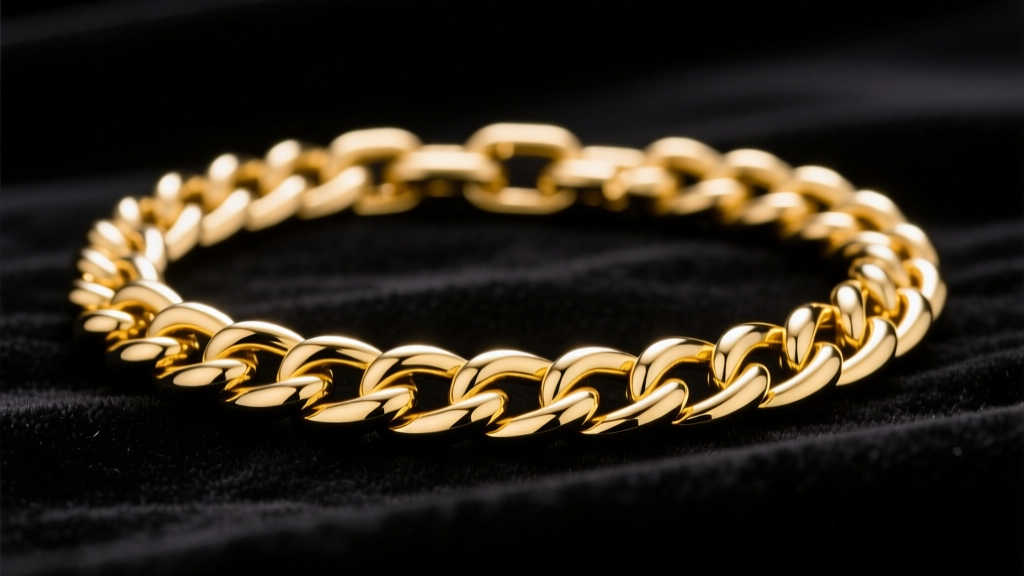
When it comes to making a bold sartorial statement, few accessories carry the cultural and financial weight of a big gold necklace. Whether you are eyeing a thick Miami Cuban link, a heavy rope chain, or an oversized Figaro piece, the allure of chunky gold is undeniable. However, as gold spot prices continue to fluctuate and hit record highs in 2026, purchasing a substantial piece of gold jewelry requires more than just an eye for style—it demands a rigorous budget and value assessment.
Many buyers fall into the trap of overpaying for inflated retail markups or, worse, purchasing hollow or heavily plated chains that offer zero long-term value. In this comprehensive guide, we break down the exact metrics you need to evaluate the true worth of a big gold necklace, ensuring your investment is as solid as the metal itself.
The 2026 Gold Market: Understanding the Baseline
Before you can assess the value of any heavy gold chain, you must understand the raw material cost. Gold is a globally traded commodity, and its spot price dictates the baseline value of your jewelry. According to real-time market data from Kitco, gold prices in 2026 have remained exceptionally robust, frequently hovering above the $2,200 per troy ounce mark.
Because one troy ounce equals exactly 31.1035 grams, a high spot price means that every single gram of gold in a heavy necklace carries significant intrinsic value. A 'big' necklace typically starts at around 10 millimeters in width and weighs anywhere from 40 to over 150 grams. At current market rates, the raw melt value of a 100-gram solid 14k gold chain is well over $4,000 before any craftsmanship, brand premium, or retail markup is applied. Understanding this mathematical floor is the first step in negotiating and assessing value.
Solid vs. Hollow vs. Plated: A Structural Value Breakdown
The most critical factor in your budget assessment is the chain's construction method. Jewelers use various techniques to make big gold necklaces look massive while altering the actual gold content. Here is how the primary construction methods compare in terms of value, durability, and budget.
| Construction Type | Gold Content | Durability | Resale / Melt Value | Budget Tier |
|---|---|---|---|---|
| Solid Gold | 100% Gold Alloy | Exceptional (Can be polished/repaired) | High (Directly tied to spot price) | Premium ($$$) |
| Semi-Solid | Solid alloy, but thinner links | Good (Prone to bending under stress) | Medium-High | Mid-High ($$) |
| Hollow Gold | Thin gold tube over resin/core | Poor (Dents easily, nearly impossible to fix) | Low (Mostly labor cost) | Low ($) |
| Gold Vermeil | Sterling silver base, thick gold plating | Fair (Plating wears off over time) | Negligible (Silver melt value only) | Budget ($) |
If your goal is generational wealth and heirloom quality, solid gold is the only acceptable choice. Hollow chains are manufactured using electroforming or resin-casting to create a large volume with minimal gold. While a 50-gram hollow chain might look identical to a 150-gram solid chain on the display pad, it will easily crush if snagged or slept in, and jewelers generally refuse to repair them.
Decoding Karats: 10K, 14K, and 18K for Heavy Chains
The Gemological Institute of America (GIA) defines gold purity by karats, which directly impacts both the color and the structural integrity of a big gold necklace. Pure 24K gold is far too soft for heavy, interlocking links; it would stretch and warp under its own weight. Therefore, alloy metals like copper, silver, and zinc are added.
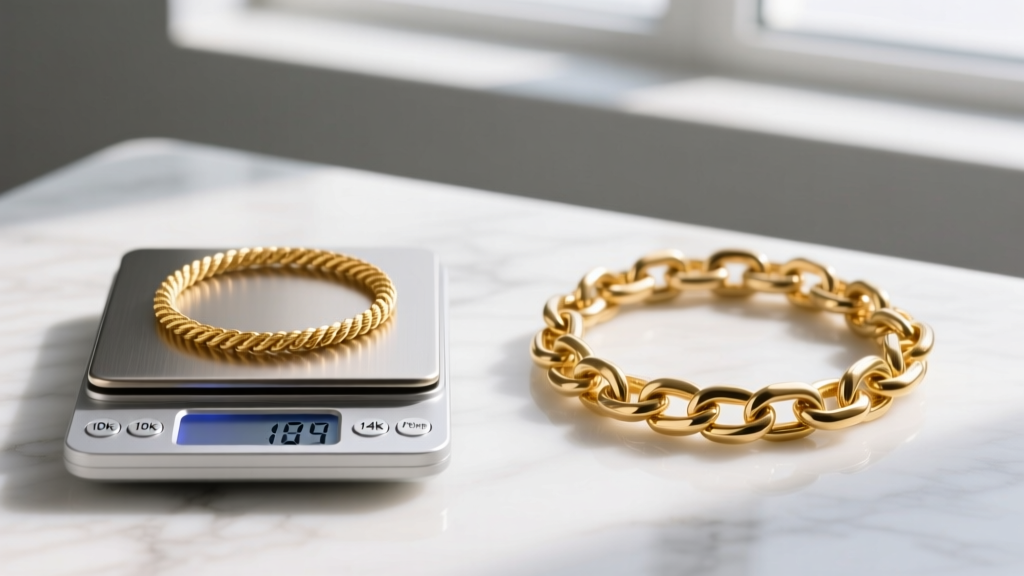
The 14K Sweet Spot
For heavy chains, 14K gold (58.3% pure gold) is widely considered the ultimate sweet spot for value and durability. It offers a rich, warm yellow hue while maintaining a high Vickers hardness score, meaning the links will resist scratching and pulling.
- 10K Gold (41.7% pure): The most budget-friendly and highly durable, but lacks the deep yellow color of higher karats. Excellent for everyday beater chains.
- 18K Gold (75% pure): Offers a luxurious, buttery yellow color and high intrinsic value, but is softer. Heavy 18K chains are prone to link stretching over decades of wear.
- 22K Gold (91.6% pure): Rarely used for thick, interlocking Western-style chains due to extreme malleability, though popular in specific cultural bridal jewelry.
How to Calculate Melt Value vs. Retail Markup
To truly assess if a big gold necklace is priced fairly, you must calculate its melt value and compare it to the retail asking price. This separates informed buyers from impulsive shoppers.
- Find the Gram Weight: Ask the jeweler for the exact weight in grams (e.g., 85 grams).
- Check the Spot Price: Look up the current daily gold spot price per ounce and divide by 31.1 to get the price per gram of pure 24K gold.
- Apply the Karat Multiplier: Multiply the pure gram price by 0.583 (for 14K) or 0.417 (for 10K).
- Multiply by Total Weight: This gives you the exact intrinsic melt value of the metal.
Example: If pure gold is $72/gram, 14K gold is roughly $42/gram. An 85-gram 14K solid chain has a melt value of $3,570. If a retailer is selling it for $4,200, you are paying a roughly 17% markup for craftsmanship, overhead, and profit—a highly reasonable premium in the jewelry industry. If the same chain is priced at $7,500, you are facing a 110% markup, which is poor value unless the piece features exceptional artisan craftsmanship or a prestigious designer hallmark.
Red Flags When Shopping for Chunky Gold Chains
When evaluating big gold necklaces in person or online, keep an eye out for these structural and ethical red flags that can instantly destroy the value of your purchase.
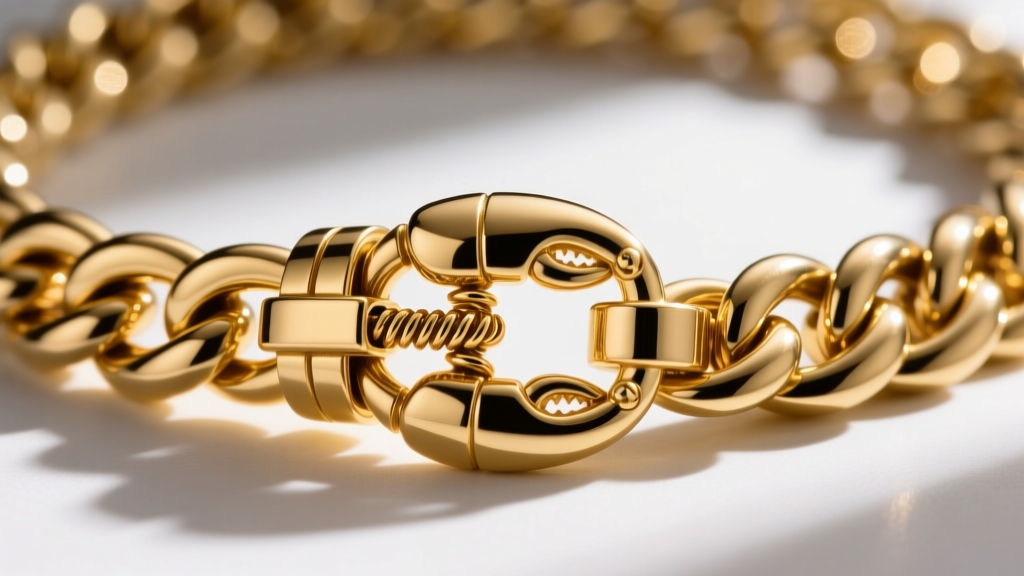
1. Undersized Clasps and Weak Soldering
A heavy gold chain requires heavy-duty hardware. If a 100-gram Miami Cuban link is attached to a tiny, flimsy lobster clasp, it is a massive red flag. The clasp should be solid gold (not gold-filled), appropriately scaled to the chain's width, and feature reinforced soldering at the jump rings. Many high-end chains now utilize a box clasp with a secondary safety latch for added security.
2. Suspiciously Light Weight
Always pick up the chain. Gold is a remarkably dense metal (19.32 g/cm³). If a visually thick 12mm rope chain feels surprisingly light or 'floaty' in your hand, it is almost certainly hollow or heavily plated over a base metal core.
3. Missing or Altered Hallmarks
The Federal Trade Commission (FTC) strictly regulates jewelry metal marking in the United States. A legitimate solid gold chain will feature a clear karat stamp (e.g., 14K, 585) and ideally a manufacturer's trademark stamp. If the clasp is completely blank, or if the stamp looks freshly scratched and misaligned, proceed with extreme caution.
Final Verdict: Allocating Your Budget Wisely
Buying a big gold necklace in 2026 is a significant financial commitment. To maximize your budget, prioritize gram weight and structural integrity over brand names and excessive diamond accents (which often carry massive retail markups but low resale value). Stick to solid 14K gold for the best balance of durability, rich color, and intrinsic melt value. By doing the math before you swipe your card, you ensure that your statement piece is not just a fashion triumph, but a sound financial asset.


