Expert Guide to the Long Orange Necklace: Materials & Styling
An expert gemological and structural analysis of the long orange necklace, covering carnelian, amber, stringing mechanics, and weight distribution.

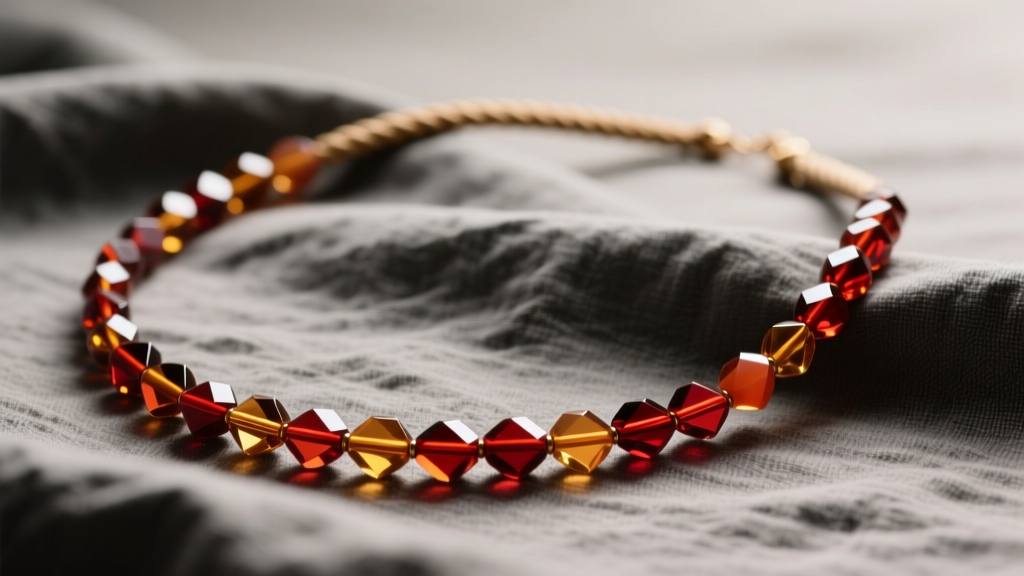
Defining the Architecture of a Long Orange Necklace
In fine jewelry design, a long orange necklace is not merely a color specification; it represents a distinct structural and gemological category. When jewelers refer to "long" strands, they are typically designating opera length (28 to 36 inches) or rope length (over 36 inches). The integration of orange gemstones—ranging from organic amber to crystalline spessartite garnet—introduces specific gravity challenges, thermal sensitivity, and tensile requirements that standard necklace templates cannot support. This technical deep dive explores the material science, structural engineering, and optical geometry required to design, string, and wear a high-end long orange necklace that withstands daily mechanical stress.
Gemological Breakdown of Orange Materials
The color orange in gemology spans multiple crystal systems and chemical compositions. Selecting the right stone for a 36-inch strand requires analyzing the Mohs hardness, specific gravity (SG), and cleavage planes. A continuous strand of heavy beads exerts immense downward force on the stringing medium and the nape of the neck. According to the GIA Gem Encyclopedia, understanding these physical properties is the first step in preventing catastrophic strand failure.
| Material | Mohs Hardness | Specific Gravity | Drill Hole Spec | Primary Failure Mode |
|---|---|---|---|---|
| Carnelian (Chalcedony) | 6.5 - 7.0 | 2.58 - 2.64 | 1.2mm - 1.5mm | Abrasion of stringing wire at the bead hole |
| Spessartite Garnet | 7.0 - 7.5 | 4.12 - 4.18 | 0.8mm - 1.0mm | Excessive weight causing clasp migration |
| Amber (Organic) | 2.0 - 2.5 | 1.05 - 1.10 | 1.5mm+ | Surface scratching and thermal warping |
| Mexican Fire Opal | 5.5 - 6.0 | 2.00 - 2.20 | 1.0mm | Crazing (internal cracking) from dehydration |
For a durable, everyday long orange necklace, carnelian offers the best balance of hardness and affordability ($2 to $15 per carat). However, if the design calls for high refractive brilliance, spessartite garnet is superior, though its high specific gravity demands advanced structural counter-weighting. Amber, while exceptionally lightweight and ideal for massive 40-inch rope strands, requires careful handling due to its low hardness and susceptibility to chemical degradation from perfumes and skin acids.
Structural Engineering: Stringing and Drill Tolerances
The most common point of failure in long, heavy bead strands is the stringing medium. Traditional Griffin No. 8 silk thread, while excellent for pearls, is entirely unsuitable for a 36-inch carnelian or garnet necklace. The crystalline edges of the drill holes will act as microscopic saws, fraying the silk and causing the strand to snap under the pendulum swing of the wearer's movement.
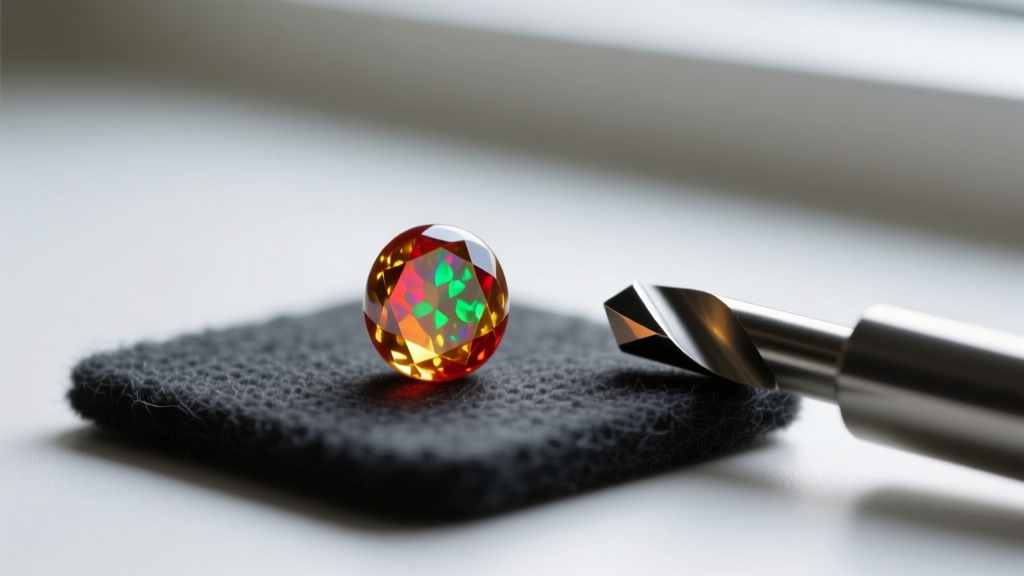
Modern master stringers utilize 49-strand micro-fused stainless steel wire with a nylon coating, such as the .024-inch diameter heavy-duty options detailed by the Soft Flex Company. This wire offers a tensile strength of up to 40 pounds, easily supporting a half-pound strand of 12mm garnet beads. Furthermore, the drill holes in the gemstones must be specifically sized. A standard 0.8mm drill hole creates a tight bend radius on the wire when the necklace curves around the neck, leading to metal fatigue. For long orange necklaces featuring beads over 10mm in diameter, jewelers must use sintered diamond core bits to widen the holes to at least 1.2mm or 1.5mm. This allows the wire to flex naturally without kinking.
"The longevity of a heavy gemstone strand is dictated not by the wire's thickness, but by the clearance inside the bead hole. A .024 wire in a 0.8mm hole is a ticking time bomb for metal fatigue." — Master Jeweler's Bench Manual
The Pendulum Effect: Clasp Mechanics and Weight Distribution
Long necklaces suffer from a mechanical phenomenon known as the "pendulum effect." Because a 36-inch strand creates a large arc, gravity continuously pulls the heaviest component toward the lowest point. If the clasp is heavier than the beads, it will inevitably migrate from the nape of the neck to the front of the chest, ruining the symmetry of the piece.
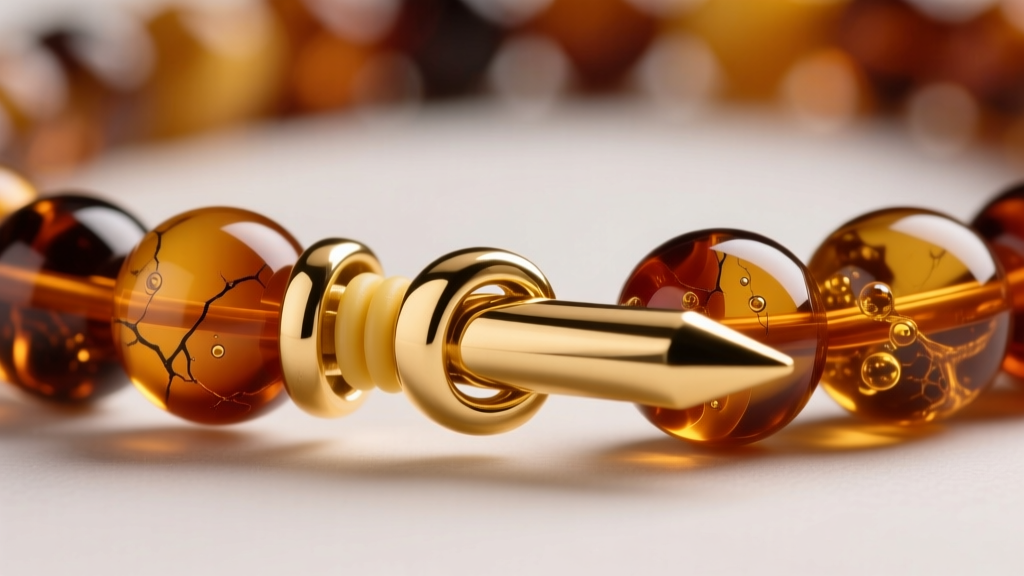
To solve this, expert bench jewelers employ three specific techniques:
- Counter-Weighting: Integrating a dense, discreet metal bead (such as a 14k gold or tungsten carbide spacer) exactly opposite the clasp to anchor the back of the neck.
- Bayonet Clasps with Silicone Grips: Using a cylindrical bayonet clasp that features an internal silicone O-ring. This creates friction against the skin and clothing, preventing the clasp from sliding freely along the neckline.
- Y-Drop Configurations: Converting the long strand into a lariat or Y-necklace, which physically locks the weight distribution and prevents rotational migration entirely.
Optical Geometry and Styling Frameworks
Styling a long orange necklace requires an understanding of color theory and spatial geometry. Orange sits between red and yellow on the visible spectrum, making it inherently warm and advancing. In terms of visual weight, orange draws the eye immediately. A 36-inch rope length creates a deep "V" shape on the torso, which elongates the neck and draws attention to the sternum.
For individuals with cool skin undertones (characterized by blue or purple veins on the inner wrist), a burnt orange or deep rust carnelian provides a striking, high-contrast complement without clashing with the skin's natural pigments. Conversely, warm undertones (green or olive veins) harmonize beautifully with vibrant, citrus-toned fire opals and translucent golden amber. When layering a long orange necklace with other pieces, maintain a minimum 4-inch gap between strands to prevent the orange stones from visually muddying against adjacent metals or gems. Opt for matte-finish chains, such as sandblasted 18k yellow gold, which allow the vitreous luster of the orange gemstones to remain the primary focal point.
Maintenance and Long-Term Care
Proper maintenance extends the life of the piece. Amber and fire opal strands must never be cleaned in ultrasonic machines; the high-frequency vibrations will shatter the opal's internal structure and melt the amber. Instead, wipe these organic and hydrous stones with a damp microfiber cloth. Carnelian and garnet can withstand mild ultrasonic cleaning, but the nylon coating on the stringing wire will degrade if exposed to harsh chemical jewelry dips. Inspect the wire near the clasp crimps every 12 months for signs of nylon fraying or wire kinking, and have the strand professionally re-strung every three to five years depending on wear frequency.


