How to Clean Satanic Necklaces and Preserve Dark Patina
Learn how to clean satanic necklaces safely. Discover expert tips to remove grime while preserving the dark oxidized patina and antique finishes.


The mainstream integration of dark occult aesthetics in 2026 has made satanic necklaces a staple of alternative and high-fashion wardrobes alike. However, the very elements that give these pieces their signature brooding appeal—deeply recessed crevices, intentional oxidation, and blackened hardware—make them notoriously difficult to maintain. Standard jewelry cleaning methods will instantly ruin the dark, antique finishes that define this genre. To preserve the integrity of your collection, you must abandon conventional silver care and adopt a specialized, material-specific maintenance protocol.
The Metallurgy of Dark Occult Jewelry
Before applying any cleaning agent, you must identify the exact method used to darken your necklace. Satanic and gothic jewelry typically relies on one of three blackening techniques:
- Chemical Oxidation (Liver of Sulfur): Used on 925 sterling silver. The potassium sulfide in Liver of Sulfur reacts with the 7.5% copper alloy in the silver to create cupric sulfide, resulting in a permanent black patina.
- Black Rhodium Plating: An electroplated layer of platinum-group metal, usually 0.1 to 0.5 microns thick, applied over silver or brass. It provides a brilliant, dark metallic finish but wears off over time on high-friction areas.
- PVD Coating (Physical Vapor Deposition): Commonly used on 316L surgical stainless steel. A layer of black titanium nitride is vaporized and bonded to the steel in a vacuum chamber, creating a highly scratch-resistant, permanent black surface.
Understanding which of these finishes your necklace possesses is the critical first step in preventing irreversible damage during the cleaning process.
The Golden Rule: Never Use Standard Silver Dips
The most common mistake owners of dark jewelry make is reaching for commercial silver dips like Tarn-X. These liquid cleaners rely on thiourea, a powerful chemical reducing agent. Thiourea works by instantly converting silver sulfide (tarnish) back into pure, bright silver. If you submerge an intentionally oxidized satanic pendant in a thiourea-based dip, it will strip away years of carefully applied antiquing in less than ten seconds, leaving you with a flat, bright white, and visually lifeless piece of metal.
Similarly, avoid the popular internet hack of using aluminum foil, boiling water, and baking soda. This creates an electrochemical cell that reverses tarnish. While excellent for brightening antique silverware, it is entirely destructive to the high-contrast, darkened crevices required for occult motifs like Baphomets, inverted crosses, or intricate pentagrams.

Step-by-Step Cleaning Protocol for Oxidized Silver
For chemically oxidized sterling silver—the most common material for high-end satanic necklaces—your goal is to remove sebum, dead skin cells, and environmental dust from the high-relief areas without disturbing the dark cupric sulfide in the recesses.
1. The Surfactant Wash
Mix a few drops of pH-neutral, fragrance-free dish soap (such as Dawn Free & Clear) into a bowl of distilled water. Avoid tap water, as dissolved chlorine and heavy minerals can cause unpredictable spotting on oxidized surfaces. Submerge the necklace for exactly three to five minutes to loosen body oils.
2. Targeted Agitation
Using an extra-soft nylon detailing brush (a baby toothbrush works, but avoid boar-bristle brushes, which can harbor abrasive grit), gently agitate the surface. Brush in a single direction across the raised elements. Do not scrub aggressively into the deep grooves; let the surfactant do the chemical lifting.
3. Precision Drying
Rinse thoroughly with fresh distilled water. Do not air dry, as water spots will ruin the finish. Instead, use a can of compressed air to blow moisture out of the intricate gothic filigree, followed by a gentle pat-down with a lint-free microfiber cloth. Avoid cotton swabs, which will snag and leave fibers trapped in the dark recesses.
Material-Specific Maintenance Matrix
Different materials require vastly different approaches. Refer to this matrix to ensure you are treating your specific necklace correctly.
| Material / Finish | Approved Cleaning Agent | Drying Method | Maintenance Frequency |
|---|---|---|---|
| Oxidized 925 Silver | pH-neutral soap & distilled water | Compressed air + microfiber | Monthly |
| Black Rhodium Plated | Dry microfiber cloth only | N/A | After every wear |
| PVD Black 316L Steel | Isopropyl alcohol (70%) | Lint-free wipe | Bi-weekly |
| Enamel / Cold Resin | Damp cloth (water only) | Soft cotton towel | As needed |
Gemstone Considerations: Onyx, Obsidian, and Jet
Satanic necklaces frequently incorporate dark gemstones to enhance their occult symbolism. However, these stones possess unique vulnerabilities. According to the Gemological Institute of America (GIA), black onyx is often dyed gray chalcedony. Harsh chemicals, ammonia, or prolonged soaking can leach the dye, resulting in a faded, patchy gray appearance.
Natural obsidian (volcanic glass) and antique Whitby jet are highly susceptible to thermal shock and cavitation damage. Never place necklaces featuring these stones in an ultrasonic cleaner. The 40kHz high-frequency vibrations can cause microscopic fractures in natural obsidian or completely shatter glass-backed onyx cabochons. Clean these stones using only a barely damp microfiber cloth, wiping gently to remove fingerprint oils.
Restoring Lost Patina: The Re-Oxidation Process
If your oxidized silver necklace has lost its dark contrast due to years of friction against clothing, you can restore the patina at home using Liver of Sulfur (LOS) gel. According to material guidelines from jewelry supplier Rio Grande, LOS must be handled with care and proper ventilation.
- Dilute a pea-sized amount of LOS gel in a glass jar containing one cup of warm (not boiling) distilled water.
- Ensure the necklace is impeccably clean and free of all oils; otherwise, the patina will apply unevenly.
- Submerge the piece using plastic tweezers (metal tweezers will react with the solution) for 30 to 60 seconds until it turns pitch black.
- Rinse in cold water and baking soda solution to neutralize the acid.
- Once dry, use a 3M polishing cloth to gently buff only the raised, high-relief areas. This restores the silver shine to the top layers while leaving the recesses pitch black, recreating the signature 3D gothic contrast.
Storage and Environmental Controls
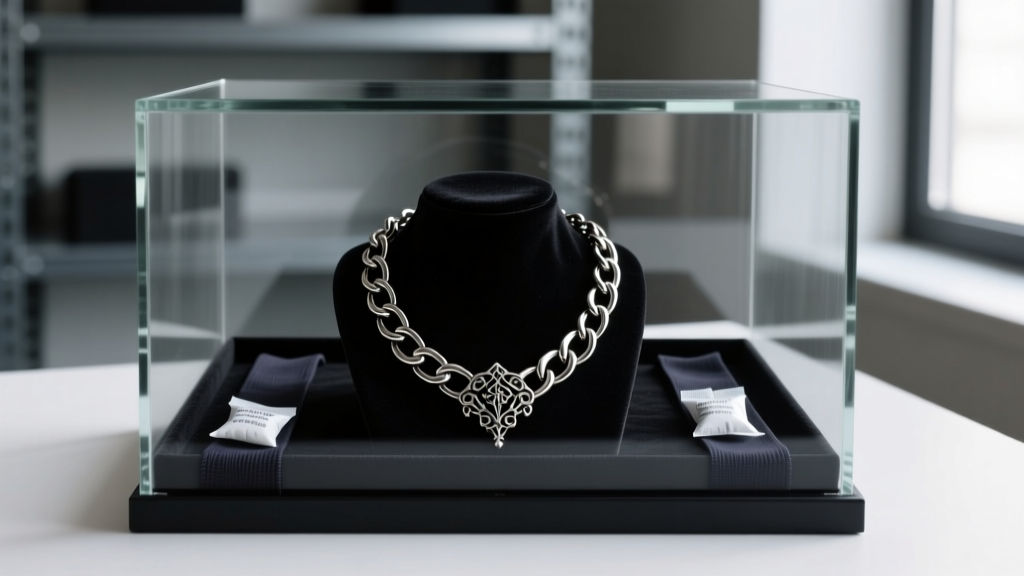
Paradoxically, while you want to preserve the intentional oxidation on a satanic necklace, you must prevent unintentional environmental tarnish, which often presents as a sickly yellowish-brown film on the high-polish areas. Store your dark jewelry in a low-humidity environment (ideally below 45% relative humidity). Use airtight acrylic display cases or heavy-duty ziplock bags paired with 3M anti-tarnish strips, which absorb atmospheric sulfur compounds before they can react with the polished silver elements of your pendant.
By respecting the complex metallurgy and intentional aging of these pieces, your satanic necklaces will maintain their dark, commanding presence for decades without losing the intricate details that make them unique.


