Step-by-Step: Choosing a Diamond Necklace for Kid Boy Safety
Learn how to safely select, size, and style a diamond necklace for kid boy gifts. Expert tips on chain gauges, clasps, and choking hazard prevention.

Introduction: Balancing Luxury and Child Safety
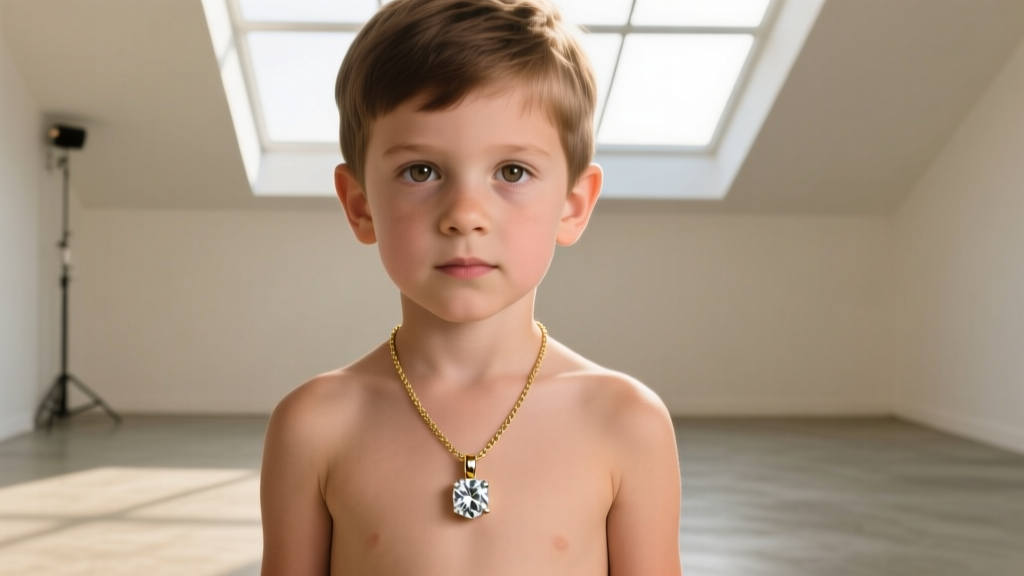
Selecting a diamond necklace for kid boy recipients is a significant milestone, often marking a religious ceremony, a major birthday, or a family heirloom transfer. However, children are not miniature adults; their active lifestyles, developing skin sensitivities, and general lack of spatial awareness require a completely different approach to jewelry selection. A piece that is safe and appropriate for an adult can pose severe strangulation, choking, or laceration hazards for a child. This comprehensive, step-by-step guide will walk you through the exact metallurgical, gemological, and safety specifications required to choose a pendant and chain that is both beautiful and fundamentally safe for a young boy.
Step 1: Prioritize Safety Standards and Clasp Mechanics
The most critical point of failure in any child's necklace is the clasp. According to the Consumer Product Safety Commission (CPSC), necklaces and drawstrings pose a well-documented strangulation risk on playgrounds and in cribs. To mitigate this, you must never use a standard lobster claw or spring-ring clasp for a child under the age of 12.
The Breakaway Clasp Requirement
Instead, opt for a magnetic breakaway clasp or a chain engineered with intentional "weak links." A magnetic breakaway clasp is designed to snap open when subjected to roughly 3 to 5 pounds of lateral tension. If the chain catches on a bicycle handle, a playground fence, or a bedpost, the clasp will instantly release, preventing choking. If you prefer a traditional metal clasp, ensure the jeweler incorporates a 2mm jump ring that is soldered slightly thinner than the rest of the chain links, acting as a mechanical fuse that will snap before the chain can cause injury.
Step 2: Select the Right Metal and Chain Gauge
Children's skin is highly reactive to alloyed metals. You must avoid anything containing nickel, which is a common contact allergen found in lower-karat white gold and cheap base metals.
- 14k or 18k Yellow Gold: The safest and most hypoallergenic options. The higher the gold content, the less likely it is to cause contact dermatitis.
- Platinum: Exceptionally durable and completely hypoallergenic, though significantly heavier and more expensive.
- Sterling Silver: Acceptable if it is certified nickel-free and rhodium-plated, but it requires more maintenance to prevent tarnishing from sweat.
Chain Gauge and Style Specifications
The thickness (gauge) of the chain dictates both its durability and its safety profile. A chain that is too thick (over 2.0mm) acts like a rope and will not break if caught. A chain that is too thin (under 0.8mm) will snap during normal play, creating a lost-diamond hazard and sharp edges. The ideal gauge for a boy's necklace is between 1.0mm and 1.5mm. Furthermore, stick to box chains or smooth cable chains. Avoid rope, herringbone, or snake chains entirely, as their interlocking grooves easily trap fine arm hair and skin, causing painful pinching and pulling.
Step 3: Choose a Kid-Proof Diamond Setting
When consulting the Gemological Institute of America (GIA) guidelines on diamond durability, it is clear that while diamonds are a 10 on the Mohs hardness scale, they possess perfect cleavage planes, meaning a hard, direct impact can chip or fracture the stone. More importantly, the setting itself poses a physical risk to the child and their playmates.
Why Prong Settings Are Dangerous for Kids
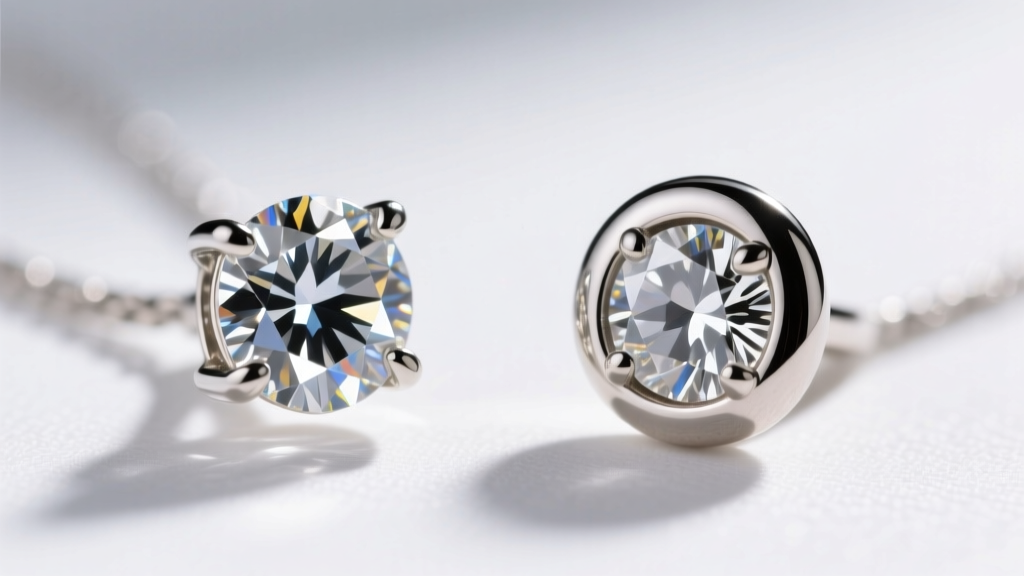
Traditional four-prong or six-prong settings feature tiny metal claws that grip the diamond. On an active boy, these prongs will inevitably catch on t-shirts, sweaters, and sports equipment. Worse, if the child is tackled during a contact sport or falls on the pendant, the exposed prongs can act like tiny blades, lacerating the child's chest or neck.
The Bezel and Flush Setting Solutions
Always choose a bezel setting (where a continuous rim of metal completely surrounds the diamond's girdle) or a flush/gypsy setting (where the diamond is set directly into the metal, sitting perfectly flat). These settings offer maximum protection against impact chipping and present a completely smooth, snag-free surface against the skin.
| Setting Type | Snag Risk | Impact Protection | Safety Rating for Kids |
|---|---|---|---|
| 4-Prong / 6-Prong | High (Catches clothes) | Low (Stone exposed) | Poor (Avoid) |
| Bezel | None (Smooth edge) | High (Metal rim) | Excellent |
| Flush / Gypsy | None (Flat surface) | Maximum (Fully embedded) | Excellent |
Step 4: Sizing, Length, and Growth Considerations
A necklace that fits an adult is a severe hazard for a child. The pendant should rest on the upper chest, never dangling near the chin or mouth. Because boys grow rapidly, purchasing a chain with a built-in 2-inch extender is highly recommended. This allows the necklace to grow with the child over several years.
Age-to-Length Measurement Guide
- Toddlers (Ages 1-3): 10 to 12 inches. Note: Necklaces are generally not recommended for this age group due to constant mouthing and choking hazards. If worn, it must be strictly supervised and removed for naps.
- Young Boys (Ages 4-7): 12 to 14 inches. This length rests safely on the collarbone.
- Older Boys (Ages 8-12): 14 to 16 inches. Accommodates broader shoulders and thicker necks.
- Teens (Ages 13+): 16 to 18 inches. Standard adult male length.

How to Measure Accurately
Do not guess the size based on age charts alone. Use a soft, flexible tailor's measuring tape. Wrap it loosely around the child's neck at the base, where the collar of a shirt would sit. Add exactly two inches to this measurement to determine the minimum safe chain length. Ensure the child is standing upright and breathing normally during the measurement.
Step 5: Diamond Quality and Financial Pragmatism
Parents often feel pressured to buy high-clarity diamonds (VVS or IF grades) for their children. From an expert standpoint, this is a poor allocation of funds. A child's pendant is small, typically ranging from 3mm to 5mm (0.10 to 0.50 carats). At this size, inclusions in an SI1 or SI2 clarity grade are completely invisible to the naked eye. By opting for an SI1 diamond with a Good or Very Good cut, you can save thousands of dollars—money that is far better invested in the child's education or savings account—without sacrificing any visible brilliance or beauty.
Step 6: Establish Wear Rules and Maintenance
Even the safest jewelry requires rules. Establish a strict "off before bed, off before sports" policy. Sweat, chlorine from swimming pools, and dirt from the playground will degrade the metal and dull the diamond over time. Once a month, perform a visual inspection: check the weak-link or magnetic clasp for wear, ensure the bezel rim is flush against the stone, and clean the pendant with a soft toothbrush and mild dish soap. By following these rigorous steps, you ensure the diamond necklace remains a cherished, safe, and enduring symbol of your love.


