Big Z Necklace Surfs Up: Engineering Saltwater Surf Pendants
Master the big z necklace surfs up trend with our technical guide to marine-grade alloys, bail tolerances, and saltwater surf jewelry.

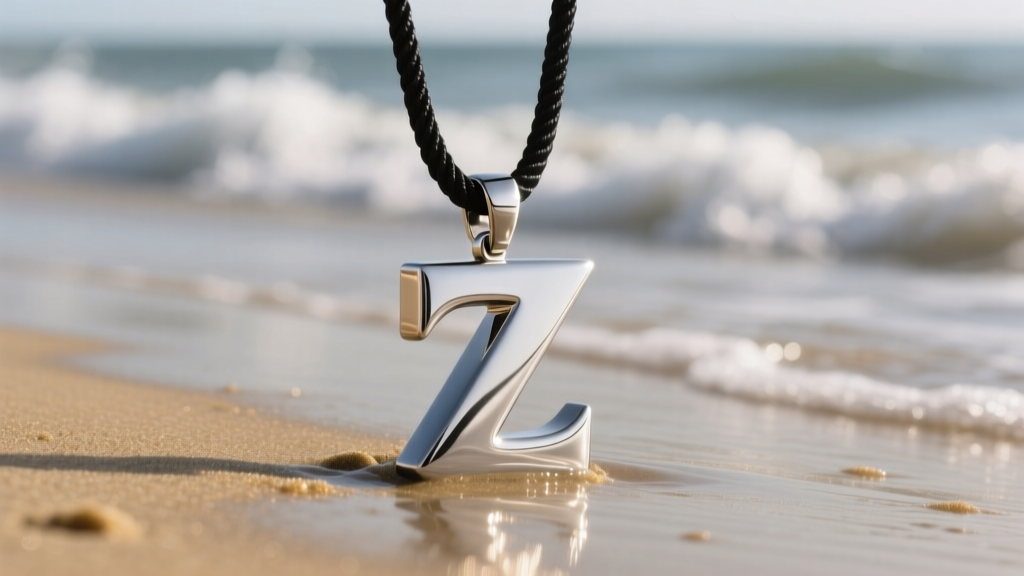
The Engineering Behind the 'Big Z' Surf Aesthetic
When the 2026 surf-streetwear revival brought the chunky initial pendant back to the forefront of coastal fashion, the 'big z necklace surfs up' trend emerged as a dominant force in both skate and surf cultures. But for jewelry engineers and serious watermen, a surf necklace is not merely a fashion accessory; it is a piece of marine hardware. The ocean is a highly hostile environment characterized by high salinity, abrasive silica (sand), and intense UV radiation. Building a 'Big Z' pendant that survives the impact of a breaking wave while maintaining its structural integrity requires a deep understanding of metallurgy, weight distribution, and suspension mechanics.
A true surf-grade 'Big Z' pendant is defined by its mass and footprint. Standard fashion jewelry relies on thin, stamped sheet metal, which will dent instantly upon impact with a surfboard or succumb to rapid chloride corrosion. An authentic surf-spec Z pendant is typically sand-cast or CNC-milled from a solid billet, measuring between 38mm and 45mm in height, with a thickness of 6mm to 9mm. This results in a substantial swing weight of 30 to 45 grams, requiring specialized rigging to prevent the suspension cord from snapping under the kinetic load of a wipeout.
Material Science: Surviving the Saltwater Test
The primary failure point in coastal jewelry is pitting corrosion caused by chloride ions in seawater attacking the passive oxide layer of the metal. To counter this, expert jewelers rely on specific marine-grade alloys. According to metallurgical standards outlined by The London Assay Office and broader materials science principles, the addition of specific trace elements dramatically alters a metal's survivability in saltwater.
| Material Alloy | Marine Grade | Weight (40mm Z) | Saltwater Reaction | Est. Price Range |
|---|---|---|---|---|
| 316L Stainless Steel | Marine/Architectural | 38g | Highly resistant due to 2-3% Molybdenum additive preventing pitting | $85 - $140 |
| Grade 23 Titanium (Ti-6Al-4V ELI) | Aerospace/Marine | 22g | Impervious to chloride corrosion; forms instant protective oxide layer | $180 - $260 |
| Silicon Bronze (C65500) | Marine Hardware | 41g | Develops a protective, non-flaking verdigris patina over time | $110 - $175 |
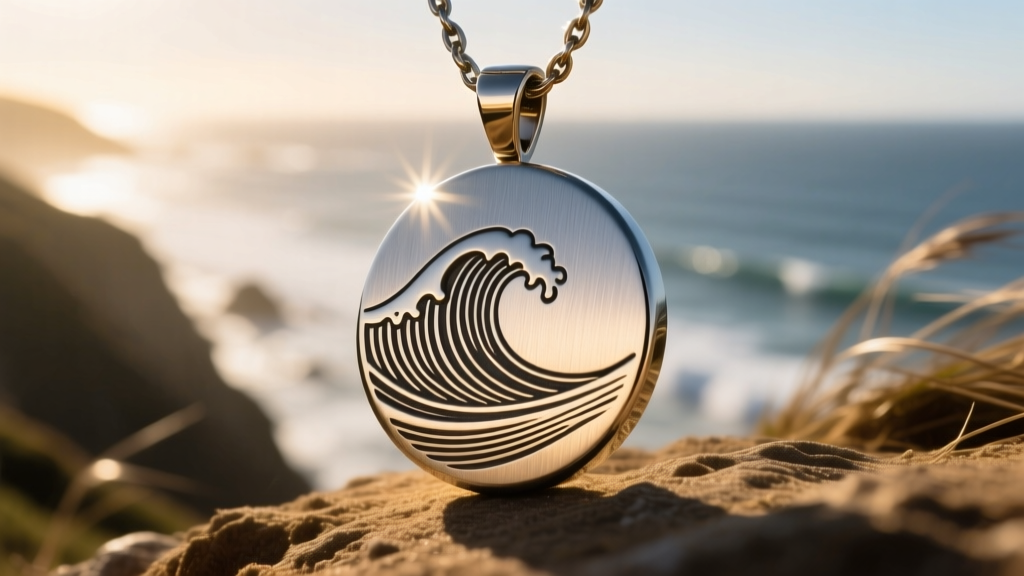
316L Stainless Steel vs. 304: Never accept a 304 stainless steel pendant for active surfing. 304 lacks molybdenum and will develop micro-pitting within a single season of regular ocean exposure. 316L is the absolute baseline for ferrous surf jewelry.
The Galvanic Corrosion Trap: A critical error made by amateur surf jewelers is pairing a 316L steel pendant with a sterling silver chain or copper findings. As documented in corrosion resistance literature, when dissimilar metals are submerged in an electrolyte like saltwater, they create a galvanic cell. The less noble metal (silver or copper) will act as an anode and corrode rapidly. Always match your pendant alloy with your hardware and clasp components.
Suspension Mechanics: Chain vs. Vulcanized Cord
The 'surfs up' aesthetic demands a rugged suspension system. Traditional metal chains, even those made of marine-grade titanium, are prone to catastrophic failure at the clasp or jump rings when subjected to the sudden tensile shock of a wave impact. A 45-gram Big Z pendant hitting the end of a slack chain generates significant kinetic force, easily snapping standard lobster clasps or deforming split rings.
The industry standard for heavy surf pendants is a 3mm to 5mm vulcanized rubber cord or marine-grade paracord. However, elastomers are highly susceptible to UV degradation and ozone cracking. When selecting a rubber cord, ensure it is treated with UV inhibitors. The termination points should not rely on glued end-caps, which dissolve in saltwater. Instead, look for mechanically crimped titanium barrels or screw-threaded 316L end-caps secured with marine-grade Loctite (threadlocker).
Bail Engineering: Solving the Asymmetrical 'Z' Problem
The letter 'Z' presents a unique geometric challenge in pendant design. Unlike a symmetrical 'O' or 'T', the 'Z' is diagonally biased, with mass concentrated in the top-left and bottom-right quadrants. If a manufacturer simply drills a standard vertical hole through the top center of the Z, the pendant will list heavily to one side, hanging crookedly against the chest.
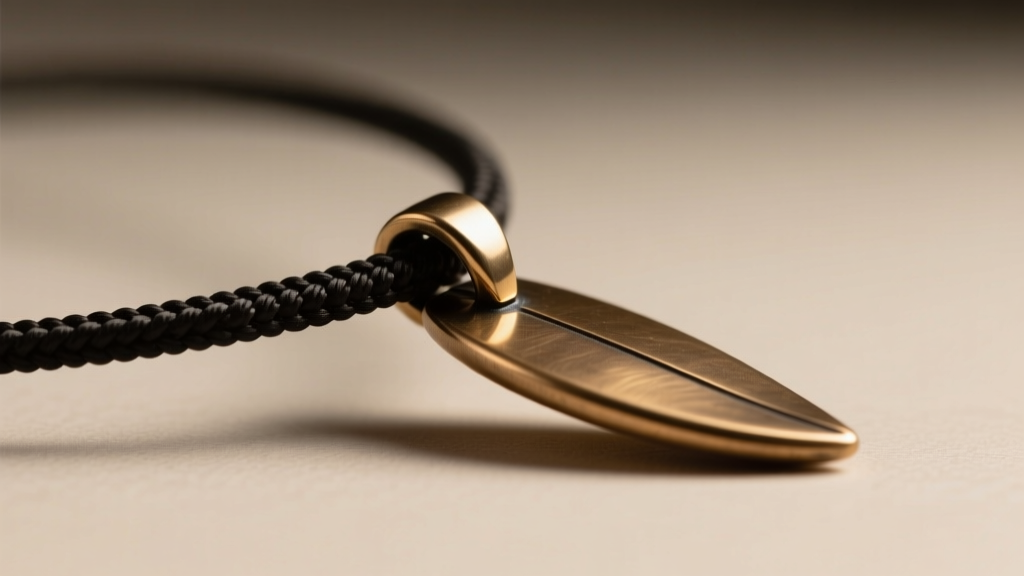
To achieve a level horizon line, expert CNC machinists utilize two specific bail engineering techniques:
- The Offset Top-Bar: Instead of a traditional loop, a horizontal bar is integrated into the top right edge of the Z, counterbalancing the visual and physical weight of the top-left serif. This allows a thick 5mm cord to pass through horizontally, keeping the pendant perfectly flat against the sternum.
- The Hidden Rear Bail: A U-channel is milled into the back of the pendant, allowing the cord to thread directly through the body of the metal. This requires a minimum clearance tolerance of 6.5mm to accommodate the cord and prevent abrasive friction from sand trapped inside the channel.
Post-Surf Maintenance and Patina Management
Even marine-grade alloys require basic maintenance to prevent the buildup of salt crystals, which can act as an abrasive paste against the skin and the metal's finish. After every session, the Big Z necklace must be rinsed in fresh water. Avoid using ultrasonic cleaners on Silicon Bronze or intentionally oxidized pendants, as the high-frequency cavitation will strip the protective patina and damage the intentional surf-worn aesthetic. For vulcanized cords, a periodic wipe-down with a silicone-based protectant will replenish the elastomer's oils and prevent micro-cracking from sun exposure, ensuring your surf hardware survives the season.


