Your Everyday Necklace: Silver Necklace Cleaning & Care Guide
Learn expert techniques to clean, polish, and store your silver necklace. Discover safe solutions for removing tarnish without damaging delicate chains.

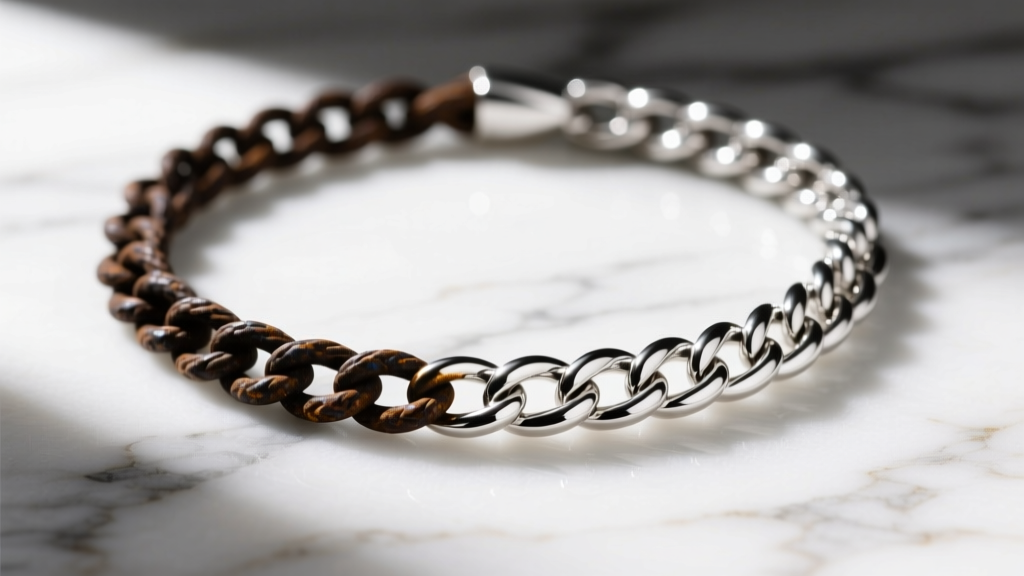
Silver jewelry possesses a timeless, luminous appeal, but its brilliance requires dedicated maintenance. Whether you are wearing a delicate 925 sterling silver chain daily or storing a heavy statement piece, understanding the metallurgy and chemistry of your jewelry is the first step toward preserving its lifespan. This comprehensive guide details professional-grade cleaning protocols, structural maintenance, and long-term storage strategies to keep your silver necklaces looking pristine.
Understanding Silver Alloys and Tarnish Chemistry
To properly care for your jewelry, you must first identify the specific silver alloy. Pure silver (999 fine silver) is highly resistant to tarnish but too soft for durable necklace chains. Therefore, jewelers alloy it with other metals for strength.
- Sterling Silver (925): Composed of 92.5% silver and 7.5% copper. The copper provides structural integrity but is the primary culprit behind tarnish.
- Argentium Silver (935/960): Replaces some copper with germanium, creating a highly tarnish-resistant surface that requires significantly less maintenance.
- Coin Silver (900): An older alloy containing 90% silver and 10% copper, which tarnishes more rapidly than sterling.
Tarnish is not a sign of poor quality; it is a natural chemical reaction. The copper in sterling silver reacts with hydrogen sulfide ($H_2S$) and moisture in the atmosphere to form silver sulfide ($Ag_2S$), a dark brown or black layer on the surface. High humidity, air pollution, and exposure to sulfur-rich foods (like eggs and onions) accelerate this oxidation process. For a deeper dive into silver metallurgy, the Silver Institute provides extensive resources on alloy behaviors.
The Electrochemical Reduction Bath (For Deep Tarnish)
For heavily tarnished chains without gemstones, the electrochemical reduction method is the safest and most effective technique. Unlike abrasive polishes that remove microscopic layers of silver, this method reverses the chemical reaction, converting silver sulfide back into pure silver.
Step-by-Step Protocol
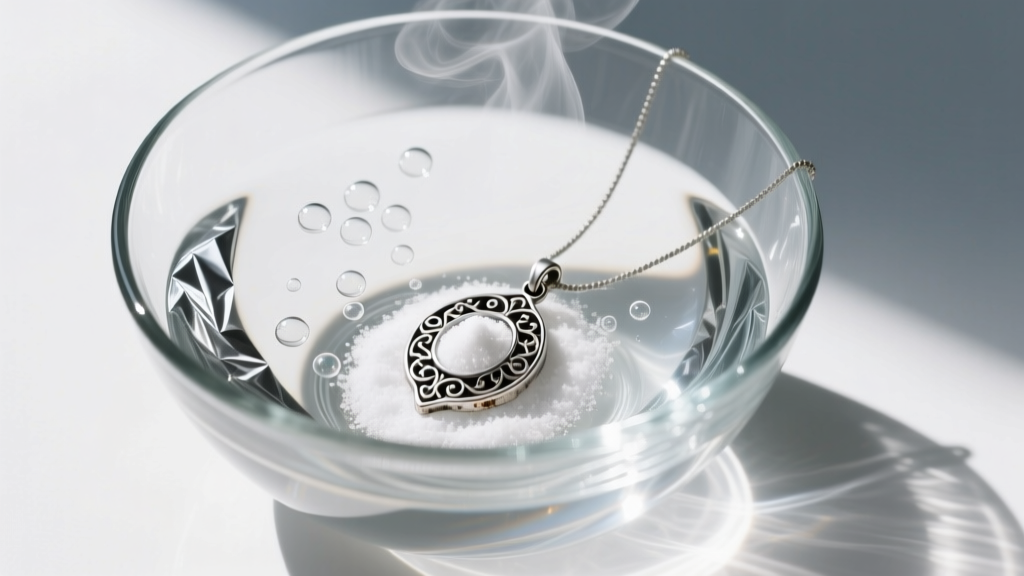
- Prepare the Vessel: Line a glass or ceramic bowl with aluminum foil, shiny side up. The aluminum acts as the anode in this galvanic cell.
- Add the Catalysts: Pour in 1 tablespoon of baking soda (sodium bicarbonate) and 1 tablespoon of sea salt. These create an electrolyte solution that facilitates ion transfer.
- Activate with Heat: Pour 1 cup of boiling water into the bowl and stir until the powders dissolve.
- Submerge the Necklace: Place your silver necklace into the solution, ensuring it physically touches the aluminum foil. This contact is mandatory for the electron transfer to occur.
- Monitor the Reaction: You will notice a sulfurous (rotten egg) smell and see the tarnish lifting within 1 to 5 minutes. For severe oxidation, gently agitate the chain with a wooden skewer.
- Rinse and Dry: Remove the necklace with plastic tongs, rinse thoroughly under warm distilled water, and pat dry with a lint-free microfiber cloth.
Mechanical Polishing vs. Chemical Dips
While the foil bath is excellent for chains, mechanical polishing is required for restoring high-shine finishes to pendants and clasps. However, you must avoid common household hacks that cause irreversible micro-scratching.
Expert Warning: Never use toothpaste to polish silver. Toothpaste contains hydrated silica, which has a Mohs hardness of 4 to 5. Silver sits at 2.5 to 3 on the Mohs scale. The abrasive silica will permanently scratch the high-polish finish, leaving a dull, matte appearance over time.
Instead, use a treated jeweler's cloth, such as a Sunshine Polishing Cloth. These cloths are impregnated with microscopic jeweler's rouge (iron oxide) and anti-tarnish agents that safely lift oxidation while leaving a protective wax barrier. For intricate crevices in box chains or filigree pendants, use a soft-bristled baby toothbrush with a drop of mild, phosphate-free dish soap and warm water.
The Danger of Liquid Chemical Dips
Commercial liquid silver dips (often containing thiourea) provide instant results but are highly detrimental to your jewelry. Thiourea is a known carcinogen and a harsh acid that strips the silver surface, leaving it porous and susceptible to rapid re-tarnishing. According to the Gemological Institute of America (GIA), repeated use of chemical dips will eventually degrade the structural integrity of fine silver chains and destroy applied patinas.
Matching Cleaning Methods to Silver Finishes
Not all silver necklaces are finished equally. Applying the wrong cleaning method can ruin the designer's intended aesthetic. Refer to the table below before treating your jewelry.
| Silver Finish | Description | Safe Cleaning Method | Methods to Avoid |
|---|---|---|---|
| High Polish | Mirror-like, highly reflective surface. | Impregnated polishing cloths, mild soap wash. | Abrasives, toothpaste, stiff brushes. |
| Matte / Satin | Brushed, non-reflective textured surface. | Soft brush with soapy water, gentle wiping. | Polishing cloths (will create shiny bald spots). |
| Oxidized | Intentionally blackened crevices for contrast. | Damp microfiber cloth, mild soap only. | Electrochemical foil bath, liquid dips, baking soda. |
| Rhodium-Plated | Coated with platinum-group metal for shine. | Warm soapy water, soft cloth. | Polishing cloths (will strip the rhodium layer). |
Special Considerations for Gemstone Necklaces
If your silver necklace features gemstones, you must tailor your cleaning approach to the specific mineral's porosity and hardness. The electrochemical bath and ultrasonic cleaners are strictly prohibited for organic and porous gems.
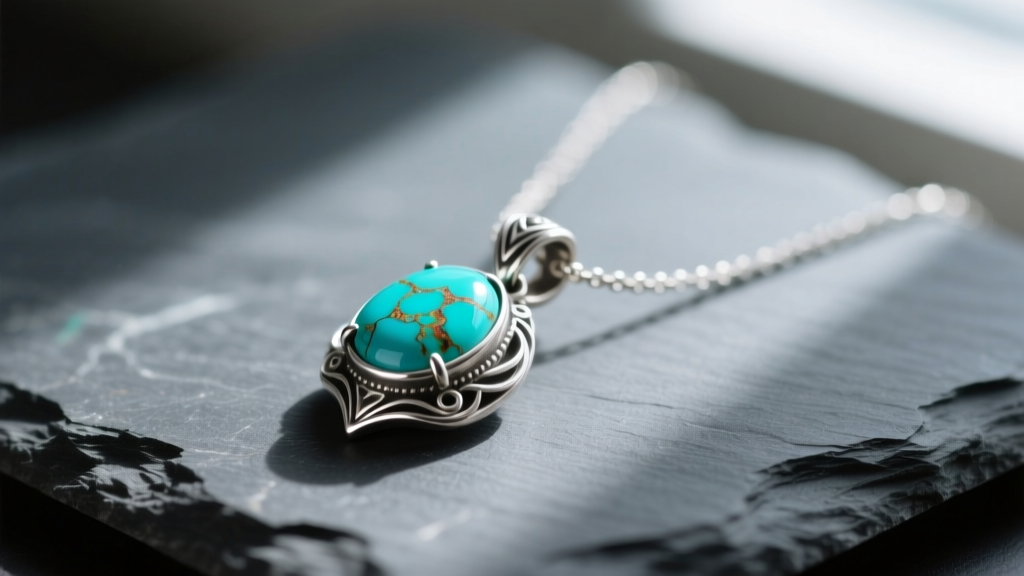
- Porous & Organic Gems (Turquoise, Opal, Pearl, Lapis Lazuli, Coral): These stones absorb liquids and chemicals. Exposure to baking soda, ammonia, or even prolonged water submersion can cause discoloration, cracking, or dissolution. Clean these strictly with a barely damp, soft cloth, avoiding the stone settings entirely.
- Hard Gems (Diamond, Sapphire, Ruby): These can withstand mild soapy water and gentle brushing, but you must ensure the silver prongs or bezels are not snagged by the brush bristles.
- Fracture-Filled Stones (Emerald, some Rubies): Often treated with cedar oil or resin. Heat and chemicals will melt the filler, ruining the stone's clarity.
Chain Architecture and Clasp Maintenance
The physical design of your necklace chain dictates how easily it traps dirt and tarnish. Snake chains and herringbone chains have tightly interlocked links that easily trap skin oils, lotions, and environmental sulfur, requiring frequent wiping with a dry cloth after wear. Conversely, cable and rope chains have open links that are easier to clean but more prone to snagging.
Pay special attention to the clasp. Lobster claws and spring-ring clasps contain tiny internal steel springs. Steel rusts when exposed to prolonged moisture. When washing your necklace, avoid submerging the clasp if possible, and always ensure the spring mechanism is completely dry before storage. A drop of mineral oil applied with a toothpick to the clasp hinge once a year will keep the mechanism operating smoothly.
Long-Term Storage Protocols
Proper storage is the most effective way to reduce the need for aggressive cleaning. Silver should never be stored exposed to the open air or in cardboard boxes, as the adhesives and wood pulp in cardboard emit sulfur gases.
The Ideal Storage Environment
- Anti-Tarnish Bags: Store individual necklaces in Pacific Silvercloth bags or specialized polyethylene zip-lock bags. PVC plastics must be avoided, as they off-gas chemicals that pit silver.
- Silica Gel Packets: Include a small silica gel desiccant packet in your storage box to control ambient humidity, the primary catalyst for oxidation.
- 3M Anti-Tarnish Strips: Place these specially treated paper strips inside your jewelry box. They absorb airborne sulfur compounds and remain effective for 6 to 12 months.
- Anti-Tangle Hanging: For long chains (24 inches or more), hang them on a velvet-lined jewelry stand or a dedicated hook to prevent knotting, which can stretch and weaken the links over time.
By integrating these scientifically backed cleaning methods and proactive storage habits, your silver necklaces will retain their structural integrity and brilliant luster for generations.


