Chunky Paperclip Necklace: Technical Build & Metal Guide
Discover the metallurgy, link fabrication, and clasp engineering behind the chunky paperclip necklace. An expert guide to gauge, weight, and durability.

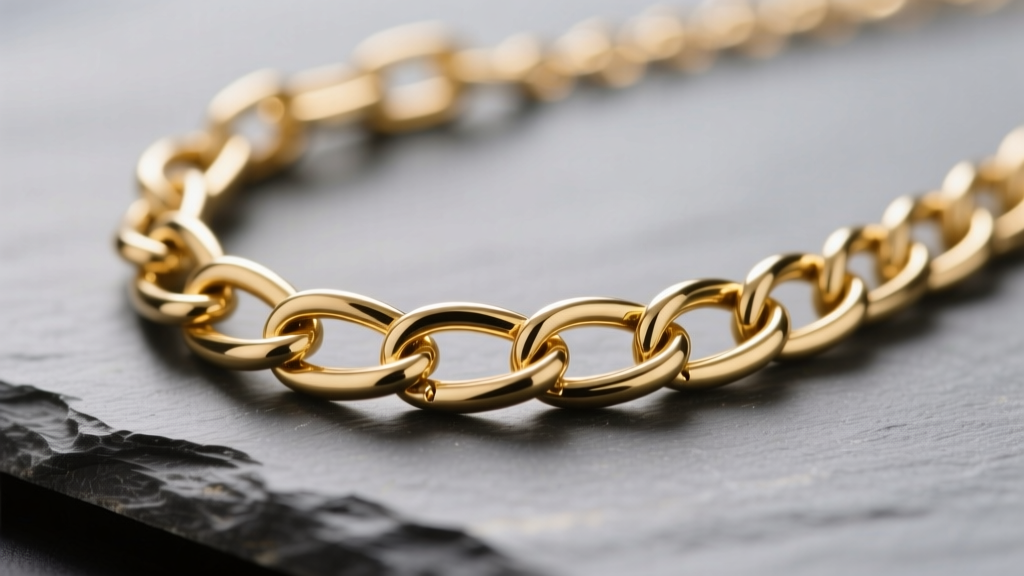
The Engineering Behind the Minimalist Aesthetic
As we navigate the jewelry landscape in 2026, the chunky paperclip necklace has firmly transitioned from a fleeting social media trend to a permanent staple in fine jewelry collections. However, beneath its clean, elongated links lies a complex matrix of metallurgical decisions, structural engineering, and weight distribution physics. When a necklace exceeds 40 grams, it ceases to be mere decoration and becomes a dynamic load-bearing structure. In this technical deep dive, we examine the exact specifications, material grades, and fabrication methods that separate a heirloom-quality piece from a fragile fashion imitation.
Defining Chunky: Dimensions, Gauge, and Weight Metrics
The term 'chunky' is often thrown around loosely by retailers, but in professional jewelry manufacturing, it is defined by strict dimensional thresholds. A true chunky paperclip chain is characterized by its wire gauge and link aspect ratio.
The Millimeter and Gauge Threshold
Standard paperclip chains range from 2mm to 4mm in width. A 'chunky' variant begins at 5mm and can scale up to 15mm or more. To achieve these widths without the links looking disproportionately thin, manufacturers must use heavier wire. According to standard jewelry fabrication metrics sourced from Rio Grande Jewelry Supply, heavy chains typically utilize wire between 12-gauge (2.05mm) and 8-gauge (3.26mm).
- Light Chunky (5mm - 7mm width): Usually crafted from 12 to 10 AWG wire. Weighs between 15g and 30g for a standard 18-inch length.
- Medium Chunky (8mm - 10mm width): Requires 10 to 8 AWG wire. Weighs between 35g and 60g.
- Heavy Statement (11mm - 15mm+ width): Often utilizes 8 to 6 AWG wire or hollow-tubing techniques. Can exceed 80g to 120g.
The aspect ratio of the link—the relationship between its length and width—is typically 3:1 or 4:1. This elongated geometry is what creates the signature paperclip silhouette, but it also introduces structural vulnerabilities at the apex of the curve where stress concentrates.
Metallurgy and Material Grades for Heavy Chains
When a chain weighs over 50 grams, the tensile strength and Vickers hardness (HV) of the metal become critical. The Gemological Institute of America (GIA) notes that pure 24k gold is far too malleable for structural jewelry, necessitating precise alloying.
| Material Grade | Vickers Hardness (HV) | Tensile Strength | Price Range (18in) | Structural Verdict |
|---|---|---|---|---|
| 316L Stainless Steel | ~150 - 200 HV | Excellent | $40 - $120 | Highly durable, but heavy and difficult to resize or solder. |
| Sterling Silver (925) | ~60 - 90 HV | Poor to Fair | $150 - $450 | Too soft for unsoldered heavy links; prone to stretching and work-hardening. |
| 14k Yellow Gold | ~130 - 160 HV | Very Good | $1,800 - $4,500 | The industry gold standard. Optimal balance of malleability and structural integrity. |
| 18k Yellow Gold | ~110 - 130 HV | Good | $3,000 - $7,500+ | Softer than 14k; requires soldered links and thicker wire gauges to prevent stretching. |

Link Fabrication: Stamped, Cast, or Wire-Drawn?
How the individual links are formed dictates the chain's longevity. There are three primary manufacturing methods for paperclip chains:
1. Wire-Drawn and Bent (The Premium Standard)
High-end chunky paperclip necklaces are made by drawing metal ingots through a draw plate to create long, uniform wires. These wires are then coiled around a mandrel and cut. This process aligns the metal's grain structure, increasing its tensile strength.
2. Cast Links
Casting involves pouring molten metal into a mold. While this allows for intricate textures, cast links are inherently more brittle due to porosity and a randomized crystalline structure. For a heavy 80g necklace, cast links are a liability and prone to snapping under sudden tension.
3. Stamped and Folded
Hollow or semi-hollow paperclip chains are often stamped from flat sheet metal and folded into shape. While this drastically reduces the weight and cost of a 15mm wide chain, the folded seams are structural weak points that can crush or split if snagged.
The Soldered vs. Unsoldered Debate
For chains under 20 grams, unsoldered links (where the wire is simply bent closed) are generally safe. However, for a chunky paperclip necklace exceeding 40 grams, soldering every single link is non-negotiable. When a heavy chain snags on clothing, the dynamic force can easily pry open an unsoldered link. Modern manufacturers use laser welding with argon shielding gas to fuse the link seams without the need for chemical fluxes, resulting in a cleaner, stronger joint that is virtually invisible to the naked eye.
Expert Insight: If you are purchasing a vintage or artisan chunky chain, inspect the link seams with a 10x jeweler's loupe. A visible gap or a dark line of oxidized solder indicates poor flash-soldering techniques, which will inevitably fail under the chain's own weight.
Clasp Engineering: Preventing Catastrophic Failure
The clasp is the single most common point of failure on any necklace, but on a heavy paperclip chain, a clasp failure means losing thousands of dollars of precious metal in an instant. Standard 5mm or 7mm spring-ring clasps are entirely inadequate for chains weighing over 30 grams.
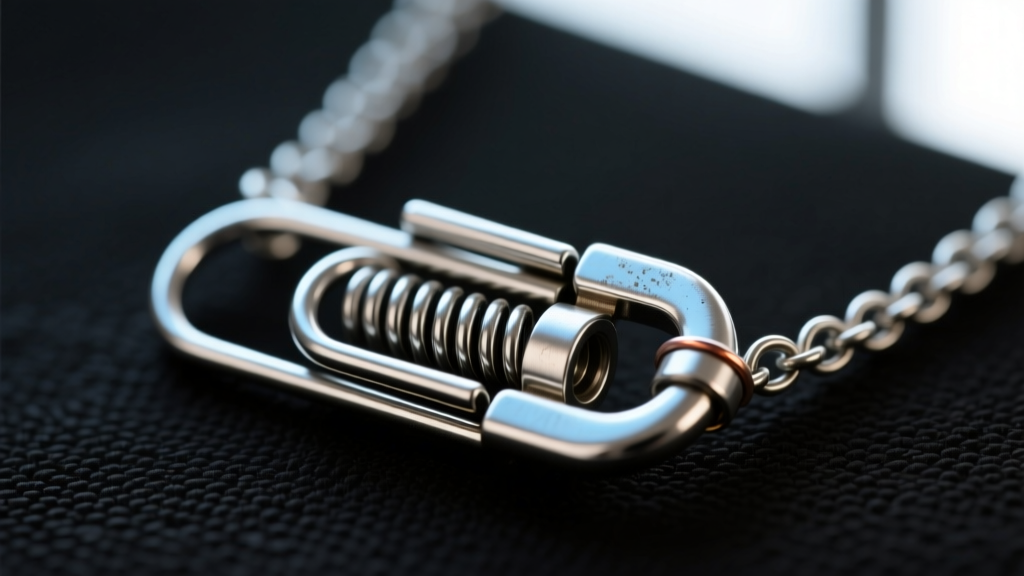
Approved Clasp Mechanisms for Heavy Chains
- Oversized Lobster Claw (15mm - 22mm): The most common choice. The internal spring must be heavy-duty, and the jump ring connecting the clasp to the chain must be soldered shut. An unsoldered jump ring will stretch into an oval shape within weeks of supporting a 60g chain.
- T-Bar / Toggle Clasps: Excellent for heavy chains because they rely on gravity and geometry rather than a delicate internal spring. The T-bar must be at least 20% wider than the receiving ring to prevent accidental slippage.
- Custom Interlocking Links: Some high-jewelry houses engineer a specific paperclip link that acts as a hidden box clasp, secured by a secondary safety catch. This maintains the unbroken visual flow of the chain.
Maintenance, Work-Hardening, and Troubleshooting
Metals undergo 'work-hardening' when subjected to repeated mechanical stress. Every time the wearer bends, twists, or pulls the necklace, the crystalline structure of the gold or silver compresses, making the metal harder but significantly more brittle. Over a period of two to three years, a frequently worn chunky paperclip chain may become stiff and prone to micro-fractures at the apex of the links.
Actionable Maintenance Protocol
To combat work-hardening and ensure the structural integrity of your investment, follow this technical maintenance schedule:
- Bi-Annual Annealing: Take the necklace to a professional bench jeweler every 18 to 24 months. They will use a controlled torch to heat the metal to a specific temperature (e.g., 1200°F for 14k gold) and then quench it, resetting the crystalline structure and restoring the metal's natural malleability.
- Ultrasonic Inspection: While ultrasonic cleaners are great for removing sebum and lotion buildup from the flat surfaces of paperclip links, use the cleaning cycle as an opportunity to inspect the solder joints. The high-frequency vibrations can sometimes reveal weak, pre-existing micro-cracks in poor solder work before they snap on your neck.
- Clasp Lubrication: Apply a microscopic drop of synthetic watch oil to the hinge pin of the lobster clasp twice a year to prevent the pivot from wearing down and seizing.
Understanding the technical anatomy of a chunky paperclip necklace transforms it from a simple accessory into an appreciation of functional art. By prioritizing correct wire gauges, laser-welded seams, and engineered clasps, you ensure that your piece will withstand the physical demands of daily wear while maintaining its striking architectural silhouette for decades to come.


