Container Necklace Materials: Which Metal Safely Holds Keepsakes?
Discover the best metals for a container necklace. We compare titanium, steel, silver, and gold for durability, waterproofing, and keepsake safety.

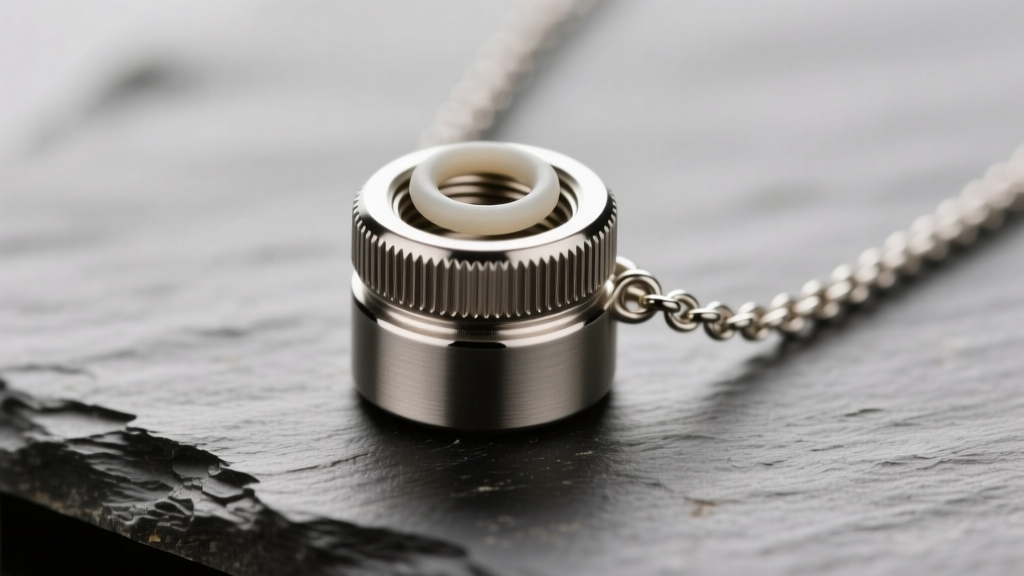
The Hidden Chemistry of Keepsakes: Why Material Matters
When selecting a container necklace—often referred to as a keepsake, urn, or secret locket pendant—the aesthetic design is only half the equation. The metallurgical properties of the vessel dictate whether your memento will remain secure, untarnished, and chemically stable over decades of daily wear. Whether you are storing cremation ashes, a lock of hair, rolled parchment, or liquid perfume, the interior environment of the pendant is a micro-ecosystem that demands precise material selection.
The primary challenge with cremation ashes (cremains) is their chemical profile. According to the Cremation Association of North America (CANA), cremains are highly alkaline, typically registering a pH between 9 and 11. When combined with ambient humidity or direct skin contact, this alkalinity can rapidly corrode reactive metals. Similarly, if your container necklace holds liquid perfume, the high concentration of alcohols and volatile organic compounds (like linalool and limonene) will degrade cheap platings and certain rubber seals. In this guide, we dissect the exact alloy grades, thread durabilities, and chemical reactivities of the four most common metals used in container necklaces.
Material Breakdown: Pros, Cons, and Metallurgical Grades
316L Surgical Stainless Steel: The Utilitarian Standard
For everyday wearers seeking maximum durability on a budget, 316L stainless steel is the undisputed workhorse. The "L" stands for low carbon, and the alloy includes a crucial 2-3% addition of molybdenum. This specific elemental inclusion drastically increases resistance to pitting and crevice corrosion, which is vital for the microscopic gaps found in screw-top threads.
Pros: Highly resistant to alkaline cremains and perfume oils. Extremely hard, meaning the micro-threads (usually M4 or M5 pitch) will not strip easily during repeated opening and closing. It is also entirely waterproof when paired with a proper gasket.
Cons: Heavier than titanium and lacks the prestige or intrinsic resale value of precious metals. Some individuals with severe nickel sensitivities may react to it, though 316L generally traps nickel within the alloy matrix.
Price Range: $30 to $85.
Grade 23 Titanium: The Hypoallergenic Vault
When biocompatibility is the priority, Grade 23 Titanium (Ti-6Al-4V ELI) is the apex material. This is the exact alloy used in surgical implants and pacemakers. According to research published by the National Center for Biotechnology Information (NCBI), titanium forms a passive, self-healing oxide layer upon exposure to oxygen, rendering it virtually inert to human biology and highly alkaline substances.
Pros: Zero reactivity with cremains or perfumes. It is 45% lighter than steel, making larger container pendants comfortable for all-day wear. It will never tarnish or rust.
Cons: Titanium is notoriously difficult to machine. If the manufacturer uses poor tooling, the threads can feel gritty. Furthermore, titanium-to-titanium threading is prone to "galling" (cold welding) if overtightened without a lubricant or sealant.
Price Range: $90 to $250.
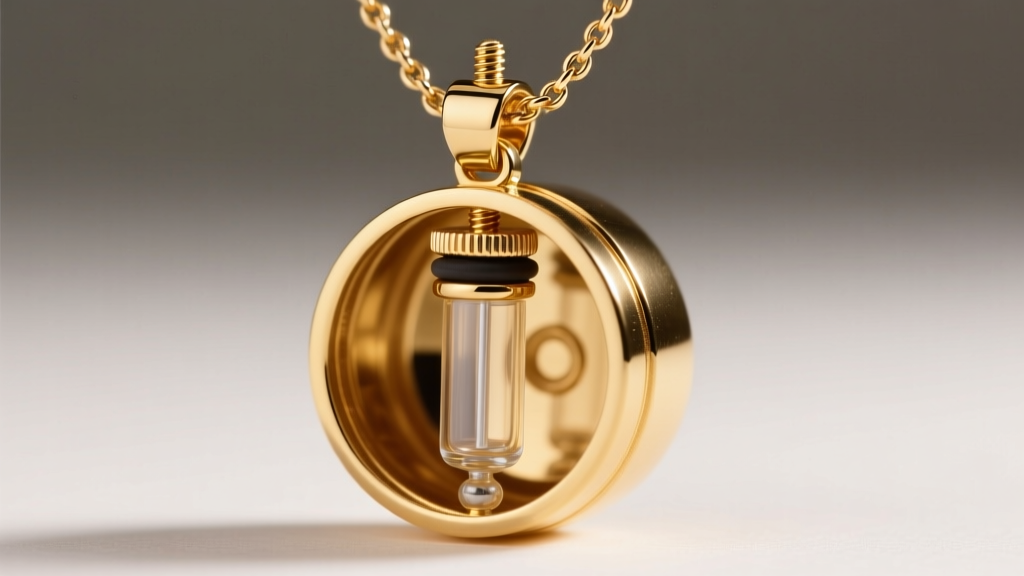
925 Sterling Silver: The Traditionalist's Choice (With Caveats)
Sterling silver (92.5% pure silver, 7.5% copper) offers unmatched vintage appeal and intricate casting capabilities, allowing for highly detailed exterior scrollwork. However, as noted by the Gemological Institute of America (GIA), the copper content makes sterling silver inherently reactive.
Pros: Beautiful luster, traditional aesthetic, and easily polished on the exterior.
Cons: Direct contact with alkaline cremains or sulfur-rich environments will cause the copper to oxidize, turning the interior black and potentially staining the keepsake. Silver is also a very soft metal; the threads can easily cross-thread or strip if the cap is forced.
Pro-Tip: If you choose a silver container necklace for ashes, ensure it features an interior borosilicate glass vial or a thick rhodium plating to act as a chemical barrier.
Price Range: $60 to $180.
14k & 18k Solid Gold: The Heirloom Investment
Gold container necklaces are designed to be passed down through generations. While 18k gold (75% pure) offers a richer color, 14k gold (58.5% pure) is significantly harder due to its higher zinc and copper alloy content. For a functional vessel with screw-on components, 14k gold is structurally superior because it holds machined threads much better than softer, higher-karat golds.
Pros: Incredible prestige, excellent resistance to tarnishing, and high intrinsic value. 14k gold provides the perfect balance of precious metal content and structural rigidity for threading.
Cons: High cost. The soft nature of gold still requires careful handling to avoid stripping the cap threads.
Price Range: $450 to $1,500+.
Comparative Data: Weight, Reactivity, and Price Ranges
Use the following matrix to evaluate which material aligns with your specific keepsake needs and budget constraints.
| Metal | Alloy Grade | Ash Reactivity | Thread Durability | Avg. Price Range |
|---|---|---|---|---|
| Surgical Steel | 316L (Low Carbon) | None (Inert) | High (Hard) | $30 - $85 |
| Titanium | Grade 23 (ELI) | None (Inert) | Medium (Galling Risk) | $90 - $250 |
| Sterling Silver | 925 (7.5% Copper) | High (Oxidizes) | Low (Soft/Strips) | $60 - $180 |
| Yellow Gold | 14k (585) | Low | Medium | $450 - $1,500+ |
Sealing Mechanisms: O-Rings vs. PTFE Tape
The metal is only half the battle; the seal dictates whether liquids leak or moisture ruins organic keepsakes. Most container necklaces utilize one of two sealing methods:
- Nitrile or Silicone O-Rings: A tiny rubber gasket sits inside the cap. While silicone is highly resistant to heat and moisture, nitrile O-rings can swell and degrade when exposed to the essential oils found in perfumes. If you are storing liquids, verify the O-ring material with the manufacturer.
- PTFE (Teflon) Tape: Many high-end and custom-machined pendants forego O-rings entirely, relying instead on the user wrapping the male threads with a single layer of PTFE plumber's tape. PTFE is completely chemically inert, meaning it will not degrade from perfume oils or alkaline ash, and it fills microscopic thread imperfections for a 100% waterproof seal.
Real-World Failure Modes and How to Prevent Them
Through extensive wear-testing and metallurgical analysis, we have identified three primary failure modes in container necklaces:
- Cross-Threading Soft Metals: Applying lateral pressure when screwing the cap onto a sterling silver or 18k gold pendant will instantly destroy the micro-threads. Solution: Always place the cap on the vessel, rotate it counter-clockwise until you feel or hear a subtle "click" (indicating the threads have aligned), and then gently tighten clockwise.
- Galvanic Corrosion: If you pair a sterling silver pendant with a cheap, nickel-plated base-metal chain, sweat acts as an electrolyte, creating a galvanic cell that rapidly corrodes the pendant's bail (the loop the chain passes through). Solution: Always ensure your chain is the same metal grade or higher than the pendant.
- O-Ring Extrusion: Overtightening a cap with a rubber O-ring causes the rubber to squeeze out of its groove and tear. Solution: Tighten only until you feel resistance, plus one-quarter turn. Do not use pliers or tools to tighten a keepsake pendant.
Final Verdict: Matching the Metal to the Memento
Choosing the right container necklace requires matching the metallurgical properties to the specific item you intend to store. For cremation ashes, Grade 23 Titanium or 316L Surgical Steel are the safest, most chemically inert options that guarantee the remains will not trigger an oxidation reaction. For liquid perfumes, 316L steel paired with a PTFE thread seal is the only combination guaranteed to withstand volatile essential oils without degrading. If you are storing dry, inert items like a lock of hair or a rolled note, 14k Gold or 925 Sterling Silver offer the most beautiful, traditional aesthetics without the risk of chemical degradation.
Ultimately, a container necklace is a vault for your most intimate memories. By prioritizing alloy grades, thread mechanics, and chemical inertness over mere surface aesthetics, you ensure that your keepsake remains as enduring as the memory it holds.


