Necklace vs Pendant: Technical Guide to Pairing Chains and Bails
Master the necklace vs pendant distinction. Explore chain tensile strength, bail mechanics, and metal compatibility for flawless jewelry pairing.

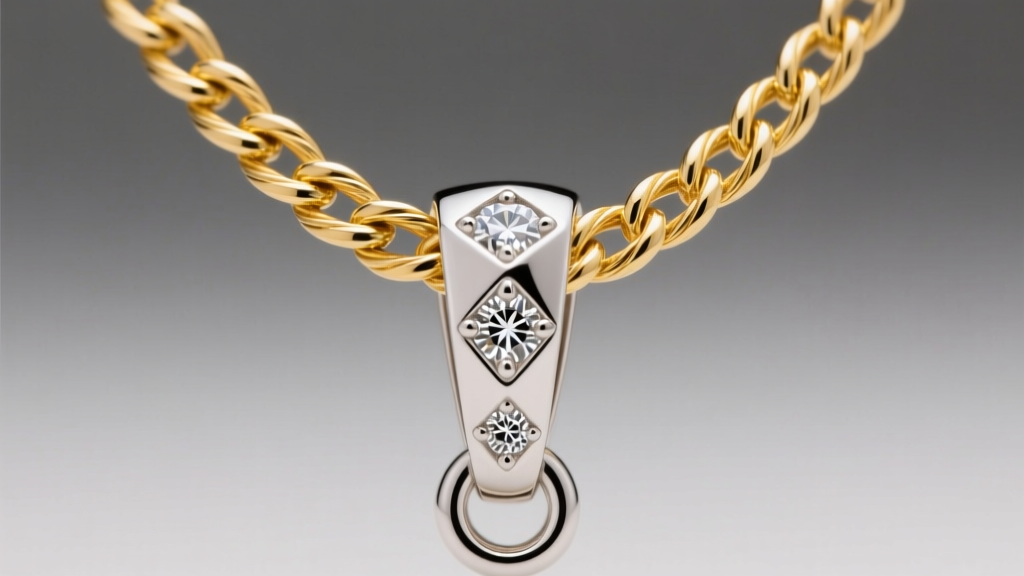
The Core Engineering Distinction: Suspension vs. Mass
When discussing the necklace vs pendant dynamic, most style guides offer a superficial definition: the necklace is the chain, and the pendant is the charm. However, from a jewelry engineering and metallurgical perspective, the distinction is rooted in physics. The necklace functions as a structural suspension system designed to manage tensile stress, dynamic loading, and skin friction. The pendant acts as the focal mass, introducing a localized center of gravity that fundamentally alters the kinetic behavior of the entire assembly.
Understanding this mechanical relationship is critical for jewelers and collectors alike. A mismatch between the structural integrity of the necklace and the physical mass of the pendant leads to catastrophic failure modes, including micro-fractures, bail grooving, and clasp migration. This guide bypasses basic fashion advice to explore the technical specifications required to properly engineer a necklace and pendant pairing.
Chain Tensile Strength and Pendant Weight Ratios
The most common point of failure in jewelry is the chain snapping under the pendant's weight. To prevent this, we must evaluate the chain's tensile strength against the pendant's mass. It is vital to differentiate between static load (the weight of the pendant when the wearer is perfectly still) and dynamic load (the amplified force exerted on the chain during walking, bending, or sudden movements). Dynamic loads can momentarily increase the stress on the chain links by up to 300%.
According to structural testing standards referenced by the Jewelers of America, a pendant's static weight should never exceed 10% to 15% of the chain's absolute breaking strength. Exceeding this threshold causes work hardening—a metallurgical phenomenon where repeated micro-stresses cause the metal's crystalline structure to become brittle, eventually leading to stress fractures at the solder points of the chain links.
Technical Specification Table: Chain Gauge vs. Maximum Pendant Weight
| Chain Type | Wire Gauge (mm) | Static Breaking Strength | Max Recommended Pendant Weight |
|---|---|---|---|
| Curb Chain | 1.2 mm | 18 lbs (81 N) | 2.5 grams |
| Rolo Chain | 1.5 mm | 25 lbs (111 N) | 4.0 grams |
| Cable Chain | 2.0 mm | 40 lbs (177 N) | 8.0 grams |
| Wheat Chain | 2.5 mm | 65 lbs (289 N) | 15.0 grams |
| Box Chain | 3.0 mm | 85 lbs (378 N) | 22.0 grams |
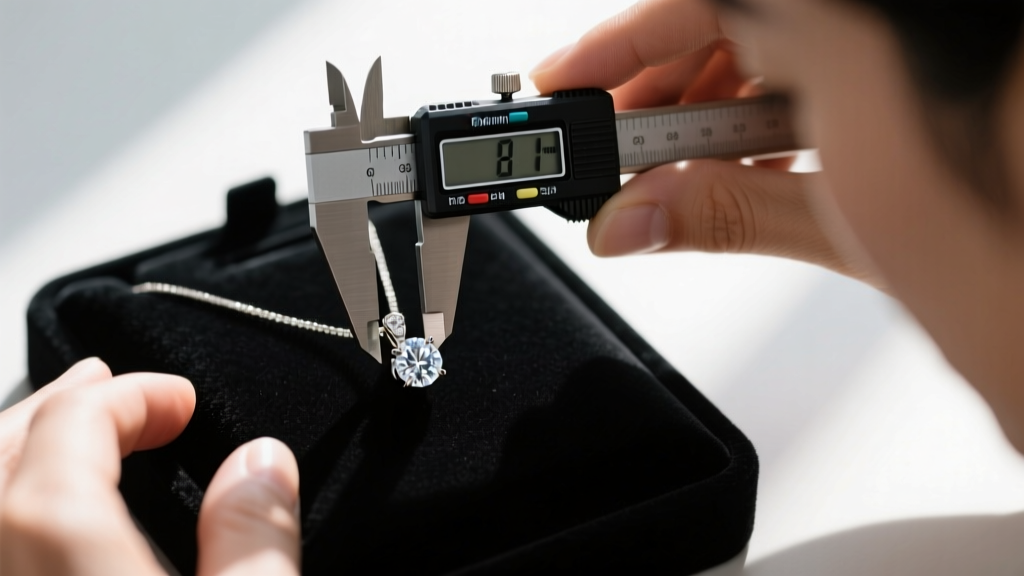
Bail Mechanics: The Hidden Stress Point
The bail is the kinematic joint connecting the pendant to the necklace. It is the single highest-friction component in the assembly. When evaluating the necklace vs pendant connection, the bail's aperture sizing and metallurgical hardness are paramount.
Aperture Sizing and Drape Mathematics
A common error is pairing a thick chain with a bail that barely accommodates it. If a 2.0mm chain is forced through a 2.2mm bail aperture, the chain loses its fluid articulation. The links bind, creating rigid stress points that transfer torque directly to the bail's solder ring. The golden rule of bail sizing is: Inner Diameter (ID) = Chain Width × 1.5. This 50% clearance allows the chain links to articulate smoothly around the curve of the neck without lateral binding.
Vickers Hardness and Bail Grooving
Friction between the chain and the bail leads to material displacement. If the pendant bail is forged from a metal with a higher Vickers Hardness (HV) than the chain, the bail will act as a microscopic file. For example, a hardened steel or tungsten carbide bail (HV 300+) will rapidly saw through a 24k gold (HV 25) or 18k gold (HV 120) chain. Over 12 to 18 months of daily wear, this creates a deep groove in the chain links, eventually causing them to snap. Always ensure the chain's alloy hardness matches or exceeds the bail's hardness, or utilize a sacrificial jump ring made of a softer metal to absorb the friction.
Galvanic Corrosion: Metal Compatibility Rules
When mixing metals between the necklace and the pendant, one must account for galvanic corrosion. This electrochemical process occurs when two dissimilar metals are in physical contact in the presence of an electrolyte (in this case, human sweat, which is rich in sodium chloride). The Gemological Institute of America (GIA) frequently highlights how improper alloy mixing can degrade jewelry over time.
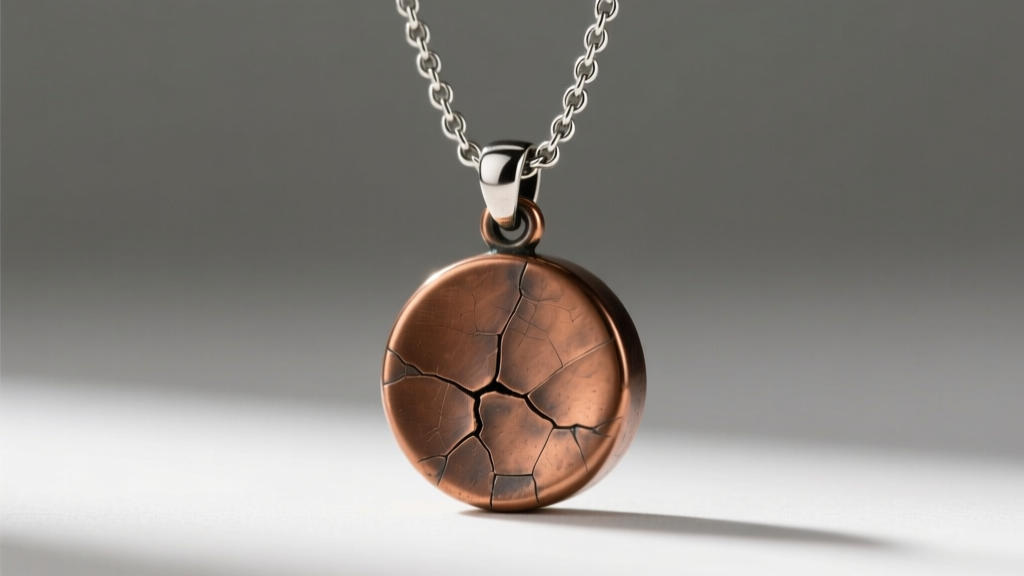
If you pair a sterling silver (925) chain with a brass or copper-heavy bronze pendant, the silver will act as the cathode and the bronze as the anode. The anodic metal (the pendant's bail or jump ring) will rapidly oxidize and degrade, turning the wearer's skin green and weakening the structural connection. To safely mix metals, utilize an inert barrier. For example, plating the connecting jump ring with a thick layer of rhodium or utilizing a ceramic-lined bail prevents the electrolytic bridge from forming, preserving both the necklace and the pendant.
Clasp Engineering and Counterweight Balance
The physics of the necklace arc dictates that the heaviest point will always seek the lowest gravitational position. In a standard 18-inch (45cm) necklace assembly, the center of mass is the pendant. If the pendant weighs 15 grams and the lobster clasp at the nape of the neck weighs only 2 grams, the kinetic movement of walking will inevitably cause the clasp to migrate to the front of the neck, resting awkwardly next to the pendant.
Solving Clasp Migration
To resolve this imbalance without compromising the necklace vs pendant aesthetic, expert jewelers employ counterweight engineering:
- Counterweight Tags: Soldering a 4-gram to 6-gram solid metal tag directly to the ring adjacent to the clasp. This shifts the center of gravity backward, anchoring the clasp at the nape.
- Graduated Link Chains: Utilizing a chain design where the links at the back of the neck are 30% thicker and heavier than the links at the front, naturally balancing the pendant's mass.
- Silicone Stoppers: For bead or cable chains, placing microscopic silicone O-rings near the clasp to increase friction against the skin and hair, preventing forward migration.
Expert Troubleshooting: Common Pairing Failures
Even with careful selection, mechanical issues can arise. Use this diagnostic framework to troubleshoot assembly failures:
- Symptom: Chain kinking directly below the bail.
Diagnosis: The bail aperture is too tight, or the pendant is too heavy, causing the chain to fold upon itself rather than drape. Solution: Upgrade to a wider, articulated sliding bail or reduce pendant mass. - Symptom: Jump ring pulling apart laterally.
Diagnosis: The jump ring was cut with shears rather than sawed, leaving a flush but structurally weak seam that catches on the bail. Solution: Replace with a laser-welded, seamless jump ring. - Symptom: Pendant flipping upside down constantly.
Diagnosis: The pendant's center of gravity is higher than the bail's pivot point. Solution: The piece requires a custom Y-bail or a weighted bezel base to lower the focal mass below the pivot axis.
Mastering the technical nuances of the necklace vs pendant relationship elevates jewelry selection from a mere visual exercise to an appreciation of structural engineering. By respecting tensile limits, bail mechanics, and metallurgical compatibility, you ensure that your jewelry not only looks impeccable but endures a lifetime of wear.


