Why Your 18 Necklace Size Fits Wrong: Troubleshooting Guide
Is your 18 necklace size sitting too high or drooping? Discover expert troubleshooting tips to fix fit issues, adjust lengths, and choose the right chain.

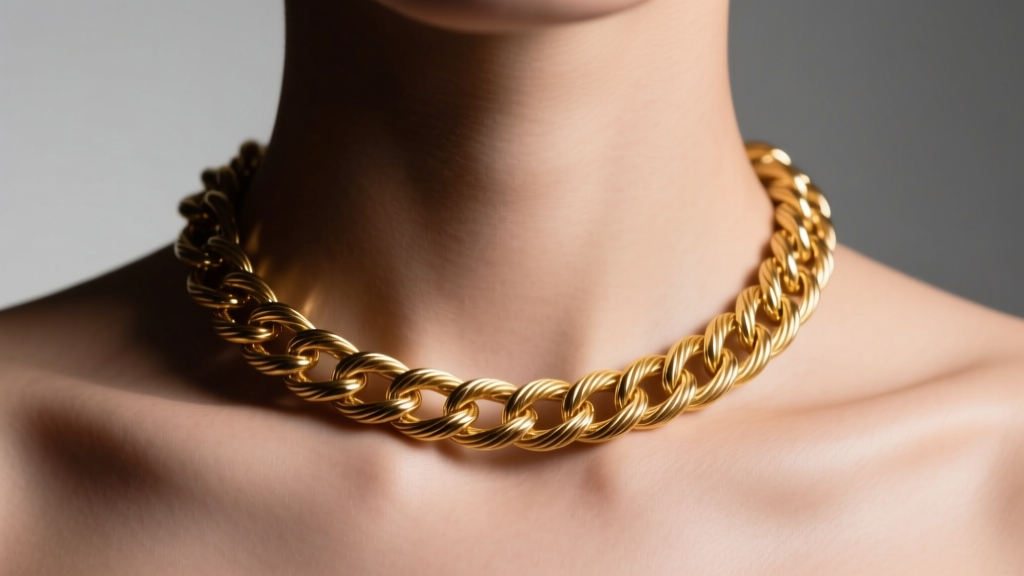
The 18-inch necklace is widely considered the "Goldilocks" of jewelry lengths—neither a choking choker nor a sweeping opera chain. In theory, an 18-inch chain should rest elegantly on the collarbone, making it the most popular standard in the industry. Yet, countless buyers experience immediate frustration when their new piece arrives. You measure it, confirm it is exactly 18 inches, but when you put it on, the fit is entirely wrong. It either feels suffocatingly tight or sags awkwardly below the neckline.
If you are dealing with this exact dilemma, you are not alone. The problem rarely lies in a manufacturing defect; instead, it stems from a misunderstanding of how chain physics, body geometry, and hardware weight interact. In this comprehensive troubleshooting guide, we will diagnose why your 18 necklace size is failing you and provide actionable, jeweler-approved solutions to fix the drape.
The Anatomy of an 18 Necklace Size Fit Issue
To troubleshoot the fit, we must first separate chain length from neck circumference. According to standard anthropometric data, the average adult female neck circumference ranges between 13 and 15 inches. An 18-inch chain leaves 3 to 5 inches of "drape" (the extra length that allows the chain to hang below the base of the neck).
However, this mathematical assumption falls apart when we factor in the hardware. A standard lobster clasp and jump rings can consume up to 0.75 inches of the total length. Furthermore, if your neck circumference is on the higher end of the spectrum (15 inches or more), an 18-inch chain leaves barely 2 inches of drape. This transforms what was intended to be a collarbone-grazing pendant necklace into a restrictive choker. Understanding your exact neck measurement is the critical first step in diagnosing fit issues.
Troubleshooting Common 18-Inch Chain Problems
Let us break down the three most frequent complaints jewelers hear regarding this specific length and how to solve them.
Problem 1: The Choker Effect (Sitting Too High)
If your necklace feels tight and sits near the hollow of your throat rather than the collarbone, the issue is usually a combination of neck circumference and pendant weight. Counterintuitively, a heavy pendant can sometimes cause the chain to ride up if the chain itself is too rigid. A thick 3mm box chain does not articulate well; it forms a wide circle that pushes outward and upward against the neck. The Fix: Swap the rigid chain for a highly articulated style, like a 1.5mm rope chain or a 1.2mm cable chain, which drapes fluidly and drops down to the collarbone.
Problem 2: The Unintended Plunge (Sitting Too Low)
Conversely, if your 18 necklace size is dipping into your cleavage, you are likely dealing with chain stretch or an overweight pendant. Snake chains and fine box chains are notorious for stretching. If a 1mm box chain is snagged on clothing, the interlocking links can warp, permanently adding 0.5 to 1.5 inches to the total length. Additionally, a heavy gemstone pendant (over 10 grams) on a fine 0.9mm chain will pull the metal downward, creating a severe V-shape that elongates the visual drop. The Fix: Upgrade to a thicker gauge chain (at least 18-gauge or 1.0mm width) to support the pendant's weight without distorting the drape.
Problem 3: The Spinning Clasp
There is nothing more annoying than constantly reaching down to pull your lobster clasp back to the nape of your neck. This happens when the front of the necklace (usually the pendant or the chain links themselves) is lighter than the clasp assembly. If your chain is a lightweight 14k gold fill cable (weighing under 2 grams) but features a solid brass or heavy stainless steel clasp, gravity will always pull the heaviest element to the lowest point—which eventually becomes the front of your neck. The Fix: Replace the heavy clasp with a lightweight 10mm sterling silver spring ring clasp, or add a small, decorative counterweight charm directly next to the clasp at the back of the neck.
Material and Hardware Factors Altering Perceived Length
Not all 18-inch chains are created equal. The link structure drastically changes how the metal behaves on the body. The Gemological Institute of America (GIA) notes that the structural integrity and articulation of precious metal links dictate both durability and drape. Below is a troubleshooting matrix to help you identify if your chain style is sabotaging your fit.
| Chain Style | Standard Width | Drape Factor | Stretch / Distortion Risk |
|---|---|---|---|
| Cable | 1.0mm - 1.5mm | Highly Fluid | Low (Links may pull open if snagged) |
| Box | 0.9mm - 1.2mm | Stiff / Structured | High (Interlocking squares warp easily) |
| Snake | 1.5mm - 2.0mm | Very Stiff / Tubular | Moderate (Prone to permanent kinking) |
| Rope | 2.0mm - 3.0mm | Heavy / Fluid | Very Low (Tightly twisted links) |
| Cuban Link | 3.0mm - 5.0mm | Stiff / Wide Circle | Low (But pushes outward on the neck) |
"When a client complains about an 18-inch chain fitting poorly, I immediately check the clasp weight and the chain's articulation. A stiff chain on a wider neck will always act like a choker, regardless of the tape measure." — Master Bench Jeweler
Actionable Fixes to Salvage Your Jewelry
If you have diagnosed the problem and realized your 18 necklace size simply does not accommodate your anatomy or your preferred pendants, you do not need to abandon the piece. Professional jewelry repair offers several low-cost, high-impact solutions.
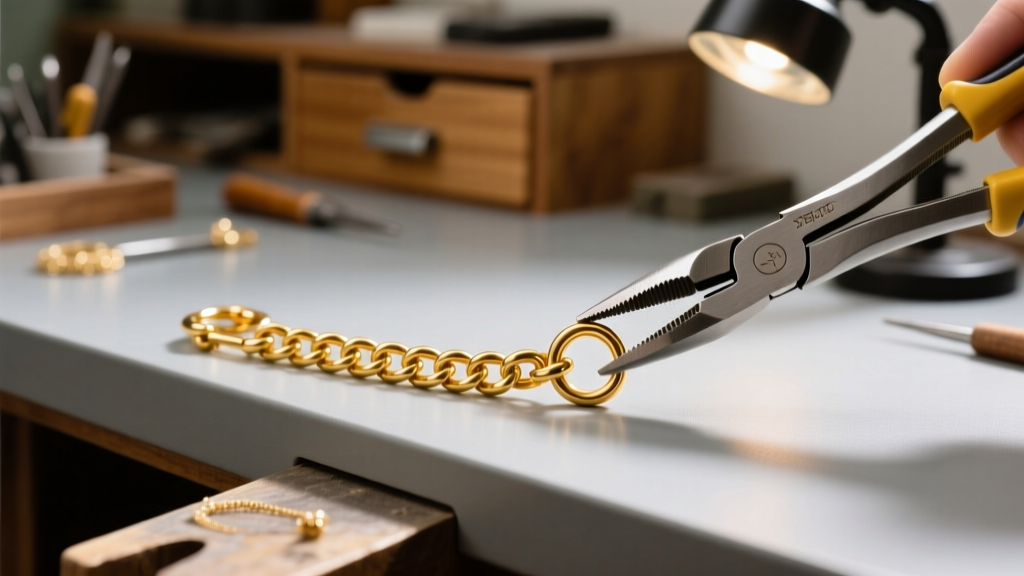
- Add a Chain Extender: The most common fix for a chain that sits too high is soldering or clipping on a 2-inch to 3-inch extender chain. According to repair guidelines from Jewelers Mutual, using a matching metal color and karat weight is vital to prevent galvanic corrosion. A 2-inch 14k gold-filled extender with 5mm jump rings will give you the flexibility to wear the piece at 18, 19, or 20 inches depending on your neckline.
- Re-ring the Jump Rings: If your clasp is spinning to the front, a jeweler can replace the standard 4mm jump rings with slightly larger, heavier 6mm soldered jump rings. This adds just enough micro-weight to the back of the neck to anchor the clasp in place without altering the visual aesthetic.
- Pendant Bails and Sliders: If a heavy pendant is pulling your 18-inch chain into a deep V-shape, switch from a standard fixed bail to a sliding tube bail. This distributes the weight across a wider surface area of the chain, preventing the sharp downward pull and keeping the necklace resting horizontally on the collarbone.
When to Abandon the 18 Necklace Size Entirely
Sometimes, troubleshooting is not enough, and the physical geometry of the wearer simply demands a different baseline length. You should permanently size up to a 20-inch or 22-inch chain if:
- Your neck circumference exceeds 15.5 inches. An 18-inch chain will leave less than 2 inches of drape, making it impossible to wear with collared shirts or high-neck blouses without feeling restricted.
- You have a prominent bust line. An 18-inch chain will hit at the upper chest, but the curvature of the bust will push the chain outward, effectively shortening the visual drop and causing the pendant to flip upside down. A 20-inch or 22-inch chain bypasses this curvature entirely.
- You prefer layering. If you intend to wear this piece with others, an 18-inch chain is often too close to a standard 16-inch choker, causing the metals to tangle and scratch each other. Sizing up to 20 inches creates the necessary 2-inch visual gap required for safe, aesthetic layering.
Ultimately, the "standard" 18 necklace size is merely a starting point. By understanding the interplay between chain articulation, hardware weight, and your unique anatomy, you can stop blaming the tape measure and start engineering the perfect drape for your personal style.


