Mastering Necklace Measurements: Troubleshooting Fit and Length
Struggling with choker choke or tangled layers? Learn how to master necklace measurements, troubleshoot common fit issues, and find your perfect length.

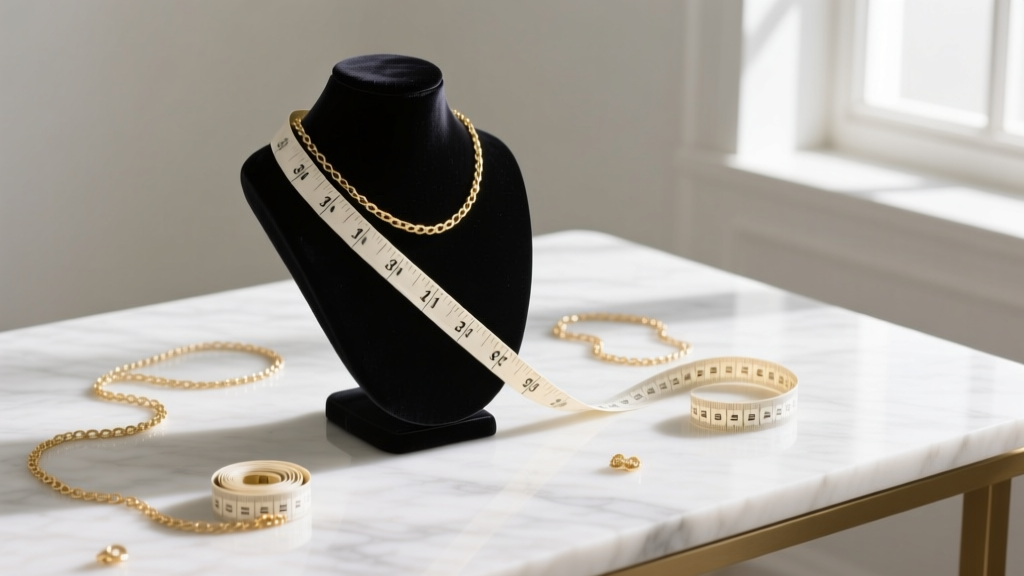
Buying jewelry online often feels like a gamble, especially when it comes to necklaces. A chain that looks elegantly draped on a model might end up choking you or disappearing entirely beneath your collar. The root of this frustration almost always comes down to misunderstood necklace measurements. Standard industry lengths are merely baselines, not universal guarantees. To achieve a flawless fit, you must account for your unique anatomy, the structural behavior of different chain links, and the hidden weight of pendants.
This troubleshooting guide will help you diagnose why your current necklaces fail, map your exact proportions, and engineer the perfect layering stack without the dreaded tangling.
The Anatomy of a Measurement Mishap
Why does a '16-inch choker' from one brand fit like a comfortable collar, while the exact same listed measurement from another feels like a tourniquet? The answer lies in how manufacturers calculate total length and the concept of jewelry vanity sizing.
- The Clasp Discrepancy: High-end jewelers typically measure the chain from the inside edge of the clasp to the inside edge of the jump ring, meaning the clasp itself adds up to 0.5 inches of unlisted length. Fast-fashion brands often measure the entire piece end-to-end, resulting in a shorter wearable circumference.
- Link Compression: Interlocking links like rope or box chains compress when laid flat versus when pulled taut around the curve of a neck. A 18-inch rope chain might only yield 17.25 inches of actual wearable circumference when wrapped.
- Pendant Drag: A heavy gemstone or metal pendant pulls the chain downward, effectively shortening the lateral spread across your collarbones by up to an inch.
How to Accurately Map Your Neck and Chest
Discard the flexible plastic sewing tape you keep in your craft drawer; they stretch and warp over time, leading to inaccurate necklace measurements. Instead, use the 'String and Steel' method for precision mapping.

- The Baseline Neck: Wrap a non-stretch piece of cotton string or dental floss around the base of your neck where a standard collar sits. Mark the overlap with a pen, then measure the string against a rigid metal carpenter's tape. Add 2 inches to this number for the minimum comfortable choker length.
- The Collarbone Apex: Drape the string so it rests in the hollow of your collarbones. Note where the center dip hits. This is your ideal 18-inch equivalent.
- The Sternum Drop: Let the string fall to your sternum (breastbone). This measurement dictates where a 22-to-24-inch matinee or opera-length chain will rest, which is critical for avoiding awkward placements over bust lines or deep V-necks.
Troubleshooting Common Length Disasters
If you already own necklaces that don't sit right, identifying the specific failure mode is the first step toward fixing it.
The 'Choker Choke' (14 to 16 Inches)
The Problem: The chain sits too high, cutting into the trachea or causing skin irritation at the nape of the neck.
The Fix: If your neck circumference is over 14 inches, a standard 14-inch choker will fail. You need a minimum of 2.5 inches of 'ease' (extra space) for comfort and breathing. Swap the standard 5mm spring ring clasp for a 7mm lobster clasp, which naturally adds 0.25 inches of length and sits flatter against the skin.
The Collarbone Clash (17 to 19 Inches)
The Problem: The pendant constantly flips upside down, or the chain rides up the back of your neck.
The Fix: This is usually a weight distribution issue. If the chain is too light (under 3 grams) and the pendant is heavy (over 8 grams), the center of gravity is compromised. According to structural guidelines from jewelry suppliers like Rio Grande, the chain's wire gauge must be proportionate to the pendant. Upgrade to a 1.5mm box chain or add a counterweight bail to balance the drop.
The Pendant Plunge (20 to 24 Inches)
The Problem: The necklace gets lost in chest tissue or swings wildly when you lean forward.
The Fix: For deeper necklines, a 20-inch chain often lands in a visual 'dead zone.' Size up to 24 inches to ensure the pendant rests firmly on the sternum. To prevent swinging, opt for a lariat style or a chain with a silicone-backed slide pendant that can be locked at a custom measurement.
The Layering Spacing Matrix
Layering is where necklace measurements become a complex geometry problem. If chains are spaced too closely, they will tangle and suffer from metal-on-metal friction damage. Use this matrix to engineer a tangle-free stack.
| Chain Position | Base Length | Max Pendant Drop | Minimum Gap to Next Chain |
|---|---|---|---|
| Chain 1 (Top) | 15 - 16 inches | 0.5 inches (or none) | 2.0 inches |
| Chain 2 (Middle) | 18 - 19 inches | 1.0 inch | 3.5 inches |
| Chain 3 (Bottom) | 22 - 24 inches | 1.5+ inches | N/A |
Pro Tip: Never layer two chains of the exact same link style (e.g., two cable chains). The identical links will act like gears, interlocking and tangling instantly. Mix a herringbone with a cable, or a box chain with a rope.
Fixing a Chain You Already Own
You don't need to abandon a beautifully crafted piece just because the measurements are slightly off. Hardware swaps and extenders can salvage a poorly fitted necklace for under $20.
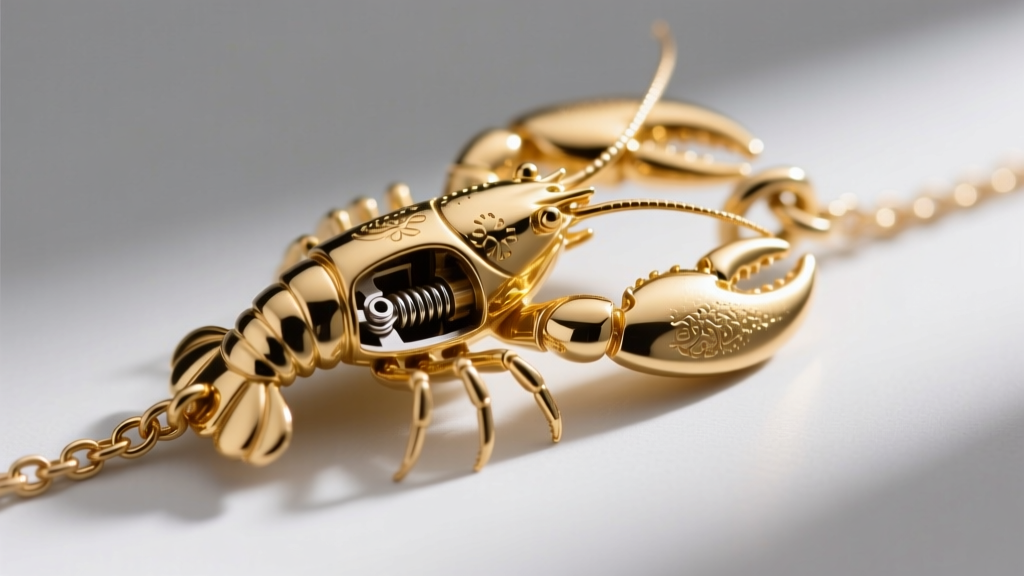
- Chain Extenders: A 2-inch sterling silver or 14k gold-filled extender chain (typically priced between $8 and $15) is the ultimate troubleshooting tool. Ensure the extender's end link is large enough to accept your existing clasp.
- Clasp Swaps: Spring ring clasps are notorious for failing on chains supporting pendants over 10 grams. Swap them for a lobster clasp. For delicate chains (0.8mm to 1.0mm), use a 5mm lobster clasp. For medium chains (1.2mm to 1.8mm), use an 8mm or 10mm lobster clasp for structural integrity.
- Jump Ring Gauges: When adding extenders, the gauge of the jump ring matters. Use 20-gauge (0.8mm) wire jump rings for fine chains, and 18-gauge (1.0mm) for standard chains. Always use 'split rings' or soldered jump rings for heavy pendants to prevent the ring from pulling open under stress.
Material Stretch and Weight Factors
Metals behave differently under the constant tension of gravity and body movement. Understanding material hardness is crucial for long-term necklace measurements. The Gemological Institute of America (GIA) notes that alloy compositions drastically affect a metal's durability and resistance to deformation.
18k vs. 14k Gold: 18k gold is softer due to its higher pure gold content (75%). A delicate 18k cable chain holding a heavy pendant will visibly stretch and ovalize over a year of daily wear, effectively adding 0.5 to 1 inch to its original length. 14k gold (58.5% pure) is alloyed with stronger metals like copper and zinc, making it highly resistant to stretching. If you are buying a chain for a heavy pendant, 14k gold or platinum are structurally superior choices.
Sterling Silver Creep: Sterling silver (925) is prone to 'creep'—a slow deformation under constant stress. Box chains and wheat chains are highly resistant to stretching because their interlocking geometric structures distribute weight laterally. Conversely, simple link chains and snake chains are highly susceptible to permanent elongation and kinking if subjected to heavy pendant weights.
By treating necklace measurements not as static numbers, but as dynamic variables influenced by anatomy, hardware, and metallurgy, you can eliminate fit issues and build a jewelry collection that sits perfectly every single time.


