Necklaces with Strapless Dresses: A Troubleshooting Guide
Struggling with slipping chains or skin irritation? Master the art of pairing necklaces with strapless dresses using our expert troubleshooting guide.

The Physics of Bare-Shoulder Styling: Why Necklaces Fail
Pairing necklaces with strapless dresses is notoriously difficult. Without the friction of fabric on the shoulders and chest, jewelry is subjected to the natural slope of the collarbone, the movement of the ribcage during breathing, and the high sebaceous output of the décolletage. The result? Chains that slide into the cleavage, clasps that migrate to the front, and sudden outbreaks of contact dermatitis. As a jewelry stylist, I see these issues ruin formal looks constantly. This guide moves beyond basic aesthetic advice to troubleshoot the mechanical and dermatological failures that occur when metal meets bare skin.
Troubleshooting Slipping Chains and Wandering Clasps
The most common complaint when wearing necklaces with strapless dresses is the "wandering clasp" phenomenon. Because a standard lobster clasp and its accompanying jump ring are heavier than the chain links at the front of the neck, gravity and the sloped topography of the trapezius muscles pull the clasp forward.
The Chain Weave Factor
Not all chains interact with bare skin equally. Smooth, flat weaves like herringbone or snake chains act like suction cups against the skin, trapping sweat and eventually kinking when they fold against the collarbone. Instead, opt for structural weaves:
- Wheat (Spiga) Chains: The woven, semi-rigid structure provides natural friction against the skin, preventing sliding.
- Box Chains: The geometric edges grip the collarbone gently without catching on fine body hair or skin texture.
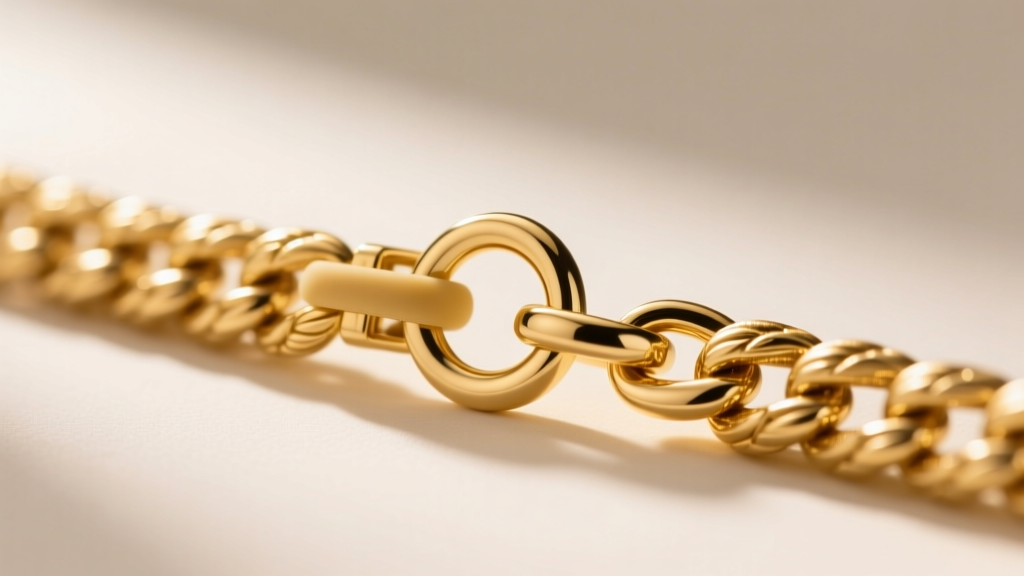
- Rope Chains: The twisted links create a high-surface-area texture that resists migrating down the chest slope.
Clasp Upgrades and Friction Hacks
If your favorite necklace keeps slipping to the front, do not rely on constant readjustment. Implement one of these mechanical fixes:
- The Silicone O-Ring Hack: Purchase 1.5mm inner-diameter silicone O-rings (commonly used for jewelry making or plumbing). Thread the jump ring of your clasp through the O-ring before closing it. The silicone creates invisible, high-friction grip against the nape of your neck, anchoring the clasp in place.
- Neodymium Magnetic Tube Clasps: Swap your lobster clasp for a perfectly balanced magnetic tube clasp. Because the weight is distributed evenly across the cylinder, it eliminates the asymmetric pull that drags standard clasps forward.
Solving the "Lost in the Cleavage" Length Problem
Strapless dresses come in various architectural cuts, and a standard 18-inch princess length will often disappear awkwardly into the bodice of a sweetheart neckline. To properly style necklaces with strapless dresses, you must map the chain length to the specific geometry of the dress's top edge.
| Dress Neckline | Ideal Necklace Length | Best Style / Weave | What to Avoid |
|---|---|---|---|
| Sweetheart (Plunging V) | 14" to 15" (Choker/Collar) | Multi-strand pearl collar, rigid torque | Y-necklaces, pendants dropping below 16" |
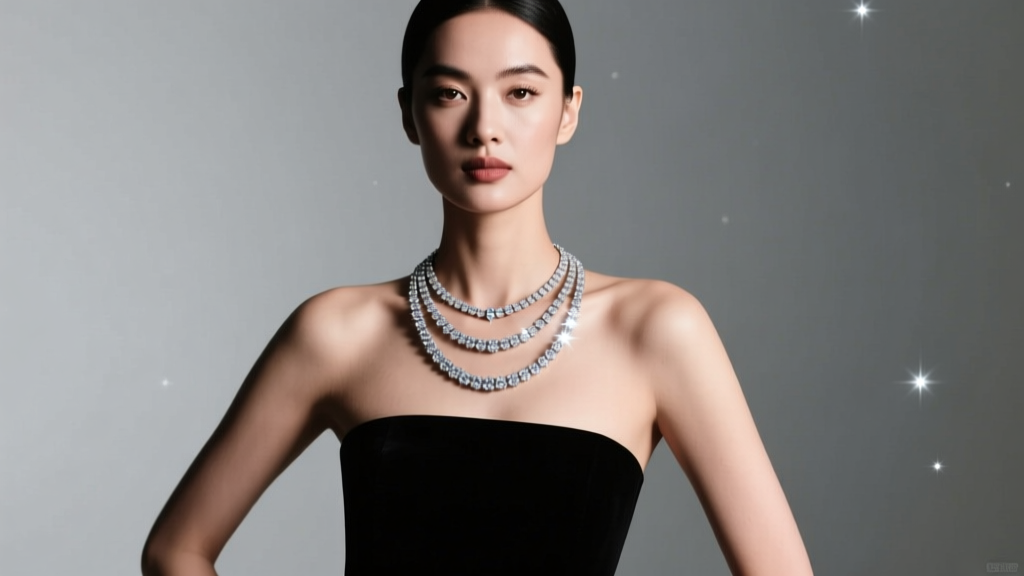
| Straight-Across (Bandeau) | 16" to 18" (Collarbone/Princess) | Diamond tennis necklace, layered cables | Heavy single pendants that bounce on the bodice |
| Asymmetrical / One-Shoulder | 20" to 24" (Matinee/Opera) | Lariat, long station chains | Chokers that compete with the shoulder strap |
| Corseted / High-Boned | 14" (Tight Choker) | Velvet ribbon with cameo, metal cuff | Any chain that rests directly on the rigid boning |
Stylist Rule of Thumb: The pendant or lowest point of your necklace should never intersect with the hemline of the dress's bodice. Always maintain at least a 1.5-inch gap of bare skin between the metal and the fabric edge to preserve the clean lines of the strapless silhouette.
Preventing Chest Sweat and Metal Irritation
The décolletage has a high density of sebaceous and eccrine sweat glands. When you combine body heat, event-related anxiety sweat, and the occlusive nature of metal resting directly on the skin, you create a prime environment for contact dermatitis. According to the GIA Gem Encyclopedia, nickel is the most common culprit in jewelry allergies, and it is frequently alloyed into 14k and 18k white gold to achieve its silver color.
Material Grades for Bare-Skin Wear
If you are wearing necklaces with strapless dresses for extended periods (like a wedding or gala), material selection is non-negotiable. Avoid fashion jewelry with brass or copper bases, as the acidic nature of chest sweat will rapidly oxidize these metals, leaving a green or black stain on your chest.
- ASTM F136 Implant-Grade Titanium: The ultimate troubleshooting material for sensitive skin. It contains zero nickel and is impervious to sweat corrosion.
- Platinum (950 Pt): Naturally hypoallergenic and dense, it won't react with skin oils. However, its heavy weight requires a sturdy chain weave to prevent stretching.
- 18k or 24k Yellow Gold: Higher karat gold contains fewer alloyed irritants. Avoid white gold unless you are certain the rhodium plating is freshly applied and intact, as worn plating exposes the nickel alloy beneath. For more on metal care, refer to the Jewelers of America care guidelines.
Balancing Visual Weight Against Bodice Boning
Many modern strapless dresses, particularly formal gowns and bridal wear, feature internal corset boning to maintain their structure. This creates a rigid, unyielding surface against the chest. If you wear a heavy pendant necklace, the pendant will physically bounce and clack against the hard boning every time you move, walk, or dance. This not only looks clumsy but can damage the delicate outer fabric of the dress (especially silk or tulle) through repeated friction.
The Solution: Distribute the visual and physical weight. Instead of a single heavy pendant on a 16-inch chain, opt for a bib necklace, a multi-strand lariat, or a graduated diamond tennis necklace. These styles lay flush against the collarbone and upper chest, dispersing the weight evenly and eliminating the "pendulum effect" that plagues single-drop pendants on structured strapless gowns.
Your Event-Day Emergency Troubleshooting Kit
Even with perfect planning, environmental factors can disrupt your jewelry. Keep this micro-kit in your clutch when wearing necklaces with strapless dresses:
- Double-Sided Fashion Tape: If a lightweight chain refuses to stay centered, a tiny piece of fashion tape on the back of the pendant or the clasp jump ring will temporarily anchor it to the skin without leaving residue.
- Microfiber Polishing Cloth: Chest oils and liquid foundations can quickly dull the brilliance of diamonds and gemstones. A quick wipe restores light performance.
- Clear Nail Polish (For Emergencies Only): If you discover your white gold necklace is causing a red rash on your chest mid-event, a quick dab of clear nail polish on the back of the pendant or clasp creates a temporary, non-porous barrier between the nickel alloy and your skin until you can take it off.
Mastering the mechanics of jewelry placement ensures that your neckline remains the focal point of your outfit, free from distractions, discomfort, and styling errors.