The Beginner's Guide to Buying a Tsavorite Necklace
Discover everything you need to know before buying a tsavorite necklace. Learn about color grading, pricing, and how it compares to emeralds.

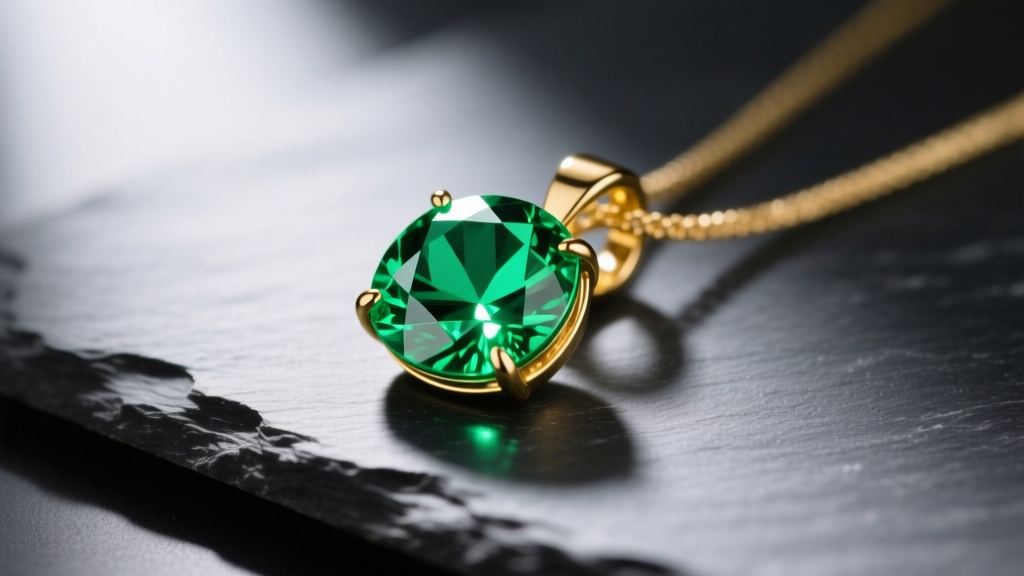
The Unsung Hero of Green Gemstones
When building a fine jewelry collection, most buyers immediately think of emeralds when they desire a lush green pendant. However, seasoned gemologists and jewelry insiders often point to a far more brilliant, durable, and entirely natural alternative: the tsavorite garnet. A tsavorite necklace offers a mesmerizing, vivid green hue that rivals the finest emeralds, yet it comes without the baggage of heavy oil treatments or extreme fragility. For beginners stepping into the world of colored gemstones, understanding this rare jewel is the key to making a smart, lasting investment.
Discovered in the late 1960s by legendary geologist Campbell Bridges, tsavorite is a variety of grossular garnet colored by trace amounts of vanadium and chromium. Because it is mined almost exclusively in a small, geologically complex region spanning the border of Kenya and Tanzania, it remains incredibly rare. In fact, gemological experts estimate that tsavorite is roughly 200 times rarer than emerald. This beginner-friendly guide will walk you through the essential metrics of evaluating, pricing, and styling your first tsavorite pendant.
Tsavorite vs. Emerald: The Green Gem Showdown
To truly appreciate a tsavorite necklace, you must understand how it stacks up against the market standard for green gems. While emeralds have centuries of royal pedigree, tsavorite offers superior optical properties and structural integrity for everyday wear.
| Feature | Tsavorite Garnet | Emerald |
|---|---|---|
| Refractive Index (Brilliance) | 1.74 (Highly brilliant) | 1.57 - 1.58 (Moderate) |
| Mohs Hardness | 7.0 - 7.5 | 7.5 - 8.0 (But highly brittle) |
| Treatments | None (100% natural) | Almost always oiled/resin-filled |
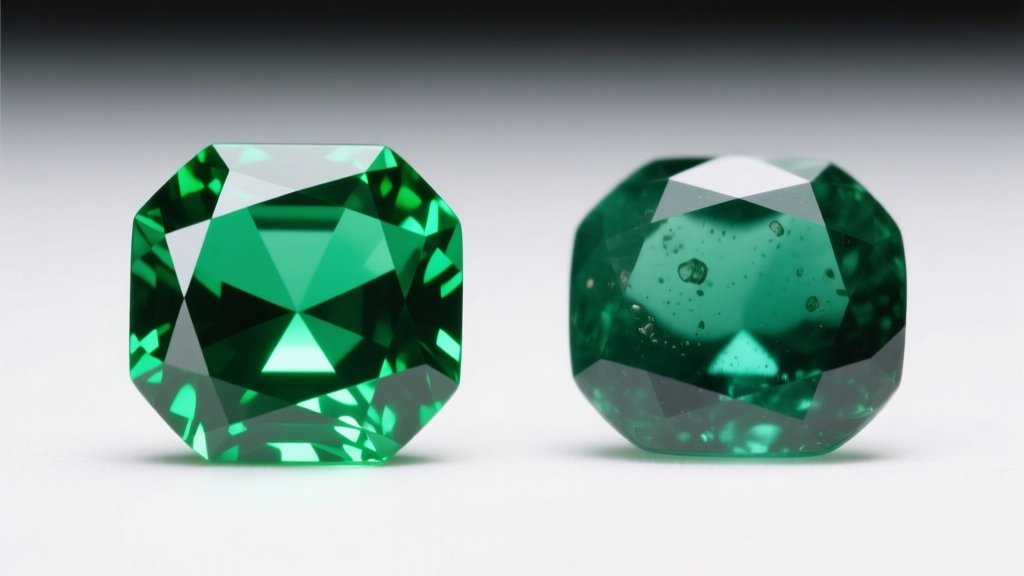
| Clarity | Typically eye-clean | Heavily included (Jardin) |
| Durability Risk | Low (Tough crystal structure) | High (Prone to chipping/cracking) |
According to the Gemological Institute of America (GIA), tsavorite's higher refractive index means it returns more light to the eye, giving it a fiery sparkle that emeralds simply cannot match. Furthermore, because tsavorite is never treated with heat, oils, or resins, the color you see in the showcase is the exact color created by the earth millions of years ago.
How to Evaluate Tsavorite Quality: A Buyer's Framework
Shopping for a tsavorite necklace requires a different lens than shopping for diamonds. While the 4 Cs apply, their hierarchy of importance shifts dramatically when dealing with colored gemstones.
1. Color: The Ultimate Value Driver
Color is the single most critical factor in determining the value of a tsavorite pendant. The ideal hue is a pure, vivid, medium-dark green. Stones that lean too far toward yellow will look like peridot or green gold garnets, while stones that are too dark will appear blackish and lose their brilliance. The most prized saturation is often described as 'electric green' or 'mint green' in lighter tones. When viewing a tsavorite, always examine it under both natural daylight and warm indoor lighting to ensure the green remains vibrant and doesn't 'extinct' (go dark) in the center.
2. Clarity: Expecting Perfection
Unlike emeralds, where visible inclusions are accepted as part of the stone's character, tsavorite is a Type II gemstone. This means that high-quality specimens are expected to be 'eye-clean' (no inclusions visible to the naked eye). While microscopic needle-like inclusions or tiny crystals are common under 10x magnification, a premium tsavorite necklace should feature a stone that appears flawless from a normal viewing distance of 6 to 12 inches.
3. Cut: Avoiding the 'Window'
Because large tsavorite rough is exceedingly rare, cutters are often tempted to cut stones too shallow to preserve carat weight. This results in a 'window'—a dead, see-through area in the center of the gem where light leaks out the bottom rather than reflecting back. A masterfully cut tsavorite will have precise facet alignment, ensuring maximum scintillation even in smaller carat weights.
4. Carat Weight and the Rarity Cliff
Tsavorite pricing does not scale linearly; it scales exponentially. The vast majority of tsavorite rough yields stones under one carat. Finding a clean, vividly colored tsavorite over two carats is a geological miracle, and over three carats is virtually museum-grade.
2026 Market Pricing: What Should You Pay?
Understanding current market valuations protects you from overpaying at retail or falling for synthetic imitations. Below is a general pricing framework for fine-quality, natural tsavorite gemstones (excluding the cost of the gold chain and setting):
- 0.50 - 0.99 Carats: $400 to $900 per carat. Excellent for delicate, everyday solitaire pendants.
- 1.00 - 1.99 Carats: $1,200 to $3,000 per carat. The sweet spot for a statement tsavorite necklace with rich color saturation.
- 2.00 - 2.99 Carats: $4,000 to $7,000+ per carat. Highly sought after by collectors; prices jump drastically due to extreme rarity.
- 3.00+ Carats: $8,000 to $12,000+ per carat. Investment-grade specimens rarely seen outside of high-jewelry auction houses.
Note: Always request a report from a reputable laboratory like GIA, AGL, or GRS when purchasing tsavorites over 1.5 carats to verify natural origin and confirm the absence of synthetic glass fillers.
Choosing the Right Metal and Setting
The metal you choose for your tsavorite necklace will fundamentally alter the visual impact of the gemstone.
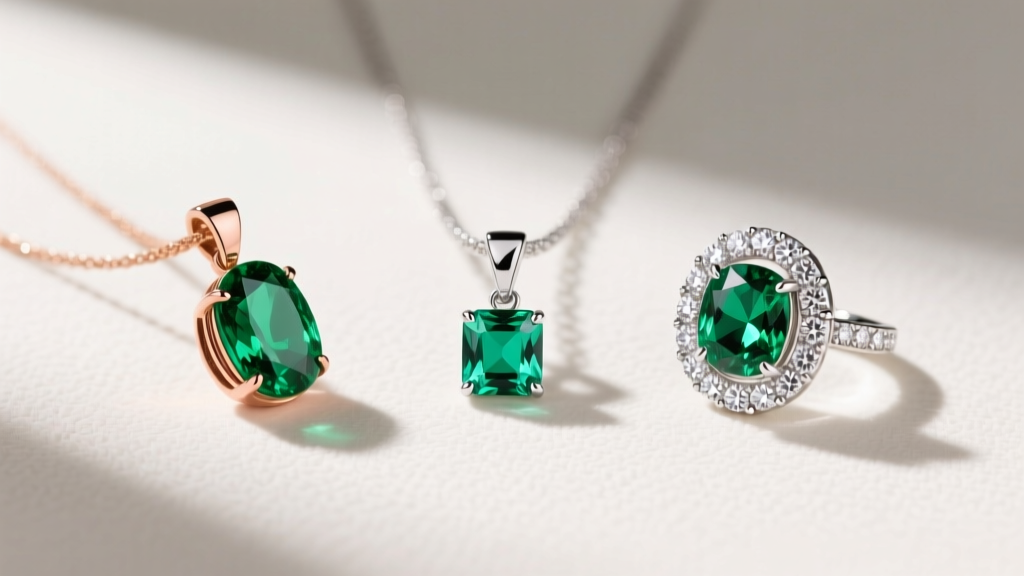
- 18k Yellow Gold: The traditional choice. The warm undertones of yellow gold harmonize with the yellow-green secondary hues in tsavorite, creating a rich, vintage-inspired, and organic look.
- Platinum or 18k White Gold: The high-contrast option. The cool, silvery tones of white metals force the green of the tsavorite to 'pop' aggressively, making the stone look cooler, more electric, and highly modern.
- Rose Gold: A contemporary, fashion-forward choice. The pinkish-copper tones of rose gold sit opposite green on the color wheel, creating a striking complementary contrast that is highly unique.
Setting Advice: While tsavorite is tougher than emerald, its 7.5 Mohs hardness means it can still chip if struck hard against a surface. For active wearers, a bezel setting (where a rim of metal completely encircles the gem's girdle) offers the best protection. For maximum light return, a classic four-prong setting is ideal, provided the prongs are well-maintained.
Care and Maintenance for Your Tsavorite Pendant
One of the greatest joys of owning a tsavorite necklace is the ease of maintenance. Because the stone is never fractured or filled with oil, it is far less temperamental than an emerald.
- Daily Cleaning: Use a soft-bristled toothbrush, warm water, and a mild, non-detergent soap. Gently scrub the back of the stone (the pavilion) where skin oils and lotions accumulate and dull the sparkle.
- Ultrasonic Cleaners: Generally safe for tsavorite, unless the stone has significant internal liquid inclusions or surface-reaching fractures. When in doubt, stick to manual cleaning.
- Steam Cleaners: Avoid. Sudden thermal shock can cause stress fractures in any garnet species.
- Storage: Store your necklace in a soft fabric-lined box separate from diamonds or sapphires, which possess higher Mohs hardness and can scratch the tsavorite's surface.
Final Thoughts on Your First Purchase
Investing in a tsavorite necklace is a choice that signals true gemological connoisseurship. You are choosing a stone that is entirely natural, optically superior to its famous green rival, and geologically scarce. By prioritizing a vivid, saturated color, demanding an eye-clean clarity, and selecting a protective setting, you will secure a breathtaking heirloom piece that will retain its fire and beauty for generations. For further reading on garnet varieties and their geological formations, consult the comprehensive GIA Garnet Encyclopedia to deepen your understanding of this magnificent mineral family.


