Gold Necklace Turkish Clasp & Chain Repair: Troubleshooting Guide
Learn how to troubleshoot common issues with Turkish gold necklaces, from fixing bent S-hook clasps to untangling delicate Trabzon chains.

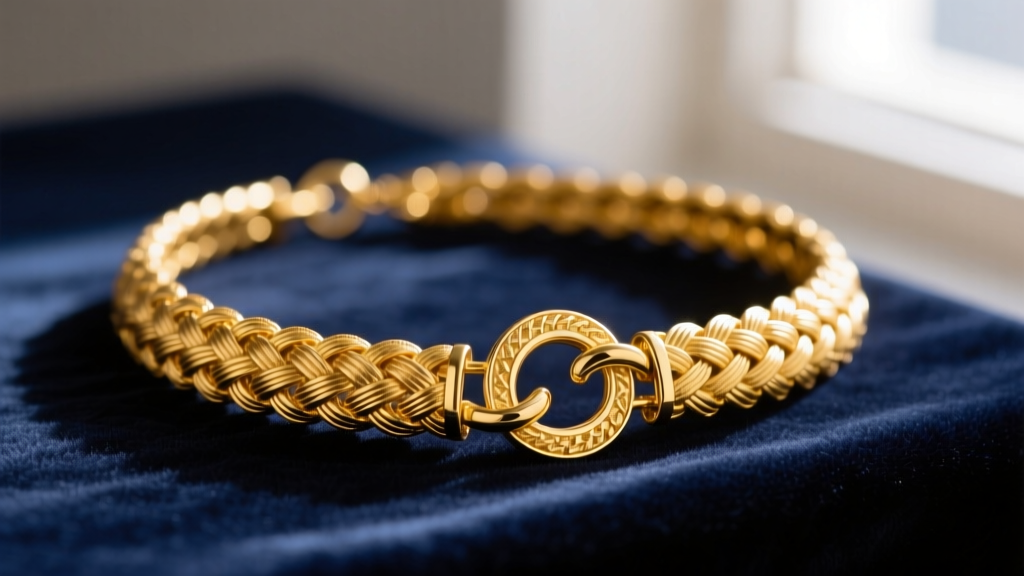
When troubleshooting a gold necklace turkish manufacturing techniques often dictate the repair strategy. Turkish jewelry is globally celebrated for its rich metallurgical history, intricate Trabzon weaving, and bold 22-karat and 14-karat designs. However, the very characteristics that make these pieces unique—the high purity of the gold, the hollow rope constructions, and the traditional S-hook clasps—also introduce specific vulnerabilities. Whether you are dealing with a kinked woven chain, a stuck box clasp, or mysterious tarnish on a supposedly pure gold piece, understanding the structural DNA of Turkish jewelry is the first step toward effective problem-solving.
Understanding Turkish Gold Alloys: 14k vs. 22k
Before attempting any repair or cleaning, you must identify the alloy. Turkish jewelry predominantly features two karatages, each presenting distinct troubleshooting challenges:
- 22k Gold (916 Stamp): Composed of 91.6% pure gold, this alloy is exceptionally soft and malleable. While it boasts a rich, buttery yellow hue, it is highly susceptible to stretching, warping, and clasp deformation. According to the Gemological Institute of America (GIA), high-karat alloys lack the structural memory of lower-karat metals, meaning once a 22k chain stretches, it cannot simply be compressed back to its original state without annealing and re-weaving.
- 14k Gold (585 Stamp): The workhorse of modern Turkish commercial jewelry, especially in hollow rope chains and figaro links. The remaining 41.5% consists of copper, silver, and zinc. This alloy is durable but prone to work-hardening and copper-induced tarnishing.
Troubleshooting Common Clasp Failures
The clasp is the most frequent point of failure on any chain. Turkish designs typically utilize one of two clasp mechanisms, each requiring a different approach to repair.
The Traditional 'S' Hook and Ring Clasp
Often found on solid 22k chains and coin necklaces, the S-hook relies on the tension of the gold wire to stay closed. Over time, the repeated motion of opening and closing causes work hardening. The metal becomes brittle, and the hook either snaps or bends outward, failing to secure the ring.
The Fix: Never use standard steel chain-nose pliers to close an S-hook; the steel teeth will gouge the soft gold and create micro-fractures. Instead, use nylon-jaw pliers to gently squeeze the hook back into its original 'S' profile. If the wire has become too brittle, a bench jeweler must anneal the clasp with a micro-torch to soften the crystalline structure before reshaping it.
Stuck Box Clasps on Hollow Chains
Modern 14k Turkish rope chains frequently employ box clasps with internal tension springs and figure-eight safety catches. A common issue is the internal spring wire losing its temper or accumulating skin oils and lotion, causing the lever to stick.
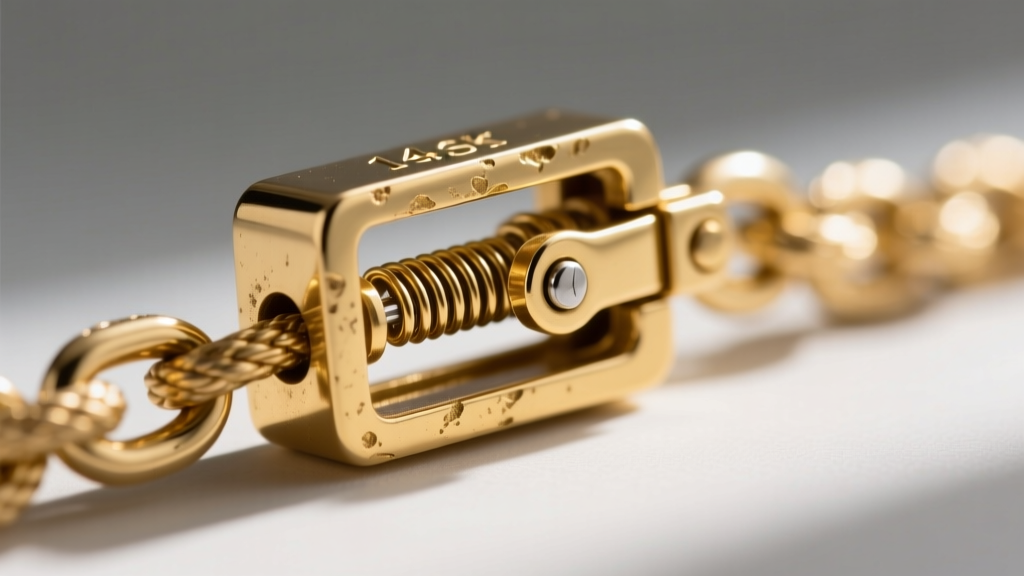
The Fix: Do not force the lever with a fingernail or metal tool, as this will snap the internal 0.3mm tension wire. Apply a single drop of synthetic watch oil or naphtha-based lighter fluid into the clasp hinge to dissolve the sebum buildup. Actuate the lever gently with a wooden toothpick. If the spring is dead, the entire clasp must be laser-soldered off and replaced, as traditional torch soldering will melt the hollow chain links adjacent to the joint.
Fixing Kinks in Trabzon and Woven Chains
Trabzon weaving (originating from the Black Sea region) involves interlocking micro-loops of gold or silver wire without the use of solder. This creates a fluid, fabric-like drape. However, if a Trabzon or fine Byzantine chain is pulled under tension, the loops can collapse inward, creating a severe, localized kink that looks like a bird's nest.
"The golden rule of woven chain repair is to never pull. Pulling a kinked Trabzon weave only tightens the microscopic loops, turning a five-minute fix into a chain that must be entirely cut out and re-woven." — Master Bench Jeweler
The Micro-Needle and Capillary Action Method
- Lay the chain flat on a non-porous silicone mat.
- Apply a drop of low-viscosity penetrating oil directly to the kink.
- Using a 0.2mm tungsten micro-needle or a fine sewing needle, gently vibrate the needle tip inside the collapsed loops to introduce the oil via capillary action.
- Once lubricated, use two pairs of ultra-fine tweezers to gently push the loops back into their alternating pattern, working from the outside of the kink toward the center.
Chain Style Troubleshooting Matrix
Different Turkish chain styles require specific repair protocols. Refer to this matrix when diagnosing structural failures:
| Chain Style | Common Failure Mode | Repair Strategy & Tools Required |
|---|---|---|
| Trabzon Woven | Loop collapse / Kinking | Micro-needle manipulation; no heat. Requires magnification. |
| Hollow Rope | Crushing / Denting | Cannot be un-dented. Must cut out damaged section and laser-weld a new jump ring. |
| Solid Figaro | Stretched links | Compress links using a rawhide mallet and steel bench block; re-solder open seams. |
| Byzantine | Hooking / Snagging | Check for burrs on link seams; polish with a rubberized abrasive wheel. |
Tarnish and Discoloration: Is Your Gold Failing?
Many owners panic when their 14k Turkish gold necklace develops dark patches or leaves a green/black mark on the skin. This is rarely a sign of counterfeit gold; rather, it is a predictable chemical reaction involving the alloying metals. As noted by Rio Grande Jewelry Supply, the copper and silver content in 14k (585) gold reacts with sulfur in the air, chlorine in swimming pools, and the acidic pH of human sweat.
Troubleshooting Tarnish:
- Mild Surface Tarnish: Wash the necklace in warm water with a few drops of mild, phosphate-free dish soap. Use a baby toothbrush to gently agitate the links. Avoid abrasive toothpaste, which will scratch the high-polish Turkish finishes.
- Severe Copper Oxidation (Dark Red/Brown): A professional jeweler will use a mild electrochemical cleaning bath. Avoid commercial 'dip' cleaners (like silver dips) on Turkish gold, as the harsh thiourea chemicals can strip the zinc from the alloy, leaving the surface porous and pinkish.
- The 'Green Skin' Phenomenon: If the necklace leaves a green mark, it indicates high copper content in the 14k alloy reacting to your body chemistry. Coating the inside of the clasp and the back of the pendant with a thin layer of clear jewelry lacquer can create a temporary barrier.
Verifying Authenticity: The Turkish Hallmark System
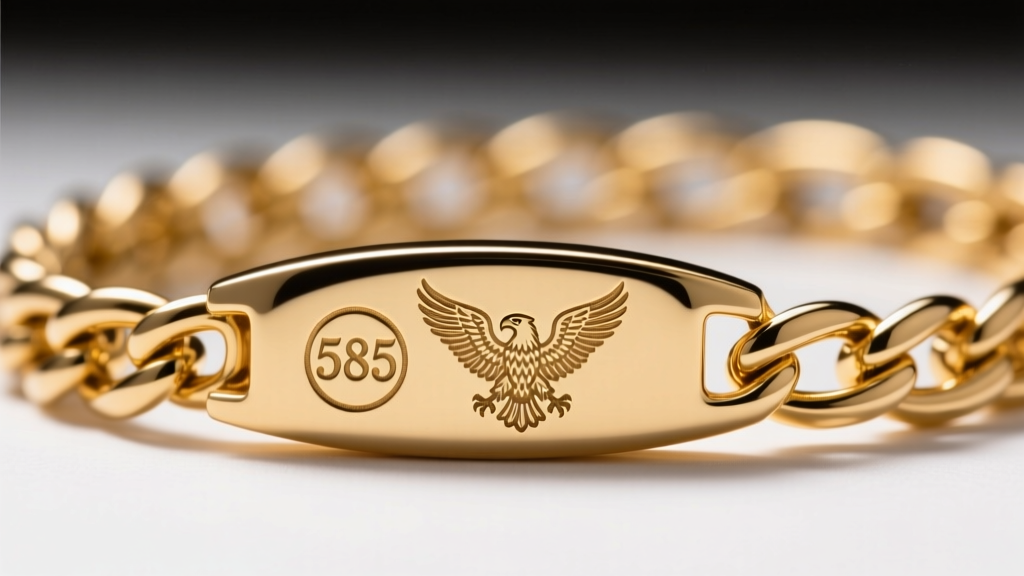
If you are troubleshooting a piece of unknown origin, verifying its authenticity is paramount. The Turkish hallmarking system, overseen by the Darphane (Mint), is highly regulated. A genuine Turkish gold necklace will typically feature two distinct stamps:
- The Millesimal Fineness Stamp: You will see
585(14k),750(18k), or916(22k). Unlike the US, which uses karat marks (14k, 22k), Turkey strictly uses the three-digit European millesimal system. - The Maker's or State Mark: Look for the iconic Turkish Eagle, a Tulip motif, or the specific registered maker's mark enclosed in a geometric shape (often a rectangle or diamond). If a piece only says '14k Turkey' without a millesimal stamp or maker's mark, it warrants professional XRF (X-ray Fluorescence) testing to verify the core metal isn't tungsten or brass.
When to Seek a Professional Bench Jeweler
While basic clasp adjustments and cleaning can be performed at home, certain structural failures demand professional intervention. If your hollow rope chain is crushed, if a 22k Trabzon weave has snapped, or if the S-hook has completely fractured, do not attempt to use superglue or DIY wire wraps. These methods will contaminate the gold, making future laser soldering impossible. Seek out a jeweler who specializes in high-karat laser welding and traditional European chain maille repairs to preserve the integrity and heritage of your Turkish gold necklace.


