Turquoise Collar Necklace Buying Guide: What to Look For
Discover how to authenticate, size, and style a turquoise collar necklace. Learn about matrix types, metal backings, and pricing in our expert guide.

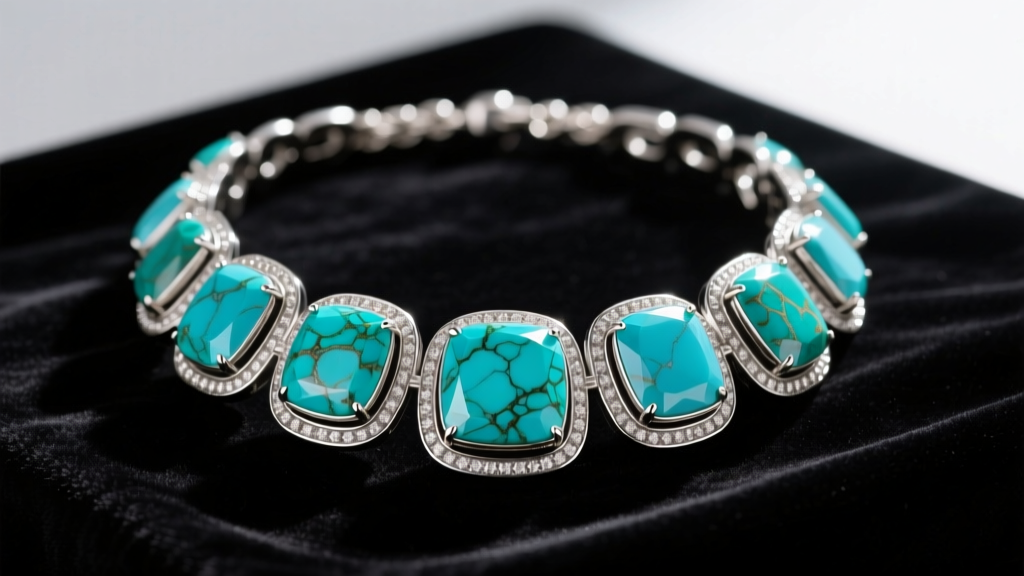
The Architecture of a Turquoise Collar Necklace
When navigating the world of statement jewelry, a turquoise collar necklace stands out as a masterclass in structural design and lapidary art. Unlike standard chains or pendants that drape freely, a collar is engineered to sit snugly at the base of the neck, acting as a rigid or semi-rigid frame for the face. Because of this close-fitting architecture, buying a collar requires a fundamentally different approach than purchasing a standard 18-inch princess chain. The torsion, body heat, and skin oils that a collar is subjected to demand superior stone stabilization and robust metal backing.
Whether you are investing in a vintage Native American piece, a contemporary artisan design, or a high-end fashion reproduction, understanding the nuances of turquoise grading, structural integrity, and precise sizing is critical. This comprehensive buying guide will equip you with the gemological and structural knowledge needed to make an informed purchase in today's market.
Collar vs. Choker: Getting the Exact Sizing Right
The terms 'collar' and 'choker' are frequently conflated in retail descriptions, but in fine jewelry, they denote distinct lengths and fits. A true collar necklace measures between 14 and 15.5 inches and rests directly on the collarbone, hugging the base of the neck. A choker, by contrast, typically measures 16 to 18 inches and sits slightly higher on the mid-neck.
Because a turquoise collar necklace is often constructed with heavy, inflexible silver or gold frameworks, guessing your size is not an option. An ill-fitting collar will either restrict breathing or gap awkwardly at the clavicle.
| Actual Neck Measurement | Recommended Collar Length | Fit Profile |
|---|---|---|
| 13.0 inches | 14.0 inches | Snug, traditional collar fit |
| 14.0 inches | 15.0 inches | Comfortable, rests on collarbone |
| 15.0 inches | 16.0 inches | Loose collar / tight choker hybrid |
| 16.0+ inches | 17.0 inches | Requires custom artisan sizing |
Pro Tip: Use a flexible tailor's measuring tape. Wrap it snugly around the exact point where you want the necklace to sit, then add exactly 1 inch to that measurement to account for the thickness of the silver bezels and the clasp mechanism.
Authenticating Turquoise: Natural vs. Stabilized vs. Imitation
The most critical factor in determining the value and longevity of your jewelry is the treatment of the stone. According to the Gemological Institute of America (GIA), turquoise is a porous, relatively soft mineral (Mohs hardness of 5 to 6). Because of this, the vast majority of turquoise used in jewelry today undergoes some form of treatment.
The Stabilization Process
For a heavy piece like a collar, stabilization is often a necessity, not a flaw. The Zachary process or modern epoxy-resin vacuum treatments are used to harden lower-grade, chalky turquoise, making it durable enough to withstand the pressure of being set into thick metal bezels without cracking. Stabilized turquoise retains its natural matrix and color but will not absorb oils or change color over time. It is a legitimate, widely accepted practice in high-end lapidary work, provided it is disclosed by the seller.
Dyed Howlite and Block Turquoise
Beware of 'block turquoise' or 'reconstituted turquoise.' These are typically dyed howlite, magnesite, or crushed turquoise dust bound with plastic resins. While they may mimic the look of a turquoise collar necklace, they possess zero gemological value and will eventually chip, fade, or crack under the structural stress of a rigid collar framework.
Matrix Types and Regional Origins
The 'matrix' refers to the host rock or mineral inclusions trapped within the turquoise. In the collector's market, the origin and matrix pattern heavily dictate the price.
- Sleeping Beauty (Arizona): Prized for its pure, robin's-egg blue color with little to no matrix. Because the Sleeping Beauty mine closed in 2012, natural, untreated stones from this origin command massive premiums. If you see a cheap 'natural' Sleeping Beauty collar today, it is likely dyed howlite or stabilized low-grade material.
- Kingman (Arizona): Famous for its deep blue color and striking black or golden-brown pyrite matrix. Kingman is highly durable when stabilized and makes for spectacular, high-contrast collar designs.
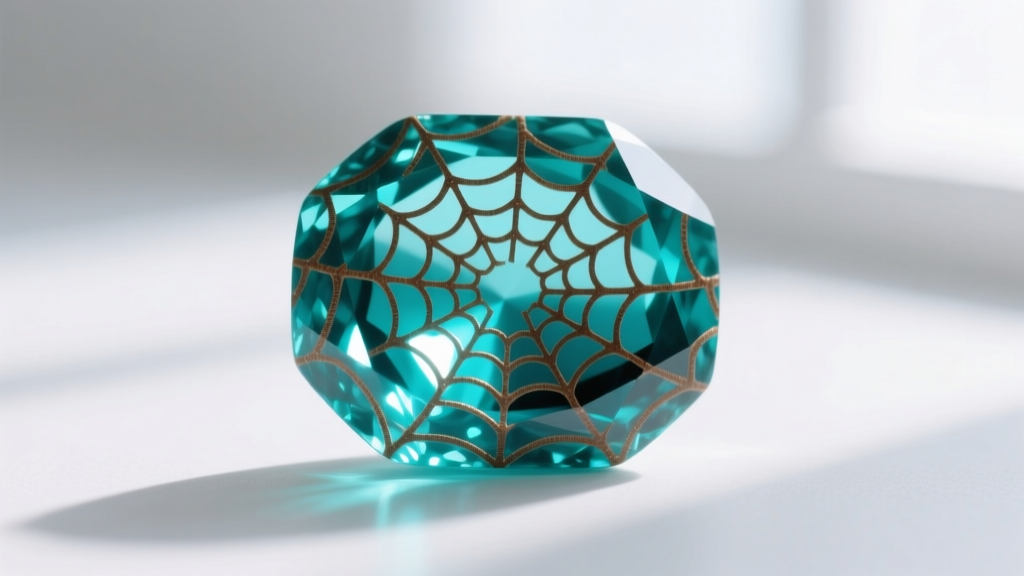
- Royston (Nevada): Known for its two-tone color shifts (deep forest green to light blue) and heavy, dramatic brown spiderweb matrix. Royston stones are often cut into large, bold cabochons perfect for the centerpieces of multi-stone collars.
- Bisbee (Arizona): Highly coveted for its 'smoky' or 'lavender' matrix. Genuine Bisbee turquoise is exceptionally rare and is usually found only in vintage or estate collars.
Metal Backings and Structural Integrity
When buying a rigid or semi-rigid turquoise collar necklace, you must inspect the underside of the piece. The metal backing serves two vital purposes: structural support and chemical isolation.
Turquoise is highly reactive to cosmetics, perfumes, and human sebum (skin oils). If an untreated or lightly stabilized stone is set in an open-back bezel and rests directly against the skin, it will absorb these oils, eventually turning a vibrant blue into a muddy, irreversible green-brown.
The 'Sweatbox' vs. Solid Backing
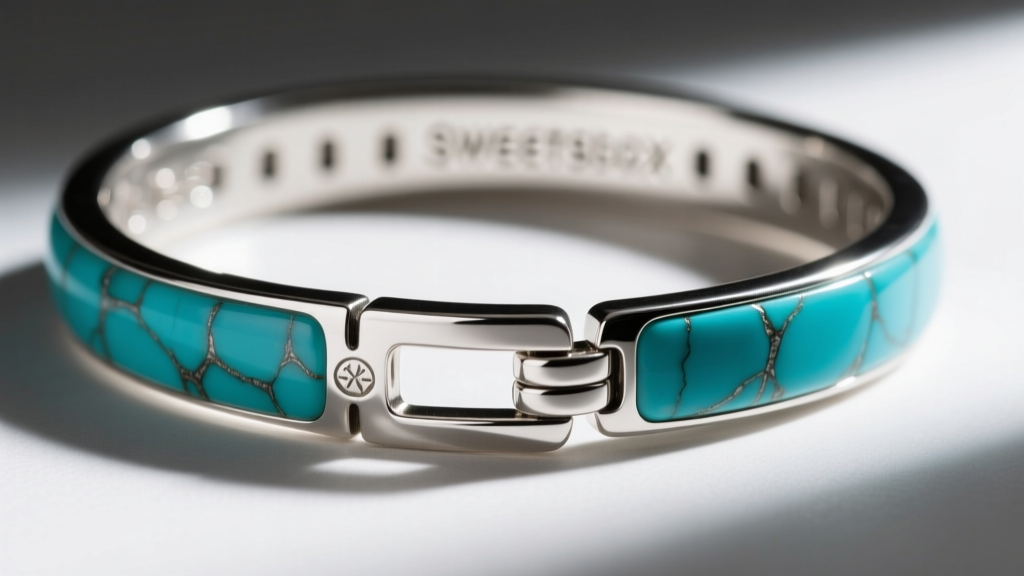
High-quality Native American and artisan collars utilize a solid sterling silver (.925) backing soldered directly behind the cabochon. Some vintage pieces use a 'sweatbox'—a recessed silver tray that keeps the stone slightly elevated but still fully shielded from the skin. Avoid collars where the turquoise is set in open-backed bezels directly against the skin, unless you plan to wear the piece exclusively over high-necked clothing.
Furthermore, inspect the hinges and clasp. A heavy multi-stone collar requires a robust box clasp with a figure-eight safety latch. Lobster clasps are entirely insufficient for the weight and torsion of a structured collar and will inevitably fail.
Pricing Tiers: What Should You Actually Pay?
The market for turquoise jewelry is saturated with misleading listings. The Federal Trade Commission (FTC) Jewelry Guides mandate that sellers must disclose any treatments, dyes, or stabilizations, yet many online marketplaces ignore these rules. Use this pricing framework to gauge authenticity.
| Material & Quality Tier | Typical Price Range (USD) | Market Reality |
|---|---|---|
| Dyed Howlite / Block 'Turquoise' | $40 - $120 | Mass-produced, zero resale value, prone to chipping. |
| Stabilized Kingman / Royston (Commercial) | $250 - $600 | Authentic treated stones, good durability, standard silver settings. |
| Stabilized High-Grade (Artisan Crafted) | $800 - $2,500 | Master silversmithing, heavy gauge silver, premium matrix patterns. |
| Natural, Untreated Sleeping Beauty / Bisbee | $3,000 - $10,000+ | Museum-grade, investment pieces, usually vintage or custom-commissioned. |
Care and Maintenance to Prevent Cracking
A turquoise collar necklace requires meticulous care to preserve both the stone and the metal framework. Never use ultrasonic cleaners, steam cleaners, or commercial silver dips. The high-frequency vibrations of an ultrasonic cleaner can shatter stabilized stones and loosen the epoxy bonds holding the cabochons in their bezels.
Expert Maintenance Rule: Always put your turquoise collar on after applying makeup, perfume, and hairspray. When removing it, wipe the stones gently with a dry, untreated microfiber cloth to remove surface oils before storing it in an anti-tarnish bag.
By prioritizing structural integrity, demanding transparency regarding stone treatments, and understanding the precise sizing requirements of a collar, you can confidently invest in a piece that will endure as a striking, heirloom-quality staple in your collection.


