Turquoise Coral Necklace Guide: Grading and Authentication
Discover expert grading, origin tracking, and authentication techniques for genuine turquoise coral necklaces. Avoid fakes with our technical guide.

The Gemological Reality of Turquoise and Coral
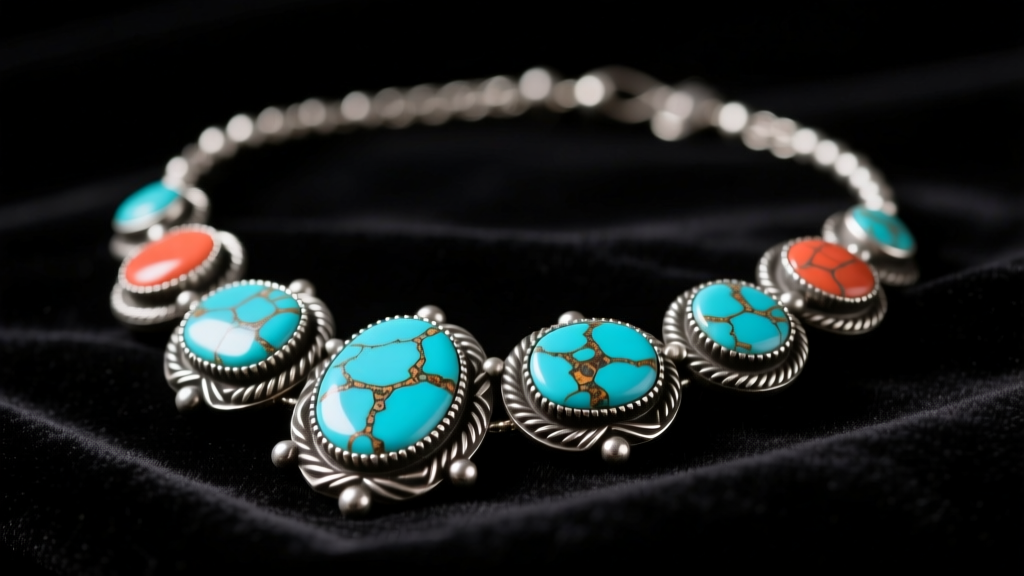
Pairing turquoise and coral in a single necklace is a hallmark of Southwestern and Native American jewelry design, but from a gemological perspective, it presents a unique set of technical challenges. Turquoise is a hydrous phosphate of copper and aluminum, typically registering between 5 and 6 on the Mohs hardness scale. Coral, conversely, is an organic gemstone composed primarily of calcium carbonate, with a much softer Mohs rating of 3 to 4. When strung together in a turquoise coral necklace, the friction between these disparate materials can lead to premature wear if the necklace is not properly constructed with protective knotting or spacing beads.
Furthermore, both materials are highly porous. Untreated turquoise can absorb skin oils and cosmetics, leading to a permanent darkening or greenish shift in color, while coral is highly sensitive to acidic environments and harsh chemicals. Understanding the structural and chemical vulnerabilities of these gems is the first step in evaluating, purchasing, and maintaining high-end turquoise and coral jewelry.
Grading Turquoise: Beyond the Robin's Egg Myth
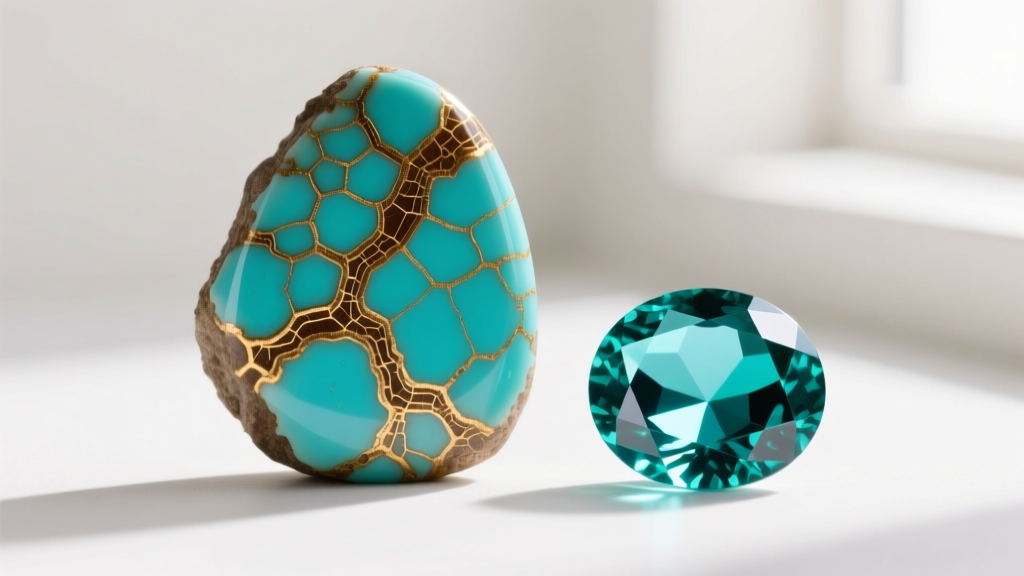
The value of turquoise in a necklace is dictated by its origin, color saturation, matrix pattern, and treatment status. According to the Gemological Institute of America (GIA), natural, untreated turquoise with a deep, even blue color and an aesthetically pleasing matrix commands the highest premiums in the market. However, less than 10% of all mined turquoise is hard enough to be cut and polished without stabilization.
The Stabilization Spectrum
- Natural (Untreated): Only the hardest, highest-grade stones (often from the Sleeping Beauty or Lander Blue mines) are left untreated. These can fetch $15 to $30+ per carat.
- Stabilized: The industry standard. Softer chalk turquoise is infused with a clear epoxy or acrylic resin under high pressure to increase hardness and lock in color. This is an accepted practice, provided it is disclosed, and typically prices the stone at $2 to $5 per carat.
- Dyed/Color-Enhanced: Resin mixed with blue dye is forced into the stone. This drastically lowers the gemological value and is often used in mass-market, low-tier necklaces.
- Zachery Treatment: A proprietary, non-polymer treatment that reduces porosity without adding plastics or resins. It is highly respected among purists but requires advanced laboratory testing (like EDXRF) to detect.
When examining a turquoise coral necklace, always look for the "spiderweb" matrix. A tight, uniform webbing (like that found in Kingman or Number 8 mine turquoise) increases the stone's desirability, whereas blotchy, uneven brown or black inclusions can detract from the visual symmetry of the cabochon.
Coral Varieties in Fine Jewelry: Sourcing and Ethics
The coral used in fine jewelry is not the reef-building coral found in shallow tropical waters, but rather precious coral (Corallium species) that thrives in deep, cold ocean environments. Due to severe overharvesting, the trade of precious coral is heavily regulated.
Precious Red vs. Bamboo Coral
Genuine Mediterranean red coral (Corallium rubrum) features a rich, opaque, organic red or pinkish-red hue with no visible surface pores when highly polished. Because of CITES restrictions and international conservation efforts, newly harvested precious coral is scarce, making vintage turquoise coral necklaces featuring genuine red coral highly collectible.
In contrast, the modern market is flooded with bamboo coral. Bamboo coral is naturally white or grayish and highly porous. To mimic precious red coral, it is heavily dyed and sometimes coated with a polymer resin. While bamboo coral is an attractive and affordable alternative, it must be accurately disclosed. A telltale sign of dyed bamboo coral is the concentration of red dye in the natural pores and grooves of the stone, which is easily visible under 10x magnification.
Technical Breakdown: Necklace Construction and Settings
The longevity of a turquoise coral necklace relies heavily on its structural engineering. Because coral is soft and turquoise can be brittle, the setting and stringing methods must mitigate impact and friction.
Bezel vs. Prong Settings
In high-quality Southwestern silverwork, cabochons are almost exclusively set in bezels. A sawtooth or smooth sterling silver bezel wraps entirely around the girdle of the stone, protecting the fragile edges from chipping. Prong settings are rarely used for turquoise or coral because they leave the edges exposed and place undue point-pressure on the gems, which can cause fracturing.
Stringing Materials Comparison
If the necklace is a strand of beads rather than silver-set cabochons, the stringing material is critical. Below is a technical comparison of common stringing mediums used in multi-gem necklaces:
| Stringing Material | Tensile Strength | Friction Wear Resistance | Best Use Case |
|---|---|---|---|
| Silk Thread | Low | Poor (abrasive turquoise cuts silk) | Pearls, high-end coral (with knotting) |
| Nylon (e.g., C-Lon) | Medium-High | Good | Heishi beads, lightweight turquoise |
| Stainless Steel Wire | Very High | Excellent | Heavy, large-grade turquoise/coral beads |
| Tiger Tail (Nylon-coated) | High | Very Good | Standard commercial strand necklaces |
Expert Note: Never use silk thread for heavy turquoise beads without knotting between every single bead. The sharp edges of the turquoise drill holes will act like microscopic saws, eventually severing the silk and resulting in catastrophic strand failure.
Authentication Matrix: Spotting Fakes and Treatments
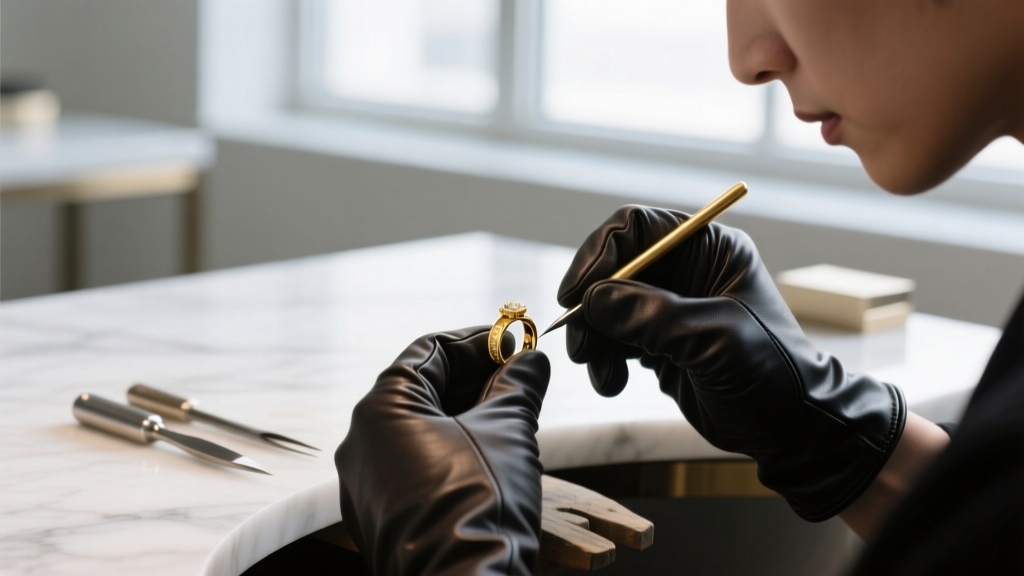
As the demand for vintage and artisan turquoise coral necklaces has surged, so has the sophistication of counterfeits. Here is a practical framework for authenticating these materials in the field.
The Acetone Test (For Dye Detection)
While you should never apply chemicals to a finished, polished piece of jewelry without the owner's consent, understanding the acetone test is vital for evaluating raw or poorly finished stones. A cotton swab dipped in pure acetone and rubbed gently on an inconspicuous area of a coral bead will lift surface dye if the stone is color-enhanced bamboo coral. Genuine precious coral will not transfer color.
UV Fluorescence
Under long-wave ultraviolet (UV) light, natural turquoise often exhibits a weak to moderate greenish or yellowish fluorescence. However, if the stone has been heavily stabilized with certain modern epoxy resins or plastics, it may fluoresce a bright, unnatural blue or white, indicating heavy polymer intrusion. Similarly, howlite (a common turquoise simulant) will not react the same way under UV and lacks the copper-driven chemical signature of true turquoise.
Magnification and the Hot Pin Test
Using a 10x jeweler's loupe, examine the surface of the coral. Genuine precious coral will show subtle, organic growth rings or faint striations. Plastic or glass imitations will reveal mold marks, spherical gas bubbles, or a completely uniform, unnatural texture. Warning: The traditional "hot pin test" (touching a heated needle to the stone to see if it melts or smells like plastic) is highly destructive and should be avoided on finished jewelry, as it will permanently scar both coral and stabilized turquoise.
Care, Maintenance, and Failure Modes
A turquoise coral necklace is an investment that requires strict environmental controls to maintain its gemological integrity.
Never use ultrasonic or steam cleaners. The high-frequency vibrations of an ultrasonic cleaner can shatter the internal matrix of stabilized turquoise and cause micro-fractures in coral. Steam will strip the polish and potentially melt the dyes in enhanced stones.
Chemical Sensitivities
Coral is calcium carbonate; it will literally dissolve upon prolonged exposure to acids. This includes common household vinegar, citrus juices, and even the natural lactic acid present in human sweat. Always put your necklace on after applying perfumes, hairsprays, and lotions. After wearing, gently wipe both the turquoise and coral with a soft, dry, untreated microfiber cloth to remove acidic skin oils.
Storage Protocols
Because of the Mohs hardness discrepancy, storing a turquoise coral necklace improperly will result in the turquoise scratching the coral. Always store the necklace flat in a lined jewelry box, or hang it on a padded velvet neck form. Avoid airtight plastic bags, as turquoise requires a minimal amount of ambient moisture to prevent the stone from drying out, cracking, or "crazing" over time.
By understanding the deep technical nuances of grading, construction, and maintenance, collectors and enthusiasts can confidently navigate the market, ensuring their turquoise coral necklace remains a pristine, valuable artifact for generations.


