How to Source, Authenticate, and Style a Boston Emerald Necklace
Learn how to source, authenticate, and style a Boston emerald necklace. Expert tips on gem grading, Downtown Crossing jewelers, and botanical styling.

The Dual Legacy: Boston's Jewelry District and the Olmsted Parks
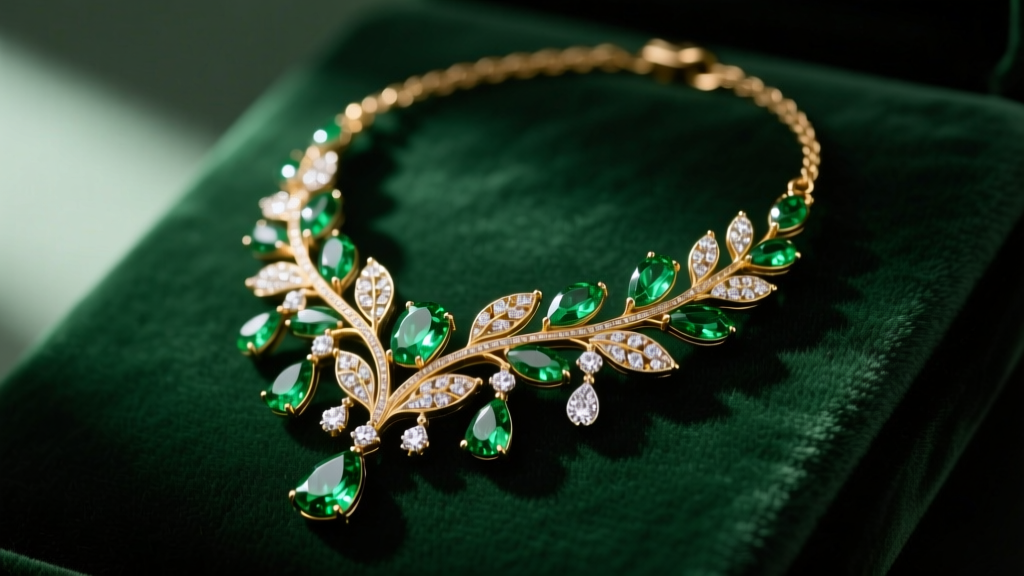
When searching for a Boston emerald necklace, you are engaging with two distinct and deeply intertwined legacies. The first is historical: Boston’s Downtown Crossing, specifically Bromfield and Washington Streets, has been the epicenter of New England’s fine jewelry trade since the late 19th century. The second is botanical: Frederick Law Olmsted’s famous 'Emerald Necklace,' a 1,100-acre chain of lush parks designed to bring nature into the urban landscape. Today, the most sought-after Boston emerald necklaces often merge these two concepts, featuring masterfully sourced gemstones set in botanical, vine-inspired motifs that pay homage to the city's green heritage.
Whether you are hunting for an antique piece in the historic jewelry district or commissioning a custom botanical pendant from a local artisan, navigating the emerald market requires a sharp eye. Emeralds are notoriously complex gemstones, and understanding their unique characteristics is the only way to ensure your investment is both authentic and enduring.
Step 1: Sourcing and Authenticating the Gemstone
The first step in acquiring a high-quality Boston emerald necklace is understanding how to evaluate the stone itself. Unlike diamonds, emeralds are valued primarily for their color and character, not flawless clarity. In fact, the internal inclusions within an emerald are romantically referred to as jardin (French for garden), and they serve as a fingerprint of the stone's natural origin.
Navigating the GIA Clarity Enhancement Scale
Because emeralds are heavily included, they are naturally prone to surface-reaching fractures. To improve clarity and stability, the vast majority of emeralds on the market undergo fracture-filling treatments. When shopping in Boston's reputable jewelry boutiques, always ask for a Gemological Institute of America (GIA) or American Gemological Laboratories (AGL) report. According to the GIA's Emerald Quality Factors, clarity enhancements are graded on a specific scale:
- None (F1): Extremely rare and commands a massive premium. The stone has no surface-reaching fractures requiring filling.
- Minor (F2): The industry standard for fine jewelry. Typically filled with natural cedar oil. Highly acceptable and stable.
- Moderate to Significant (F3): Heavily filled, often with synthetic resins or polymers. These stones are less valuable and require extreme care, as the fillers can degrade or leak over time.
When consulting with a jeweler on Bromfield Street, explicitly ask if the stone is treated with traditional cedar oil or modern synthetic resins. Traditional oiling is preferred by collectors and high-end artisans.
Step 2: Choosing the Right Origin and Metal Setting
The geographic origin of your emerald dramatically influences its color profile and, consequently, the metal setting that will best complement it. Colombian emeralds are prized for their warm, pure, and intensely saturated green, while Zambian emeralds typically exhibit a cooler, bluish-green undertone with higher natural clarity.
| Metal Setting | Best Paired With | Aesthetic Effect |
|---|---|---|
| 18K Yellow Gold | Colombian Emeralds | Enhances the warm, lush green tones; provides a classic, vintage botanical look reminiscent of Olmsted's park designs. |
| Platinum / White Gold | Zambian Emeralds | Amplifies the cool, crisp bluish-green hues; offers a modern, high-contrast, and icy elegance. |
| 18K Rose Gold | Brazilian or Ethiopian | Creates a romantic, whimsical contrast; ideal for intricate leaf and vine motif settings. |
Crucial Setting Considerations: Protecting the Jardin
While emeralds rank between 7.5 and 8 on the Mohs hardness scale, their extensive internal inclusions make them highly brittle. A standard four-prong setting leaves the vulnerable corners of an emerald-cut stone exposed to chipping. For a daily-wear Boston emerald necklace, insist on a bezel setting or a halo setting that fully protects the stone's girdle and corners. If you prefer a prong setting, ensure the jeweler uses V-shaped prongs at the corners to distribute pressure evenly.
Step 3: Styling Your Botanical Emerald Necklace
Styling an emerald necklace requires balancing the stone's intense visual weight with your wardrobe. The rich green hue is remarkably versatile, acting almost as a neutral when paired with the right fabrics and necklines.
- The V-Neck Framework: A 16-to-18-inch emerald pendant resting perfectly in the negative space of a silk V-neck blouse draws the eye downward and elongates the neck. This is the ideal canvas for a botanical vine pendant.
- The Boatneck Contrast: Pairing a shorter, 15-inch emerald choker or collar with a wide boatneck sweater creates a striking horizontal line that frames the collarbones beautifully.
- Layering with Chains: To modernize a vintage Boston emerald necklace, layer it with two delicate 14K gold cable chains of varying lengths (e.g., 20 and 22 inches). Ensure the accompanying chains are minimalist so they do not compete with the intricate jardin of the central gemstone.

Step 4: Care and Maintenance for Oiled Emeralds
The most common mistake owners make with emerald jewelry is treating it like a diamond or sapphire. Because most emeralds are fracture-filled with natural oils, you must never place an emerald necklace in an ultrasonic or steam cleaner. The high-frequency vibrations and intense heat will strip the cedar oil from the stone, causing the fractures to turn white and making the gem look cloudy and fractured.
According to the GIA's official care and cleaning guidelines, the only safe way to clean your emerald necklace at home is with lukewarm water, a mild dish soap, and a very soft baby-hair brush. Gently wipe the stone, rinse quickly, and pat dry with a microfiber cloth. Furthermore, if you wear your necklace frequently, expect to have it professionally 're-oiled' by a master jeweler every three to five years to maintain its optimal luster and clarity.
Final Thoughts on the Boston Emerald Necklace
Acquiring a Boston emerald necklace is more than just a jewelry purchase; it is an investment in craftsmanship, history, and natural art. By prioritizing GIA-certified stones with minor oil treatments, selecting protective bezel or halo settings, and embracing the botanical styling inspired by the city's iconic park system, you ensure your piece will remain a breathtaking heirloom for generations to come. Whether sourced from a historic Downtown Crossing vault or a modern local artisan, a well-chosen emerald necklace is a timeless testament to nature's most captivating green.


