Card Holder Necklace Trends: 2026 Style & Utility Guide
Discover how the card holder necklace blends utility with high fashion in 2026. Explore materials, chain gauges, and styling tips for this top trend.

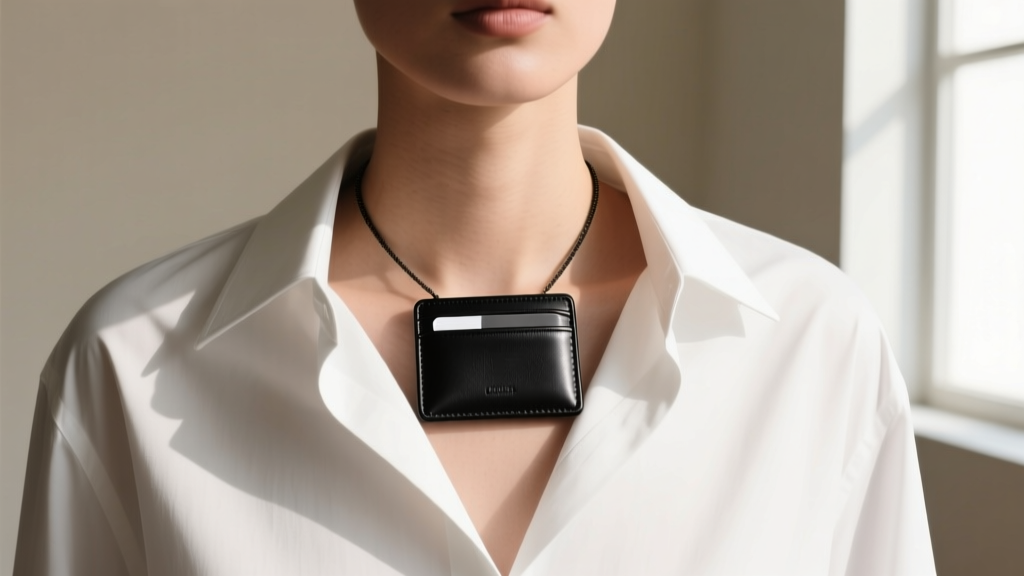
The Evolution of Wearable Utility
The intersection of high fashion and everyday utility has reached a definitive peak in 2026, and nowhere is this more evident than in the meteoric rise of the card holder necklace. Once relegated to the realm of corporate lanyards and theme park passes, this accessory has been completely reimagined by luxury houses and independent streetwear brands alike. As the post-pandemic shift toward minimalist carry continues, consumers are abandoning bulky crossbody bags in favor of streamlined, hands-free solutions. According to trend forecasting data from Vogue Business, the 'elevated utility' movement has driven a 45% year-over-year increase in searches for functional jewelry that merges tech-wear aesthetics with fine metalwork.
But a true luxury card holder necklace is not merely a lanyard; it is a carefully engineered piece of body architecture. It requires precise weight distribution, premium metallurgy, and an understanding of modern security needs, such as RFID blocking. This guide breaks down the exact specifications, materials, and styling frameworks you need to navigate this definitive 2026 trend.
Material Breakdown: Engineering the Perfect Carrier
Hardware and Chain Gauges
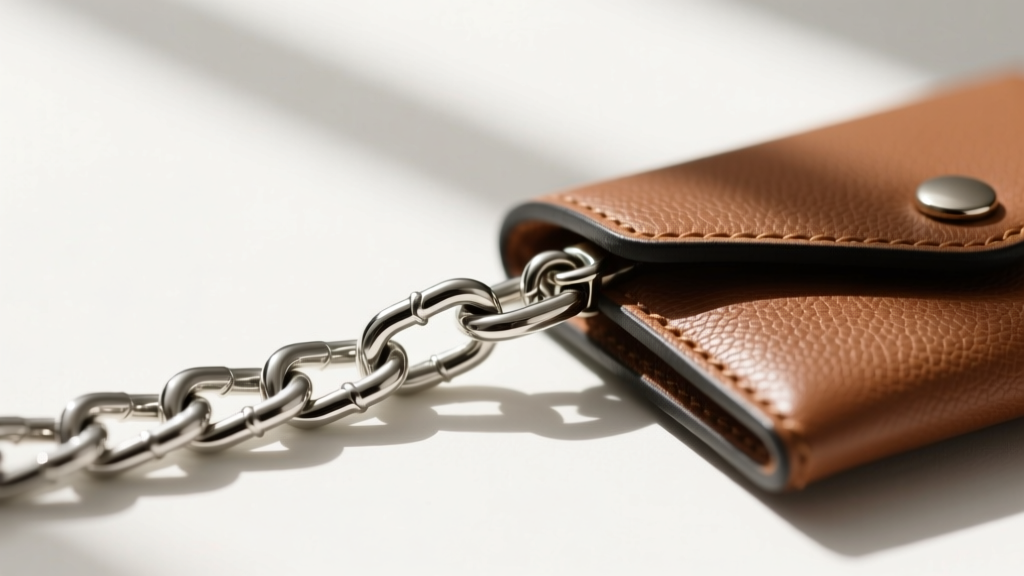
The chain is the structural spine of any card holder necklace. Because a loaded pouch (holding two to three credit cards, a transit pass, and a key) typically weighs between 60 and 90 grams, delicate chains will fail, kink, or cause cervical strain. In 2026, the industry standard for high-end utility necklaces relies on 316L surgical stainless steel or solid 925 sterling silver.
- The 4mm to 6mm Curb Chain: The undisputed king of streetwear utility. The interlocking, flat-surfaced links distribute weight evenly across the clavicle, preventing the chain from biting into the skin. Look for chains with a minimum tensile strength of 20kg.
- The 3mm Box Chain: Preferred for corporate or minimalist aesthetics. The geometric, square links offer a sleek, continuous line that mimics fine jewelry while maintaining enough structural integrity to support a lightweight, single-card leather sleeve.
- Clasp Mechanics: Avoid standard spring rings, which easily snap under the pendulum motion of a walking stride. The 2026 standard is the oversized lobster clasp or the integrated magnetic neodymium clasp, which offers a secure, satisfying snap and allows for one-handed removal.
The Pouch: Leather, Nylon, and Tech Fabrics
The pouch itself must adhere to strict dimensional tolerances. A standard credit card follows the ISO/IEC 7810 ID-1 format, measuring exactly 85.60 × 53.98 mm. Therefore, a well-designed card holder necklace pouch should have internal dimensions of at least 90 x 60 mm to allow for a 2mm tolerance gap, ensuring cards do not get stuck while preventing them from slipping out.
For heritage aesthetics, full-grain vegetable-tanned leather is the premier choice. Unlike top-grain leathers that are sanded and coated, full-grain leather retains the natural hide fibers, allowing it to develop a rich, personalized patina from skin oils and sunlight over time. However, for the tech-wear and festival demographics, Cordura nylon and ballistic weaves dominate. These synthetic fabrics offer unparalleled abrasion resistance and water repellency, crucial for outdoor environments.
RFID Security and the Invisible Shield
As contactless payments and tap-to-enter transit systems become ubiquitous, digital skimming remains a valid concern. A premium card holder necklace in 2026 must integrate passive RFID-blocking technology. This is achieved by lining the leather or nylon pouch with a micro-mesh of copper and nickel alloy. This metallic matrix creates a Faraday cage effect, blocking the 13.56 MHz frequency used by most modern credit cards and passports. When shopping, always verify that the brand explicitly states the inclusion of an EMI/RFI shielding layer, rather than just relying on thick leather, which does not naturally block radio frequencies.
2026 Trend Forecast: Three Dominant Aesthetics
The Business of Fashion recently highlighted how utility accessories have splintered into distinct subcultures. Here are the three dominant card holder necklace aesthetics defining the current landscape:
1. Corporate Stealth
Designed for the modern hybrid worker, this style features ultra-thin, single-card sleeves crafted from black or oxblood Saffiano leather. Suspended on a 2mm PVD-coated gold cable chain, it is designed to be worn under an unbuttoned blazer or over a fine-gauge merino turtleneck. The hardware is minimal, often featuring a hidden magnetic closure that maintains an unbroken visual line.
2. Y2K Cyber and Festival Tech
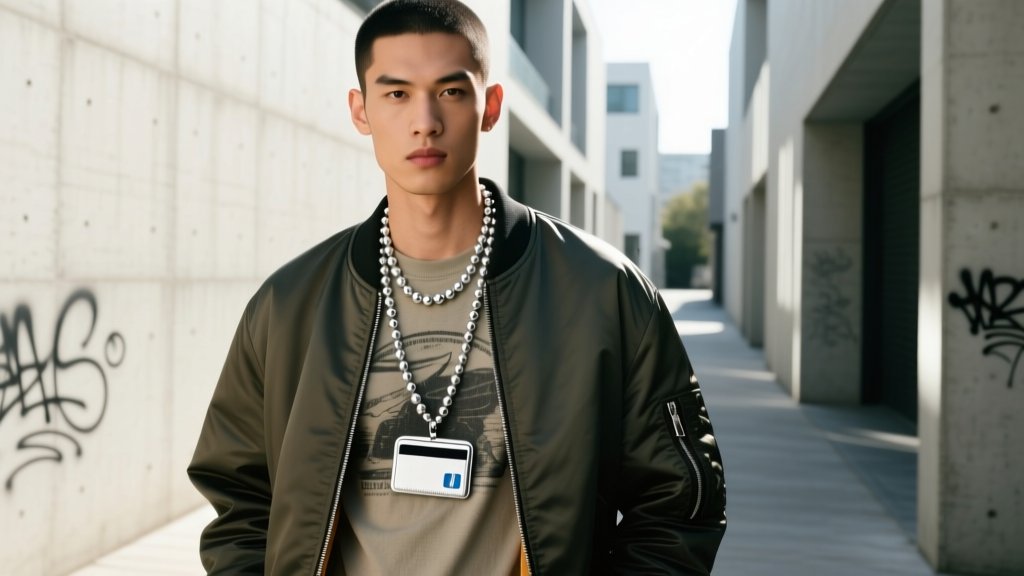
Embracing the chaotic energy of early 2000s tech-wear, these necklaces feature translucent TPU (thermoplastic polyurethane) pouches, neon webbing straps, and heavy-duty D-ring attachments. They are often layered with secondary chains or beaded lanyards, serving as a focal point for festival attire and streetwear ensembles.
3. Artisan Craft
A reaction against mass production, the artisan trend features hand-tooled leather, woven paracord, and custom-cast brass hardware. These pieces often incorporate beadwork, silver conchos, or repurposed vintage elements, treating the card holder not just as a tool, but as a wearable piece of folk art.
Ergonomics and Sizing Framework
The drop length of a card holder necklace dictates both its security and its visual proportion. A chain that is too long will swing aggressively against the sternum while walking, while one that is too short will feel restrictive and sit awkwardly above the collarbone.
| Chain Length | Drop Position | Best Use Case | Max Recommended Pouch Weight |
|---|---|---|---|
| 18 - 20 inches | Base of the throat / Upper chest | Corporate minimalism, lightweight single-card sleeves | 40 grams |
| 22 - 24 inches | Mid-chest / Solar plexus | Everyday carry, 2-3 card leather pouches, streetwear | 80 grams |
| 26 - 28 inches | Lower chest / Upper abdomen | Festival wear, heavy tech-wear, multi-tool attachments | 120+ grams |
Expert Tip: If your loaded pouch exceeds 70 grams, you must increase the chain gauge to at least 4mm or switch to a flat, 1-inch wide leather or nylon strap to prevent localized pressure on the cervical spine.
Styling Framework: Necklines and Layering
Integrating a functional piece into a curated outfit requires an understanding of visual hierarchy. Because the card holder necklace inherently draws the eye downward toward the center of the torso, it pairs best with open necklines that provide a blank canvas.
- The V-Neck and Unbuttoned Collar: The ideal pairing. The V-shape of the neckline naturally frames the V-shape created by the chain, leading the eye directly to the pouch.
- The Crew Neck: For a streetwear look, layer a 24-inch silver curb chain card holder over a heavyweight, vintage-wash crew neck t-shirt. The contrast between the casual cotton and the utilitarian metal creates high visual tension.
- Layering Techniques: In 2026, layering a card holder necklace with traditional jewelry is standard practice. Pair a 22-inch leather-strap card holder with a 16-inch choker and an 18-inch simple pendant chain. Ensure there is at least a 4-inch gap between each layer to prevent the heavy card pouch from tangling with finer chains.
Maintenance and Care
Unlike traditional jewelry that is removed at night, a daily-carry card holder necklace is subjected to immense environmental stress: sweat, friction, rain, and the constant insertion and removal of PVC cards. To maintain the integrity of the piece, wipe down the metal chain weekly with a microfiber cloth to remove sebum and salt buildup, which can degrade PVD coatings over time. For leather pouches, apply a light coat of carnauba-based leather conditioner every three months to prevent the card slots from stretching and losing their tension. By treating your card holder necklace with the same respect as a luxury timepiece, you ensure it remains a functional, stylish staple for years to come.


