Beyond The Necklace PDF Short Story: Recreating Mathilde's Jewels
Dive beyond the necklace PDF short story to explore the 1880s diamond rivière. Learn to identify antique paste vs. real diamonds and recreate the look.

The Literary Blueprint: Decoding the "River of Diamonds"
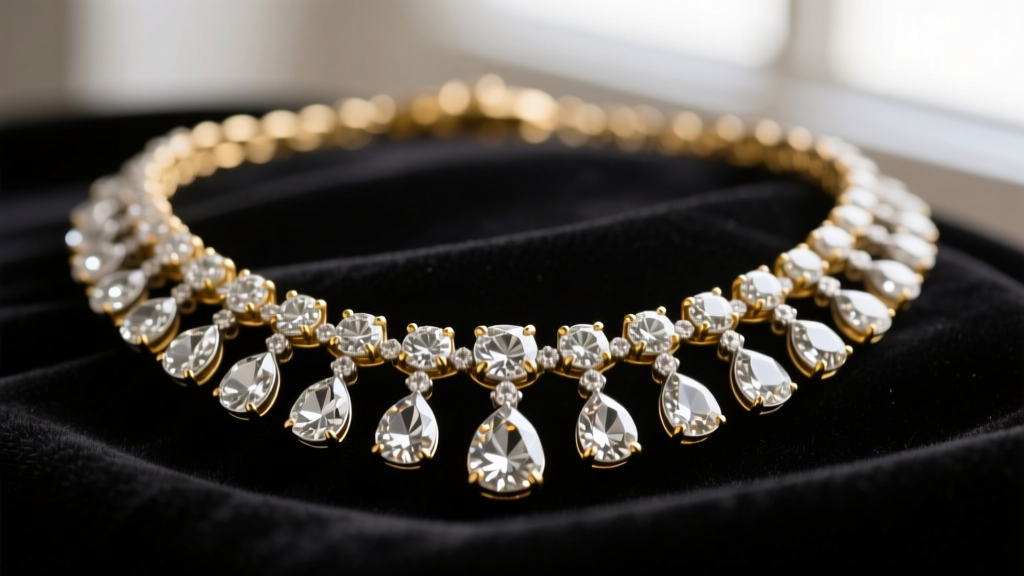
Every year, thousands of students, educators, and literature enthusiasts search for the necklace pdf short story to read Guy de Maupassant’s 1884 masterpiece, "La Parure" (The Necklace). While most readers focus on the story's themes of vanity, pride, and the cruel irony of fate, jewelry historians and gemologists read the narrative through a completely different lens. The tragic plot hinges entirely on a single piece of jewelry: a rivière de diamants (river of diamonds). Mathilde Loisel’s inability to distinguish between a 36,000-franc natural diamond necklace and a 500-franc paste (glass) imitation is the catalyst for a decade of ruinous debt. But how could she not tell the difference? And more importantly, how can modern jewelry lovers recreate or identify this iconic 19th-century piece today?
In 1880s Paris, a rivière necklace was the ultimate symbol of high-society wealth. The term "rivière" refers to a necklace design where gemstones of the same type and cut are set in a continuous, flowing line, often graduating slightly in size toward the center. Unlike modern pendants or intricate lacework designs, the rivière relies entirely on the sheer carat weight and light performance of its stones. When Mathilde borrows what she believes to be a diamond rivière from her wealthy friend, Madame Forestier, she is borrowing a piece of jewelry that would cost upwards of $150,000 to $200,000 in today’s market.
Step 1: Understanding the Fatal Mistake (Paste vs. Diamond)
To understand how Mathilde was fooled, we must look at the state of 19th-century gemology. The imitation necklace was likely made of strass—a high-lead-content glass invented by Georg Friedrich Strass in the 1730s. By the 1880s, Parisian jewelers in the Palais-Royal were masters of creating paste jewelry that could easily deceive the untrained eye in dim, candlelit ballrooms.
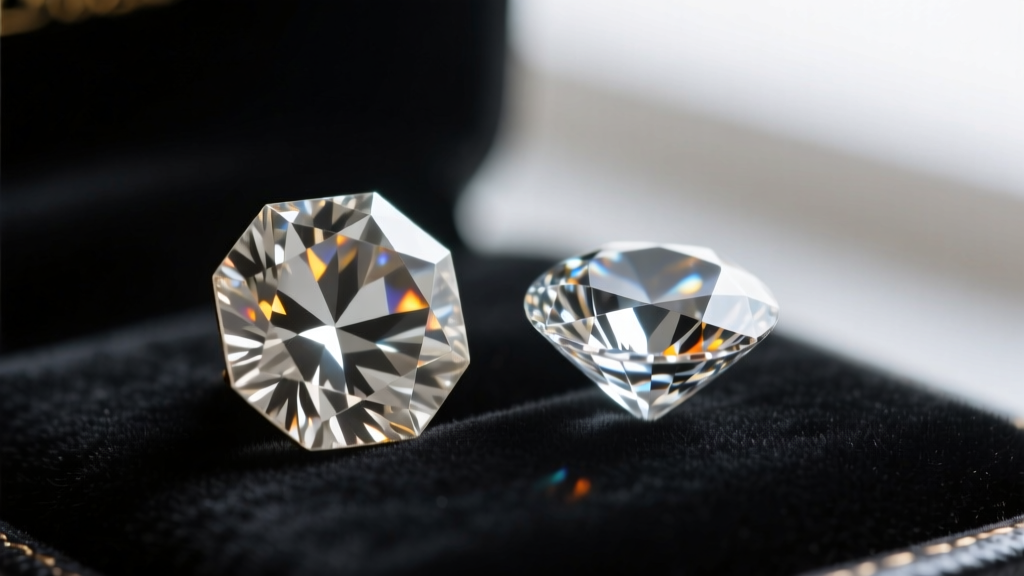
According to the Victoria and Albert Museum, 19th-century paste stones were often foil-backed and set in closed-back silver or gold settings. The metallic foil reflected light back through the glass, mimicking the brilliance and "fire" (dispersion) of a real diamond. Because Mathilde and her husband only examined the necklace in its closed velvet box and later in the low light of a Parisian salon, the visual cues that separate glass (refractive index ~1.7) from carbon (refractive index 2.417) were entirely masked. It wasn't until the necklace was lost and replaced with a real diamond rivière that the crushing weight of true gem-quality carbon was realized.
Step 2: Sourcing an Authentic Antique Rivière Necklace
If you are looking to acquire a genuine late-19th-century diamond rivière, you must know exactly what to look for. The Gemological Institute of America (GIA) notes that antique diamonds possess distinct faceting patterns that differ vastly from modern stones. Here is your step-by-step authentication guide.
Verify the Cut: Old Mine vs. Old European
An authentic 1880s rivière will feature either Old Mine Cuts (OMC) or early Old European Cuts (OEC). These stones were cut by hand, resulting in asymmetrical facet patterns, high crowns, small tables, and a distinctly open, flat culet at the bottom of the stone. Modern brilliant-cut diamonds, by contrast, are machine-symmetrical with pointed culets.
Inspect the Setting: Silver-Topped Gold
In the 1880s, white gold and platinum were not yet widely used in jewelry making. To ensure the diamonds appeared white and colorless, jewelers set the stones in silver. However, silver tarnishes and stains the skin. To solve this, they used "silver-topped gold"—a layer of silver over a base of 14k or 18k yellow gold. If you examine an antique rivière and see yellow gold prongs touching the skin with white metal holding the diamonds, you are looking at a historically accurate setting.
Check the Clasps and Safety Chains
Antique necklaces from this era predate the modern lobster clasp. Look for a C-clasp, a push-in box clasp, or an early trombone clasp. A genuine piece will also show microscopic wear on the interior of the drill holes where the silk thread or early wire once passed through.
| Feature | Authentic 1880s Antique | Modern Reproduction / Fake |
|---|---|---|
| Diamond Cut | Old Mine or Old European (open culet) | Modern Round Brilliant (pointed culet) |
| Metal Setting | Silver-topped 14k/18k Yellow Gold | Platinum, White Gold, or Sterling Silver |
| Clasp Type | C-Clasp, Push-in Box, or Trombone | Lobster Claw or Spring Ring |
| Stone Symmetry | Slightly asymmetrical, hand-cut facets | Perfectly symmetrical, laser-cut |
Step 3: Recreating the Mathilde Loisel Look on a Modern Budget
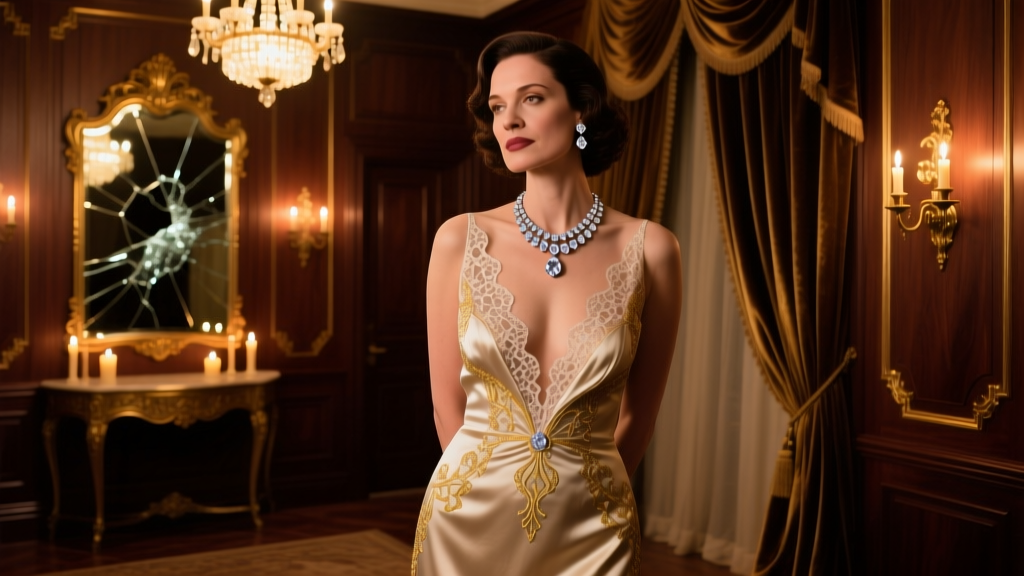
You do not need to spend ten years paying off a Parisian jeweler to capture the elegance of Maupassant’s iconic necklace. Today, advanced lapidary science allows us to recreate the exact visual weight and fire of an 1880s rivière at a fraction of the cost.
Option A: Lab-Grown Diamonds (CVD and HPHT)
For those who want genuine carbon crystals without the antique markup or ethical concerns, lab-grown diamonds are the premier choice. A 15-inch lab-grown diamond rivière featuring 35 stones (approx. 15 total carat weight) in the Old European Cut style will cost between $4,000 and $8,000 in 2026. This provides the exact hardness (10 on the Mohs scale) and refractive index of Mathilde’s borrowed jewel, ensuring it sparkles identically under ballroom lights.
Option B: High-Grade Cubic Zirconia or Moissanite
If you are strictly recreating the "paste" aspect of the story for a theatrical production, historical reenactment, or budget-friendly styling, opt for high-grade cubic zirconia (CZ) set in sterling silver. To mimic the 1880s look, ensure the CZ stones are cut with high crowns and small tables. A high-end CZ rivière can be sourced for $300 to $600, closely mirroring the 500-franc valuation of Madame Forestier’s actual necklace.
Step 4: Care and Maintenance for Rivière Necklaces
Whether you own an antique original or a modern recreation, a continuous line of stones requires meticulous maintenance to prevent catastrophic loss.
- Prong Inspection: Because rivière necklaces contain dozens of individual stones, a single worn prong can result in a lost diamond. Have a jeweler inspect the prongs every 6 months using a 10x loupe.
- Cleaning Foil-Backed Antiques: If you acquire a genuine 19th-century paste or foil-backed diamond rivière, never use ultrasonic cleaners or liquid solutions. The moisture will destroy the foil backing, turning the stones black or cloudy. Use only a soft, dry makeup brush to remove dust.
- Storage: Always store a rivière necklace flat or draped over a velvet bust. Folding or bunching the necklace can weaken the links and cause the settings to snag and pull apart.
Conclusion: The True Value of the Necklace
Reading the necklace pdf short story is a masterclass in human psychology, but analyzing the jewelry within it is a masterclass in gemology. Mathilde Loisel’s tragedy was not just born of vanity, but of a lack of gemological education. By understanding the historical context of the 1880s diamond rivière, the deceptive brilliance of Palais-Royal paste, and the modern alternatives available today, we can appreciate the artistry of the past without falling victim to its financial traps. Whether you are sourcing an authentic Old Mine cut antique or designing a lab-grown tribute, the rivière remains an enduring testament to the timeless allure of diamonds.
"She saw, in a black satin box, a superb diamond rivière." — Guy de Maupassant, La Parure (1884). Today, we know exactly what that rivière looked like, how it was constructed, and how to bring its legacy into the modern era.


