Buying a Dainty Emerald Necklace: 2026 Quality Guide
Discover how to choose the perfect dainty emerald necklace. Learn about gemstone treatments, chain gauges, bezel settings, and 2026 pricing data.

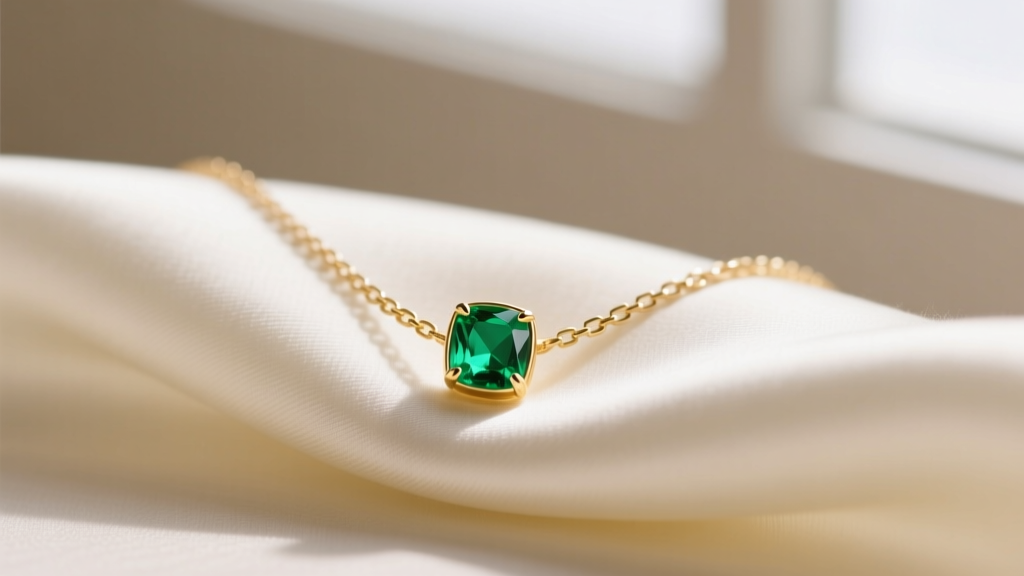
The allure of a dainty emerald necklace lies in its ability to deliver the lush, historic prestige of emeralds in a subtle, everyday-wearable silhouette. However, scaling down one of the world's most complex gemstones introduces unique structural and gemological challenges. Emeralds rank at 7.5 to 8 on the Mohs hardness scale, but their natural internal fractures—known as jardin—make them notoriously brittle. When set into delicate, low-profile pendants, the margin for error in craftsmanship and stone selection shrinks dramatically.
As of 2026, the market is flooded with everything from heavily fracture-filled natural stones to advanced hydrothermal lab-grown alternatives. This comprehensive buying guide cuts through the marketing fluff, providing you with the exact specifications, material grades, and structural red flags you need to evaluate before purchasing a fine dainty emerald pendant.
The Anatomy of a Dainty Emerald: Carat and Cut
When jewelers use the term "dainty" for emerald pendants, they are generally referring to stones weighing between 0.15 and 0.45 carats (approximately 3mm to 5mm in diameter). At this scale, the cut of the emerald dictates both its visual impact and its structural integrity.
- Round Brilliant Cut: While rare for emeralds due to the high wastage of rough material, round cuts are exceptionally safe for dainty settings. The lack of sharp corners minimizes the risk of chipping during daily wear.
- Emerald Cut (Rectangular): The classic step-cut. For dainty stones under 0.30ct, the stepped facets can sometimes look muddy if the clarity isn't high. Furthermore, the sharp 90-degree corners are highly susceptible to chipping if not protected by V-prongs or a bezel.
- Oval and Pear Cuts: Excellent for maximizing perceived size. A 0.25ct oval emerald will face up larger than a 0.25ct emerald cut, making it a popular choice for minimalist, budget-conscious buyers.
According to the Gemological Institute of America (GIA), color is the most critical quality factor for emeralds. For small, dainty stones, look for a medium-dark tone with high saturation. Zambian emeralds often provide better clarity and a slightly bluer-green hue at smaller sizes compared to their Colombian counterparts, making them a superior choice for microscopic, eye-clean dainty pendants.
Treatments: The Non-Negotiable Disclosure
Over 90% of natural emeralds on the market are treated to improve clarity. Because dainty emeralds are small, finding an entirely untreated, eye-clean stone is exceptionally rare and commands a massive premium. However, not all treatments are created equal, and the type of filler used directly impacts the necklace's longevity.
The Clarity Enhancement Hierarchy
- Cedar Oil (Traditional): The industry standard. It is temporary and can dry out or leak if exposed to heat or ultrasonic cleaners, but it is widely accepted and easily reapplied by a jeweler.
- Opticon / Synthetic Resins: More permanent than oil, but can yellow over time. Acceptable in minor amounts.
- Polymer / Epoxy Fracture Filling: Avoid. Often used to hold heavily fractured, low-grade emeralds together. If a dainty stone has "significant" polymer filling, it is structurally compromised and may shatter if bumped against a hard surface.
"Always demand a lab report or explicit seller disclosure regarding clarity enhancement. Under FTC guidelines, sellers must disclose treatments that significantly affect the stone's value or durability." - FTC Jewelry Guides
Natural vs. Lab-Grown: 2026 Market Pricing
The lab-grown emerald market has matured significantly. Hydrothermal synthesis now produces emeralds with natural-looking jardin inclusions, making them visually indistinguishable from mined stones to the naked eye. For dainty necklaces, lab-grown options offer a way to get a richer, more saturated green without the premium of natural origin.
| Stone Type (0.25ct - 0.40ct) | Typical Clarity/Treatment | 2026 Price Range (14k Gold Setting) | Durability for Daily Wear |
|---|---|---|---|
| Natural Colombian | Moderate Cedar Oil | $600 - $1,200+ | Fair (Requires careful maintenance) |
| Natural Zambian | Minor Oil / Untreated | $450 - $900 | Good (Denser crystal structure) |
| Hydrothermal Lab-Grown | Untreated / Eye-Clean | $180 - $350 | Excellent (Fewer internal fractures) |
| Nano / Simulated Glass | N/A (Not real beryl) | $40 - $90 | Poor (Scratches easily) |
Note: Prices reflect the pendant and a standard 16-inch 14k solid gold chain. Vermeil or gold-plated settings will reduce the price but are not recommended for heirloom-quality gemstones.
Chain Architecture: Gauges, Links, and Clasps
A dainty emerald pendant requires a chain that balances delicacy with tensile strength. The most common failure point in minimalist jewelry is a chain snapping under the dynamic weight of the pendant.
Optimal Chain Specifications
- Gauge (Thickness): Never purchase a chain thinner than 0.8mm for an emerald pendant. The ideal sweet spot is 0.9mm to 1.1mm. This provides enough visual subtlety while ensuring the links can withstand accidental snags.
- Link Style: Box chains and Wheat chains offer the highest tensile strength due to their interwoven geometric structures. Avoid delicate cable chains or snake chains for emeralds, as snake chains kink permanently and thin cable links easily pull apart.
- The Clasp: Insist on a lobster clasp. Spring-ring clasps are notoriously difficult to operate, prone to internal spring failure, and offer a weaker connection point.
Setting Styles: Protecting a Brittle Gemstone
How the metal wraps around your emerald is the single most important factor in its survival. Because emeralds are brittle, traditional high-prong settings leave the vulnerable girdle and corners exposed to impacts.
Bezel vs. Prong Settings
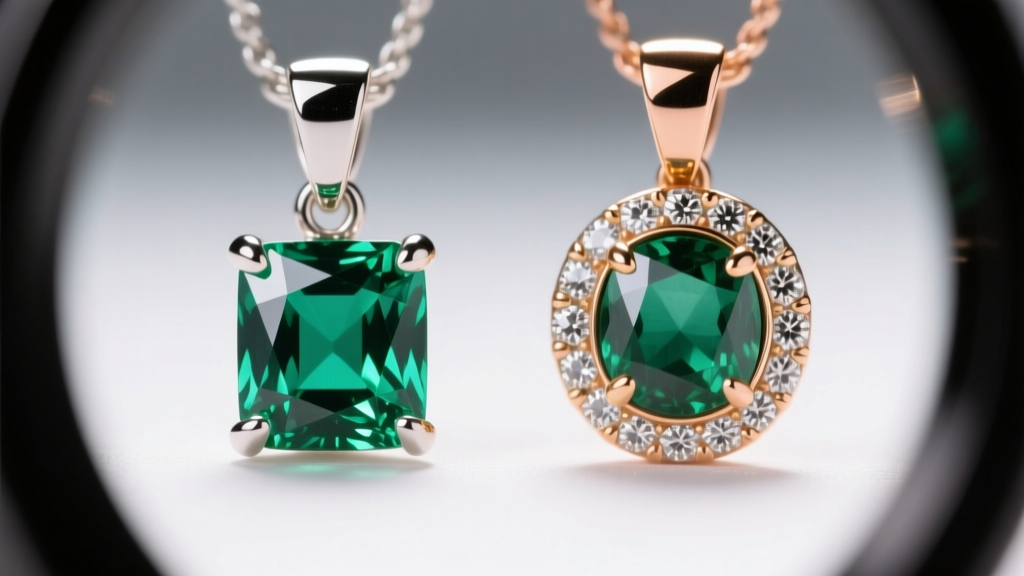
For a dainty emerald necklace intended for everyday wear, a full bezel setting is the undisputed champion. A bezel features a continuous rim of metal that encircles the entire girdle of the stone. This not only protects the fragile edges from chipping but also prevents lotions, perfumes, and sweat from seeping into the emerald's surface-reaching fractures, which can degrade cedar oil treatments over time.
If you strongly prefer the light-letting properties of a prong setting, ensure the jeweler uses low-profile, V-shaped prongs at the corners (if using an emerald or pear cut). Avoid four-prong settings on rectangular emeralds, as they leave the 90-degree corners completely exposed to catastrophic chipping.
Red Flags to Avoid When Shopping
When browsing online or in-store, keep an eye out for these immediate dealbreakers:
- "Created" vs. "Simulated" Ambiguity: "Lab-created" means it is real beryl with the same chemical makeup. "Simulated" or "Created Emerald Simulant" usually means green glass or cubic zirconia. Always read the fine print.
- Ultrasonic Cleaning Warranties: If a seller claims their natural emerald necklace is safe for ultrasonic cleaners, they are either lying or selling a fracture-filled stone that is about to shatter. Natural emeralds should only be cleaned with warm water, mild soap, and a soft baby toothbrush.
- Hollowed-Out Backs: Some manufacturers carve out the back of the emerald (creating a concave pavilion) to make a dark, heavily included stone look lighter and more transparent. This severely weakens the stone and makes it nearly impossible to resize or repair the setting later.
Final Sizing and Neckline Pairing
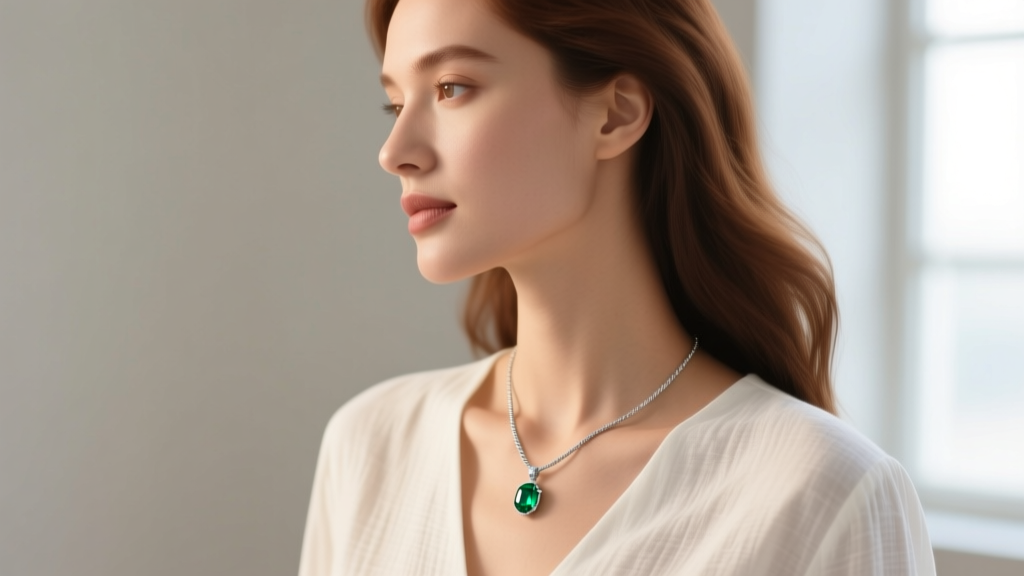
For dainty pendants, chain length dictates the entire aesthetic. A 14-inch choker length places the emerald directly on the collarbone, ideal for crew necks and off-the-shoulder tops. A 16-inch standard length allows the pendant to rest in the hollow of the throat, making it the most versatile option for V-necks and button-down blouses. If you plan to layer your dainty emerald with other gold chains, opt for a 16-inch or 18-inch length to ensure the gemstone sits below the rest of your metal layering stack, preventing the metal from scratching the surface of your beryl.
By prioritizing a protective bezel setting, demanding full treatment disclosure, and selecting a structurally sound 1.0mm box chain, your dainty emerald necklace will remain a vibrant, enduring staple in your jewelry wardrobe for decades to come.


