Expert Cleaning and Care for Your T Initial Necklace
Learn expert cleaning, maintenance, and storage tips for your T initial necklace. Protect gold vermeil, silver, and pave stones from damage.

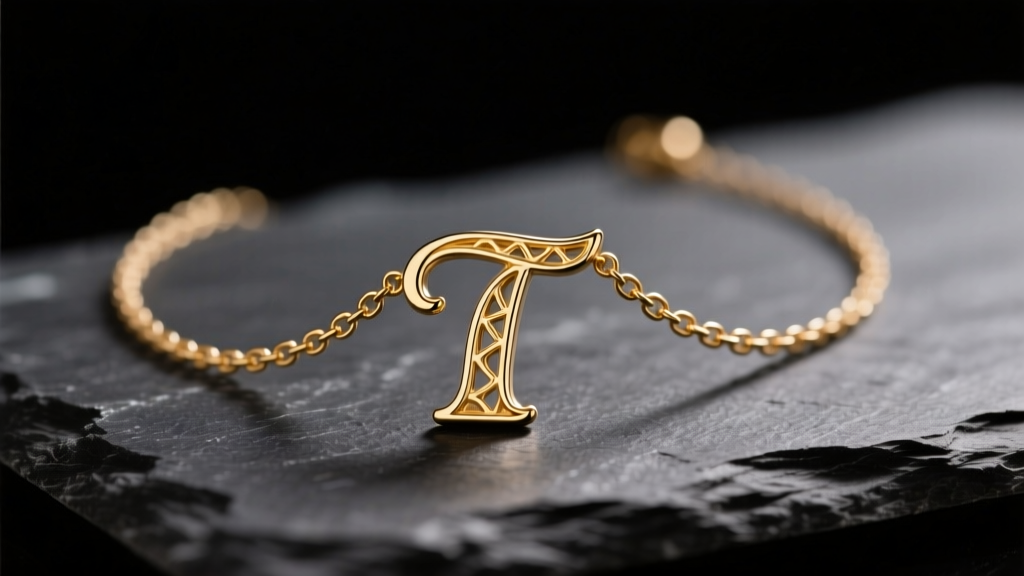
The Anatomy of a T Initial Necklace: Why Material Dictates Care
The T initial necklace remains a staple in personalized jewelry, but its distinct geometry and material variations demand a highly specific maintenance approach. Unlike simple circular pendants, the sharp 90-degree inner corners of the letter 'T' act as micro-traps for sebum, dead skin cells, and cosmetic residues. Furthermore, the care protocol shifts dramatically depending on whether your piece is crafted from solid 14k gold, 925 sterling silver, or gold vermeil.
As of 2026, the market has seen a surge in high-quality gold vermeil initial necklaces. According to the Federal Trade Commission (FTC) Jewelry Guides, true vermeil must consist of a sterling silver base plated with at least 2.5 microns of 10k, 14k, or 18k gold. Many premium contemporary brands now push this to 3 or 4 microns for enhanced longevity. However, this micron-thin layer is highly susceptible to abrasive polishing and harsh chemical strippers, meaning the cleaning methods you use must be meticulously gentle.
Solid Gold vs. Gold Vermeil vs. Plated Brass
Before applying any cleaning solution, you must verify your necklace's base metal. Solid 14k or 18k gold can withstand commercial jewelry dips and ultrasonic cleaners. Gold vermeil, however, will permanently degrade if exposed to ultrasonic cavitation or ammonia-based dips, which strip the gold layer and expose the underlying silver. Brass-based plated necklaces, often found in fast-fashion tiers, are even more fragile; once the microscopic gold flash wears off the high-friction edges of the 'T', the brass will oxidize rapidly and turn the skin green.
The Universal Safe-Cleaning Protocol
For 90% of T initial necklaces—especially those featuring delicate cable chains and pave accents—the following manual cleaning protocol is the safest and most effective method to restore brilliance without risking structural damage.
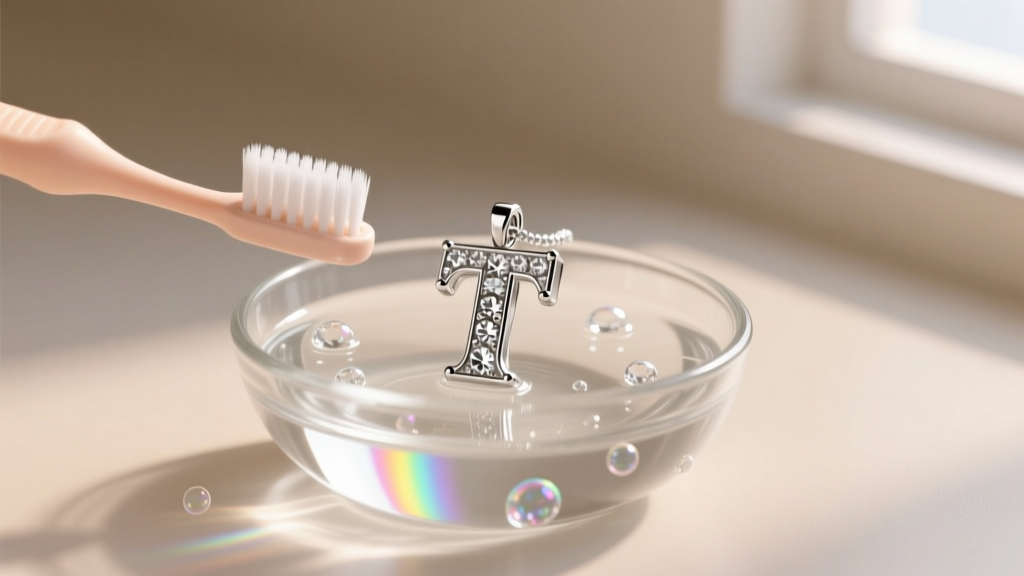
- Prepare the Solution: Mix three drops of phosphate-free, mild dish soap (such as original Dawn) into a glass bowl containing one cup of lukewarm distilled water. Avoid tap water, as trace minerals and chlorine can leave micro-deposits on the metal.
- The Targeted Soak: Submerge the necklace for exactly 3 to 5 minutes. Do not exceed this time, especially if your 'T' pendant features glued-in cubic zirconia or mother-of-pearl inlays, as prolonged water exposure weakens jewelry epoxies.
- Geometric Brushing: Using an extra-soft baby toothbrush, gently agitate the bristles into the sharp inner corners of the 'T'. Hold the brush at a 45-degree angle to dislodge trapped oils without scratching the flat, polished face of the letter.
- The Rinse and Dry: Rinse the piece under a gentle stream of lukewarm distilled water. Immediately pat dry with a lint-free microfiber cloth. Never air-dry, as water spots will form on the high-polish surfaces.
Material-Specific Maintenance Matrix
Different alloys react uniquely to environmental stressors. Use the matrix below to tailor your long-term maintenance strategy based on your necklace's exact composition.
| Material | Safe Cleaning Agent | Strictly Avoid | Polishing Frequency |
|---|---|---|---|
| Solid 14k/18k Gold | Mild dish soap, commercial gold dips | Bleach, mercury exposure | Monthly with a jeweler's cloth |
| 925 Sterling Silver | Baking soda paste (for heavy tarnish), soap | Chlorine pools, rubber bands | Bi-weekly with a Sunshine cloth |
| Gold Vermeil (2.5+ microns) | Mild dish soap, distilled water only | Ultrasonic cleaners, polishing pastes | Never use abrasive polishes |
| 316L Stainless Steel | Isopropyl alcohol, glass cleaner | Hydrochloric acid | As needed (highly scratch-resistant) |
Protecting Pave Diamonds and Cubic Zirconia Accents
Many T initial necklaces feature pave-set stones outlining the letter. The Gemological Institute of America (GIA) notes that while diamonds are incredibly hard, the settings holding them are vulnerable. In pave settings, tiny metal beads or prongs secure the stones. Over time, friction from clothing can wear these prongs down.
If your 'T' features cubic zirconia (CZ) or moissanite, avoid steam cleaners entirely. The sudden thermal shock can cause micro-fractures in lab-created stones, leading to a cloudy appearance. Furthermore, if the stones are friction-set or glued rather than prong-set, any alcohol-based cleaner will dissolve the adhesive, resulting in lost stones. Always inspect the underside of the 'T' pendant with a jeweler's loupe; if you see a solid metal backing rather than open galleries, the stones are likely glued and require strictly non-chemical, damp-cloth cleaning.
Chain Care: Preventing Stretch and Tangles
The chain on an initial necklace is often a delicate 1mm to 1.5mm cable, box, or rolo chain. Box chains, while beautiful, are notorious for trapping skin oils between their interlocking square links, which eventually causes the chain to stiffen and snap. Cable chains, conversely, are prone to stretching if the clasp is caught on a sweater.
To clean the chain, lay it flat on a microfiber towel. Do not bunch it up. Run a soapy cotton swab along the length of the chain, applying zero downward pressure. When drying, pull the chain taut between two hands and run it through a dry section of the cloth to ensure the inner links are completely moisture-free.
Strategic Storage for Longevity
Tarnish on sterling silver initial necklaces is not a defect; it is a chemical reaction between the copper alloy in the silver and hydrogen sulfide in the ambient air. To halt this process, storage environment is just as critical as cleaning.
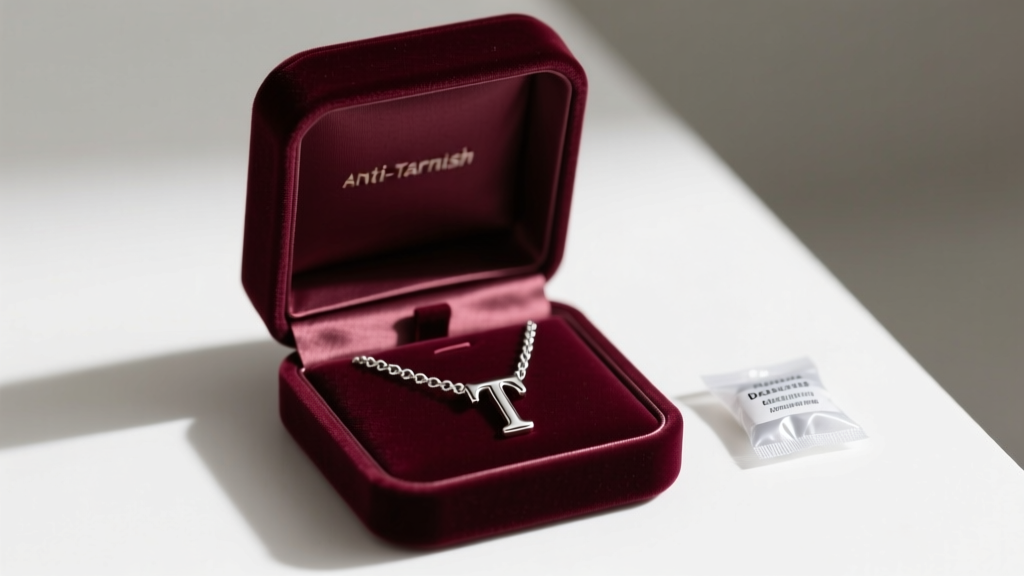
Pro-Tip: Never store your T initial necklace in a humid bathroom. The combination of aerosolized hairspray, steam, and fluctuating temperatures will accelerate silver sulfide formation and degrade gold vermeil plating within weeks.
Store the necklace in an airtight polyethylene ziplock bag alongside a 3M anti-tarnish strip and a small silica gel desiccant packet to control both sulfur gases and ambient moisture. Always fasten the lobster clasp through the end ring before storage; this prevents the delicate chain from threading through itself and forming microscopic knots that are nearly impossible to untangle without bending the links.
When to Visit a Professional Jeweler
While home maintenance handles daily grime, structural and chemical interventions require a professional. According to Jewelers of America, you should seek professional servicing if you notice any of the following:
- Vermeil Fading: If the high-friction edges of the 'T' or the clasp area begin to show a silver or brassy hue, a jeweler can professionally re-plate the piece, restoring the original micron thickness.
- Prong Wear: If a pave stone on the initial feels loose or catches on silk fabrics, stop wearing it immediately and have a jeweler re-tip the micro-prongs.
- Chain Kinks: If a box chain develops a hard kink, do not attempt to bend it back into place with pliers. This will snap the interlocking links. A jeweler has specialized mandrels to gently massage the chain back into alignment.
By respecting the specific geometry and metallurgy of your T initial necklace, you ensure that this personalized piece remains a brilliant, enduring fixture in your daily jewelry rotation for years to come.


