Men Necklace Length Troubleshooting: Fix Fit, Sizing & Collar Clash
Struggling with the wrong men necklace length? Learn how to measure, adjust chain drops, prevent collar clash, and fix sizing issues like a pro.

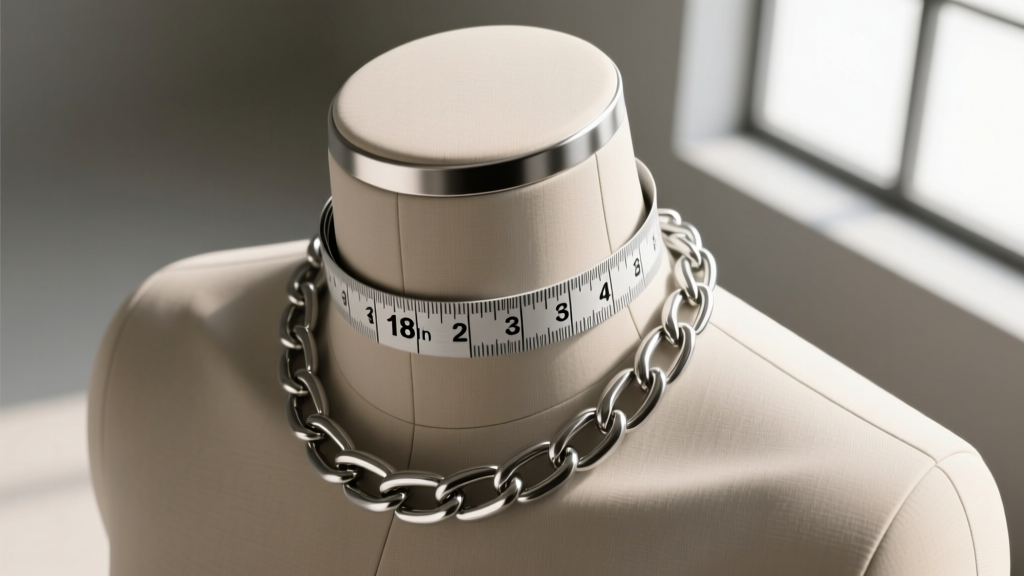
Finding the perfect men necklace length is rarely as simple as picking a standard 20-inch chain off the rack. While the jewelry industry often pushes a "one-size-fits-most" narrative, the reality of male anatomy, pendant weight, and wardrobe integration makes necklace sizing a frequent source of frustration. A chain that looks proportional on a mannequin can feel like a chokehold on a guy with a 17-inch neck, or hang awkwardly low on someone with a leaner build. According to Blue Nile's comprehensive sizing guide, the drop of the necklace—how far it falls below the collarbone—drastically alters its visual weight and comfort. This troubleshooting guide will help you diagnose fit issues, calculate true baseline measurements, and fix chains that are fighting with your shirt collars.
The Core Problem: Why Standard Sizing Fails
The most common mistake men make is ignoring their actual neck circumference. The average adult male neck measures between 15 and 17 inches. If you purchase a standard 20-inch chain and have a 17-inch neck, you are left with only 3 inches of total slack. This translates to a mere 1.5-inch drop on either side of your neck, causing the chain to sit tight against the base of your throat. This not only feels restrictive but also causes the metal to catch on body hair and trap sweat, leading to premature tarnishing and skin irritation.
Furthermore, standard sizing fails to account for the "trapezius shift." When you move your arms or shrug, your neck muscles expand and contract, temporarily increasing your neck circumference by up to half an inch. A chain that feels fine while sitting still can become uncomfortably tight during physical activity. To solve this, you must establish a true baseline measurement that accounts for both static anatomy and dynamic movement.
The Measurement Framework: Finding Your True Baseline
To troubleshoot your ideal men necklace length, discard the rigid ruler and use a flexible tailor's measuring tape or a piece of non-stretch string. Wrap it around your neck at the exact height where you want the chain to rest—usually just below the Adam's apple for shorter chains, or at the collarbone for standard drops.
Once you have your snug measurement, apply the "Comfort Multiplier":
- For a snug, choker-style fit (18 inches): Add 1.5 to 2 inches to your base neck measurement.
- For a standard collarbone drop (20-21 inches): Add 3 to 4 inches to your base measurement.
- For a mid-chest casual drop (22-24 inches): Add 5 to 7 inches to your base measurement.
Always measure at the end of the day when your body is slightly more swollen from daily activity and hydration. This ensures your chain won't feel restrictive during summer heat or after a workout.
Factoring in Pendant Weight and Chain Gauge
A bare chain measurement is only half the equation. If you plan to add a pendant, you must calculate the "pendant pull." A heavy pendant—such as a 25-gram solid 14k gold signet or a dense tungsten cross—will pull the center of a flexible chain (like a 2mm rope or box chain) downward by an additional 0.5 to 1 inch due to gravity and tension. If you size your chain based on a bare measurement, the pendant will drag the neckline down into an awkward, elongated V-shape. To counteract this, subtract 0.5 inches from your target length when pairing a thin chain (under 3mm) with a heavy pendant (over 20 grams).
Fixing a Chain That Is Too Short or Too Long
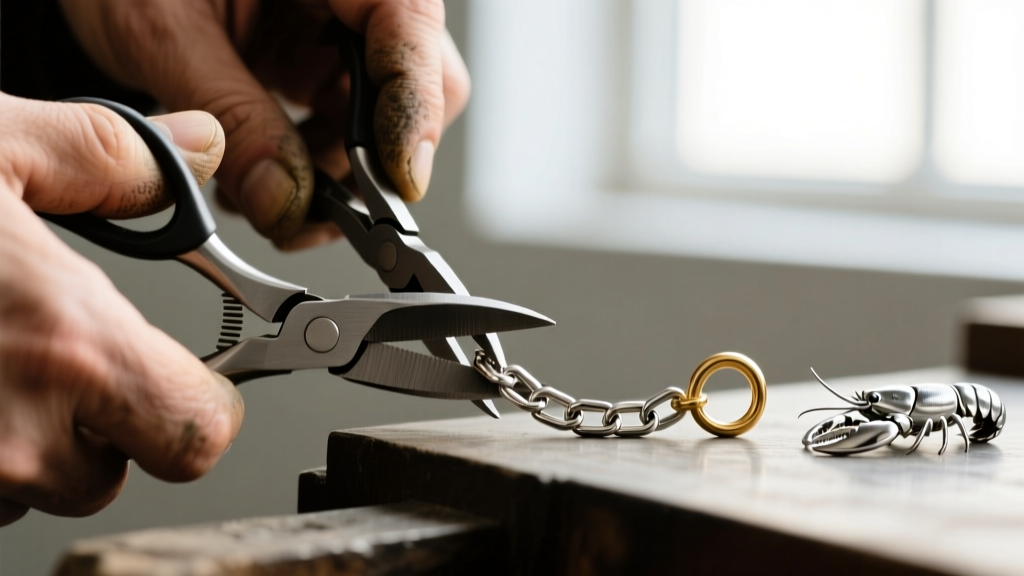
If you already own a chain that fits poorly, you don't necessarily need to replace it. Adjusting the men necklace length is a routine procedure, but the method depends entirely on the chain's link structure and gauge. Chains with uniform, soldered links (like Figaro or Cuban links) require professional intervention to remove or add links seamlessly. Conversely, chains with unsoldered links or modular designs can sometimes be adjusted at home.
DIY Adjustments vs. Professional Jeweler Sizing
For lightweight chains (under 4mm gauge) made of sterling silver, gold-filled, or base metals, you can perform minor adjustments using precision jewelry tools. A pair of Lindstrom 8141 flush cutters will cleanly snip through a 2mm brass jump ring or a thin box chain link without crushing the surrounding metal. You can then attach a 2-inch sterling silver extender chain to the clasp end, giving you modular length options.
However, for solid gold, platinum, or chains thicker than 4mm, DIY adjustments often result in structural failure. A master jeweler will use a laser welder to seamlessly remove links and re-solder the chain without leaving a visible seam or compromising the metal's temper. Expect to pay between $35 and $60 for standard gold soldering, and upwards of $85 to $120 for laser welding titanium or platinum chains, as noted by industry repair standards. Upgrading the clasp during this process—swapping a weak 5mm spring ring for a 12mm stainless steel lobster clasp—adds roughly 0.25 inches to the total length and drastically improves security.
Troubleshooting Collar Clash: Necklaces vs. Shirt Types
One of the most persistent styling issues is "collar clash," where the necklace competes with the shirt's neckline, creating a cluttered visual or physically catching on the fabric. As highlighted in GQ's menswear styling guides, the relationship between the chain length and the shirt collar dictates whether the piece looks intentional or accidental.
| Shirt Type | Ideal Chain Length | Pendant Drop Strategy | Clasp & Gauge Recommendation |
|---|---|---|---|
| Crew Neck T-Shirt | 20 - 22 inches | Rests exactly 1 inch below the fabric collar line. | 3-5mm gauge; sturdy lobster clasp to handle fabric friction. |
| V-Neck T-Shirt | 22 - 24 inches | Mirrors the V-shape; pendant should sit 1 inch above the shirt's deepest point. | 2-4mm rope or box chain; avoid wide flat chains that clash with the V. |
| Button-Down (Unbuttoned) | 21 - 23 inches | Sits mid-sternum, visible through the open collar gap. | Matte finish chains to avoid catching on cotton threads. |
| Hoodie / Sweatshirt | 24 - 26 inches | Must hang below the thick hood seam and front kangaroo pocket line. | 6mm+ heavy gauge (e.g., Cuban or Curb) to stand out against heavy fleece. |
Material and Gauge Constraints to Watch For
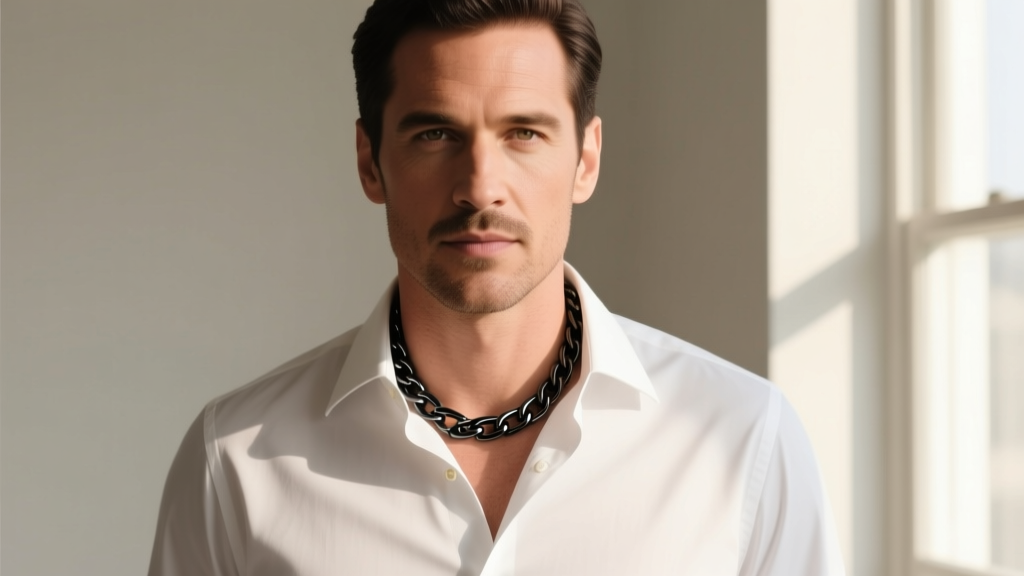
When troubleshooting fit, the material and gauge (thickness) of the chain dictate how it drapes and behaves. A 20-inch chain made of 6mm stainless steel Cuban links will sit completely differently than a 20-inch 2mm sterling silver snake chain. Thicker, heavier chains possess high structural rigidity; they do not drape closely to the skin and instead project outward. This "stand-off" effect means a thick chain will feel tighter and sit higher on the chest than a thin chain of the exact same length.
Additionally, certain materials are notoriously difficult to resize. Tungsten carbide and titanium chains cannot be traditionally soldered due to their extreme melting points and reactivity with oxygen. If you buy a titanium chain in the wrong length, you are often forced to rely entirely on clasp-side extender additions rather than link removal. Always verify the metal composition before purchasing a chain if you anticipate needing future sizing adjustments.
Final Thoughts on Mastering Your Fit
Achieving the perfect men necklace length requires moving beyond generic sizing charts and treating the chain as a tailored garment. By accurately measuring your dynamic neck circumference, calculating the gravitational pull of your pendants, and matching the chain's drop to your specific wardrobe necklines, you can eliminate the discomfort and visual clutter of a poorly fitted chain. When in doubt, opt for a slightly longer chain and utilize a high-quality extender or seek a professional jeweler's laser-sizing service to lock in your ideal, custom fit.


