How to Style a Black White Pearl Necklace for Beginners
Discover how to choose, grade, and style a black white pearl necklace. Our beginner-friendly guide covers lengths, necklines, and pearl types.

The Rise of Two-Tone Elegance
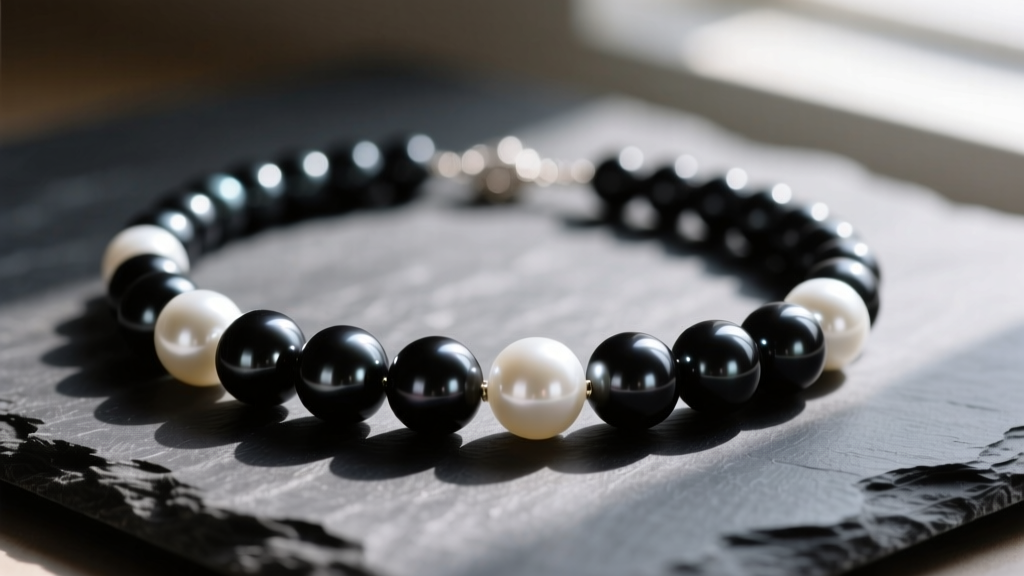
For decades, pearl jewelry was strictly monochromatic. You either wore a strand of bright whites or a moody rope of dark greys. However, as we navigate the jewelry trends of 2026, the black white pearl necklace has emerged as a definitive statement piece for beginners and collectors alike. This striking two-tone design leverages high-contrast aesthetics, blending the mysterious, iridescent depths of dark pearls with the crisp, reflective brilliance of white ones. For a beginner, navigating the nuances of mixed-pearl jewelry can feel overwhelming. This guide will break down the gemology, construction, and styling mechanics you need to confidently select and wear a two-tone pearl necklace.
Decoding the Pearls: Tahitian vs. Akoya and Freshwater
To understand a black white pearl necklace, you must first understand that "black" and "white" are industry shorthand. True, pitch-black pearls do not exist in nature. The dark pearls in your necklace are almost certainly Tahitian pearls, while the white pearls are typically Akoya or high-grade Freshwater pearls.
The "Black" Pearl: Tahitian Origins
Cultivated primarily in French Polynesia, Tahitian pearls are produced by the Pinctada margaritifera oyster. They are renowned for their dark body colors—ranging from charcoal grey to deep aubergine—and their spectacular overtones. The most prized overtone is "peacock," a shimmering mix of green, rose, and purple. When strung in a mixed necklace, Tahitian pearls provide a heavy, luxurious visual anchor.
The "White" Pearl: Akoya and Freshwater
White pearls in these designs are usually Akoya (cultivated in Japan and China) or Freshwater (cultivated primarily in China). Akoya pearls are the gold standard for mirror-like luster and perfect roundness, typically ranging from 6mm to 9mm. Freshwater pearls offer a wider variety of shapes and larger sizes (up to 12mm) at a more accessible price point, though their luster is generally softer and more satiny than Akoya.
| Feature | Tahitian (Dark) | Akoya (White) | Freshwater (White) |
|---|---|---|---|
| Typical Size Range | 8mm - 14mm | 6mm - 9.5mm | 7mm - 12mm |
| Luster Quality | Soft, satiny, deep | Sharp, mirror-like | Soft, glowing, satiny |
| Common Overtones | Peacock, green, silver | Rose, silver, cream | Rose, peach, ivory |
| Average Price (Per Strand) | $800 - $5,000+ | $300 - $2,500 | $100 - $600 |
The GIA Grading Framework: What Beginners Must Know
When investing in a black white pearl necklace, you must look beyond the color contrast and evaluate the structural quality of the gems. The Gemological Institute of America (GIA) evaluates pearls based on seven factors, but for beginners, three are absolutely critical:
- Luster: This is the most important value factor. High-quality pearls will reflect light sharply. If the white pearls look chalky or the dark pearls look dull and matte, the necklace is of low quality. You should be able to see a crisp reflection of a light source on the pearl's surface.
- Surface Quality: Pearls are organic and rarely flawless. However, a high-grade necklace will feature pearls that are "clean to the naked eye." Avoid strands with deep pits, cracks, or chalky spots, as these compromise the nacre's structural integrity.
- Nacre Thickness: Nacre is the crystalline substance the oyster secretes to form the pearl. For Akoya pearls, ensure the nacre is at least 0.4mm thick. For Tahitian pearls, the government of French Polynesia mandates a minimum export thickness of 0.8mm. Thin nacre will eventually peel or flake off the bead nucleus.

Stringing and Construction: The Hidden Markers of Quality
A common beginner mistake is ignoring how the necklace is actually assembled. A premium black white pearl necklace is not simply strung on a wire. It should be hand-knotted on high-grade silk thread. Knotting between every single pearl serves two purposes: it prevents the pearls from rubbing against each other (which damages the nacre), and it ensures that if the strand breaks, you only lose one pearl rather than the entire necklace.
Additionally, inspect the ends of the necklace where the silk meets the metal clasp. High-end jewelers use French wire (also known as gimp)—a tiny, hollow coil of fine silver or gold wire that protects the silk thread from fraying against the metal jump ring. If you see bare silk thread looping directly through a metal clasp, the necklace is poorly constructed and prone to snapping.
Choosing the Right Length and Neckline Pairing
The visual weight of a two-tone pearl necklace demands careful consideration of length and clothing pairings. Here is a practical matrix for styling your piece:
Choker Length (14 to 16 Inches)
A choker sits snugly against the base of the neck. Because the alternating black and white pearls create a bold, graphic pattern, a choker length acts almost like a collar. Best paired with: Off-the-shoulder tops, boat necklines, or deep V-necks where the necklace rests directly on bare skin, allowing the high contrast to pop without competing with fabric patterns.
Princess Length (18 Inches)
The princess length is the most versatile and universally flattering, resting just below the collarbone. This is the ideal length for a graduated black white pearl necklace, where the pearls slowly increase in size toward the center. Best paired with: Crew necks, button-down shirts, and professional blazers. It bridges the gap between casual and formal wear effortlessly.
Matinee Length (20 to 24 Inches)
A matinee strand falls at the top of the bust. The alternating colors create a long, slimming vertical line. Best paired with: High-necked blouses, turtlenecks, and business suits. The length prevents the necklace from feeling overwhelming while adding a sophisticated layer of texture to conservative outfits.
How to Layer a Black White Pearl Necklace
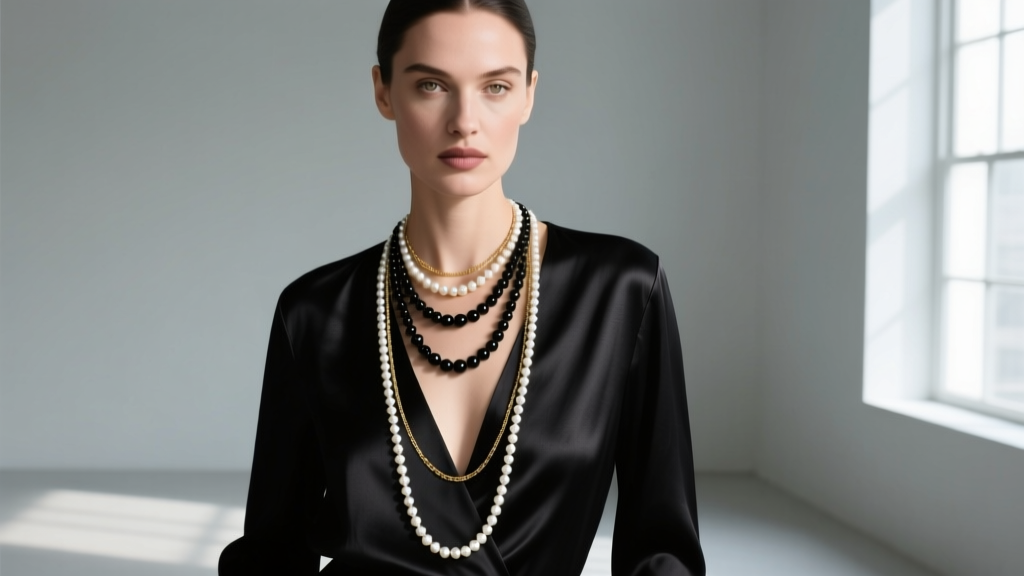
Layering is a dominant trend in 2026, and two-tone pearls are uniquely suited for mixed-material stacking. The key to layering a black white pearl necklace is to use the pearls as the "hero" piece and surround them with complementary metal chains.
"When layering mixed pearls, always anchor the piece with a metal that matches the pearl's overtone. If your Tahitian pearls have cool silver or green overtones, layer with white gold or platinum chains. If your white Akoya pearls have warm rose overtones, introduce delicate 14k or 18k yellow gold chains to bridge the color gap."
For a balanced three-piece layer, start with a 14-inch delicate cable chain, follow with your 18-inch black white pearl necklace, and finish with a 22-inch heavier rope or box chain. Ensure there is at least a two-inch gap between each layer to prevent the metal clasps from scratching the pearl nacre.
Caring for Your Two-Tone Pearl Jewelry
Pearls are exceptionally delicate, ranking only 2.5 to 3.0 on the Mohs hardness scale. The American Gem Society (AGS) emphasizes that pearls require specific, gentle care to maintain their luster and prevent dehydration.
- The "Last On, First Off" Rule: Always put your pearl necklace on after applying makeup, perfume, and hairspray. The chemicals and alcohols in cosmetics can dissolve the pearl's nacre and strip its natural luster.
- Proper Cleaning: Never use ultrasonic cleaners, steam cleaners, or harsh jewelry dips. After wearing, gently wipe the pearls with a clean, slightly damp microfiber cloth to remove body oils and sweat. Allow them to air dry completely before storing.
- Storage Mechanics: Never store your black white pearl necklace in a plastic bag or an airtight safe deposit box. Pearls are organic and require moisture from the air to prevent cracking. Store them flat in a soft, breathable cotton or linen pouch, separate from harder gemstones and metal jewelry that could scratch their surface.
Conclusion
A black white pearl necklace is more than just a piece of jewelry; it is a masterclass in contrast, texture, and organic beauty. By understanding the distinct origins of Tahitian and Akoya pearls, scrutinizing the silk knotting and nacre thickness, and thoughtfully pairing the strand with your wardrobe, you can elevate this striking accessory from a simple trend to a timeless cornerstone of your collection. Approach your purchase with an eye for structural quality, and your two-tone strand will remain a captivating focal point for decades to come.


