The Ultimate Guide to Buying a Vintage Mother of Pearl Bead Necklace
Learn how to authenticate, evaluate, and price a vintage mother of pearl bead necklace with our expert guide covering luster, eras, and clasps.

The Allure of Vintage Mother of Pearl
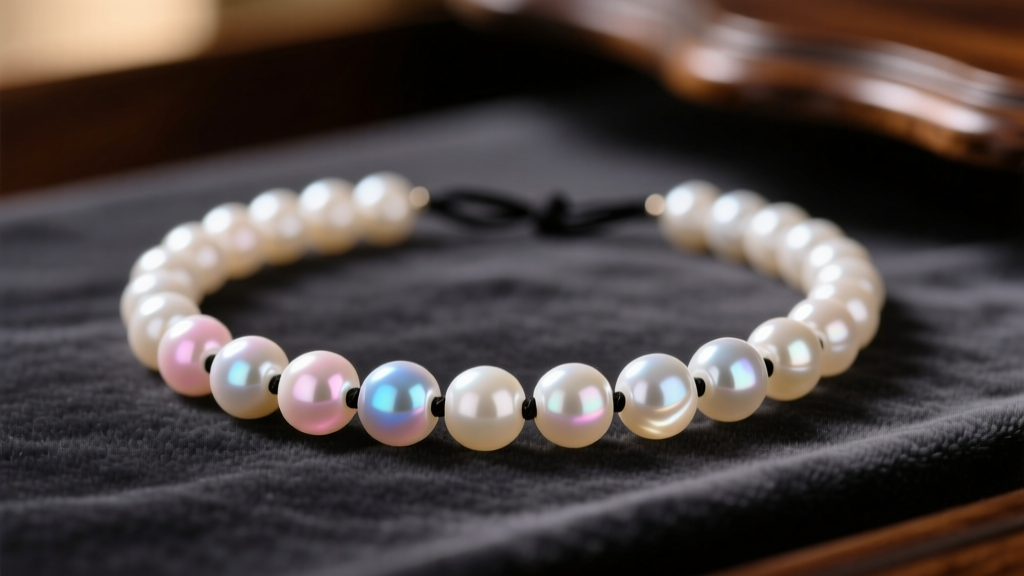
Mother of pearl, scientifically known as nacre, is the iridescent inner layer of certain mollusk shells, primarily the Pinctada maxima (silver-lipped or gold-lipped pearl oyster) and Pinctada margaritifera (black-lipped oyster). While cultured pearls often steal the spotlight in fine jewelry, a vintage mother of pearl bead necklace offers a distinct, organic beauty characterized by broad flashes of color, intricate natural banding, and a lightweight comfort that heavy gemstones cannot match. According to the Gemological Institute of America (GIA), nacre is composed of microscopic aragonite platelets, which create the material's signature optical phenomenon known as 'orient'—the play of iridescent colors across the surface.
For collectors and style enthusiasts in 2026, vintage MOP necklaces represent a sustainable, historically rich alternative to newly mined gems. However, the vintage market is saturated with glass imitations, plastic replicas, and modern 'shell pearls' (ground shell powder coated in lacquer). This comprehensive buying guide will equip you with the gemological knowledge and historical context required to confidently authenticate, evaluate, and price vintage mother of pearl bead necklaces.
How to Authenticate Genuine Vintage MOP
Before evaluating the aesthetic quality of a necklace, you must verify its material authenticity. Mid-century and Victorian counterfeiters frequently used celluloid, Bakelite, and milk glass to mimic the creamy luster of genuine shell. Here are the three non-destructive tests used by estate jewelry appraisers:
- The Tooth Test: Gently rub the bead against the biting edge of your front teeth. Genuine mother of pearl feels slightly gritty, sandy, or textured due to the crystalline structure of the aragonite. Glass and plastic will glide perfectly smoothly.
- The Temperature Test: Hold the beads against your cheek or the inside of your wrist. Authentic MOP is cool to the touch and takes a moderate amount of time to warm to your body temperature. Plastic feels room-temperature immediately, while glass feels significantly colder and remains cold longer.
- The Weight Test: Compare the strand to a known glass bead necklace of similar millimeter diameter. Mother of pearl is surprisingly lightweight. If a 12mm bead strand feels excessively heavy and clunks loudly when dropped on a glass table, it is likely a glass imitation.
Evaluating Luster, Nacre, and Bead Grading
Not all vintage mother of pearl is created equal. The value of a strand is heavily dictated by the thickness of the nacre, the depth of the orient, and the precision of the lapidary work. When inspecting a potential purchase, evaluate the following quality factors, which align with the GIA's pearl quality grading standards adapted for carved shell:
1. The Quality of the Orient
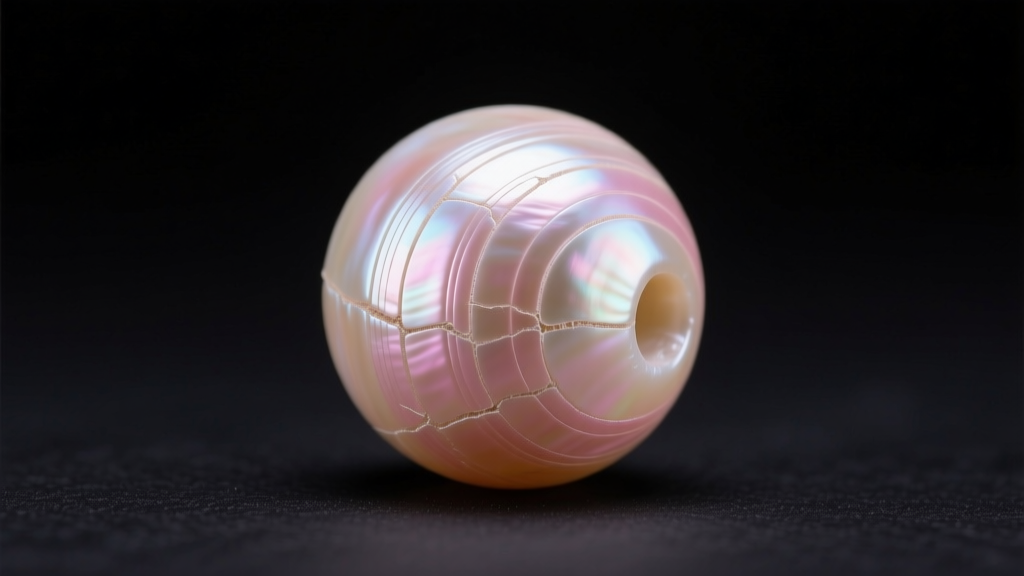
High-grade vintage MOP exhibits a deep, multi-colored iridescence. Look for beads that flash vibrant pinks, greens, silvers, and peacock hues when tilted under direct light. Lower-grade shell, often harvested from thinner or less desirable mollusk species, will appear 'chalky' or flat white with minimal color play. Avoid strands that look uniformly opaque, as this often indicates heavy bleaching or a lower-grade shell base.
2. Bead Shape and Symmetry
While perfectly round MOP beads are beautiful, vintage strands often feature barrel, button, or faceted shapes. Faceted mother of pearl is exceptionally rare and highly prized, particularly in Art Deco pieces, as the cutting process risks shattering the brittle nacre layers. Carved beads (such as floral motifs or geometric ribs) add significant artisan value, provided the carving is sharp and does not expose the dull, chalky under-layer of the shell.
3. Surface Blemishes and Pitting
Because MOP is an organic material, minor surface pitting or natural growth rings are expected and actually serve as proof of authenticity. However, deep cracks, missing chunks, or 'crazing' (a network of fine surface cracks caused by extreme dehydration or heat exposure) will drastically reduce the structural integrity and value of the necklace.
Identifying Vintage Eras by Clasp and Stringing
The clasp and stringing method are the most reliable indicators of a necklace's true age. A genuine antique strand will rarely feature a modern lobster claw clasp; if it does, the necklace has likely been restrung, which can affect its provenance and value. Below is a breakdown of era-specific characteristics to look for when shopping for vintage MOP.
| Era | Typical Clasp Type | Bead Style & Spacers | Stringing Method |
|---|---|---|---|
| Victorian (1837-1901) | Simple C-clasp, early push-clasp, or ornate screw barrel | Small round beads, seed MOP, carved cameos, often mixed with jet or seed pearls | Unknotted cotton or early silk, no French wire |
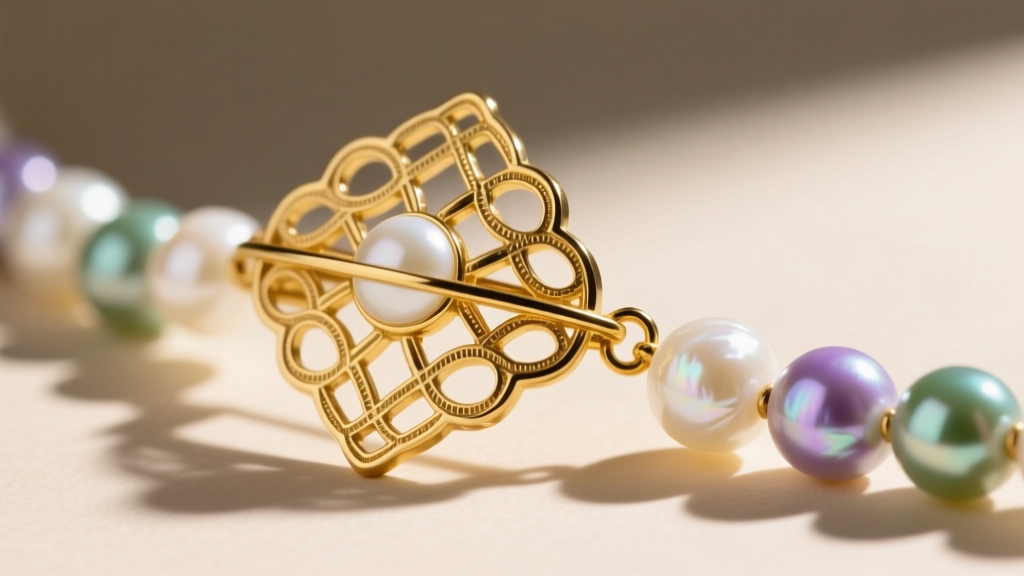
| Art Deco (1920-1935) | Filigree box clasp with safety chain, often set with marcasite or tiny diamonds | Geometric faceting, barrel shapes, contrasted with black onyx or coral spacers | Knotted silk, early use of French wire (gimp) at the clasp |
| Mid-Century (1950s-1960s) | Gold-filled push-pull clasp, simple fold-over clasp | Large 10mm-15mm round or barrel beads, high polish, occasional gold wire wrapping | Heavily knotted silk or early synthetic nylon threads |
| 1970s-1980s | Lobster claw, spring ring, or magnetic clasps | Irregular shapes, chunky statement beads, mixed with base metals or turquoise | Unknotted synthetic wire or monofilament line |
Pricing Framework for Vintage MOP Necklaces
Pricing vintage organic jewelry requires an understanding of both material rarity and historical desirability. Based on current estate jewelry market data and insights from antique jewelry historians at Lang Antiques, you can expect the following pricing tiers for authentic vintage mother of pearl bead necklaces:
Tier 1: Commercial & Tourist Trade ($40 - $120)
These are typically mid-to-late 20th-century strands featuring chalky, low-luster beads, synthetic stringing, and mass-produced base-metal clasps. They are fun for casual layering but hold little investment or collector value.
Tier 2: Fine Mid-Century & High-Luster Strands ($150 - $450)
This tier includes 1950s and 1960s necklaces with excellent orient, large well-matched beads (10mm+), and gold-filled or low-karat gold clasps. Strands that have been professionally restrung on silk with French wire protection sit at the top of this range.
Tier 3: Art Deco & Carved Antiques ($600 - $2,500+)
The pinnacle of the MOP market. Necklaces from the 1920s and 30s featuring intricate faceting, onyx contrasts, and intact 14k or 18k gold filigree box clasps command premium prices. Furthermore, Victorian-era strands that incorporate hand-carved MOP cameos or integrate rare seed pearls can easily exceed the $2,000 mark at specialized auction houses.
Collector's Tip: Always inspect the 'French wire' (the tiny coiled metal tube where the silk thread meets the clasp). If the French wire is crushed, darkened, or missing, the silk thread is vulnerable to being sliced by the metal clasp. Factor the $50-$100 cost of professional restringing into your offer price if the wire is compromised.
Essential Care for Heirloom Shell Jewelry
Mother of pearl is relatively soft, ranking between 2.5 and 3.0 on the Mohs hardness scale, making it highly susceptible to scratching and chemical damage. To preserve the orient of your vintage acquisition, adhere to these strict care protocols:
- Never Use Ultrasonic Cleaners: The high-frequency vibrations can cause microscopic fractures in the nacre layers, leading to catastrophic bead splitting.
- Avoid Harsh Chemicals: Perfumes, hairsprays, and acidic skin pH can etch the surface of the shell, permanently dulling the luster. Always put your MOP necklace on after applying cosmetics.
- Proper Storage: Store the necklace flat or loosely rolled in a soft microfiber pouch. Do not hang it, as the weight of the beads will stretch the vintage silk thread over time. Furthermore, keep it away from extremely dry environments (like a safe deposit box without a humidity control packet), which can cause the organic shell to dehydrate and crack.
- Cleaning Routine: After wearing, gently wipe the beads with a slightly damp, lint-free cloth to remove skin oils, and allow them to air dry completely before storing.
By understanding the gemological properties, historical markers, and proper care techniques, you can confidently navigate the estate market. A well-chosen vintage mother of pearl bead necklace is not merely an accessory; it is a wearable piece of natural history that offers a timeless, luminous elegance impossible to replicate with modern synthetic materials.


