Recreating the Queen Latifah Key Necklace: Metal & Chain Guide
Explore the technical anatomy of the Queen Latifah key necklace. Learn about pendant casting, chain weight ratios, and clasp mechanics.

The Anatomy of the Queen Latifah Key Necklace
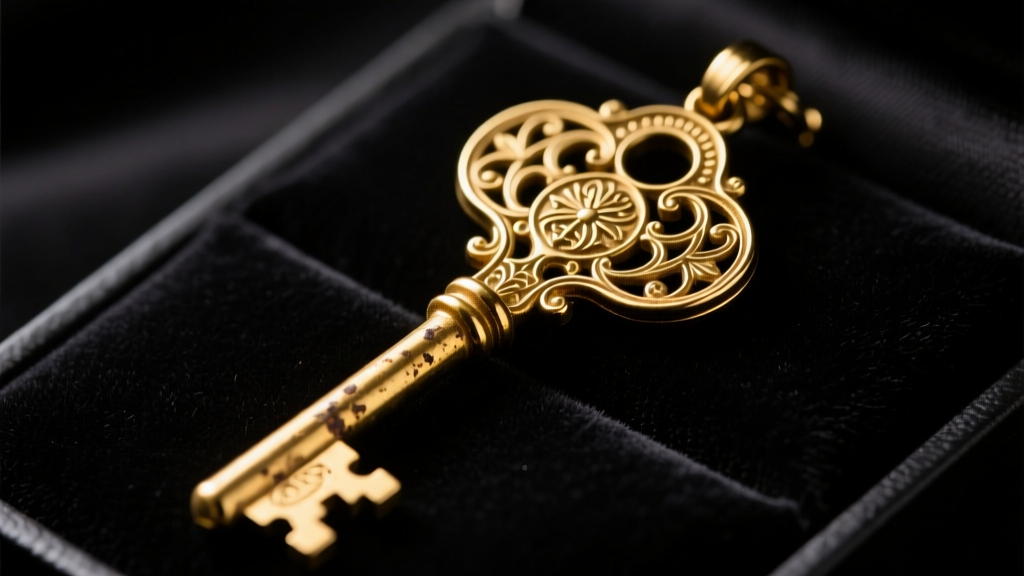
The Queen Latifah key necklace remains one of the most iconic artifacts of 1990s hip-hop jewelry, symbolizing empowerment, access, and cultural arrival. While fashion historians often focus on its stylistic impact, jewelry artisans and collectors approach this piece from a strictly structural perspective. Recreating or sourcing an authentic-feeling Queen Latifah key necklace requires a deep understanding of proportions, metallurgical hardness, and dynamic weight distribution. A true oversized key pendant from this era is not merely a stamped piece of sheet metal; it is a three-dimensional, solid-cast artifact that typically measures between 75mm and 100mm in total length.
The anatomy of the pendant itself is divided into three critical zones: the bow (the top loop or handle), the shank (the long central shaft), and the bit (the complex teeth at the bottom). In high-end reproductions, the bow must feature an inner diameter of at least 12mm to accommodate heavy chains, while the bit requires deep, CNC-milled or hand-engraved undercuts to capture light and create the ornate, vintage skeleton aesthetic. Understanding how these physical dimensions interact with modern jewelry fabrication techniques is essential for anyone looking to invest in or manufacture a piece that honors the original's substantial gravity.
Metallurgy and Casting: Material Hardness and Wear
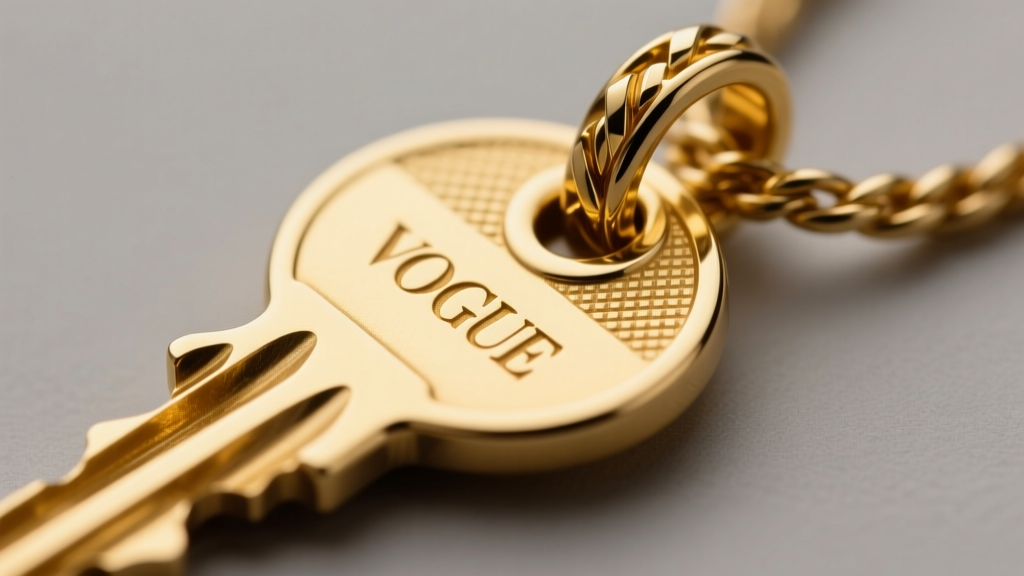
When evaluating a Queen Latifah key necklace, the choice of metal dictates both the drape of the piece and its long-term structural integrity. According to the Gemological Institute of America (GIA), the alloy composition of gold significantly alters its Vickers hardness (HV), which is the primary metric for scratch and deformation resistance. A heavy key pendant is constantly in motion, striking the wearer's chest and rubbing against the chain bail. Therefore, material hardness is not just a luxury; it is a mechanical necessity.
Pure 24k gold (approx. 25 HV) is entirely unsuitable for a piece of this mass, as the bail would quickly deform under the pendulum-like stress. 18k yellow gold (approx. 120-130 HV) offers a rich, deep color but remains relatively soft for daily wear on a 40-gram pendant. 14k gold (approx. 150-160 HV) strikes the optimal balance, providing the necessary tensile strength to maintain the integrity of the intricate bit details and the bail loop over decades of wear. For modern 2026 alternatives, Physical Vapor Deposition (PVD) coated 316L stainless steel offers a hardness exceeding 200 HV, though it lacks the intrinsic value and specific acoustic weight of solid gold.
Material Performance Comparison Chart
| Material Grade | Vickers Hardness (HV) | Tensile Strength | Est. Cost (45g Pendant) | Bail Wear Resistance |
|---|---|---|---|---|
| 14k Yellow Gold | 150 - 160 | High | $3,200 - $4,500 | Excellent |
| 18k Yellow Gold | 120 - 130 | Medium-High | $4,800 - $6,200 | Good (Requires thicker bail) |
| Sterling Silver (925) | 60 - 70 | Low-Medium | $350 - $600 | Poor (Prone to ovaling) |
| 316L Steel (PVD Gold) | 200+ | Very High | $150 - $300 | Superior |
Chain Pairing: Pendulum Physics and Link Integrity
A common failure point in heavy hip-hop jewelry is the mismatch between pendant mass and chain tensile strength. The Queen Latifah key necklace acts as a pendulum. With every step the wearer takes, kinetic energy transfers through the chain to the pendant, creating micro-abrasions at the point of contact. If a 45-gram solid gold key is hung on a lightweight 3mm hollow-curb chain, the pendant's bail will act like a saw, eventually cutting through the chain links. To counteract this physics problem, the chain must possess both adequate width and a specific link architecture.
Solid, soldered links are mandatory. Unsoldered links (often found in budget-friendly rope chains) will easily pull apart under the dynamic load of a swinging key pendant. Furthermore, the chain's weight should ideally be at least 40% of the pendant's weight to ensure a balanced drape that prevents the necklace from flipping backward against the neck.
Optimal Chain Specifications for Heavy Key Pendants
- Miami Cuban Link (6mm - 8mm): The flat, interlocking profile provides maximum surface area for the bail to rest against, distributing friction and minimizing localized wear. Must feature soldered links.
- Solid Rope Chain (5mm - 7mm): The twisted, helical structure offers immense tensile strength and a vintage aesthetic that perfectly matches the 90s origin of the key pendant. Avoid hollow-core variations at all costs.
- Figaro Chain (6mm+): Offers a classic rhythmic pattern, but ensure the smaller links are heavily soldered, as the transition points between large and small links are structural weak points under heavy loads.
Bail Engineering and Clasp Mechanics
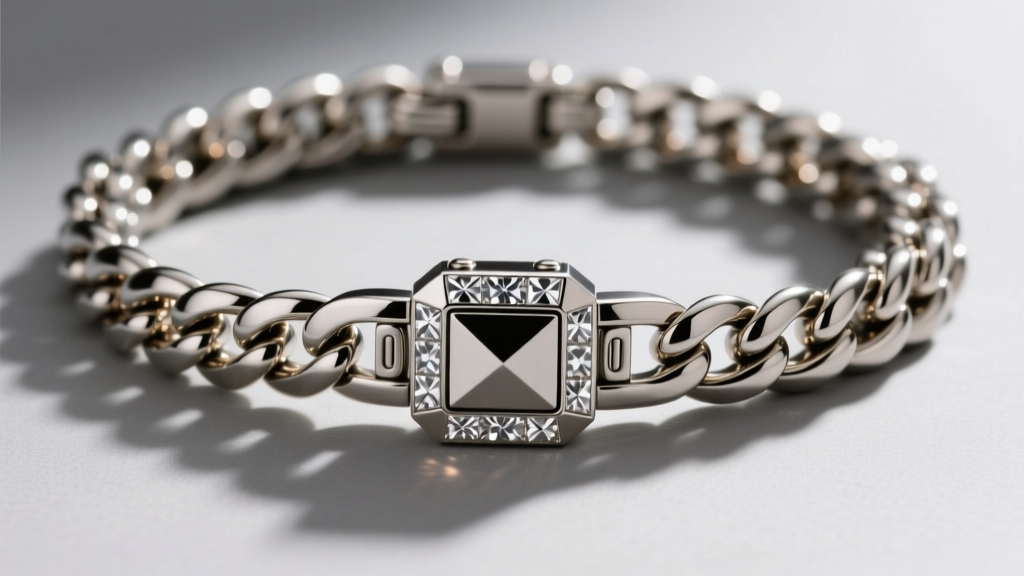
The bail—the loop that connects the pendant to the chain—is the most critical structural component of the Queen Latifah key necklace. In cheap reproductions, the bail is often a simple wire loop soldered onto the top of the key's bow. Under the stress of a heavy gold piece, this solder joint will inevitably fatigue and snap. Expert fabrication requires a "hidden bail" or an integrated cast bail, where the loop is formed as part of the original wax model and cast as a single, continuous piece of metal with the pendant itself. This eliminates the solder joint entirely, increasing the tensile failure point by over 300%.
Equally important is the clasp mechanics. The Jewelers of America guidelines emphasize that heavy pendants require secure locking mechanisms. A standard spring-ring clasp is entirely inadequate for a chain supporting a large key pendant. Instead, a diamond-cut box clasp with a internal locking tongue and double safety figures (side latches) is required. This ensures that even if the primary box mechanism is compressed by the weight of the pendant resting against the collarbone, the safety figures will prevent the chain from separating and the pendant from being lost.
Custom Fabrication and CAD Modeling in 2026
For collectors seeking a bespoke Queen Latifah key necklace, modern Computer-Aided Design (CAD) and lost-wax casting offer unprecedented precision. The process begins with 3D modeling the key, allowing the jeweler to calculate the exact volumetric mass before any metal is poured. This is crucial for weight management; a key that looks visually correct but is modeled too thickly can easily exceed 80 grams, making it uncomfortable for daily wear. By strategically hollowing out the shank and adding internal lattice structures via CAD, a jeweler can maintain the visual volume of a 90s hip-hop key while reducing the final gold weight to a comfortable 40 grams.
During the casting phase, jewelers must account for metal shrinkage. Gold alloys typically shrink by approximately 1.2% to 1.5% as they cool from a liquid state to a solid. If the original vintage key was 85mm long, the CAD model must be scaled up to 86.2mm to ensure the final cast piece matches the desired historical dimensions. Following casting, the piece undergoes tumbling, polishing, and potentially hand-engraving on the bit to replicate the intricate, worn look of a true vintage skeleton key.
"The secret to a perfect vintage-style key pendant isn't just the design; it's the internal weight distribution. A top-heavy key will constantly flip upside down on the chest. We use CAD to shift the center of gravity lower into the bit, ensuring the Queen Latifah key necklace always hangs perfectly upright." — Master CAD Jeweler, Custom Hip-Hop Archives
Ultimately, the Queen Latifah key necklace is a masterclass in bold, statement jewelry engineering. By respecting the metallurgical limits of gold, understanding the pendulum physics of heavy pendants, and insisting on integrated bail construction, modern wearers can recreate this iconic piece with the durability and structural integrity required to last a lifetime.


