A Beginner's Guide to Choosing a Simple Elegant Necklace
Discover how to choose a simple elegant necklace with our beginner's guide. Learn about chain types, metal grades, and perfect lengths for daily wear.

The Anatomy of an Everyday Essential
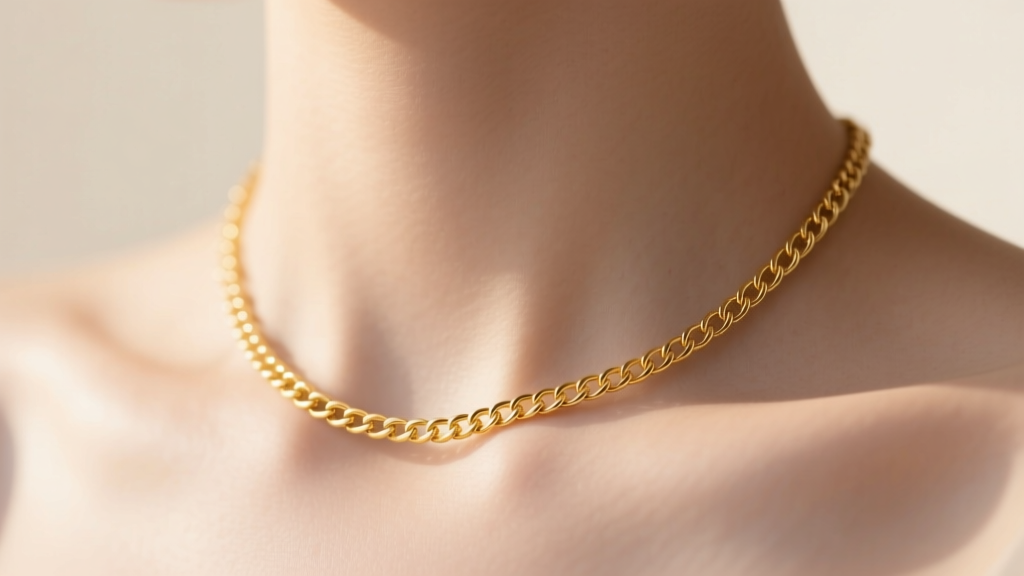
When building a foundational jewelry wardrobe, a simple elegant necklace is the undisputed anchor. Unlike statement pieces that rotate seasonally, a well-chosen foundational necklace is designed to be worn daily, layered effortlessly, and paired with everything from a casual white t-shirt to formal evening wear. However, the term 'simple' is often mistaken for 'basic' or 'cheap.' In the realm of fine jewelry, simplicity actually demands higher quality. Because there are no large gemstones or intricate enamel work to hide behind, the metal purity, chain architecture, and hardware mechanics of a minimalist piece are entirely exposed.
For beginners stepping into the world of fine jewelry, navigating the sea of karats, chain styles, and plating techniques can be overwhelming. This guide breaks down the exact specifications you need to look for to ensure your first simple elegant necklace is a durable, timeless investment rather than a disposable accessory.
Decoding Metal Grades: What You Are Actually Paying For
The longevity and skin-compatibility of your necklace depend entirely on its metal composition. According to the Gemological Institute of America (GIA), pure 24k gold is too soft for everyday chains; it will stretch and break under minimal tension. Therefore, gold is alloyed with metals like copper, silver, and zinc for structural integrity.
Solid Gold vs. Gold Alternatives
- 14k Solid Gold (58.5% Pure Gold): The gold standard for everyday wear. It offers the perfect balance of rich color, hypoallergenic properties, and tensile strength. A 14k chain will not tarnish and can be worn in the shower without degrading.
- 18k Solid Gold (75% Pure Gold): Offers a warmer, deeper yellow hue but is slightly softer. It is excellent for minimalist pendants but requires more care in delicate chain formats.
- Gold Vermeil: A premium alternative where a thick layer of gold (legally required to be at least 2.5 microns) is bonded to a sterling silver base. It is highly durable but will eventually require re-plating after years of daily friction.
- Gold Plated / Gold Filled: Gold plated jewelry uses a brass or copper base with a microscopic gold layer (often under 0.5 microns) that rubs off quickly. Gold filled contains 5% gold by weight and is more durable than plated, but the exposed base metal at the cut ends can still tarnish.
| Metal Type | Base Material | Gold Thickness | Durability | Estimated Price Range |
|---|---|---|---|---|
| 14k Solid Gold | Gold Alloy | Solid Throughout | Lifetime | $250 - $600+ |
| Gold Vermeil | Sterling Silver | Min. 2.5 Microns | 3 - 7 Years | $80 - $200 |
| Gold Filled | Brass/Copper | 5% by Weight | 2 - 5 Years | $50 - $120 |
| Gold Plated | Brass/Copper | < 0.5 Microns | Months | $20 - $60 |
Chain Styles Demystified: Finding the Right Texture
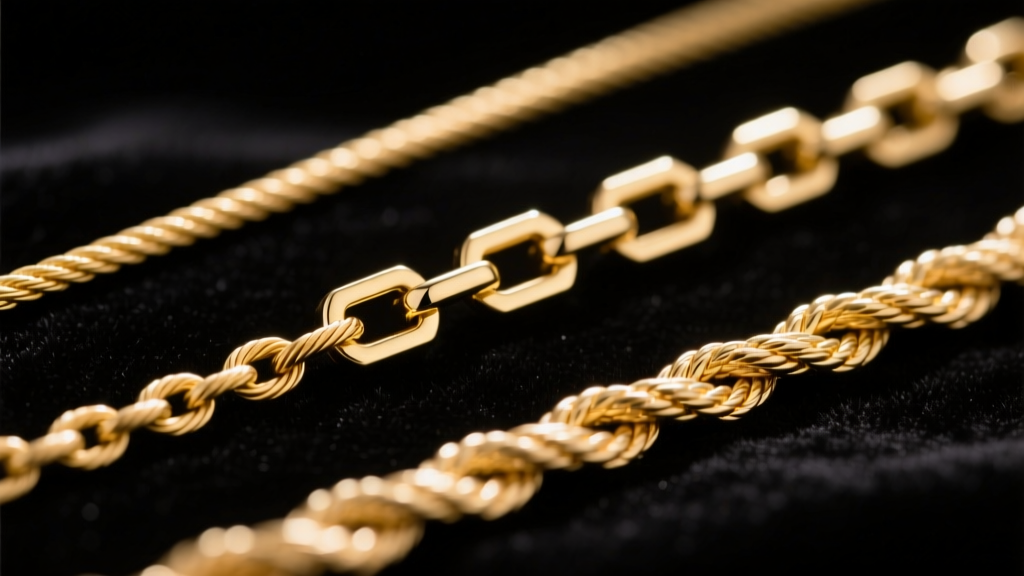
The chain profile dictates how light interacts with your necklace and how it behaves against your skin. For a simple elegant necklace, the sweet spot for chain width is between 1.0mm and 1.5mm. Anything thinner risks snapping; anything thicker crosses into streetwear territory.
The Top Three Chains for Minimalist Elegance
- The Box Chain (1.0mm - 1.5mm): Composed of square links connected in a smooth, geometric pattern. Box chains are incredibly strong, lay perfectly flat against the collarbone, and reflect light from multiple angles. They are the premier choice for holding small, delicate pendants because the flat surface prevents the pendant bail from twisting.
- The Cable Chain (1.0mm - 1.2mm): The most traditional link style, featuring uniform oval rings. While classic, cable chains have a higher tendency to catch on fine hair or knit fabrics due to the gaps between the links. They offer a vintage, understated look.
- The Snake Chain (1.2mm - 1.5mm): Made of tightly joined wavy rings that create a sleek, tubular, and flexible surface. Snake chains offer unparalleled liquid-like elegance. Expert Warning: Snake chains are notorious for kinking. If bent sharply, the internal structure can fracture. They are best for those who remove their jewelry before sleeping.
The Mathematics of Necklace Lengths
Choosing the correct length is crucial for achieving that effortless, elegant drape. The placement of the necklace changes the visual proportions of your neckline.
Pro-Tip: Before purchasing, use a soft measuring tape or a piece of string to simulate different lengths around your neck while looking in a mirror. A difference of just two inches completely changes the silhouette.
- 16 Inches (Choker/Collarbone): Sits snugly at the base of the neck. Ideal for smaller necklines, off-the-shoulder tops, or as the top layer in a multi-chain stack.
- 18 Inches (Princess Length): The most universal and forgiving length. It rests perfectly on the collarbone and sits beautifully over crew necks, V-necks, and button-down shirts. If you are buying your very first simple elegant necklace, 18 inches is the safest, most versatile choice.
- 20 to 22 Inches (Matinee Length): Drops below the collarbone and onto the upper chest. Best suited for high necklines, turtlenecks, or layered over a simple pendant chain.
Hardware Matters: Clasps and Jump Rings
Beginners often ignore the clasp, focusing entirely on the chain and pendant. However, the hardware is the most common point of failure in fine jewelry. A broken clasp means a lost necklace.
Lobster Claw vs. Spring Ring
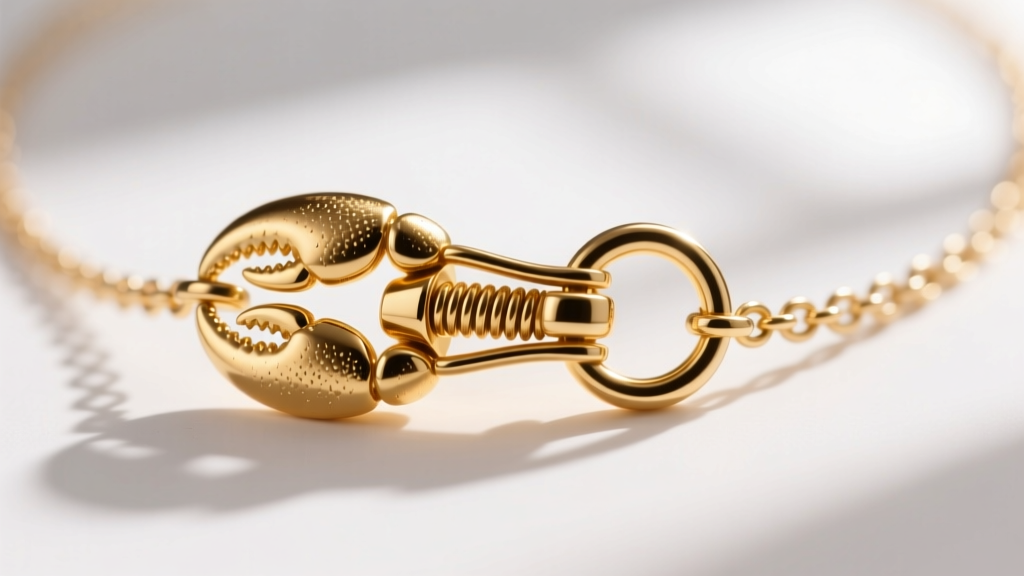
Always opt for a lobster claw clasp over a spring ring. Spring rings (the small, perfectly circular clasps with a tiny lever) rely on a microscopic internal tension wire that is highly susceptible to fatigue and snapping. Lobster claws feature a robust, solid-metal lever mechanism that is easier to operate with one hand and significantly more secure.
The Importance of Soldered Jump Rings
The jump ring is the small circular loop that connects the chain to the clasp. On high-quality necklaces, this ring will be soldered—meaning the tiny seam where the wire meets itself is melted shut with a laser or torch. If the jump ring is unsoldered, the chain can easily slip through the microscopic gap when pulled, resulting in loss. Always inspect the jump ring under good lighting before purchasing.
Care and Maintenance for Longevity
Even solid 14k gold requires basic maintenance to retain its brilliant luster. Lotions, perfumes, and natural skin oils can build up in the crevices of a box or cable chain, dulling its sparkle. According to the Jewelers of America, regular, gentle cleaning is the best way to preserve fine jewelry.
The Safe Cleaning Protocol
- Fill a small bowl with warm water and a few drops of mild, phosphate-free dish soap.
- Submerge the necklace for 10 to 15 minutes to loosen oils and debris.
- Gently brush the chain and clasp with an ultra-soft baby toothbrush, paying special attention to the clasp mechanism where grime accumulates.
- Rinse thoroughly under lukewarm running water (ensure the drain is plugged!).
- Pat dry with a lint-free microfiber cloth. Avoid paper towels, as the wood fibers can cause micro-scratches on highly polished gold surfaces.
Final Thoughts on Building Your Collection
Investing in a simple elegant necklace is an exercise in prioritizing quality over quantity. By focusing on solid 14k gold or high-grade vermeil, selecting a structurally sound chain like a 1.2mm box chain, and ensuring the hardware features a soldered jump ring and lobster clasp, you guarantee a piece that will endure years of daily wear. Treat this first purchase not just as an accessory, but as the foundational cornerstone of your personal style.


