Choosing Your First Necklace: Chain Necklace Styles Explained
Discover the ultimate beginner's guide to chain necklace styles, material grades, gauges, and lengths to find your perfect everyday piece.

The Anatomy of a Chain: What Beginners Must Know
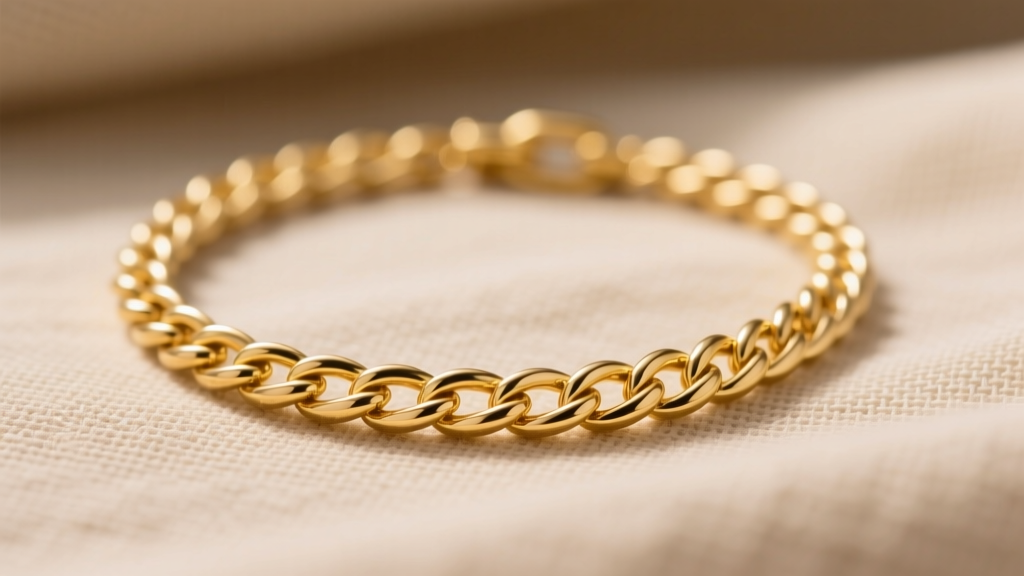
Building a foundational jewelry collection starts with understanding the architecture of your pieces. The search for the perfect necklace chain necklace often ends with a simple realization: not all links are created equal. A chain is more than just a string of metal; its geometry dictates its durability, how it catches the light, and whether it can support a heavy pendant or if it is better suited for standalone wear. For beginners, navigating the jewelry counter can feel overwhelming due to the sheer volume of terminology. However, by breaking down the anatomy of chain links, material grades, and gauge thicknesses, you can make an informed investment that will last a lifetime.
According to Rio Grande jewelry supply, the structural integrity of a chain relies heavily on whether its links are soldered. High-quality chains feature individually soldered links, meaning each oval or circle is closed with a microscopic weld. This prevents the chain from stretching or pulling apart when subjected to the tension of a heavy pendant. Unsoldered chains, often found in fast-fashion jewelry, will quickly deform and break under stress.
Decoding the Most Popular Chain Link Styles
Before selecting a metal, you must choose a link style. Each profile offers a distinct aesthetic and functional profile. Below is a structural comparison of the six most common chain styles you will encounter.
| Chain Style | Link Geometry | Durability | Best Use Case |
|---|---|---|---|
| Cable | Uniform oval links | Medium | Lightweight pendants (under 5g) |
| Curb | Flattened, interlocking links | High | Standalone wear, heavy pendants |
| Figaro | Patterned (3 short, 1 long) | High | Vintage aesthetics, layering |
| Box | Square, geometric links | Very High | Modern pendants, sleek layering |
| Snake | Tightly joined wavy rings | Low | Light pendants, smooth presentation |
| Rope | Twisted, spiral links | High | Statement pieces, light refraction |
Why Snake Chains Require Special Care
While snake chains offer a beautifully smooth, liquid-metal appearance, they are notoriously fragile. The tightly wound rings can easily kink if bent at a sharp angle, and once a snake chain kinks, the structural damage is nearly impossible to repair. If you are purchasing a snake chain, always store it laid flat or hanging freely, never crumpled in a jewelry box.
Material Grades and Pricing Realities
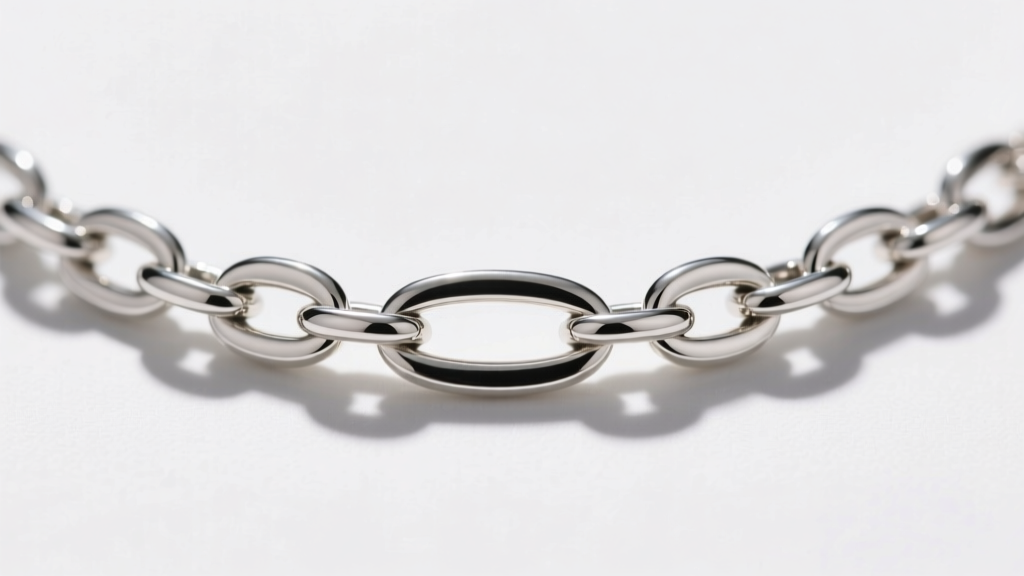
The metal you choose dictates both the longevity of the piece and its impact on sensitive skin. The Gemological Institute of America (GIA) outlines strict standards for metal purity, which directly correlates to price and durability.
- 316L Stainless Steel ($20 - $50): The ultimate budget-friendly, hypoallergenic option. It will not tarnish and is highly resistant to scratching, but it cannot be easily resized or soldered if broken.
- 925 Sterling Silver ($40 - $150): Composed of 92.5% pure silver and 7.5% copper. The copper adds strength but makes the metal prone to oxidation (tarnishing). Look for pieces with a rhodium plating to delay tarnish and provide a white-gold-like finish.
- 14k Gold ($250 - $800): Containing 58.5% pure gold, 14k is the gold standard for everyday chains. The alloy metals (like zinc and copper) provide excellent tensile strength, making it ideal for holding heavy pendants without stretching.
- 18k Gold ($600 - $2,000+): At 75% pure gold, 18k offers a richer, deeper yellow hue but is significantly softer. It is more prone to scratching and micro-deformations over time compared to 14k.
Always verify the hallmark stamp on the clasp or the first link. The Federal Trade Commission (FTC) mandates that precious metals sold in the US must bear a quality mark (e.g., 14K, 925) alongside a manufacturer's trademark to guarantee purity claims.
Length, Gauge, and the Fit Framework
Choosing the right dimensions is where most beginners make costly mistakes. Gauge refers to the thickness of the metal wire used to create the links, while length determines where the chain rests on your anatomy.
The Gauge-to-Pendant Ratio
A common error is pairing a heavy gemstone pendant with a micro-thin chain. This creates a tension point that will eventually snap the links. Use this framework to match your gauge to your pendant's weight:
- 0.8mm - 1.2mm Gauge: Best for delicate pendants weighing under 5 grams. Ideal for a subtle, barely-there aesthetic.
- 1.5mm - 2.5mm Gauge: The versatile middle ground. Supports pendants up to 15 grams and can comfortably be worn alone.
- 3.0mm - 6.0mm+ Gauge: Heavy-duty statement chains. These are designed to be worn standalone or with massive, solid-metal pendants exceeding 20 grams.
Standard Length Classifications
Where the chain falls changes the visual proportion of your neckline. A 16-inch choker sits tightly at the base of the throat, demanding a precise fit. The 18-inch "Princess" length is the most universally flattering, resting perfectly on the collarbone. For layering or wearing over crewneck sweaters, a 22-inch "Matinee" or 28-inch "Opera" length provides the necessary drape.

Troubleshooting Common Chain Failures
Even high-quality chains can experience mechanical failures. Understanding the weakest points of your jewelry allows you to perform preventative maintenance.
The Clasp Conundrum: Spring Ring vs. Lobster Claw
The clasp is the most frequent point of failure on any necklace. Spring ring clasps are inexpensive and common on lightweight silver chains, but the internal spring mechanism frequently jams or snaps, and the tiny lever is difficult to operate with one hand. Lobster claw clasps are vastly superior. They feature a solid, spring-loaded arm that locks securely into the jump ring. For any chain over 20 inches or supporting a pendant over 10 grams, a lobster claw is non-negotiable for security.
Dealing with Tangled Box and Cable Chains
Finer chains, particularly cable and box styles, are notorious for knotting during storage. This happens when the microscopic gaps between links catch on one another. To prevent this, always store your chains hanging from a dedicated jewelry stand or lay them completely flat. If a knot occurs, do not pull. Lay the chain on a hard surface, apply a microscopic drop of baby oil or mineral oil to the knot, and use two fine sewing needles to gently tease the links apart from the center outward.
Expert Tip: Always put your chains on after applying perfumes, lotions, and hairsprays. The alcohol and volatile organic compounds in cosmetics can degrade the rhodium plating on sterling silver and strip the natural luster from porous gemstone pendants attached to your chain.
Final Tips for Your First Purchase
When buying your first foundational piece, prioritize versatility over trend-driven aesthetics. A 1.5mm 14k gold or rhodium-plated sterling silver curb or box chain at 18 inches will seamlessly transition from a casual t-shirt to formal evening wear. By focusing on soldered links, appropriate gauge thickness, and secure lobster claw clasps, you ensure that your chain necklace is not just a temporary accessory, but a lasting pillar of your personal style.


