Stick Pearl Necklace Guide: Nacre, Luster & Material Grades
Discover the material properties of a stick pearl necklace. Compare freshwater nacre thickness, luster grades, and durability for lasting elegance.

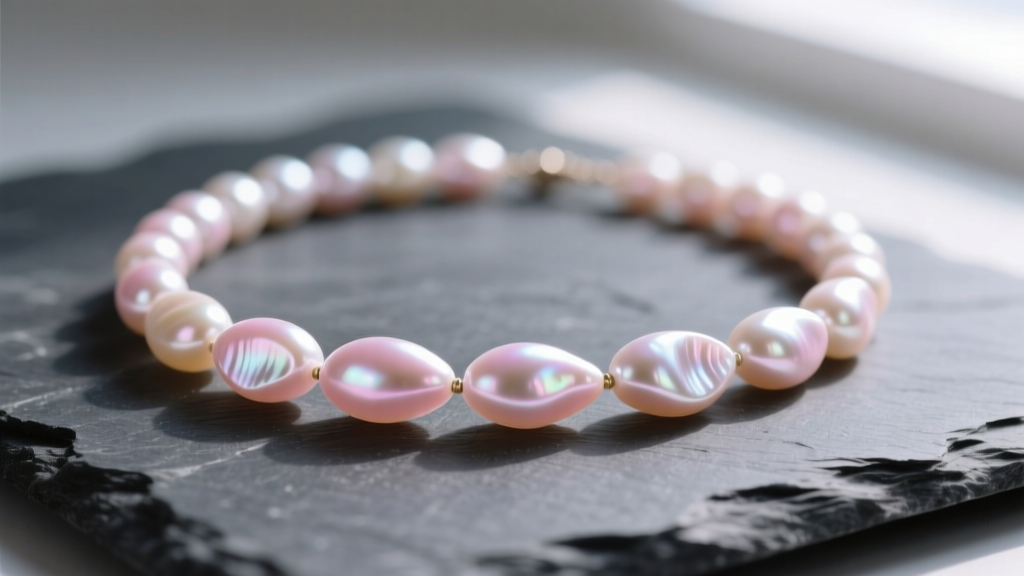
When evaluating a stick pearl necklace, the uninitiated often focus solely on the striking, elongated silhouette. However, as gemologists and jewelry designers, we know that the true value, longevity, and aesthetic depth of these baroque treasures lie in their material composition. Stick pearls—often referred to as Biwa sticks, rice pearls, or keshi sticks depending on their origin—present unique structural challenges and opportunities. This comprehensive material comparison dissects the nacre quality, luster physics, and structural integrity of the various materials used in stick pearl necklaces available today.
The Anatomy of a Stick Pearl: Why Shape Dictates Material Choice
Unlike perfectly spherical Akoya pearls, which are bead-nucleated to achieve roundness, the vast majority of natural stick pearls are tissue-nucleated. A tiny piece of mantle tissue is inserted into the freshwater mussel (Hyriopsis cumingii), triggering the secretion of nacre (calcium carbonate and conchiolin) around an organic core. Because there is no rigid spherical bead to guide the growth, the pearl develops an elongated, asymmetrical stick shape.
According to the Gemological Institute of America (GIA), this tissue-nucleation process means that high-quality freshwater stick pearls are composed of nearly 100% solid nacre. This material property drastically differentiates them from their saltwater counterparts and synthetic imitations, directly impacting their weight, luster, and resistance to peeling. The overlapping aragonite platelets in these elongated pearls often form in irregular, stair-step patterns, which is exactly what produces the distinctive ridges and grooves of the stick shape.
Freshwater vs. Saltwater vs. Synthetic: A Material Breakdown
To make an informed purchase, you must understand the three primary material categories that dominate the stick pearl necklace market.
Freshwater Biwa and Keshi Sticks
Genuine freshwater stick pearls boast exceptional durability due to their solid nacre composition. The nacre thickness typically ranges from 2.0mm to 4.0mm across the entire pearl. The material exhibits a softer, more satiny luster compared to saltwater pearls, but high-grade specimens display intense orient—the iridescent play of colors caused by light diffracting through the overlapping aragonite platelets. Because the surface is naturally ridged and grooved, freshwater sticks are highly forgiving of minor surface blemishes, which blend seamlessly into the baroque texture.
Saltwater Keshi Sticks
True saltwater stick pearls are rare. They occur as 'keshi' (accidental) pearls when the oyster (Pinctada fucata or Pinctada margaritifera) rejects the bead nucleus but continues to secrete nacre around the remaining tissue. These saltwater sticks possess a higher, sharper luster due to the tighter, more compact aragonite crystalline structure of saltwater nacre. However, they are significantly more expensive, often smaller, and much harder to source in matching strands than freshwater variants.
Glass and Shell-Core Imitations
Imitation stick pearl necklaces, such as those pioneered by Majorica, utilize a glass or porcelain core dipped in 'essence d'orient'—a synthetic coating made from guanine crystals extracted from fish scales, suspended in lacquer. While the elongated shape can be easily molded in a factory, the material lacks the optical depth of genuine nacre. The coating is prone to chipping, peeling, and UV degradation over time, making it a poor long-term investment despite its initial flawless appearance.
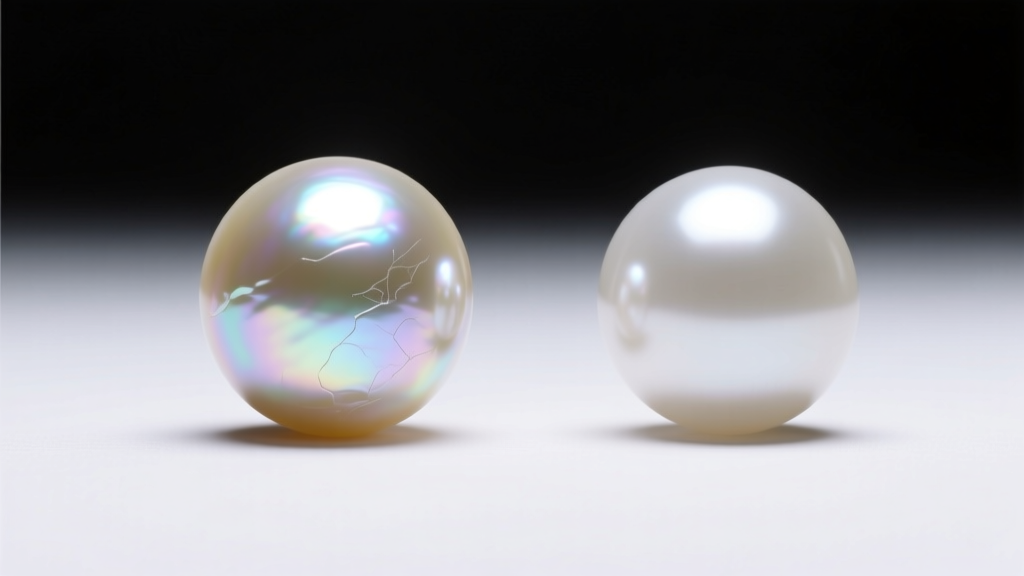
Nacre Thickness and Luster Grading Matrix
The following matrix compares the gemological properties of the three primary stick pearl materials. This data is critical for assessing value, optical performance, and longevity.
| Material Type | Nacre Thickness | Luster Quality | Mohs Hardness | Average Price (18" Strand) |
|---|---|---|---|---|
| Freshwater Tissue-Nucleated | 2.0mm - 4.0mm (Solid) | Satiny to High (Good Orient) | 2.5 - 3.0 | $150 - $800 |
| Saltwater Keshi (Accidental) | 0.8mm - 1.5mm (Solid) | Mirror-like to Very High | 2.5 - 3.5 | $1,200 - $4,500+ |
| Glass/Guanine Imitation | 0.05mm - 0.1mm (Coating) | Flat, Synthetic Shine | 5.5 (Core) / 2.0 (Coating) | $40 - $120 |
Durability and Wearability: The Mohs Scale Reality
Pearls are notoriously soft, ranking between 2.5 and 4.5 on the Mohs scale of mineral hardness. However, the unique geometry of a stick pearl necklace introduces specific wearability factors. The elongated shape means the pearls do not roll smoothly against the skin or each other; instead, they tend to catch, snag, and create concentrated friction points.
When evaluating material durability, you must consider the ridges and grooves inherent to baroque stick pearls. In solid freshwater nacre, these ridges are structurally sound and can withstand minor impacts. In bead-nucleated saltwater pearls with thin nacre (less than 0.4mm), the ridges are highly susceptible to 'chipping' or 'peeling' if struck against a hard surface. This is why gemologists strongly advise against purchasing thin-nacre saltwater pearls in extreme baroque or stick shapes. For daily wear, solid-nacre freshwater sticks offer the best resistance to structural failure. For comprehensive care protocols, the GIA's pearl care guidelines emphasize keeping all pearl materials away from ultrasonic cleaners, harsh acids, and even mild perfumes, which can dissolve the calcium carbonate matrix and degrade the conchiolin proteins.
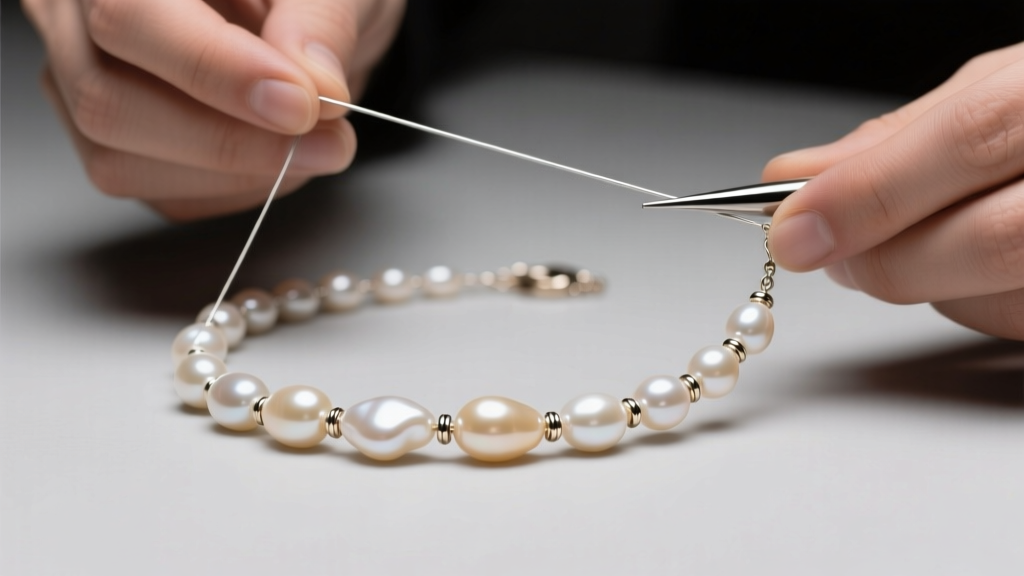
Stringing Materials: Silk vs. Synthetic Wire for Elongated Pearls
The material of the pearls is only half the equation; the stringing material dictates the structural survival of a stick pearl necklace. Because stick pearls are asymmetrical, they create uneven tension on the stringing medium. Furthermore, freshwater stick pearls typically feature larger, sometimes irregularly shaped drill holes ranging from 0.9mm to 1.2mm, which influences the choice of stringing gauge.
Traditional Silk Thread
Pure Chinese silk (Size F or G, approximately 0.40mm to 0.50mm thick) is the traditional choice for fine pearls. Silk is a natural protein fiber that gently accommodates the irregular drill holes of baroque pearls without causing internal abrasion. However, silk degrades when exposed to perspiration and stretches under the concentrated, uneven weight of elongated pearls. If you choose a silk-strung stick pearl necklace, it must be hand-knotted between every single pearl to prevent catastrophic loss if the thread snaps, and it requires professional restringing every 18 to 24 months.
Modern Synthetic Wire (Soft Flex)
For heavy, oversized stick pearls, modern jewelers increasingly prefer multi-strand stainless steel wire coated in nylon (such as Soft Flex in 0.015" or 0.018" diameters). This material offers a tensile strength of up to 40 pounds, completely eliminating the risk of stretching or snapping. The nylon coating prevents the steel from abrading the nacre inside the drill holes. When using wire, traditional knots are impossible; instead, jewelers use 14k gold or sterling silver crimp beads and tiny spacer beads to lock the elongated pearls in place, ensuring the necklace maintains its intended drape without sagging over time.
Expert Verdict: Choosing Your Stick Pearl Necklace
Selecting the right material for your stick pearl necklace depends entirely on your priorities regarding budget, luster preference, and maintenance tolerance. If you seek an heirloom-quality piece with deep, satiny luster and exceptional structural durability, a solid-nacre freshwater tissue-nucleated stick pearl is the undisputed champion. It provides the quintessential baroque aesthetic without the exorbitant price tag or fragility of rare saltwater keshi sticks. Conversely, avoid glass-core imitations if you want a piece that will age gracefully; the synthetic guanine coatings will inevitably yellow and peel, whereas genuine calcium carbonate nacre, when properly cared for, will outlast generations. Always inspect the drill holes under magnification before purchasing—sharp, clean edges indicate high-quality nacre, while chalky, crumbling edges signal inferior material or excessive chemical bleaching during the post-harvest processing stage.


