Teething Necklace for Toddler Safety & Sensory Style Trends
Discover the latest safety guidelines and style trends for the teething necklace for toddler use, focusing on sensory chewelry and parent-worn designs.


The Evolution of the Teething Necklace for Toddler Wear
The jewelry market for children and parents has undergone a massive transformation over the last decade. When parents and caregivers search for a teething necklace for toddler use, they are often met with a confusing array of products ranging from traditional Baltic amber to modern, architectural silicone designs. However, as we navigate the style and safety landscape of 2026, the most critical trend is not aesthetic—it is regulatory. The modern approach to teething and sensory jewelry strictly separates parent-worn nursing necklaces from toddler-worn sensory chewelry, prioritizing stringent safety protocols without sacrificing high-end style.
Historically, the market was flooded with amber bead necklaces marketed directly for babies and young toddlers to wear. Today, informed consumers and pediatric experts recognize the severe risks associated with these items. The contemporary style radar is now focused on two distinct categories: beautifully crafted, parent-worn teething necklaces designed for infants to safely chew on while being held, and specialized sensory necklaces (often called 'chewelry') designed exclusively for older toddlers (ages 3+) and neurodivergent children.
Safety First: FDA and AAP Guidelines on Toddler Jewelry
Before evaluating bead shapes or color palettes, it is imperative to understand the medical consensus on toddler jewelry. The U.S. Food and Drug Administration (FDA) has issued explicit warnings against teething jewelry, citing severe risks of strangulation and choking. According to the FDA's official consumer updates, necklaces worn by infants or toddlers can easily become caught on cribs or playground equipment, while broken beads pose an immediate choking hazard.
Expert Insight: The American Academy of Pediatrics (AAP) and the Consumer Product Safety Commission (CPSC) advise that children under the age of 3 should never wear jewelry with small parts or continuous cords around the neck. Any product marketed as a wearable 'teething necklace for toddler' independent use is fundamentally at odds with current pediatric safety guidelines.
Because of these guidelines, the 2026 trend has shifted entirely toward sensory necklaces for older toddlers (3+) and nursing/teething necklaces worn by the parent. This pivot has forced jewelry designers to innovate, creating pieces that look like premium, minimalist adult jewelry but are engineered with food-safe materials and advanced breakaway hardware.
Decoding Safety Standards and Breakaway Hardware
For older toddlers who benefit from sensory chewelry, or for parents wearing teething necklaces that a baby might pull on, the clasp is the most vital component. Standard lobster clasps or spring rings are unacceptable and dangerous in this context.
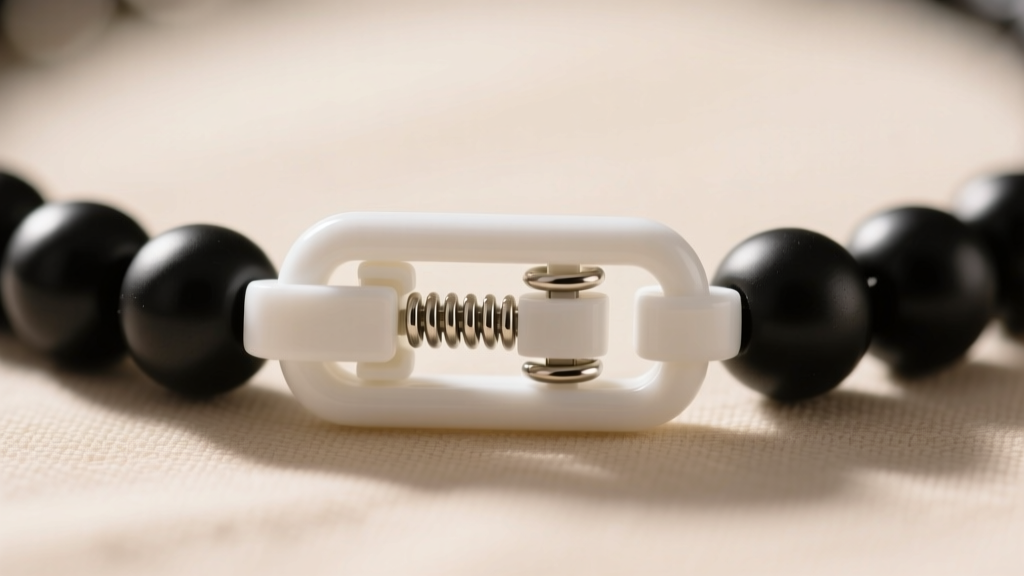
- Breakaway Clasps: Modern sensory and nursing necklaces must utilize a specialized breakaway safety clasp. These are engineered to release under approximately 1.5 lbs (6.8 Newtons) of pressure. If a toddler pulls the necklace or it gets snagged, the clasp pops open immediately, preventing airway compression.
- Cord Materials: High-quality pieces use 100% nylon or polyester cording rather than elastic or cotton. Elastic can snap dangerously, while cotton can fray and harbor bacteria. Nylon is tested for tensile strength to ensure it won't snap into sharp, whipping ends.
- Knotting Techniques: If beads are used, they must be individually knotted (similar to high-end pearl necklaces) so that if the cord is severed, only one bead is released, mitigating the choking hazard.
Material Grades: What to Look for in 2026
The aesthetic of the modern teething and sensory necklace relies heavily on the material's finish and durability. Cheap, glossy plastics are out; matte, architectural, and organic textures are in.
Platinum-Cured Food-Grade Silicone
The gold standard for 2026 is 100% food-grade, platinum-cured silicone. Unlike peroxide-cured silicone (which can leave chemical residues and degrade faster), platinum-cured silicone is completely inert, BPA/BPS/PVC/phthalate-free, and can withstand repeated sterilization in boiling water or dishwashers. Designers are utilizing Shore A hardness ratings between 50A and 70A—firm enough to maintain geometric shapes like hexagons and cylinders, yet yielding enough to provide satisfying sensory feedback for teething infants or chewing toddlers.
Untreated Hardwoods and Organic Finishes
For a more bohemian or organic aesthetic, hard maple or beech wood beads are highly popular. However, the finish is critical. Safe wood beads are sealed only with organic, food-safe options like coconut oil or pure beeswax. Polyurethane or synthetic varnishes are strictly avoided, as they can chip off into a child's mouth.
Market Comparison: Traditional vs. Modern Sensory Necklaces
Understanding the difference between outdated trends and modern, safe alternatives is crucial for both retailers and consumers.
| Feature | Traditional Amber/Bead Necklaces (Outdated) | Modern Sensory & Parent-Worn Necklaces (2026 Trend) |
|---|---|---|
| Target Wearer | Babies and young toddlers (Unsafe) | Parents (for babies to chew) or Toddlers 3+ |
| Clasp Type | Standard metal lobster or screw clasps | Plastic breakaway safety clasps (1.5 lbs release) |
| Material | Baltic amber, untreated stone, cheap plastic | Platinum-cured silicone, food-safe sealed maple |
| Cord Construction | Thin cotton or elastic string | High-tensile nylon, individually knotted |
| Aesthetic | Chunky, brightly colored, toy-like | Minimalist, matte, geometric, adult-jewelry mimicry |
Style Trends: What Parents and Older Toddlers Are Wearing
The stigma of the 'ugly mom necklace' is entirely gone. Today’s parent-worn teething necklaces are designed to seamlessly integrate with a sophisticated, minimalist wardrobe. The prevailing style trend is architectural minimalism. Think matte olive-green silicone cylinders, dusty-rose hexagonal beads, and charcoal-grey geometric pendants that mimic high-end ceramic or resin jewelry.
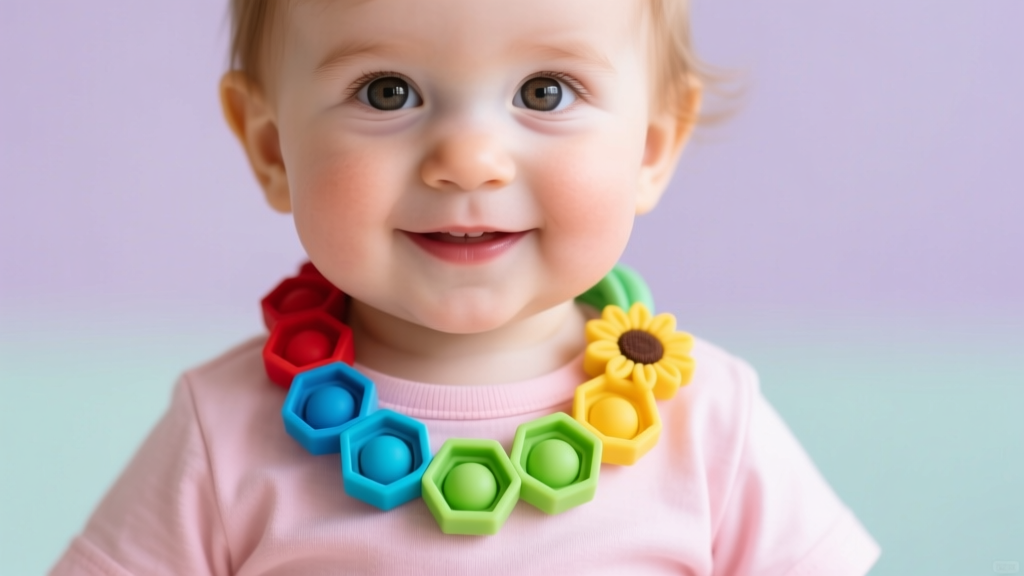
For older toddlers (3+) who use sensory chewelry for emotional regulation or focus, the trend leans toward customizable, modular designs. Pendants shaped like subtle dinosaur teeth, minimalist shields, or abstract topographical maps allow children to have a sensory tool that looks like a cool, personalized accessory rather than a medical device. Layering is also emerging as a trend for parents, pairing a delicate, 14k gold-filled chain necklace with a single, matte silicone teething pendant on a separate 24-inch breakaway cord.
How to Verify Authenticity and Safety Certifications
Because the market is saturated with unregulated imports, verifying safety claims is non-negotiable. When purchasing any jewelry intended for interaction with infants or toddlers, look for the following documentation:
- Children’s Product Certificate (CPC): In the US, any product designed for children 12 and under must have a CPC based on testing by a CPSC-accepted third-party laboratory.
- ASTM F963 Compliance: Ensure the product meets the Consumer Product Safety Commission's guidelines for toy safety, specifically regarding heavy metals (lead and cadmium limits) and small parts testing.
- Food-Contact Testing: For silicone items, manufacturers should provide FDA 21 CFR 177.2600 compliance documentation, proving the material is safe for repeated food and saliva contact.
Ultimately, the modern approach to the teething necklace for toddler and infant use is defined by a refusal to compromise. By demanding rigorous safety hardware, non-toxic material grades, and sophisticated, minimalist aesthetics, today's consumers are driving a market where child-safe jewelry finally looks as good as it performs.


