The Luxury Seashell Flower Necklace: Lapidary Craft & Care Guide
Discover the lapidary techniques, organic materials, and chain gauges behind a luxury seashell flower necklace. Expert care and styling insights inside.

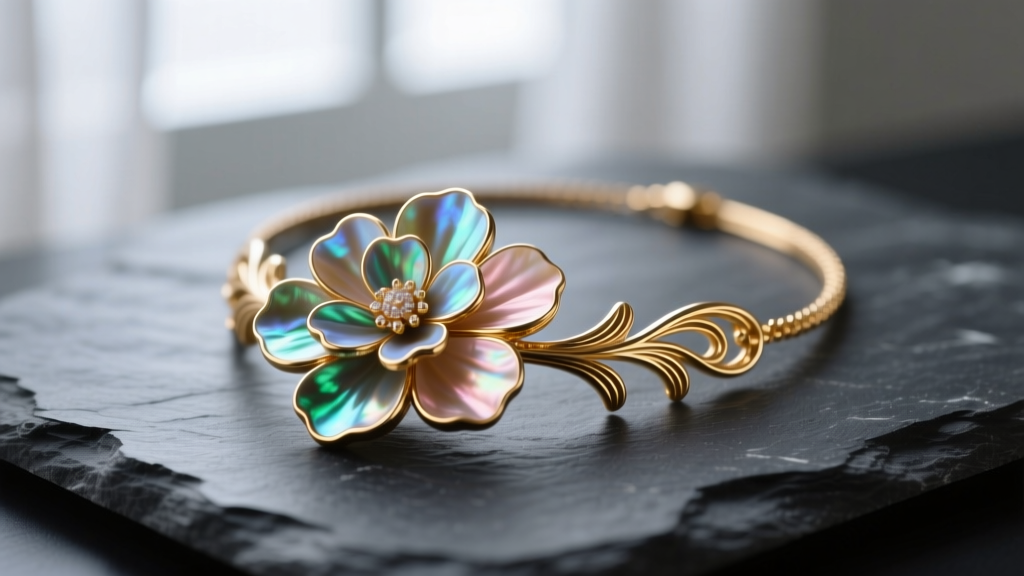
When most consumers hear the term 'seashell flower necklace,' they immediately picture mass-produced, brittle souvenirs from coastal gift shops. However, in the upper echelons of fine jewelry, organic motifs have experienced a massive renaissance. Haute joaillerie houses and independent master lapidaries are transforming raw, iridescent mollusk shells into breathtaking, structurally complex floral pendants. This expert deep dive explores the material science, precision carving techniques, and mechanical hardware specifications required to engineer a luxury seashell flower necklace that transcends seasonal trends and withstands decades of wear.
The Evolution of Organic Motifs in Fine Jewelry
Historically, organic gem materials were relegated to casual or bohemian aesthetics. Today, the integration of carved shell into high-karat gold settings represents a fusion of natural wonder and horological-level precision. The modern seashell flower necklace relies on the natural structural integrity of nacre, combined with advanced micro-pave diamond accents and enamel work. Master jewelers treat the shell not merely as a decorative inlay, but as a primary gemstone, requiring the same respect for cleavage planes and hardness metrics as a sapphire or emerald.
Material Breakdown: Which Shells Yield the Best Blooms?
Not all shells are created equal. The structural viability of a carved floral pendant depends entirely on the species of mollusk and the thickness of its nacreous layer. According to the Gemological Institute of America (GIA), organic gem materials require specific environmental conditions to form their signature luster, and their chemical composition dictates their durability.
Pinctada Maxima vs. Trocas Shell
The gold standard for high-end shell carving is the Pinctada maxima, commonly known as the South Sea pearl oyster. Its nacre layers are exceptionally thick, often exceeding 2-3 millimeters, which allows lapidaries to carve deep, multi-layered flower petals without breaking through to the dull, chalky outer prismatic layer. The Mohs hardness of this nacre hovers between 2.5 and 4.5, primarily due to its aragonite crystal structure, as documented by Mindat.org.
Conversely, the Trocas shell (Tectus niloticus) is frequently used in mid-tier jewelry. While it is thicker and easier to harvest in large, flat discs, it lacks the deep, fiery 'orient' (iridescence) of the Pinctada maxima. Trocas is often bleached and dyed to mimic premium nacre, a treatment that drastically reduces its long-term structural integrity.
Understanding Nacre Orient and Specific Gravity
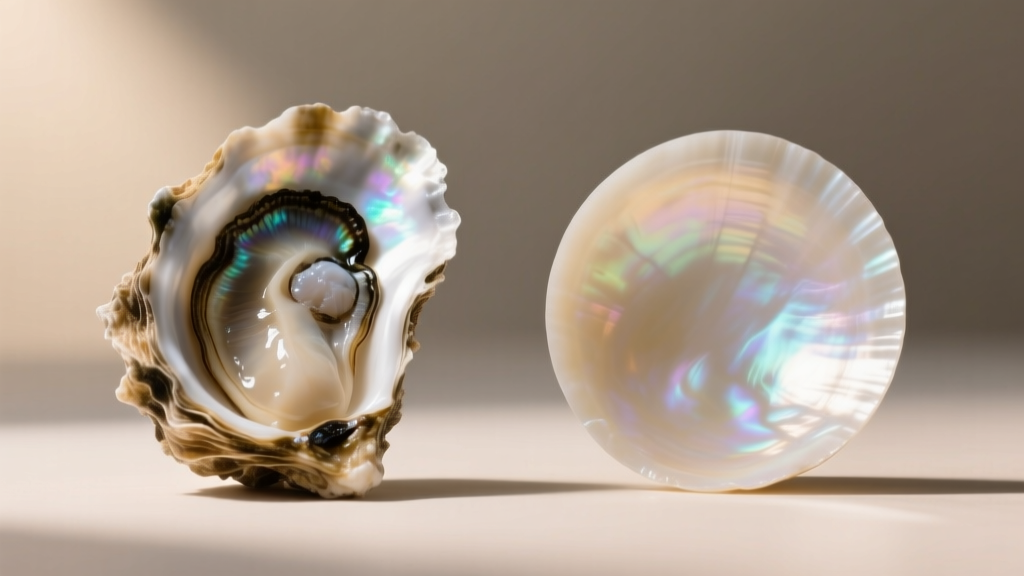
The mesmerizing play of color in a premium seashell flower necklace is known as 'orient.' This optical phenomenon occurs when light waves interfere with the microscopic, overlapping platelets of aragonite crystals suspended in conchiolin (an organic protein). A high-quality specimen will exhibit a specific gravity (SG) between 2.60 and 2.85. If a pendant feels unusually light or exhibits an SG below 2.50, it is likely a resin composite or a heavily calcified, low-grade shell that will eventually delaminate.
Lapidary Techniques: Carving the Petals
Carving a three-dimensional floral motif out of nacre is a high-risk endeavor. Shell is anisotropic; it possesses distinct cleavage planes where the aragonite layers can easily split or 'flake' if subjected to lateral shearing forces.
- Ultrasonic Milling: For complex, repeating floral patterns, master lapidaries use ultrasonic carving tools equipped with diamond-coated brass dies. The high-frequency vibration (typically 20,000 Hz) pulverizes the shell material without applying destructive lateral pressure.
- Hand-Carving with Diamond Burrs: For bespoke, one-of-a-kind pieces, artisans use flexible shaft micromotors with sintered diamond burrs. The carving process moves progressively from 120-grit for rough shaping to 600-grit for detailing the petal veins.
- Polishing Protocols: Nacre cannot be polished with standard aluminum oxide, which can cause micro-scratching. Instead, lapidaries use a slurry of cerium oxide or a 50,000-grit diamond paste applied with a soft felt bob, bringing the aragonite platelets to a mirror-like, glassy finish.
Chain Mechanics: Gauges and Clasp Hardware
A common failure point in organic necklaces is the hardware. A solid, hand-carved mother-of-pearl floral pendant typically weighs between 8 and 18 grams. Suspending this weight requires precise chain engineering. Flimsy, hollow-core chains will snap under the pendulum effect of a heavy shell pendant.
| Component | Recommended Specification | Technical Rationale |
|---|---|---|
| Chain Style | Rolo or Wheat Chain | Interlocking, uniform links distribute tensile stress evenly, preventing localized kinking. |
| Wire Gauge | 1.2mm to 1.5mm (Solid) | Provides a minimum breaking strength of 15-20 lbs, essential for 10g+ pendants. |
| Clasp Type | 12mm Cast Lobster Claw | Cast hardware prevents the internal spring mechanism from warping, unlike stamped sheet-metal clasps. |
| Jump Rings | Soldered Closed (Min 4mm) | Prevents the pendant bail from slipping through the gap of an open jump ring during wear. |
For the chain itself, 14k or 18k solid gold is mandatory. Gold-filled or vermeil chains will eventually wear through their outer plating, and the exposed brass or copper core will oxidize, potentially staining the porous edges of the shell pendant.
Authentication and Failure Modes
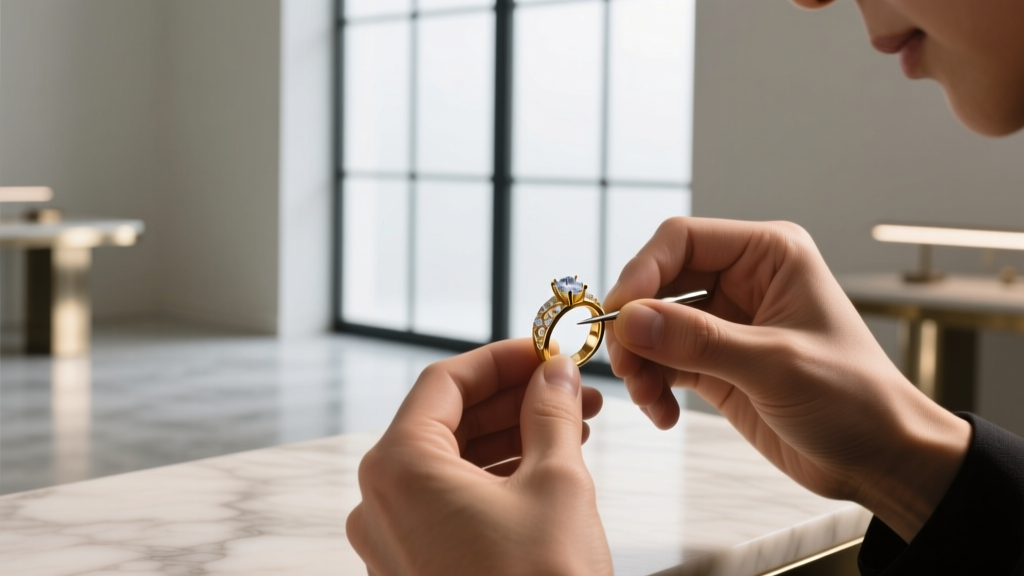
As the demand for organic jewelry rises, so does the proliferation of synthetic imitations. Modern polymers and crushed-shell resins can mimic the visual weight and temperature of real nacre. However, an expert can identify a genuine seashell flower necklace through specific diagnostic markers.
Identifying Genuine Nacre
Under 30x magnification, genuine carved shell will reveal subtle, concentric growth lines and a slightly 'scaly' or overlapping platelet structure on the surface. Resin composites will appear perfectly homogenous or exhibit tiny trapped air bubbles. Furthermore, when subjected to long-wave UV light (365 nm), natural conchiolin often fluoresces a pale, chalky blue or green, whereas synthetic resins typically glow a bright, artificial milky-white.
Common Failure Modes in Shell Jewelry
- Acid Etching: Nacre is highly sensitive to acids. Human sweat has a pH ranging from 4.5 to 7.0. Prolonged exposure to acidic perspiration will literally dissolve the aragonite crystals, leaving the surface of the flower petals dull, chalky, and pitted.
- Delamination: If a shell is exposed to extreme thermal shock (such as being left on a car dashboard in summer), the conchiolin protein binder can dry out and shrink, causing the nacre layers to peel apart like a flaking onion.
- Prong Tension Fractures: If the floral pendant is set with prongs rather than a bezel, over-tightening the metal prongs can crack the shell. Nacre has virtually zero tolerance for compressive point-stress.
Long-Term Preservation Protocol
Maintaining the optical brilliance of a luxury seashell flower necklace requires a strict, proactive care regimen. Never place organic shell jewelry in an ultrasonic cleaner. The cavitation bubbles generated by the high-frequency sound waves will violently impact the surface of the nacre, causing microscopic pitting and destroying the orient.
Instead, clean the pendant using a soft, untreated microfiber cloth lightly dampened with distilled water. Avoid tap water, as the chlorine and dissolved minerals can leave a permanent, cloudy film on the aragonite surface. After wearing, gently wipe the shell and the gold hardware to remove skin oils and environmental pollutants. Store the necklace flat in a humidity-controlled environment (ideally 40-50% relative humidity) lined with anti-tarnish flannel, ensuring the carved petals are not compressed against harder gemstones that could scratch the relatively soft 2.5 Mohs surface.


