2026 Trend Guide: Styling a Pearl Necklace With Cross Pendant
Discover how the pearl necklace with cross pendant is dominating 2026 fashion. Explore styling tips, pearl grades, and material pairings.

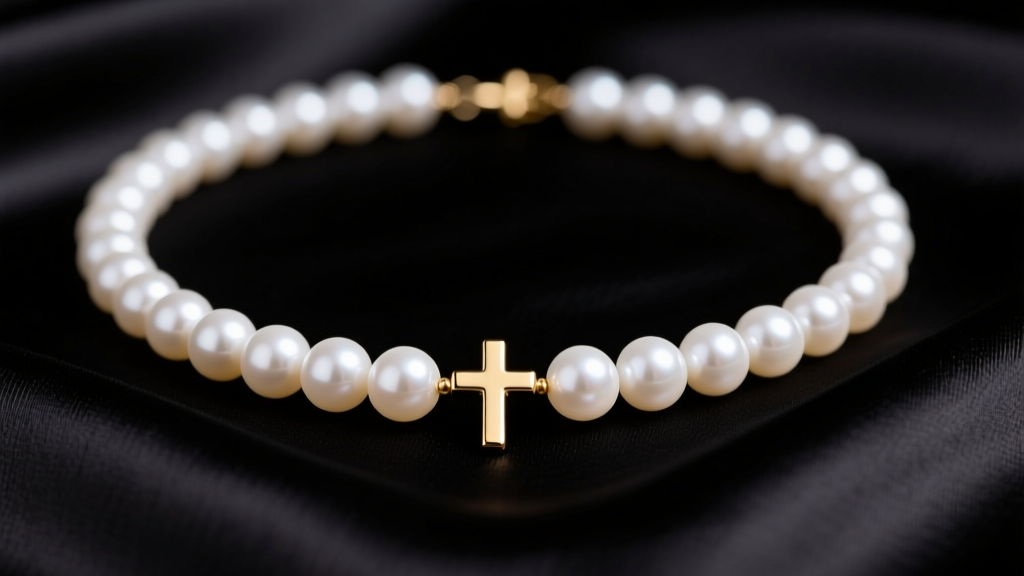
The 2026 Renaissance of the Pearl and Cross Motif
In the landscape of 2026 jewelry trends, the pearl necklace with cross pendant has transcended its traditional religious connotations to become a cornerstone of both 'quiet luxury' and 'neo-gothic' aesthetics. No longer confined to vintage heirloom boxes, this pairing is being reimagined by contemporary designers who contrast the organic, luminous luster of nacre with the sharp, geometric lines of precious metal crosses. According to recent market analyses, consumer demand for symbolic pendants integrated into classic pearl strands has increased by 34% year-over-year, driven by a cultural shift toward personalized, meaning-driven accessories. However, executing this look requires a nuanced understanding of gemological proportions, metallurgical durability, and structural stringing techniques to avoid common failure modes.
Decoding Pearl Grades and Proportional Synergy
The visual success of a pearl necklace with cross pendant hinges entirely on the proportional relationship between the pearl's diameter and the pendant's dimensions. A common styling error is pairing an oversized, heavy metal cross with a delicate strand of small pearls, which not only looks visually unbalanced but causes severe structural degradation.
The Golden Ratio of Pearl to Pendant
- 4mm - 6mm Pearls (Seed/Baby): Best paired with micro-crosses (8mm - 12mm height). Ideal for layered choker aesthetics.
- 7mm - 8.5mm Pearls (Standard Akoya): The most versatile size. Accommodates standard crosses (15mm - 22mm height) without overwhelming the strand.
- 9mm - 13mm Pearls (South Sea/Large Freshwater): Requires substantial, bold cross pendants (25mm+ height) to maintain visual equilibrium.
When selecting the pearls themselves, luster is the paramount quality factor. The Gemological Institute of America (GIA) emphasizes that luster dictates the sharpness of reflections on the nacre surface. For a cross pendant to truly pop, opt for Hanadama-grade Akoya pearls, which exhibit a mirror-like luster, or high-grade AAA Edison freshwater pearls, which offer a sophisticated satin glow at a more accessible price point.
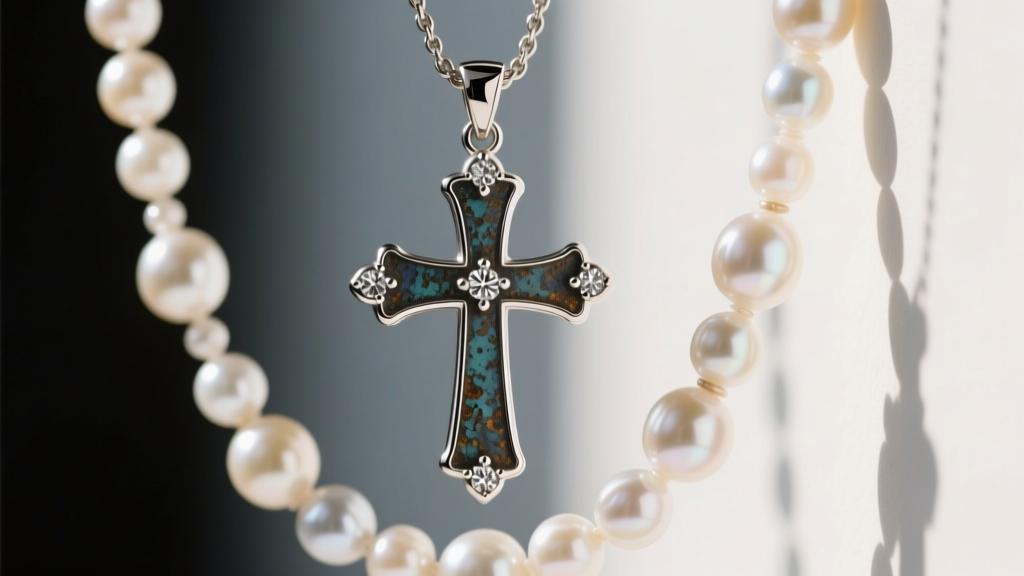
Material Synergy: Pairing Metals with Nacre
The metal composition of the cross pendant and the necklace's hardware (clasp, bail, and French wire) must be carefully selected to complement the pearl's overtone and ensure longevity.
Durability and Aesthetic Pairings
While 18k gold (75% purity) offers a rich, buttery yellow hue that beautifully enhances cream or gold-overtoned pearls, it is inherently softer. If the cross pendant is heavy, the bail (the loop connecting the pendant to the chain or strand) should be crafted from 14k gold (58.5% purity) or platinum to prevent bending and warping over time. For the 'dark academia' or neo-gothic trend prevalent in 2026, oxidized sterling silver (925) crosses provide a striking, high-contrast backdrop for bright white Akoya pearls. The darkened recesses of the oxidized silver highlight intricate engraving or pavé diamond accents, creating a moody, editorial look.
Structural Configurations and Failure Prevention
How the cross is integrated into the pearl necklace fundamentally alters its drape, durability, and styling potential. Below is a breakdown of the primary configurations and their structural implications.
| Configuration Type | Description | Best Pearl Type | Durability & Risk Factors |
|---|---|---|---|
| Fixed Center-Drilled | The cross is permanently strung into the center of the silk thread. | Uniform round Akoya or Freshwater. | High Risk: The sharp metal edges of the cross drill-hole can saw through silk thread over time. Requires a protective rubber or silicone O-ring spacer. |
| Removable Bail on Strand | A hinged or hidden bail allows the cross to slide onto a traditional knotted pearl strand. | Any knotted strand (7mm+). | Low Risk: Preserves the integrity of the strand. Ensure the bail interior is polished to prevent nacre scratching. |
| Asymmetrical Clasp Pendant | The cross serves as the functional clasp or is attached off-center near the clasp. | Baroque or Keshi pearls. | Medium Risk: Requires a robust locking mechanism (like a bayonet clasp) to prevent accidental unfastening due to pendant weight. |
Expert Troubleshooting: A frequent failure mode in vintage or poorly constructed pearl necklaces is the use of heavy solid gold crosses on delicate 4mm rice pearl strands. The localized weight causes premature silk stretching and severe nacre abrasion at the adjacent drill holes. Always ensure your strand is strung with Size 2 (0.6mm) or Size 3 (0.8mm) pure silk thread, and verify that the jeweler has used 0.8mm French wire (gimp) at the clasp connection points to protect the thread from metal friction.
Neckline Pairing and the 2026 Layering Framework
Styling a pearl necklace with cross pendant in 2026 is all about intentional layering and neckline manipulation. The rigid geometry of the cross softens the romanticism of the pearls, making it an excellent transitional piece from daywear to evening attire.
The Three-Tier Layering Matrix
- The Base (14" - 15"): A seed pearl (3mm-4mm) choker worn tightly against the collarbone. This frames the face and provides a textural foundation.
- The Focal Point (17" - 18"): The primary pearl necklace with cross pendant. A 7.5mm Akoya strand with a 20mm 14k gold cross resting perfectly at the hollow of the throat or upper sternum.
- The Anchor (22" - 24"): A long, un-knotted freshwater pearl rope or a delicate 14k gold paperclip chain to draw the eye downward, elongating the torso.
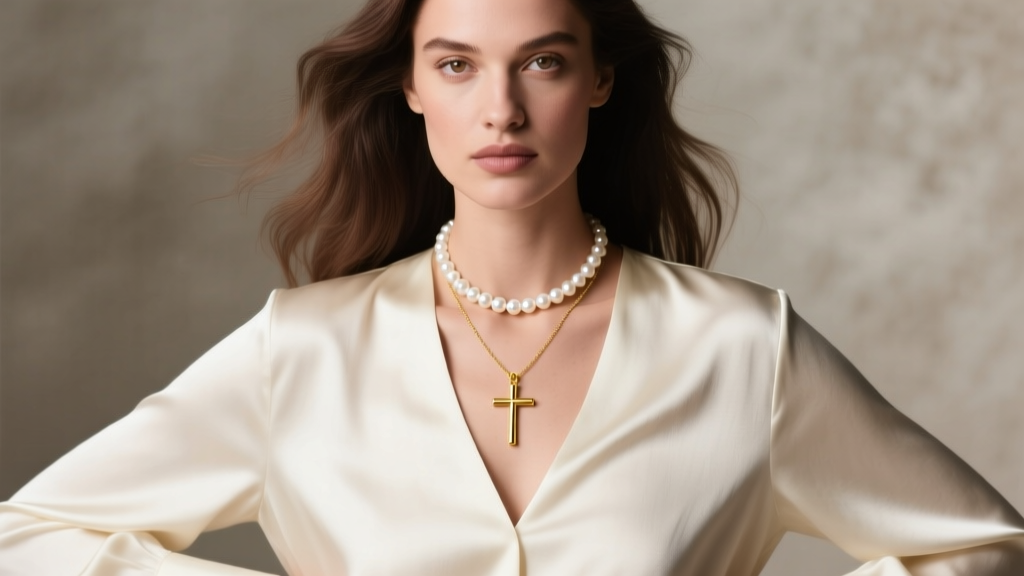
When wearing this combination with apparel, the neckline dictates the pendant size. High-necked garments, such as silk blouses with pussy-bow ties or fine-gauge merino turtlenecks, require smaller, more discreet crosses (under 15mm) to avoid visual clutter. Conversely, deep V-necks and open scoop necks provide the necessary negative space to showcase larger, gemstone-encrusted cross pendants.
Investment Tiers and 2026 Market Pricing
Navigating the market for a high-quality pearl necklace with cross pendant requires understanding the pricing tiers based on material provenance and gemological grading. Based on current World Gold Council data and pearl market valuations, here is what consumers should expect to invest:
- Entry-Level ($250 - $600): Features AAA-grade near-round freshwater pearls (7-8mm) with a sterling silver or 10k gold vermeil cross pendant. Excellent for trend-driven styling, though the vermeil may require re-plating after 12-18 months of daily wear.
- Mid-Tier Luxury ($800 - $2,200): The sweet spot for heirloom quality. Includes AA+ or AAA-grade Akoya pearls with sharp luster, hand-knotted on pure silk, paired with a solid 14k gold or platinum micro-pavé diamond cross. This tier offers the best balance of nacre thickness (0.4mm+) and precious metal durability.
- Haute Joaillerie ($4,500+): Reserved for Hanadama-certified Akoya or white South Sea pearls (10mm+), featuring bespoke, artisan-crafted crosses utilizing rare gemstones like Paraíba tourmalines or unheated sapphires, often with custom-tooled hidden clasps.
Ultimately, the pearl necklace with cross pendant remains a masterclass in contrast. By meticulously matching the pearl's luster grade, respecting the structural limits of silk stringing, and leveraging proportional styling, this iconic pairing will continue to dominate the vanguard of personal adornment well beyond 2026.


