Turquoise and Coral Necklace: Material Properties & Care Guide
Discover the material properties, treatments, and care tips for your turquoise and coral necklace. Compare hardness, porosity, and grading.

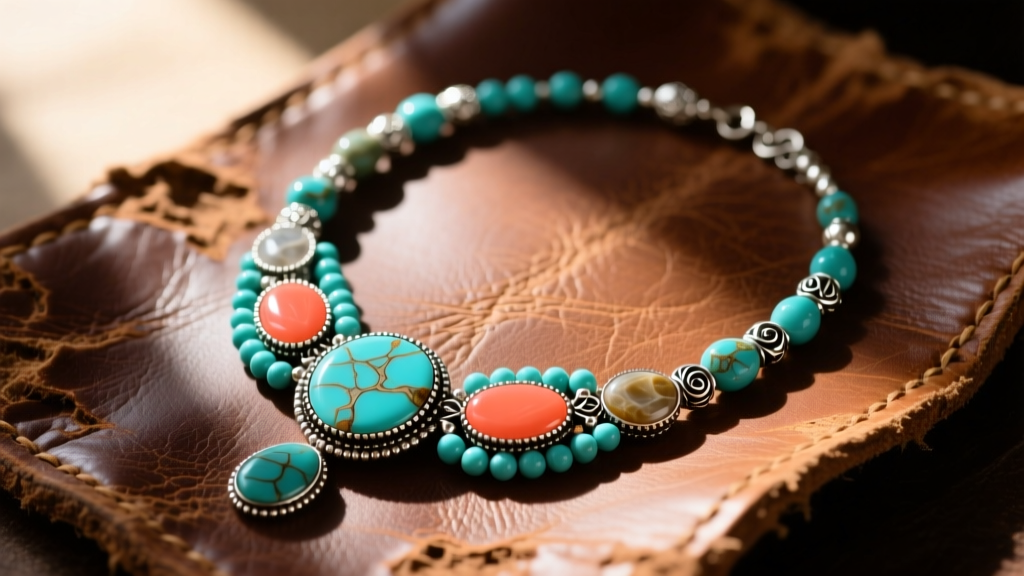
The iconic pairing of a turquoise and coral necklace represents one of the most enduring aesthetics in Southwestern and bohemian jewelry design. However, combining these two distinct organic and mineral materials into a single wearable piece requires a deep understanding of their contrasting gemological properties. As we navigate the 2026 jewelry market, where ethical sourcing and material transparency are paramount, collectors and everyday wearers must understand the physical vulnerabilities, common treatments, and structural requirements of these gems. This guide provides a comprehensive material comparison to help you evaluate, wear, and preserve your turquoise and coral pieces.
Material Deep Dive: Turquoise Properties and Grading
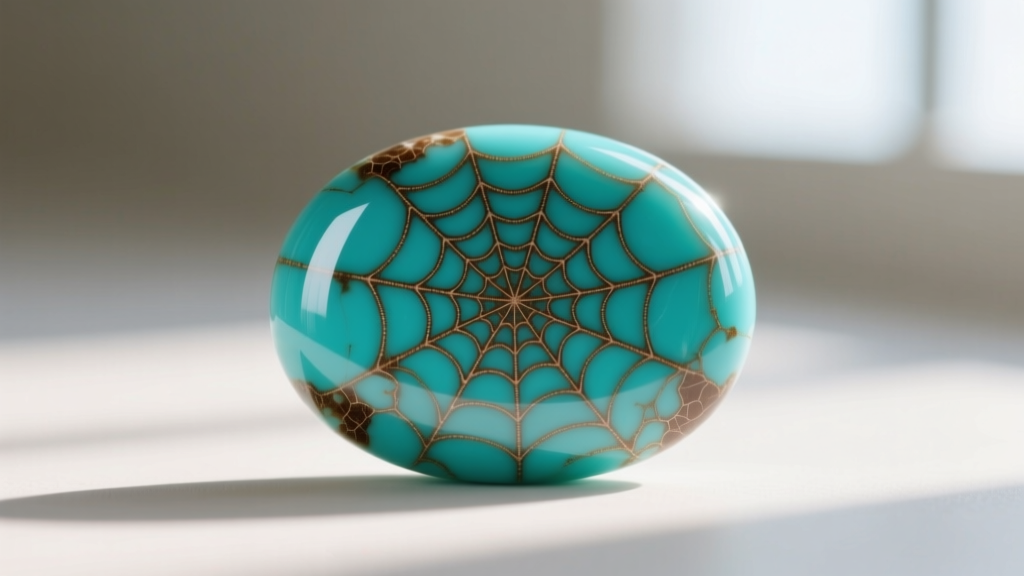
Turquoise is a hydrous phosphate of copper and aluminum, with the chemical formula CuAl6(PO4)4(OH)8·4H2O. Its striking blue-to-green coloration is dictated by the presence of copper (blue) and iron (green). According to the Gemological Institute of America (GIA), turquoise possesses a Mohs hardness ranging from 5 to 6, making it relatively soft compared to quartz but significantly harder than most organic gems.
Porosity and the Necessity of Stabilization
In its natural, untreated state, turquoise is highly porous. Only about 10% to 15% of mined turquoise is "gem grade"—dense and stable enough to be cut, polished, and worn without chemical intervention. The remaining 85%+ is "chalk" or "soft" turquoise, which is too friable for jewelry. To create a durable turquoise and coral necklace, manufacturers must stabilize the softer stones.
- Epoxy/Resin Stabilization: The most common method, where porous stones are submerged in a hardening resin under a vacuum. This permanently alters the stone's density and color saturation.
- The Zachery Treatment: A premium, closely guarded stabilization method using potassium silicate. Unlike epoxy, it does not introduce plastic polymers, allowing the stone to retain a more natural feel while significantly reducing porosity.
- Dyeing and Reconstitution: Lower-tier necklaces often feature reconstituted turquoise (turquoise dust mixed with resin) or dyed howlite/magnesite masquerading as turquoise. Always look for disclosure of these treatments in high-end pieces.
Material Deep Dive: Coral Properties and Ethical Sourcing
Unlike the mineral-based turquoise, coral is an organic gemstone formed by marine polyps, primarily composed of calcium carbonate (CaCO3). This fundamental chemical difference dictates its extreme vulnerability in jewelry applications.
Calcium Carbonate Vulnerabilities
Coral registers a mere 3 to 4 on the Mohs hardness scale. It is highly susceptible to scratching, heat, and most critically, acids. Because calcium carbonate reacts readily with weak acids, everyday substances like human sweat, citrus juices, vinegar, and even the alcohol in perfumes can permanently etch, dull, or dissolve the polished surface of a coral bead.
The 2026 Sourcing Landscape and CITES Regulations
Historically, Mediterranean red coral (Corallium rubrum) was the standard for high-end Southwestern jewelry. However, stringent CITES regulations and marine conservation efforts have severely restricted the wild harvesting of precious coral. In 2026, the market has largely pivoted toward two alternatives:
- Verified Antique Coral: Reclaimed from vintage estate jewelry, commanding premium prices due to its legal, pre-ban status.
- Bamboo Coral: A naturally gray or white deep-sea coral that is universally dyed red to mimic precious coral. While ethically more viable and affordable, the dye can bleed if exposed to harsh chemicals or prolonged moisture.
Comparative Analysis: Turquoise vs. Coral in Necklace Form
When designing or purchasing a turquoise and coral necklace, understanding how these two materials interact physically is crucial for the piece's longevity. The following table outlines their divergent gemological profiles:
| Property | Turquoise | Precious / Bamboo Coral |
|---|---|---|
| Chemical Composition | Hydrous Copper Aluminum Phosphate | Calcium Carbonate (Organic) |
| Mohs Hardness | 5.0 - 6.0 | 3.0 - 4.0 |
| Specific Gravity | 2.60 - 2.90 | 2.60 - 2.70 |
| Refractive Index | 1.610 - 1.650 | 1.486 - 1.658 |
| Primary Vulnerability | Porosity, Cosmetics, Oils | Acids, Heat, Abrasion |
| Common Treatments | Stabilization, Zachery, Dyeing | Dyeing (Bamboo), Bleaching |
Design and Stringing Considerations for Dual-Material Necklaces
The most critical failure point in a mixed-material necklace is abrasion. Because turquoise (Mohs 5-6) is significantly harder than coral (Mohs 3-4), allowing the beads to rest directly against one another will result in the turquoise slowly grinding away the polish and physical structure of the coral beads over time.
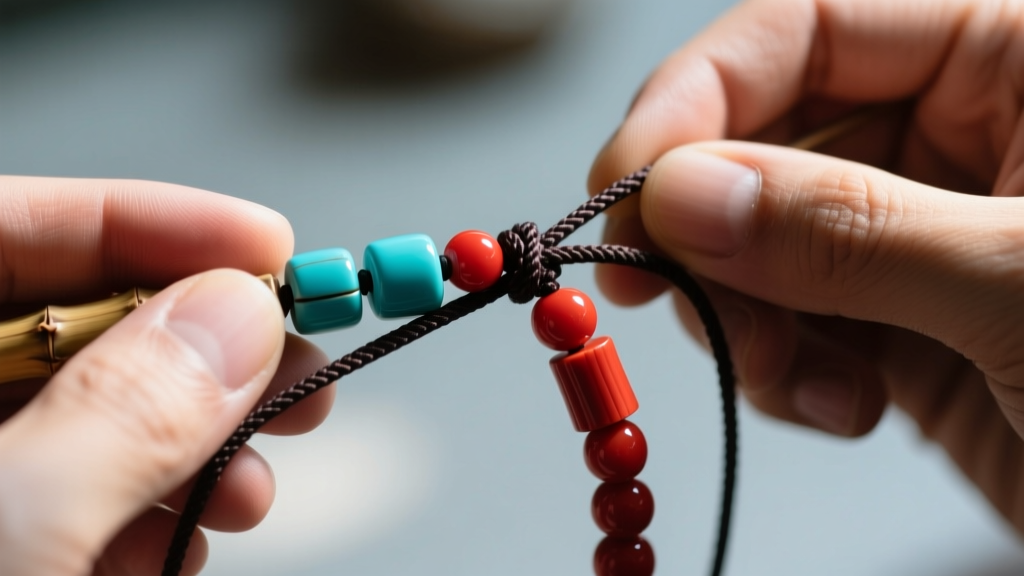
The Mandatory Use of Knotting and Spacers
To prevent this destructive friction, a properly constructed turquoise and coral necklace must employ specific stringing techniques:
- French Knotting: Hand-knotting the cord (typically nylon or silk) between every single bead ensures they never touch. Nylon is highly recommended over silk in 2026, as silk proteins can degrade when exposed to the microscopic acidic residues naturally present on coral.
- Metal Spacers: Alternatively, sterling silver, gold-filled, or copper spacer beads can be placed between the gems. This not only protects the softer coral but also leans into the traditional Native American bench-bead aesthetic.
- Drill Hole Quality: Inspect the drill holes. Rough, uneven drill holes in lower-grade turquoise can act like tiny saws, cutting through the stringing cord over time and leading to catastrophic necklace failure.
Long-Term Care and Environmental Threats
Caring for a dual-material piece requires catering to the more sensitive gemstone—in this case, the coral. Never use ultrasonic cleaners, steam cleaners, or commercial jewelry dips on a turquoise and coral necklace. The high-frequency vibrations of an ultrasonic cleaner can shatter the internal structure of stabilized turquoise, while the heat and chemicals will instantly strip the dye from bamboo coral and etch precious coral.
The Golden Rule of Wear: Always put your necklace on after applying perfumes, hairsprays, and lotions, and take it off before showering or exercising. To clean, simply wipe the beads gently with a soft, dry, lint-free microfiber cloth after wearing to remove skin oils and environmental pollutants.
Pricing Tiers and Authentication Markers
The valuation of these necklaces varies wildly based on material authenticity and origin. Here is a general pricing framework for the current market:
- Entry-Level ($50 - $150): Features stabilized or reconstituted turquoise paired with dyed bamboo coral, often strung on unknotted synthetic cord with base-metal findings.
- Mid-Tier ($200 - $800): Showcases genuine, stabilized American-mined turquoise (e.g., Kingman or Sleeping Beauty) with high-quality dyed bamboo or fossilized coral, hand-knotted with sterling silver clasps and spacers.
- Investment/Collector ($1,500 - $10,000+): Comprises untreated, high-grade gem turquoise (e.g., Lander Blue or Bisbee) paired with verified, pre-ban Mediterranean red coral, often featuring master-crafted silver or gold smithing by recognized indigenous artisans.
When purchasing investment-grade pieces, always request a gemological report or provenance documentation, especially to verify the legal, ethical sourcing of the coral components under current international wildlife trade laws.


