Gold Lock and Key Necklace: Technical Guide to Craft & Wear
Explore the metallurgy, mechanics, and styling of the gold lock and key necklace. Learn about karat durability, functional clasps, and chain gauges.

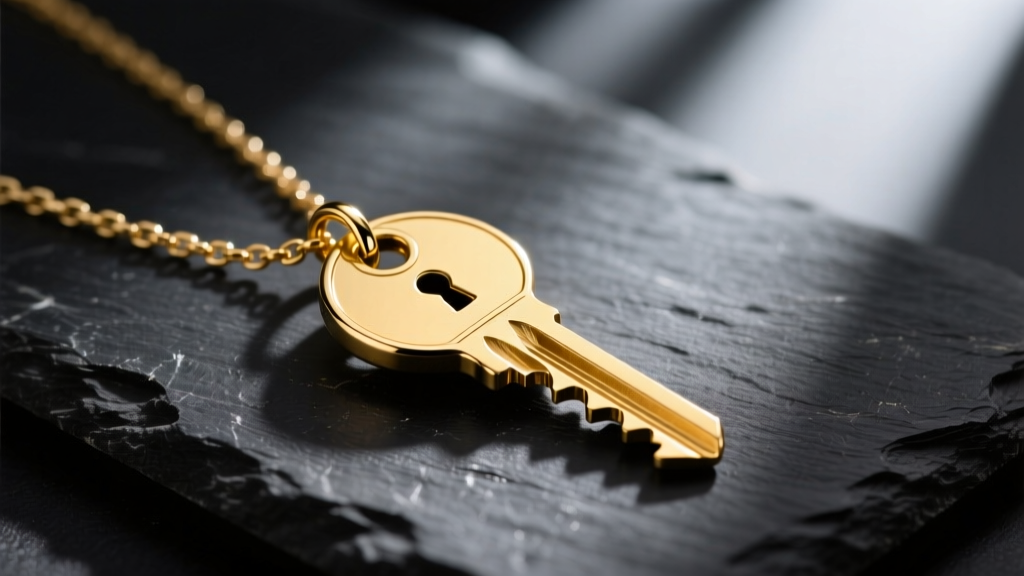
The Metallurgy of Lock and Key Pendants: Karat Selection
When evaluating a gold lock and key necklace, the karat weight dictates not just the color and value, but the mechanical viability of the piece. According to the Gemological Institute of America (GIA), pure 24k gold is far too malleable for functional jewelry; it possesses a Vickers hardness (HV) of roughly 25, meaning a functional lock mechanism would warp after a single use. For a necklace where the key must repeatedly engage with the lock's internal chambers, 14k and 18k gold are the industry standards.
14k gold (58.5% pure gold) is alloyed with copper, silver, and zinc, yielding a Vickers hardness of approximately 150-170 HV. This makes it the superior choice for functional locks, as the internal pins and key teeth will resist abrasion over years of daily wear. 18k gold (75% pure gold) sits around 120-130 HV. While it offers a richer, deeper yellow hue, an 18k functional lock requires thicker structural walls to prevent the keyway from deforming. If you are purchasing a purely decorative lock where the key is soldered in place or never inserted, 18k or even 22k gold is perfectly acceptable and offers superior luster.
Manufacturing Methods: Lost-Wax Casting vs. CNC Milling
The method used to create the lock body profoundly impacts its structural integrity and mechanical precision. The vast majority of commercial gold lock and key necklace pendants are produced via lost-wax casting. This involves 3D printing or hand-carving a wax model, encasing it in investment plaster, burning out the wax, and injecting molten gold. While excellent for intricate exterior filigree, cast gold is inherently micro-porous. Under magnification, cast internal chambers often reveal microscopic pitting, which can cause a functional key to stick or grind over time.
Conversely, high-end bespoke jewelers and specialized horology-adjacent brands utilize CNC (Computer Numerical Control) milling for the lock bodies. CNC milling cuts the lock from a solid billet of hardened 14k or 18k gold, achieving tolerances as tight as 0.02mm. This results in a perfectly smooth keyway and a satisfying, precise mechanical action that cast pieces simply cannot replicate. When sourcing a functional piece, always inquire whether the internal chambers are cast or milled.
Functional vs. Decorative: The Mechanics of the Lock
The market is flooded with decorative "locks" that feature a faux keyhole stamped into a solid piece of gold. For collectors and enthusiasts seeking true mechanical function, there are two primary mechanisms to look for:
The Skeleton Key Mechanism
This is the most common functional design in fine jewelry. It relies on a simple warding system where the key's bit (the notched end) must bypass internal obstacles (wards) to rotate a simple cam or latch. While romantic and historically accurate, skeleton mechanisms offer minimal security and are prone to wear if the gold is too soft. The key must be cast with a slightly harder alloy than the lock body to prevent the teeth from stripping.
Micro Pin-Tumbler Mechanisms
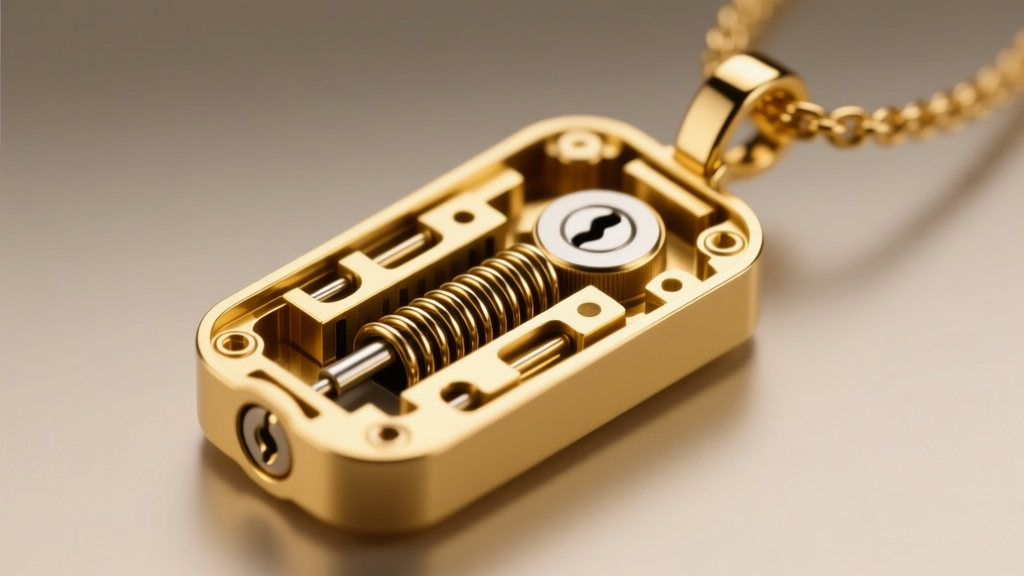
Reserved for luxury and avant-garde jewelers, the micro pin-tumbler mechanism mimics a modern door lock on a millimeter scale. Inside the gold lock body, tiny spring-loaded pins must be aligned to a sheer line by the unique grooves of the key. Crafting these in gold requires master-level engineering, as the springs are typically made from surgical-grade stainless steel or titanium to maintain tension, while the lock body remains gold. The World Gold Council frequently highlights such multi-metal engineering as the pinnacle of modern jewelry craftsmanship.
Chain Engineering: Gauge, Links, and Load-Bearing
A gold lock and key necklace is only as secure as the chain that bears its weight. Solid gold locks are remarkably dense; a modest 20mm x 15mm solid 14k padlock pendant with an accompanying key can easily weigh between 12 and 18 grams. Pairing this with a delicate 1.0mm chain is a recipe for catastrophic failure. You must match the chain's gauge and link style to the pendant's mass.
| Chain Style | Recommended Gauge | Tensile Strength (Approx.) | Best For |
|---|---|---|---|
| Curb Chain | 2.5mm - 3.5mm | 25 - 40 lbs | Heavy solid gold locks (15g+) |
| Cable Chain | 2.0mm - 2.5mm | 15 - 25 lbs | Medium locks and hollow electroformed pieces |
| Figaro Chain | 3.0mm+ | 30 - 45 lbs | Statement pieces requiring high visual impact |
| Box Chain | 1.5mm - 2.0mm | 10 - 15 lbs | Lightweight, purely decorative lock pendants |
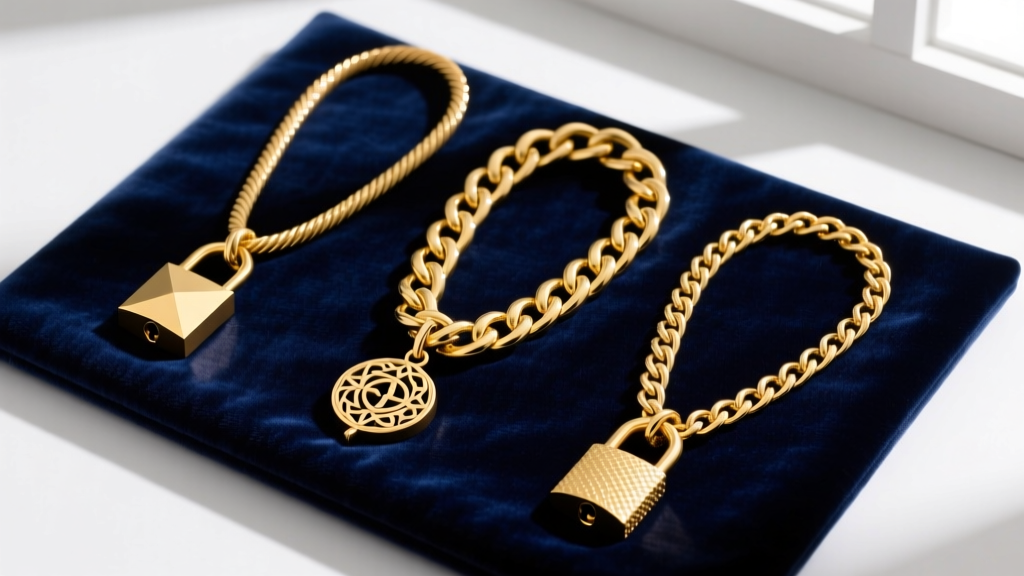
For locks exceeding 15 grams, a 3.0mm Curb or Figaro chain is non-negotiable. The interlocking, flattened links of a curb chain distribute the pendant's weight evenly, preventing the localized stress that causes cable chain links to ovalize and eventually snap.
Clasp Engineering: The Weakest Link
The clasp is the most frequent point of failure in any necklace. Standard spring-ring clasps are entirely inadequate for a heavy gold lock and key necklace. The internal steel spring in a spring ring is prone to fatigue, and the soldered joint on the ring itself can easily pull apart under the dynamic load of a swinging pendant.
Always insist on a solid-cast lobster clasp. Lobster clasps feature a thicker, more robust internal spring and a wider gate that accommodates thicker chain links. For chains over 3.0mm, look for a "double-spring" lobster clasp or a specialized toggle clasp with a heavy-gauge T-bar. Furthermore, ensure the jump rings connecting the clasp to the chain are soldered closed. An unsoldered jump ring will inevitably be pried open by the weight of a solid gold lock.
Sourcing, Pricing, and Market Realities
Understanding the pricing structure of a gold lock and key necklace requires looking past the brand name and focusing on the gold weight and manufacturing complexity. As of 2026, with gold prices remaining historically elevated, the melt value of the piece forms a hard floor for pricing.
- Decorative / Hollow Electroformed ($250 - $600): These pieces use an electroforming process to create a thin shell of gold over a resin core. They look massive but weigh less than 3 grams. They are highly prone to denting and cannot withstand daily wear.
- Solid Cast Functional ($800 - $2,200): The sweet spot for most buyers. These are solid 14k or 18k gold, weighing 10-20 grams, featuring a basic skeleton key mechanism. Pricing scales directly with the daily spot price of gold plus a standard 30-50% retail markup for labor.
- CNC Milled / Micro-Mechanical ($3,500 - $10,000+): Produced by high-end independent jewelers or luxury houses. These feature complex pin-tumbler mechanisms, mixed-metal internal springs, and flawless finishing. You are paying for horological-level engineering applied to jewelry.
Maintenance and Wear-and-Tear Troubleshooting
Functional gold locks require specific maintenance to ensure the key continues to turn smoothly. Over time, skin oils, lotions, and environmental dust accumulate inside the keyway, creating an abrasive paste that wears down the internal wards.
Expert Warning: Never place a functional gold lock necklace in an ultrasonic cleaner. The high-frequency vibrations can dislodge microscopic internal pins, damage delicate solder joints on the chain, and force debris deeper into the lock mechanism.
Instead, clean the lock by submerging it in a warm bath of distilled water and a few drops of mild, phosphate-free dish soap. Use a soft-bristled toothbrush to gently agitate the exterior. To clean the internal keyway, spray a short burst of compressed air (held at least six inches away to prevent moisture propellant from entering) or use a wooden toothpick to gently dislodge compacted debris. Avoid metal picks, which will scratch the soft gold interior.
For polishing, use a treated jeweler's cloth specifically designed for gold. Avoid abrasive polishing compounds on the lock body, as removing even a fraction of a millimeter of gold can alter the tolerances of a tight-fitting functional mechanism, causing the key to slip or fail to engage entirely.


