Turquoise Tennis Necklace Buying Guide: What to Look For in 2026
Discover how to buy a genuine turquoise tennis necklace in 2026. Learn about stabilization, matrix grading, metal settings, and pricing tiers.

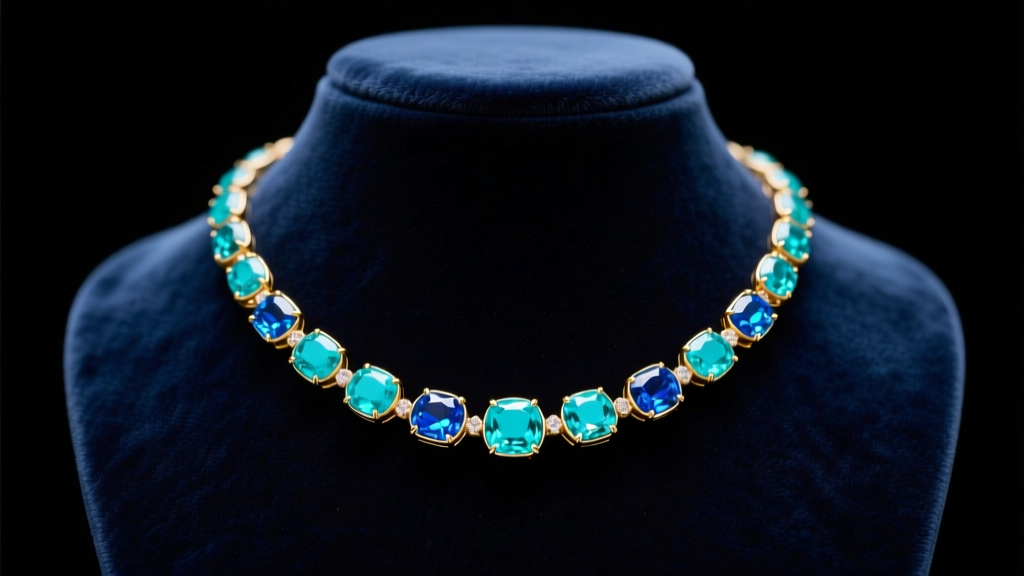
The Anatomy of a Turquoise Tennis Necklace
The turquoise tennis necklace has evolved far beyond its mid-century Southwestern roots, emerging in 2026 as a staple of high-end, bohemian-luxe fine jewelry. Unlike traditional heishi or chunky squash blossom necklaces, a true tennis necklace relies on a continuous, unbroken line of uniformly matched gemstones. For turquoise, this presents a unique gemological challenge. Because turquoise is an opaque, naturally varying mineral, achieving the visual continuity required for a tennis silhouette demands rigorous stone calibration.
In premium pieces, each cabochon must be calibrated to within 0.2mm of the others in both diameter and depth. If the stones vary beyond this tolerance, the necklace will kink, lay unevenly against the clavicle, and place asymmetrical stress on the wire or link settings. When evaluating a turquoise tennis necklace, the first marker of quality is the fluidity of the drape; it should move like a liquid ribbon of color, not a rigid collar.
Natural vs. Stabilized Turquoise: What You Are Actually Buying
The most critical factor in purchasing turquoise is understanding its treatment history. Turquoise is inherently porous, with a Mohs hardness ranging from 5 to 6. In its raw state, it is highly susceptible to fracturing during the cutting process and color-shifting when exposed to skin oils. According to the Gemological Institute of America (GIA), over 90% of the turquoise on the commercial market undergoes some form of stabilization.
Stabilization is not inherently a negative trait; it is a lapidary necessity for most rough material. However, you must know what you are paying for. Here is how the primary treatment categories break down:
| Treatment Type | Process | Durability | Market Value Impact |
|---|---|---|---|
| Natural (Untreated) | Mined, cut, and polished only | Low (Prone to chalking/chipping) | Highest (Investment Grade) |
| Stabilized | Clear epoxy/resin infused under pressure | High (Mohs 7, color-locked) | Moderate (Standard Fine Jewelry) |
| Zachary Treated | Electrochemical enhancement (no polymers) | High | Moderate-High (Disclosed premium) |
| Reconstituted | Turquoise dust bonded with resin and dyed | Very High | Lowest (Fashion/Costume Jewelry) |
When buying a tennis necklace, always ask the jeweler for a disclosure statement. A stabilized turquoise tennis necklace is an excellent choice for daily wear, provided the price reflects stabilized—not natural—goods.
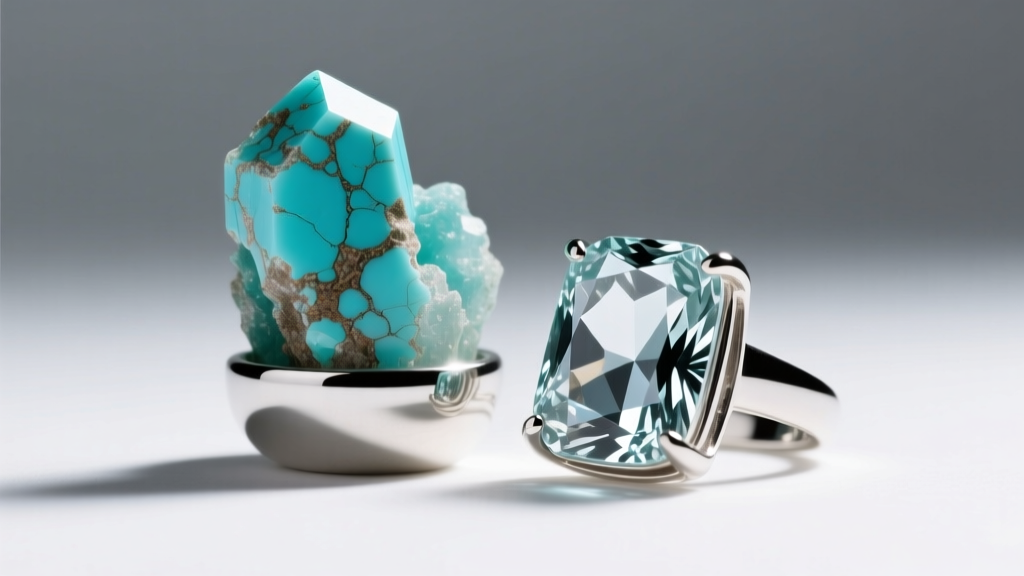
Evaluating Quality: Origin, Color, and Matrix
The value of the stones in your necklace is dictated by their origin and the presence (or absence) of matrix—the host rock that creates veining within the stone. In a tennis necklace, the challenge is matching the matrix across 40 to 60 individual stones.
- Sleeping Beauty (Arizona): Prized for its solid, robin’s-egg blue color with little to no matrix. Because the original mine closed in 2012, genuine, untreated Sleeping Beauty rough is exceedingly rare, making matched tennis necklaces of this material highly sought-after investment pieces.
- Kingman (Arizona): Known for its deep blue colors and striking black or brown pyrite matrix. Matching a spiderweb matrix across an entire tennis necklace is nearly impossible, so Kingman tennis necklaces usually feature stones with a consistent, heavy matrix pattern rather than intricate webs.
- Persian (Iranian): Historically the benchmark for pure, un-veined sky blue turquoise. Antique or vintage Persian turquoise tennis necklaces command massive premiums at auction.
Metal Settings and Clasp Mechanics for Durability
Because turquoise is brittle and sensitive to pressure, the setting style is non-negotiable: bezel settings are mandatory. Prong settings leave the girdle (the edge of the cabochon) exposed, guaranteeing eventual chipping. A well-crafted bezel must have a precise "bearing" or "seat" inside the metal cup. If the seat is too shallow, the stone will rattle; if the metal is pushed too tightly over the dome of the cabochon, the internal tension will cause the turquoise to crack over time.
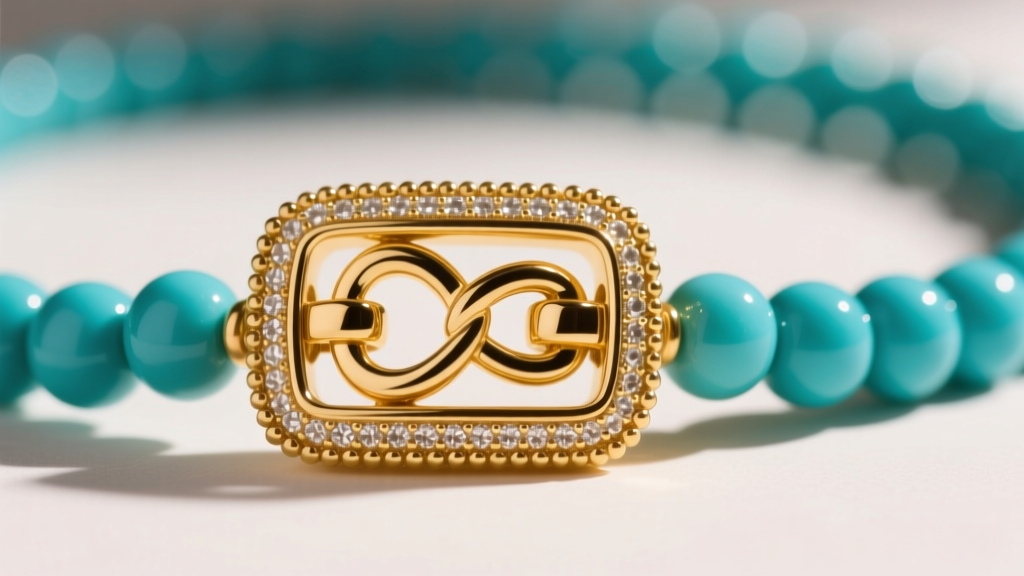
Regarding metals, 14k or 18k yellow gold provides a warm, luxurious contrast to the cool blue of the stones and will not tarnish. Sterling silver is the traditional pairing, but it requires maintenance. If you opt for silver, ensure it is heavily rhodium-plated or oxidized to minimize tarnish transfer to the porous stones. Finally, inspect the clasp. A heavy stone necklace should never rely on a simple spring-ring clasp. Look for a lobster clasp with a figure-8 safety catch, or a hidden box clasp with a secondary security chain.
2026 Pricing Tiers and Market Value
Due to global supply chain constraints and the depletion of major American turquoise mines, the cost of high-grade rough has surged. When shopping in 2026, expect the following pricing structures for a standard 16-to-18-inch turquoise tennis necklace:
Entry Tier ($250 - $600)
Features stabilized turquoise, smaller calibrated stones (3mm - 4mm), and sterling silver settings. The color will be uniform, but the stones may lack the deep saturation of premium grades. Excellent for everyday, worry-free wear.
Mid Tier ($800 - $2,500)
Features high-grade stabilized or lower-grade natural stones (5mm - 7mm), set in 10k or 14k gold, or heavy artisan-crafted oxidized silver. You will see excellent color saturation, precise bezel work, and secure box clasps.
Investment Tier ($4,000 - $15,000+)
Features completely untreated, natural Sleeping Beauty or Lander Blue turquoise, perfectly matched in color and dome height, set in 18k gold with artisan milgrain detailing. These pieces are essentially wearable assets and should come with full gemological provenance.
Care Protocols: Preventing Chalking and Color Shifts
The most common failure mode for turquoise jewelry is "chalking"—a phenomenon where the stone absorbs sebum, lotions, and cosmetics, altering its refractive index and turning the vibrant blue into a dull, chalky green. While stabilized stones are largely immune to this, natural stones require strict care protocols.
Expert Rule of Thumb: Turquoise should always be the last thing you put on when getting dressed, and the first thing you take off when you get home. Never expose your necklace to perfume, hairspray, or chemical sunscreens.
To clean your turquoise tennis necklace, never use ultrasonic cleaners, steamers, or commercial jewelry dips. The Encyclopedia Britannica's gemological guidelines note that harsh chemicals can dissolve the copper and aluminum salts that give turquoise its color. Instead, simply wipe the stones gently with a damp, lint-free microfiber cloth after wearing, and store the necklace flat in a soft pouch away from direct sunlight and extreme heat to prevent the stones from dehydrating and developing surface spiderweb fractures.


