2 Tone Necklace Value: 2026 Budget & Quality Guide
Discover if a 2 tone necklace is worth your budget in 2026. We analyze plating methods, hidden costs, and exact price tiers for the best value.

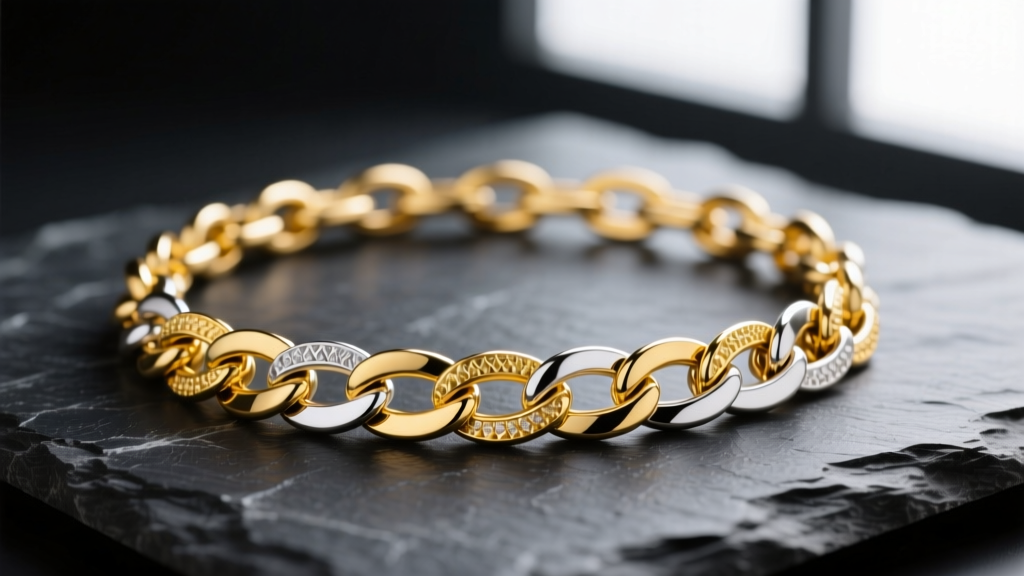
The mixed-metal aesthetic has dominated jewelry trends for decades, but shopping for a 2 tone necklace in 2026 requires more scrutiny than ever before. The visual contrast between warm yellow gold and cool white metals (like platinum, white gold, or sterling silver) offers incredible versatility. However, the market is currently saturated with deceptive pricing structures, misleading hallmarks, and advanced coating technologies that blur the line between fine jewelry and cheap costume pieces.
As a buyer, how do you determine if a two-tone piece is a legitimate investment or a depreciating expense? This comprehensive budget and value assessment breaks down the exact manufacturing methods, hidden failure modes, and realistic price tiers you need to know before making a purchase.
The Manufacturing Reality: Solid vs. Plated vs. PVD
To accurately assess the value of any 2 tone necklace, you must first understand how the two colors are applied. The price disparity between a $50 chain and a $500 chain comes down to one of three manufacturing methods.
1. Solid Soldered Construction
In genuine fine jewelry, a two-tone chain is created by manufacturing links out of two distinct solid alloys (e.g., 14k yellow gold and 14k white gold) and mechanically interlocking or soldering them together. There is no surface coating. The value here is intrinsic; the piece holds melt value and can be polished indefinitely without losing its color.
2. Traditional Electroplating
Most budget-friendly two-tone necklaces are made by casting the entire piece in a base metal (like brass or sterling silver) and selectively masking and electroplating the yellow gold sections. The durability depends entirely on the thickness of the gold layer, measured in microns. 'Flash plating' uses a mere 0.1 to 0.3 microns of gold, while the Federal Trade Commission (FTC) requires 'Heavy Gold Electroplate' (HGE) to be at least 2.5 microns thick.
3. PVD (Physical Vapor Deposition) Coating
By 2026, PVD has become the standard for mid-tier stainless steel jewelry. PVD uses a vacuum chamber to vaporize titanium nitride, bonding it to the steel at a molecular level. PVD gold tones are significantly harder than electroplated gold—often exceeding 2,000 on the Vickers hardness scale compared to electroplating's 150. However, it contains zero actual gold, meaning the intrinsic value is virtually zero.
2026 Market Pricing: The Budget Breakdown
When evaluating a 2 tone necklace, use this pricing matrix for a standard 18-inch, 2mm cable chain to determine if you are being overcharged.
| Construction Type | Base/Core Metal | Expected Price Range | Lifespan | Replating Cost |
|---|---|---|---|---|
| Flash Plated | Brass / Copper | $25 - $60 | 3 - 9 Months | Not Cost-Effective |
| Gold Vermeil | Sterling Silver | $85 - $160 | 1 - 3 Years | $40 - $75 |
| PVD Coated | 316L Stainless Steel | $60 - $130 | 3 - 5 Years | Cannot be Replated |
| Solid Soldered | 14k / 18k Gold Alloys | $450 - $1,200+ | Lifetime | Polish Only ($20) |
Note: Solid gold pricing is heavily dependent on the daily spot price of gold and the exact gram weight of the chain.
Hidden Costs and Failure Modes
The initial purchase price of a plated 2 tone necklace is rarely the final cost of ownership. Budget buyers often fall victim to two specific failure modes that ruin the aesthetic and drain their wallets.
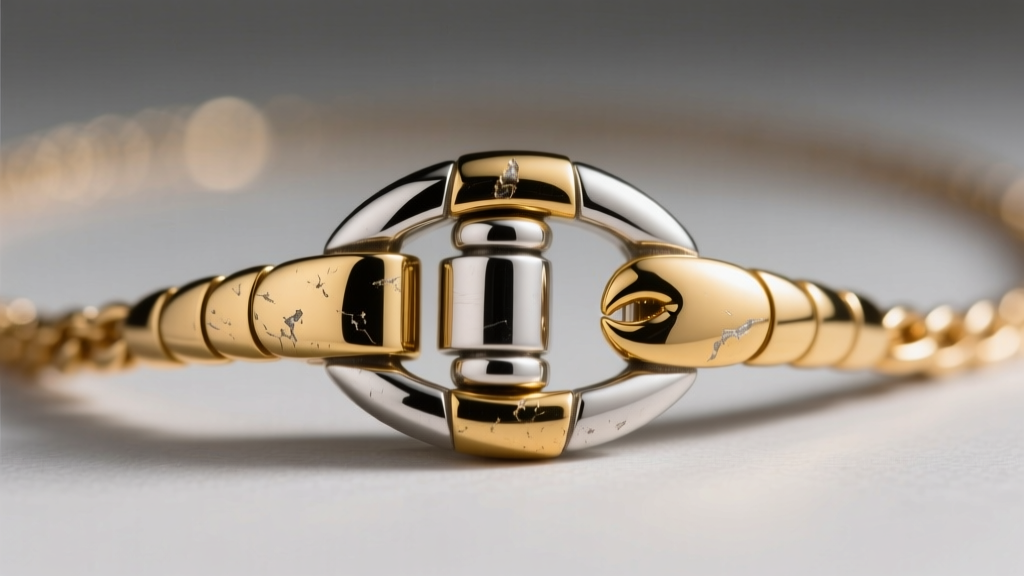
The Clasp Friction Problem
The lobster clasp or spring ring on a necklace is a high-friction zone. Every time you put the necklace on or take it off, the metal rubs against your fingernails, skin, and the jump ring. On a selectively plated 2 tone necklace, the gold plating on the clasp and the adjacent three links will wear away first, revealing the silver or brass underneath. This creates a jarring, patchy look that ruins the two-tone illusion.
Galvanic Corrosion in Mixed Alloys
When two different metals sit against the skin in the presence of moisture (sweat, humidity), they can create a microscopic galvanic cell. If a manufacturer uses a cheap copper alloy base and plates it with silver and gold, the copper can oxidize rapidly, causing the overlying plating to blister and flake off. According to metallurgical data from the Gemological Institute of America (GIA), proper rhodium flashing between base metals and topcoats is essential to prevent this, but budget manufacturers frequently skip this step to save pennies.
How to Inspect a 2 Tone Necklace Before Buying
Whether you are shopping online or examining a piece in a brick-and-mortar jeweler, run it through this strict inspection checklist to verify its true value.
- Check the Hallmarks: Look closely at the clasp and the jump ring. A solid piece will be stamped '14K' or '18K'. If you see '14K GP' (Gold Plated), '14K HGE' (Heavy Gold Electroplate), or '14K GEP', you are looking at a coated base metal. By FTC guidelines, the plating stamp must not overshadow the base metal reality.
- Perform the Melt Value Math: A standard solid 14k yellow and white gold 18-inch cable chain (2mm width) weighs approximately 4.5 grams. Given the 2026 gold market, the raw melt value of that gold alone is roughly $180. If a seller is offering a 'solid' chain of this size for $90, it is mathematically impossible. It is either plated, hollow, or a scam.
- Examine the Link Joints: Use a jeweler's loupe or your phone's macro camera to look at where the links connect. In high-quality solid two-tone chains, the links are often soldered closed. In cheap plated chains, the links are simply pinched shut, and you might see the plating pooling or cracking at the seams.

The Magnet Test (With Caveats)
Many buyers use a rare-earth magnet to test for authenticity. While solid gold and silver are non-magnetic, many budget two-tone necklaces use 316L stainless steel as a base for PVD coatings, which is also largely non-magnetic. Furthermore, the internal springs inside lobster clasps are almost always made of magnetic steel, even in 100% solid gold necklaces. Therefore, use the magnet test only to rule out cheap iron or nickel bases, not to confirm solid gold.
Final Verdict: Which Tier Offers the Best ROI?
The return on investment (ROI) for a 2 tone necklace depends entirely on your wearing habits and long-term goals.
If you are buying for daily wear and longevity, a solid 14k soldered two-tone chain is the only logical choice. While the upfront cost is steep ($450+), the cost-per-wear drops to pennies over a decade, and the piece retains intrinsic scrap value. It will never flake, tarnish, or require expensive chemical replating.
If you are buying for occasional wear or trend-chasing, skip the flash-plated brass and opt for a high-quality Gold Vermeil piece (sterling silver base with at least 2.5 microns of 14k gold). The sterling silver base prevents the green skin effect associated with copper, and when the gold eventually wears off at the clasp, a local jeweler can easily replate it for a reasonable fee, extending the life of your jewelry for years to come.


