Understanding the Necklace Crown: Bails, Caps, and Royal Pendants
Discover what a necklace crown is in jewelry making. Learn about structural crown bails, pearl caps, and royal motif pendants in this guide.

What Does "Necklace Crown" Actually Mean?
When beginners enter the world of jewelry design and start searching for a "necklace crown," they are often met with confusing, conflicting results. In the jewelry industry, this term does not refer to a single, universally standardized item. Instead, it represents a duality: it can describe a highly specific structural component used in jewelry assembly, or it can refer to an aesthetic motif featured in royal-inspired pendants. Understanding the difference between these two applications is crucial for anyone looking to design, repair, or purchase necklaces. Whether you are a hobbyist trying to attach a half-drilled pearl to a chain, or a collector seeking vintage heraldic jewelry, mastering the terminology of the necklace crown will elevate your expertise and save you from costly purchasing mistakes.
The Structural Crown: Bails, Caps, and Pearl Settings
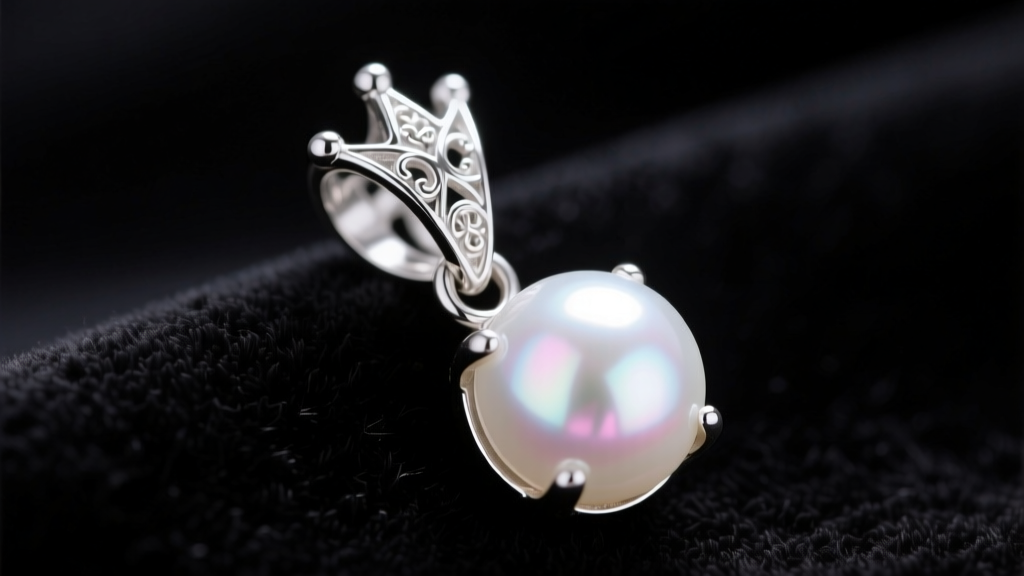
In jewelry making and lapidary arts, a structural "crown" (often called a crown bail, crown cap, or crown setting) is a specialized metal finding used to attach a bead, pearl, or gemstone to a necklace chain. Unlike standard bails that loop through a fully drilled hole, a crown cap is designed specifically for half-drilled beads. The finding features a base with a small protruding peg or a cup with prongs that secure the bead, while a loop at the top allows the chain to pass through.
These findings are essential for creating elegant, seamless pendant drops where the chain appears to emerge directly from the top of the gemstone. According to Fire Mountain Gems, utilizing the correct crown finding ensures the structural integrity of the pendant, preventing the bead from snapping off under the dynamic tension of daily wear. They are most commonly manufactured in 925 sterling silver, 14/20 gold-filled brass, and rhodium-plated base metals to prevent oxidation against the skin.
Sizing Your Crown Cap for Perfect Tension
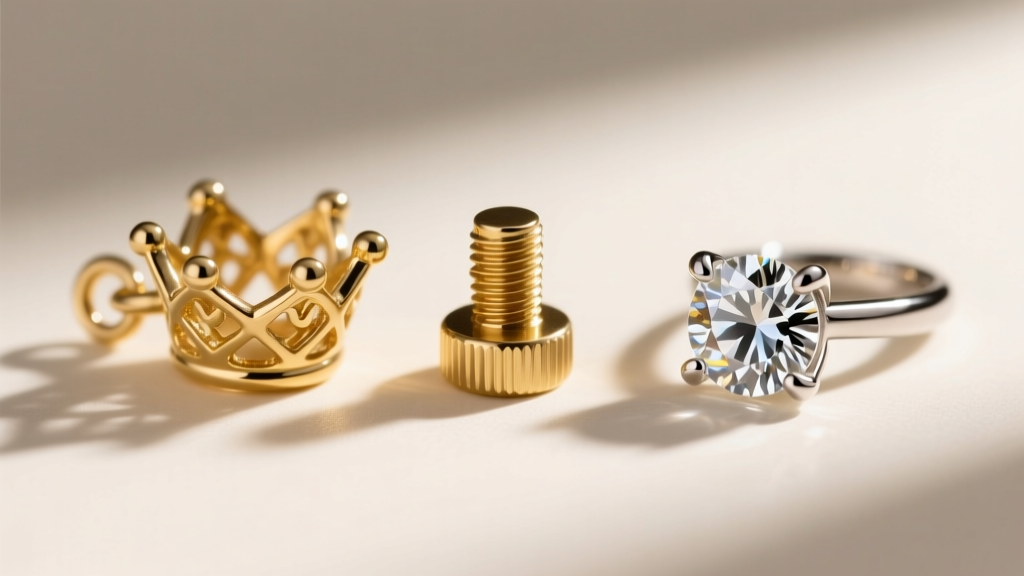
One of the most common beginner errors is mismatching the crown cap diameter to the bead size. A crown cap should never perfectly match the bead's width; it must be slightly smaller to create a visually pleasing "floating" effect and ensure the metal does not overwhelm the stone. The Golden Rule of Sizing: Select a crown cap that is 1.0mm to 1.5mm smaller than the diameter of your bead. For example, if you are setting a 9.0mm round Akoya pearl, an 8.0mm or 7.5mm sterling silver crown cap is ideal. If the cap is too wide, it will create an unsightly metallic lip around the pearl; if it is too narrow, the adhesive surface area will be insufficient to support the bead's weight.
Adhesives and Assembly: Beyond Super Glue
Securing a half-drilled bead to a crown bail peg requires the right chemical bond. Beginners often reach for cyanoacrylate (commonly known as Super Glue), which is a catastrophic mistake when working with organic gems. Cyanoacrylate cures brittle and can chemically etch or cloud the delicate nacre of a pearl. The Gemological Institute of America (GIA) notes that pearls require careful handling and specific, non-corrosive environments to maintain their luster. Instead, professionals rely on two primary adhesives:
- E6000 Jewelry Adhesive: A flexible, industrial-strength glue that cures in 24 hours. It absorbs shock and movement, making it ideal for heavier gemstone beads (10mm and above).
- G-S Hypo Cement: A precision, medium-strength cement with a fine needle applicator. It is perfect for delicate 5mm to 7mm pearls where excess glue squeeze-out must be strictly avoided.
The Aesthetic Crown: Royal Motifs and Heraldic Pendants
On the other side of the spectrum, "necklace crown" frequently refers to the aesthetic design of the pendant itself. Crown motif necklaces have been a staple in jewelry since the Victorian era, symbolizing authority, divine right, and noble heritage. Today, these pendants range from minimalist, geometric tiara silhouettes to highly detailed, heraldic replicas of the St. Edward's Crown or the Tudor Crown.
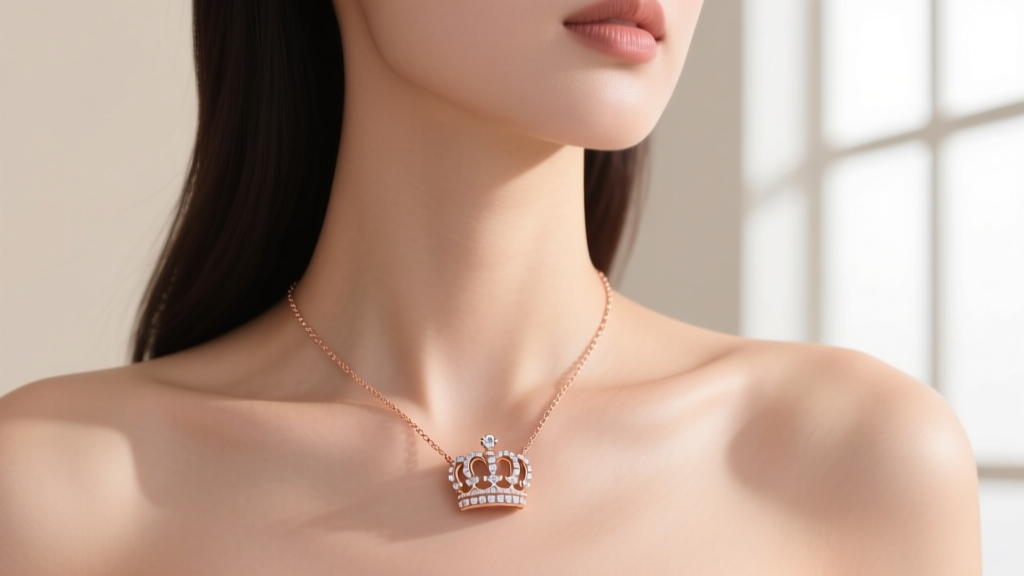
Modern crown pendants are often cast in 14k gold or platinum and feature intricate micro-pavé settings. In a micro-pavé crown pendant, dozens of microscopic cubic zirconia or natural diamonds (typically 0.8mm to 1.2mm in diameter) are set closely together using tiny metal beads raised from the gold itself. This technique maximizes light return, giving the small pendant a massive visual footprint. When shopping for aesthetic crown necklaces, pay close attention to the "arches" of the crown design. High-quality castings will have fully pierced, open-work arches, whereas cheaper, mass-produced stamped pendants will feature solid, flat metal with faux arch lines etched into the surface.
Comparison Chart: Crown Bail Types for Beginners
If you are assembling your own structural necklace crown, choosing the right mechanism is vital. Below is a breakdown of the three primary crown bail types used in modern jewelry fabrication.
| Crown Bail Type | Mechanism of Action | Best Use Case | Beginner Skill Level |
|---|---|---|---|
| Glue-In Peg Bail | Features a flat base and a metal peg that is glued into a half-drilled bead hole. | Round pearls, opaque cabochons, and lightweight resin beads. | Beginner (Requires basic adhesive knowledge) |
| Screw-In Cap | The bead is tapped with internal threads, and the crown cap screws directly into the bead. | High-value, heavy gemstones where glue failure is not an option. | Advanced (Requires lapidary tapping tools) |
| Pronged Crown Setting | A cup with 4 to 6 metal prongs that are bent over the girdle of a faceted stone to lock it in. | Faceted gemstones (e.g., amethyst, CZ) and large, heavy cabochons. | Intermediate (Requires prong pliers and bezel pushers) |
Common Mistakes to Avoid When Working with Crown Findings
Even with the right materials, structural failures occur when fundamental jewelry mechanics are ignored. Avoid these three critical errors when working with necklace crowns:
- Ignoring Chain Gauge Compatibility: The loop at the top of a crown bail is often quite small, typically measuring 2.0mm to 3.0mm in outer diameter. If you attempt to thread a thick 4.0mm rope chain or a wide Cuban link through this loop, it will cause severe friction, eventually wearing through the soft metal of the bail and dropping your pendant. Always pair crown bails with delicate chains like 1.0mm to 1.5mm cable, box, or wheat chains.
- Failing to Degrease the Bonding Surface: Before applying E6000 or G-S Hypo Cement to a crown cap, the metal base and the bead's drilling site must be wiped with isopropyl alcohol. Natural skin oils, polishing compounds, and dust will create a barrier that causes the adhesive to fail within weeks.
- Over-Pronging Faceted Stones: When using a pronged crown setting for a gemstone, beginners often push the prongs down too far, covering the crown (the top faceted surface) of the stone. This blocks light entry, effectively killing the gemstone's brilliance and fire. Prongs should only grip the very edge of the girdle.
Final Thoughts on Choosing Your Necklace Crown
Whether you are deciphering the anatomy of a structural crown bail to set a lustrous South Sea pearl, or you are curating a vintage-inspired heraldic crown pendant for a layered necklace stack, precision and material knowledge are your best tools. By understanding the exact sizing ratios, selecting the correct non-corrosive adhesives, and recognizing the hallmarks of quality micro-pavé casting, you transition from a novice jewelry enthusiast to an informed connoisseur. Always verify your metal grades, respect the structural limits of your findings, and let the crown of your necklace serve as a testament to quality craftsmanship.


