Ursula's Necklace: Anatomy, Metals & Styling the Sea Witch Icon
An expert deep dive into Ursula's necklace, exploring the metallurgy, casting techniques, chain engineering, and styling of this iconic shell pendant.

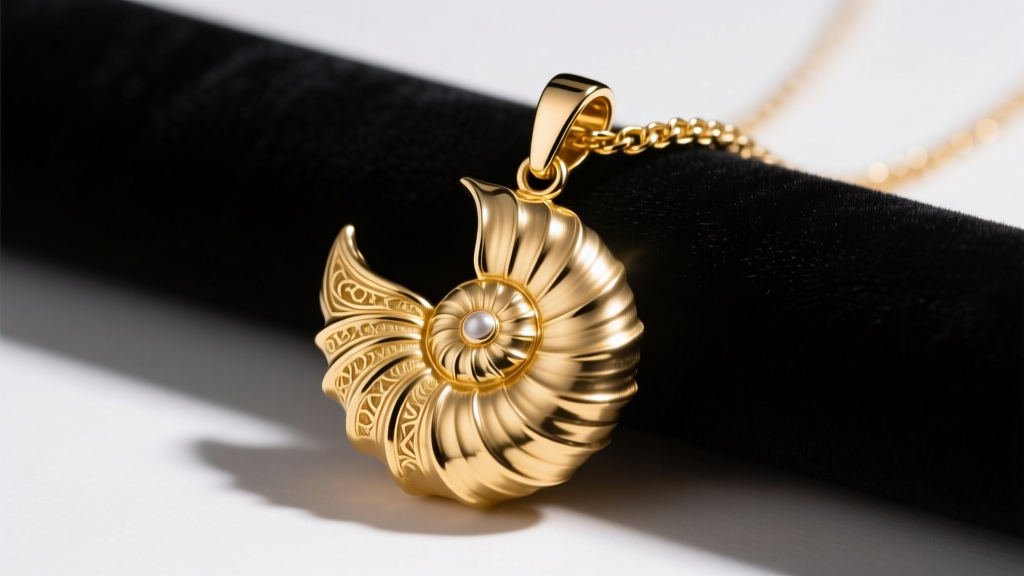
When discussing iconic pop-culture jewelry, few pieces command the immediate recognition and structural intrigue of Ursula's necklace. Originally popularized by the 1989 animated classic The Little Mermaid and later reimagined in high-jewelry adaptations for the 2023 live-action film, the Sea Witch’s signature gold shell pendant is a masterclass in villainous glamour. However, translating this larger-than-life, oceanic statement piece into wearable, high-quality fine jewelry requires a deep understanding of metallurgy, weight distribution, and structural engineering.
As jewelry designers and collectors look to capture this iconic aesthetic for modern wardrobes, we must look past the surface-level nostalgia. This expert deep dive dissects the anatomy of Ursula's necklace, exploring the precise casting techniques, metal grades, and chain tensile strengths required to engineer a piece that is as functional as it is fabulous.
The Anatomy of the Shell Pendant: Casting & Dimensions
The focal point of Ursula's necklace is the oversized, scalloped shell. While often referred to as a scallop or conch, the geometric spirals and ridges most closely resemble a nautilus shell cross-section. In animation, the pendant appears to be roughly 60mm to 75mm in width. In real-world jewelry design, a solid cast gold pendant of this diameter poses a severe ergonomic problem: weight.
If cast in solid 14k gold using traditional lost-wax casting methods, a 65mm shell with a 4mm depth and thick structural walls would weigh upwards of 160 grams. This would cause severe neck strain and inevitably warp the chain. To solve this, expert jewelers utilize advanced manufacturing techniques:
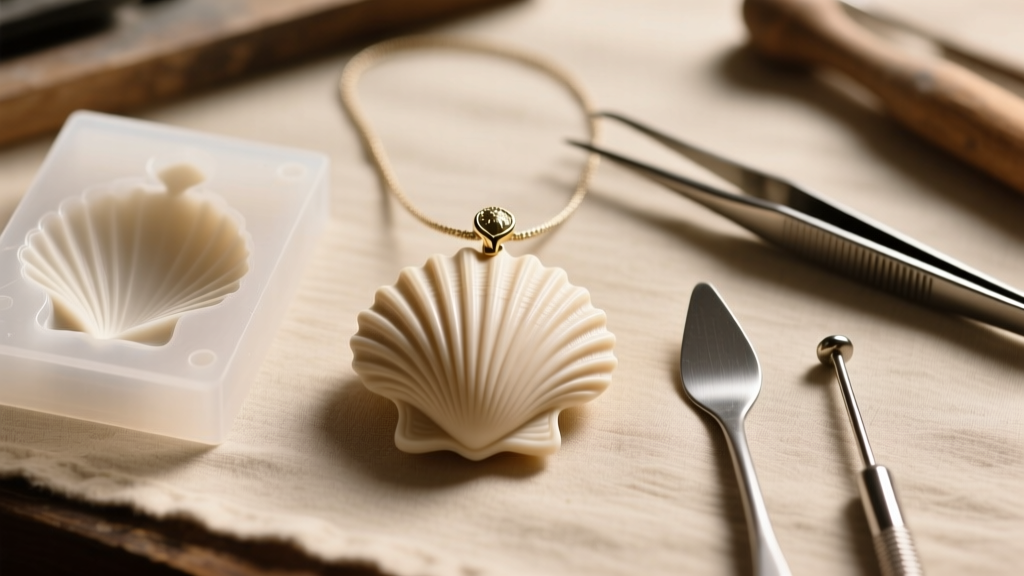
Hollow-Form Casting and Electroforming
To maintain the dramatic volume of Ursula's necklace without the punishing weight, high-end replicas employ hollow-form casting or electroforming. According to Rio Grande's casting guides, electroforming allows jewelers to build up a precise, microscopic layer of gold over a conductive wax or resin model. This results in a massive, 65mm shell pendant that weighs a mere 15 to 20 grams while retaining immense structural rigidity and crisp, high-definition surface textures.
Metallurgy & Material Grades: Recreating the Gold
The warm, saturated yellow gold seen in the films requires specific alloy compositions to achieve the correct hue and durability. The Gemological Institute of America (GIA) notes that the exact color of gold is dictated by its alloying metals—copper adds warmth and red tones, while silver and zinc lighten the hue. For Ursula's necklace, a rich, slightly copper-heavy 14k or 18k yellow gold alloy best mimics the antique, treasure-like aesthetic of the character's underwater lair.
Below is a technical breakdown of the materials used across different market tiers for this specific pendant design:
| Material Grade | Composition | Avg. Weight (65mm) | Durability & Tarnish | Est. Price Range |
|---|---|---|---|---|
| Solid 14k Gold (Hollow) | 58.5% Au, Ag, Cu, Zn | 18g - 22g | Excellent; will not tarnish | $2,800 - $4,500 |
| Solid 14k Gold (Solid Cast) | 58.5% Au, Ag, Cu, Zn | 140g - 165g | Excellent; heavy wear risk | $9,000 - $12,000+ |
| Heavy Gold Vermeil | Sterling Silver + 2.5μm Au | 55g - 65g | Good; requires careful polishing | $250 - $450 |
| PVD Gold over Brass | Brass base + TiN coating | 60g - 75g | Moderate; highly tarnish-resistant | $80 - $150 |
| Zamak Alloy (Costume) | Zinc, Aluminum, Magnesium | 70g+ | Low; prone to pitting and breakage | $20 - $45 |
Chain Engineering: Supporting Heavy Statement Pendants
A common failure mode in large statement necklaces is chain stretch or bail breakage. Ursula's necklace features a thick, rope-like gold cord or chain. When engineering this piece for daily or extended wear, standard cable or curb chains will fail under the dynamic load of a heavy pendant swinging against the chest.
Optimal Chain Profiles
- Wheat Chains (4mm - 6mm): The interlocking, woven oval links of a wheat chain provide multidimensional tensile strength, preventing the kinking that plagues standard rope chains.
- Byzantine Chains (5mm+): For a historically accurate 'pirate treasure' aesthetic, the complex, folded links of a Byzantine chain offer exceptional weight distribution and an opulent, textured profile that matches the shell.
- Box Chains (Reinforced): While sleek, box chains must be laser-welded at the joints to support pendants exceeding 40 grams without the links pulling apart at the clasp.
The Bail: The Critical Stress Point
The bail—the loop connecting the shell to the chain—must be integrated directly into the shell's structural framework. A soldered, hidden tube bail placed at the exact center of gravity prevents the pendant from flipping upside down during wear. Wrap bails, while common in commercial gemstone jewelry, introduce weak points and should be avoided for heavy, asymmetric metal pendants like Ursula's shell.
Styling the Sea Witch: Necklines & Proportions
Wearing an oversized, character-associated pendant requires careful styling to elevate the piece from 'cosplay' to 'high-fashion editorial.' The key lies in neckline pairing and color theory.
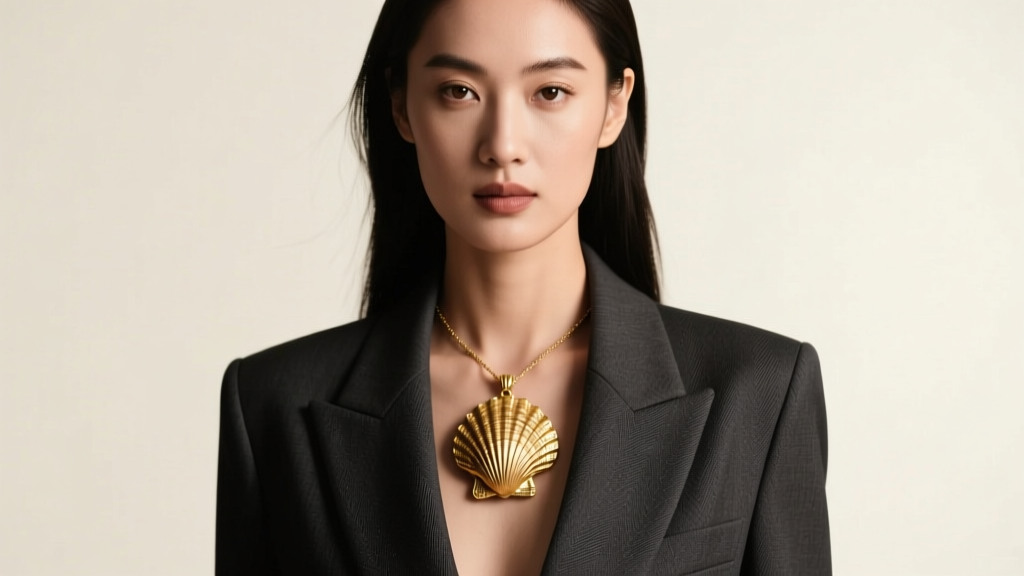
Neckline Synergy
Because the nautilus shell spans 65mm or more, it requires negative space to breathe. High crew necks and turtlenecks will cause the pendant to sit awkwardly against the fabric, muffling its visual impact.
The golden rule of statement pendants: The neckline must act as a frame, not a competing texture. Deep V-necks, sweetheart cuts, and open-collar blazers provide the necessary canvas for the shell to rest flat against the sternum.
Color Theory & Metal Contrast
Ursula's iconic color palette relies on the stark contrast between deep, saturated cool tones and warm, reflective metals. To channel this energy in a modern wardrobe, pair a high-karat gold shell pendant with rich jewel tones: aubergine, deep emerald, midnight navy, and charcoal velvet. The warmth of the gold will visually pop against these dark, cool backgrounds, mimicking the bioluminescent glow of the ocean depths.
Maintenance & Tarnish Prevention for Large Surface Areas
The expansive, ridged surface area of the shell pendant makes it a magnet for skin oils, cosmetics, and environmental sulfur, which accelerate tarnishing—especially in vermeil or lower-karat gold alloys.
- Ultrasonic Cleaning: Safe for solid gold and plain brass, but never use ultrasonic cleaners on gold vermeil, as the high-frequency vibrations can strip the micron-layer of gold from the silver base.
- Steam Cleaning: Ideal for blasting trapped sebum and lotion out of the deep, textured ridges of the shell without abrasive contact.
- Microfiber Polishing: For routine maintenance, use a dry, untreated microfiber cloth to buff the high points of the shell, leaving the recessed ridges slightly oxidized to enhance the 3D topography of the design.
Ultimately, Ursula's necklace remains a triumph of character design and jewelry engineering. By respecting the physical limitations of gold, employing advanced hollow-casting techniques, and selecting the correct chain architecture, jewelers can transform this animated artifact into a breathtaking, wearable piece of modern armor.


