Long Turquoise Bead Necklace Value: A Buyer's Pricing Guide
Discover how to assess the true value of a long turquoise bead necklace. Learn grading, pricing tiers, and how to avoid dyed imitations in our guide.

The Anatomy of Turquoise Value: Natural vs. Treated
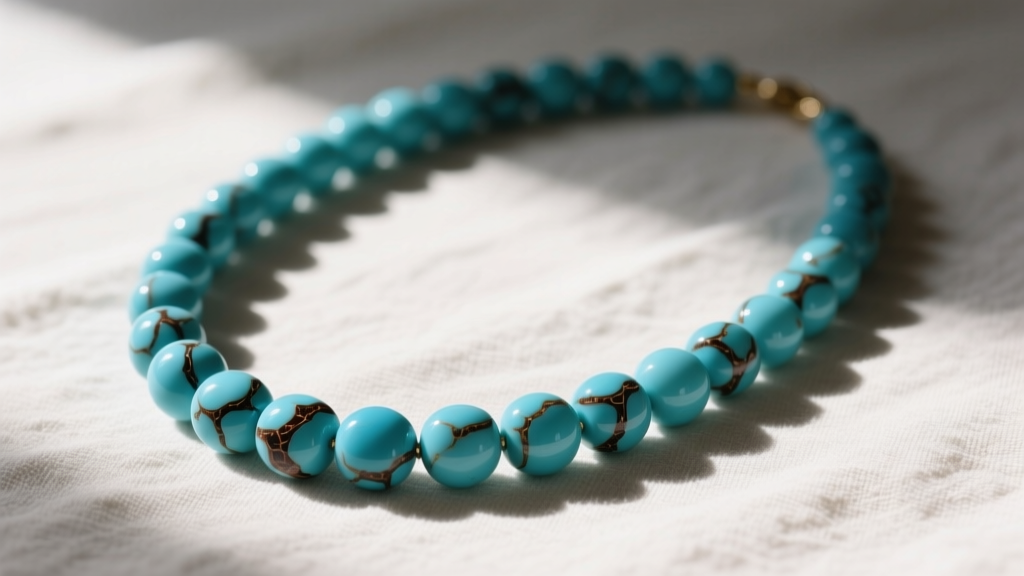
When assessing the budget and true market value of a long turquoise bead necklace, the first and most critical distinction is between natural, untreated stone and stabilized or dyed alternatives. According to the Gemological Institute of America (GIA), less than 10% of all mined turquoise is hard and dense enough to be cut, polished, and strung without chemical treatment. This ultra-rare natural turquoise commands a massive premium.The vast majority of authentic turquoise on the market is stabilized. This is not inherently a negative trait; it is a necessary lapidary process. Soft, chalky turquoise is subjected to pressure and infused with a clear epoxy resin or polymer. This hardens the stone (raising it from a Mohs 3 to a Mohs 5 or 6), prevents it from absorbing skin oils, and locks in the color. A high-quality stabilized long turquoise bead necklace from a renowned mine like Kingman, Arizona, holds excellent value and durability.
Conversely, reconstituted (or chalk) turquoise is made from turquoise dust and sludge mixed with dyes and resins, then pressed into blocks. While it contains trace amounts of real turquoise, its market value is negligible. Budget buyers must learn to differentiate between stabilized whole-stone beads and reconstituted blocks to avoid overpaying.
Decoding the Matrix: Does It Affect the Price?
The matrix is the host rock visible as veins or webs within the turquoise bead. In the mid-20th century, a clean, matrix-free stone (like the famous Sleeping Beauty turquoise from Arizona) was considered the most valuable. Today, collector preferences have shifted dramatically.
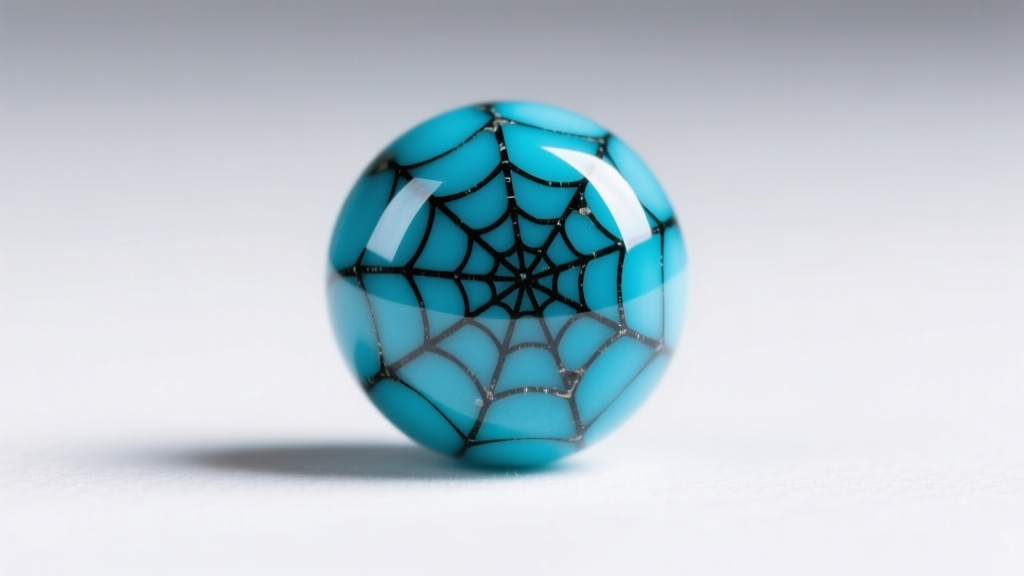
A tight, intricate spiderweb matrix—often composed of black limonite or golden sandstone—can actually increase the value of a long turquoise bead necklace by 20% to 40%, provided the webbing is aesthetically balanced and the base stone is a vibrant, saturated blue or green. However, muddy, blotchy, or asymmetrical matrix patterns will lower the stone's grade. When evaluating a 36-inch opera-length strand, look for consistency in the matrix style across the majority of the beads; a strand that mixes heavy black webbing with completely clean stones indicates a lower-tier sorting process.
Pricing Tiers: What Should a Long Turquoise Bead Necklace Cost?
To accurately budget for a long turquoise bead necklace, you must calculate the raw material weight. A standard 36-inch strand featuring 8mm beads requires approximately 115 beads. If the beads are upgraded to a chunky 10mm size, you are looking at roughly 92 beads, weighing close to 150 grams. Because high-grade natural turquoise is priced by the carat or gram, the physical dimensions of the beads dictate the baseline cost.
| Value Tier | Material Grade & Origin | Treatment Status | Expected Price Range (36-inch) |
|---|---|---|---|
| Budget | Dyed Howlite / Magnesite | Lab-Created / Dyed | $25 - $75 |
| Mid-Tier | Commercial Turquoise (Hubei, China or low-grade AZ) | Heavily Stabilized / Color-Enhanced | $120 - $350 |
| Premium | High-Grade Kingman or Carico Lake | Clear Stabilized (No Dye) | $400 - $900 |
| Collector | Natural Sleeping Beauty or Persian (Neyshabur) | Untreated / Natural | $1,200 - $3,500+ |
| Heritage | Vintage Native American Heishi | Hand-Cut / Natural | $2,000 - $8,000+ |
Stringing and Hardware: Hidden Cost Factors
A common failure mode in vintage and poorly constructed turquoise jewelry is string degradation. Turquoise is surprisingly heavy. A 150-gram necklace exerts constant friction against its stringing material, especially at the clasp and the nape of the neck.
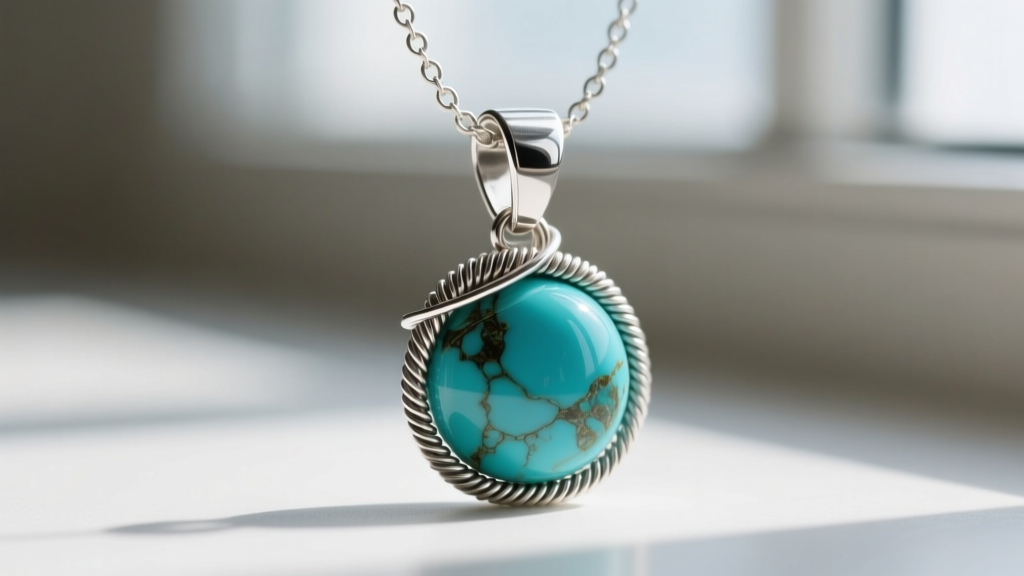
If you are evaluating a premium long turquoise bead necklace, inspect the stringing medium. Silk thread, while traditional, is highly susceptible to rotting from skin acidity and the weight of 10mm+ stone beads. A high-value piece should be strung on 49-strand stainless steel beading wire (such as .024-inch diameter Soft Flex wire). Furthermore, look for sterling silver wire guardians (French wire) at the clasp loop and properly crimped beads covered by metal crimp covers. If a seller is asking $1,500 for a natural turquoise strand but it is knotted on fraying silk with a base-metal lobster clasp, factor in a $100 to $150 restringing cost before making your offer.
Red Flags: Spotting Dyed Howlite and Chalk Turquoise
The market is flooded with imitations masquerading as authentic turquoise. As Lang Antiques University notes, howlite and magnesite are naturally white, porous stones that absorb dye beautifully, making them the most common culprits in fake turquoise necklaces. Use this practical troubleshooting framework to protect your budget:
- The Price-to-Weight Ratio: If a 36-inch strand of 10mm beads is selling for $80, it is mathematically impossible for it to be natural or even high-grade stabilized turquoise. The raw material cost alone would exceed the asking price.
- The Acetone Test: With the seller's permission, apply a small drop of nail polish remover (acetone) to a cotton swab and rub an inconspicuous bead. If the swab turns blue or green, the stone is dyed howlite, magnesite, or heavily color-enhanced chalk.
- Uniformity of Color: Natural turquoise, even from the same vein, exhibits microscopic variations in hue and saturation. If every single bead on a 36-inch strand is the exact same robin's-egg blue with zero matrix, you are likely looking at dyed howlite or synthetic ceramic.
- The Hot Pin Test (Use Caution): Touching a red-hot needle to an inconspicuous area will melt plastic or reconstituted resin, emitting a harsh chemical smell. Natural or stabilized stone will not melt, though this test can damage the polish and is best left to professionals.
Final Verdict: Investing in Authenticity
A long turquoise bead necklace is a striking, versatile piece that can transition from casual bohemian layering to elegant opera-length statements. However, the budget you allocate should directly align with your expectations of longevity and material authenticity. For everyday wear and vibrant color, a mid-tier stabilized Kingman strand ($200–$400) offers the best intersection of durability, beauty, and value. For serious collectors, investing in untreated, high-grade material with documented mine origins remains a tangible asset that holds its value against the tide of mass-produced imitations.


