The Vatican Library Collection Cross Necklace: Materials Guide
Explore the material properties of the Vatican Library collection cross necklace, from .925 silver grades to champlevé enamel and gemstone inlays.


The Intersection of Faith and Metallurgy
When evaluating high-end ecclesiastical jewelry, few pieces command the reverence and meticulous craftsmanship associated with the vatican library collection cross necklace. Inspired by the vast archives of the Biblioteca Apostolica Vaticana, these necklaces are not mere fashion accessories; they are wearable artifacts. In 2026, the demand for museum-grade replicas and historically accurate religious pendants has pushed jewelers to adopt rigorous metallurgical standards. Understanding the material properties of these crosses—from the specific silver alloys used to the vitreous enamels and semi-precious stone inlays—is critical for collectors, devout wearers, and jewelry historians alike.
This comprehensive guide dissects the anatomical materials of the Vatican Library-inspired cross necklace, providing actionable insights into metal grades, enamel firing techniques, and long-term preservation.
Core Metals: Analyzing the Base Alloys
The structural integrity and visual weight of a historical cross pendant rely heavily on its base metal. Authentic ecclesiastical replicas typically avoid cheap base metals like zinc alloy or nickel, opting instead for noble metals and traditional bronzes.
.925 Sterling Silver vs. Argentium Silver
Standard .925 sterling silver (92.5% silver, 7.5% copper) remains the industry standard for high-quality religious pendants. However, the copper content makes it highly susceptible to hydrogen sulfide in the atmosphere, leading to rapid tarnishing. To combat this, premium Vatican collection replicas utilize rhodium plating. A high-quality electroplated rhodium layer should measure between 0.15 and 0.30 microns in thickness. Anything less will wear through within months of daily friction, while anything thicker risks micro-cracking due to rhodium's inherent brittleness.
For a more advanced alternative, modern artisans are increasingly turning to Argentium Silver (.935 or .960). By replacing a portion of the copper alloy with germanium, Argentium forms a self-healing, transparent oxide layer that drastically slows tarnish. For a piece meant to be worn daily against the skin's natural oils and environmental pollutants, Argentium offers superior longevity without the need for heavy rhodium plating.
Antiqued Bronze and Brass
For crosses designed to mimic older, medieval reliquaries found in the Vatican archives, bronze (an alloy of copper and tin) and brass (copper and zinc) are frequently employed. These metals provide a substantial, heavy drape and accept chemical patinas (like liver of sulfur) beautifully, creating the deep, oxidized crevices that highlight intricate filigree work. The failure mode here is verdigris—a green copper carbonate buildup caused by prolonged exposure to sweat and moisture. High-end bronze pendants must be sealed with a micro-crystalline wax or a specialized jewelry lacquer to prevent this reaction.
The Art of Champlevé and Cloisonné Enameling
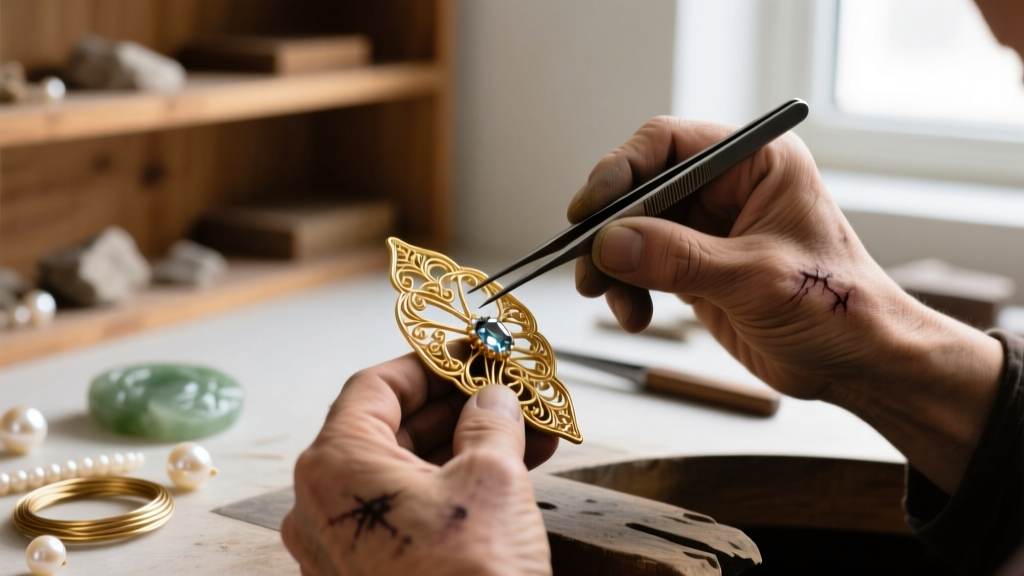
Color in historical cross necklaces is rarely achieved through paint or resin; it is born from fire. The rich blues, deep reds, and stark whites seen in the Vatican Library collection pieces are typically the result of traditional enameling. According to historical metallurgical records documented by Encyclopædia Britannica, enameling involves fusing powdered glass (frit) to a metal substrate at extreme temperatures.
- Champlevé Enameling: This is the most common technique for heavy, ornate crosses. Artisans carve or cast troughs into the silver or copper base metal. These cells are packed with wet enamel frit and fired in a kiln at approximately 750°C to 850°C. The glass melts, flows, and fuses to the metal. After cooling, the piece is sanded flat and polished. The result is a deeply saturated, UV-stable color that will not fade over centuries.
- Cloisonné Enameling: More delicate and common in Eastern Orthodox or highly intricate Byzantine-style crosses, this method uses fine silver or gold wires soldered on edge to create the cells. It allows for highly detailed pictorial elements, such as tiny depictions of saints or botanical motifs.
- Cold Enamel (Epoxy Resin): A modern, mass-market shortcut. While cheaper, epoxy resins lack the refractive index of true glass and will inevitably yellow, scratch, and degrade under UV exposure. A true Vatican-inspired archival piece will exclusively use vitreous enamel.
Gemstone Inlays: Lapis Lazuli and Onyx
To elevate the visual hierarchy of the cross, artisans frequently inlay semi-precious stones. The two most prominent materials used in ecclesiastical jewelry are Lapis Lazuli and Black Onyx, each presenting unique gemological properties and care requirements.
Lapis Lazuli is prized for its celestial blue hue, often speckled with golden pyrite. According to the Gemological Institute of America (GIA), Lapis is not a single mineral but a rock composed primarily of lazurite, calcite, and pyrite. With a Mohs hardness of 5 to 5.5, it is relatively soft and highly porous. It is extremely vulnerable to ultrasonic cleaners, harsh chemicals, and even prolonged exposure to acidic sweat, which can dull its polish and degrade the calcite matrix.
Black Onyx, conversely, is a banded chalcedony (quartz) with a Mohs hardness of 7. It is highly durable, takes a mirror-like polish, and provides a striking, solemn contrast to bright silver or gold. Most commercial black onyx is actually gray agate that has been treated with heat and carbon-rich solutions to achieve its uniform, opaque black color—a stable and accepted industry practice.
Material Comparison Chart
| Material | Mohs Hardness | Tarnish / UV Resistance | Typical Price Premium | Primary Vulnerability |
|---|---|---|---|---|
| .925 Sterling Silver | 2.5 - 3.0 | Low (Requires Rhodium) | Base Standard | Sulfur exposure, scratching |
| Argentium .960 | 2.5 - 3.0 | High (Germanium Oxide) | +15% to 25% | Firestain during casting |
| Vitreous Enamel | 5.0 - 7.0 | Exceptional | +40% (Labor intensive) | Blunt force impact (chipping) |
| Lapis Lazuli | 5.0 - 5.5 | Low (Porous) | +20% to 50% | Acids, ultrasonic cleaners |
| Black Onyx | 7.0 | Exceptional | +10% to 15% | Hard impacts (cleavage planes) |
Chain Mechanics and Clasp Durability
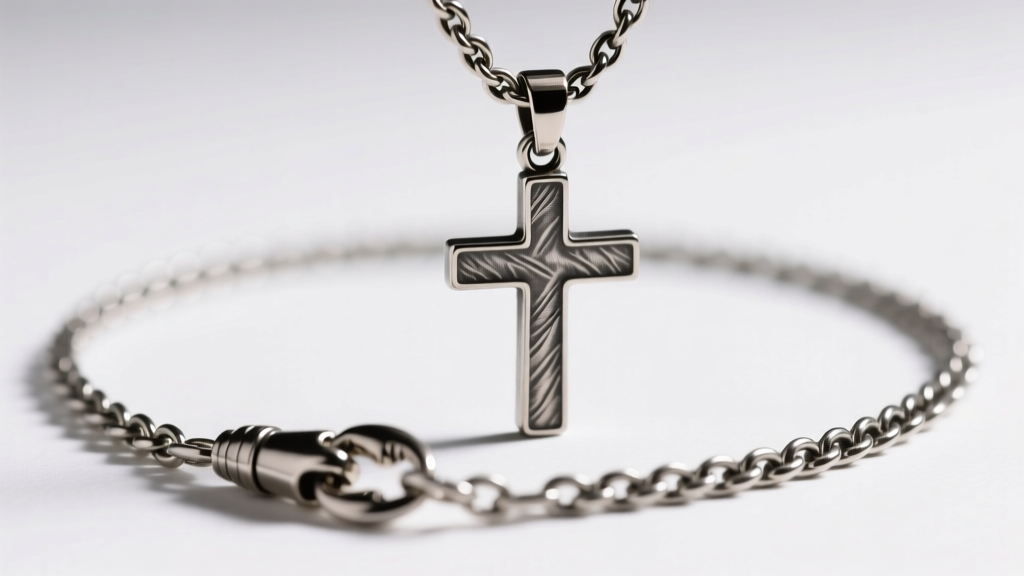
A heavy, enameled, and gem-set cross pendant requires a chain engineered for both tensile strength and historical aesthetics. The delicate, mass-market box chains (often 0.8mm to 1.2mm) are entirely unsuited for these pieces. The failure mode of a weak chain usually occurs at the soldering point of the jump ring or the clasp mechanism itself.
For a Vatican Library collection cross necklace, the ideal chain is a Rolo or Belcher chain measuring between 2.0mm and 3.5mm in width. The rounded, uniform links distribute weight evenly and resist kinking. Furthermore, the clasp must be a solid-cast lobster claw rather than a hollow spring ring. Spring rings suffer from internal spring fatigue and misalignment, whereas a well-manufactured lobster clasp with a sturdy steel internal spring provides a secure, mechanical lock capable of supporting pendants weighing upwards of 30 grams.
Care and Preservation of Ecclesiastical Jewelry
Maintaining the integrity of a multi-material cross necklace requires a nuanced approach to cleaning. Because these pieces combine porous stones, glass enamels, and reactive metals, standard jewelry cleaning protocols can be disastrous.
- Avoid Ultrasonic Cleaners: The high-frequency vibrations can shatter vitreous enamel and fracture the internal matrix of lapis lazuli.
- Chemical Dips are Forbidden: Silver dip solutions (thiourea-based) will strip the oxidized patina from the carved crevices, ruining the antique contrast, and will leave a chalky, irreversible residue on porous gemstones.
- The Correct Cleaning Method: Use a few drops of mild, phosphate-free dish soap in lukewarm water. Gently agitate the piece using a soft baby toothbrush, being careful not to scrub the lapis lazuli aggressively. Rinse thoroughly with distilled water to avoid mineral spotting, and dry immediately with a microfiber cloth.
- Storage: Store the necklace flat in an anti-tarnish cloth pouch. Hanging heavy pendants for long periods can stress the bail (the loop connecting the pendant to the chain), potentially leading to metal fatigue over decades.
Conclusion
Owning a piece inspired by the Vatican Library archives is an investment in history, art, and metallurgy. By understanding the specific grades of silver, the permanence of vitreous enamels, and the geological realities of semi-precious inlays, collectors can make informed purchasing decisions. The true value of the vatican library collection cross necklace lies not just in its spiritual symbolism, but in the uncompromising material science required to bring such a profound artifact to life in the modern era.


