Complete Care, Cleaning, and Storage for a Venus Necklace
Learn expert cleaning, maintenance, and storage tips for your Venus necklace. Protect natural shells, gold vermeil, and sterling silver from tarnish.

Understanding the Materials of Your Venus Necklace
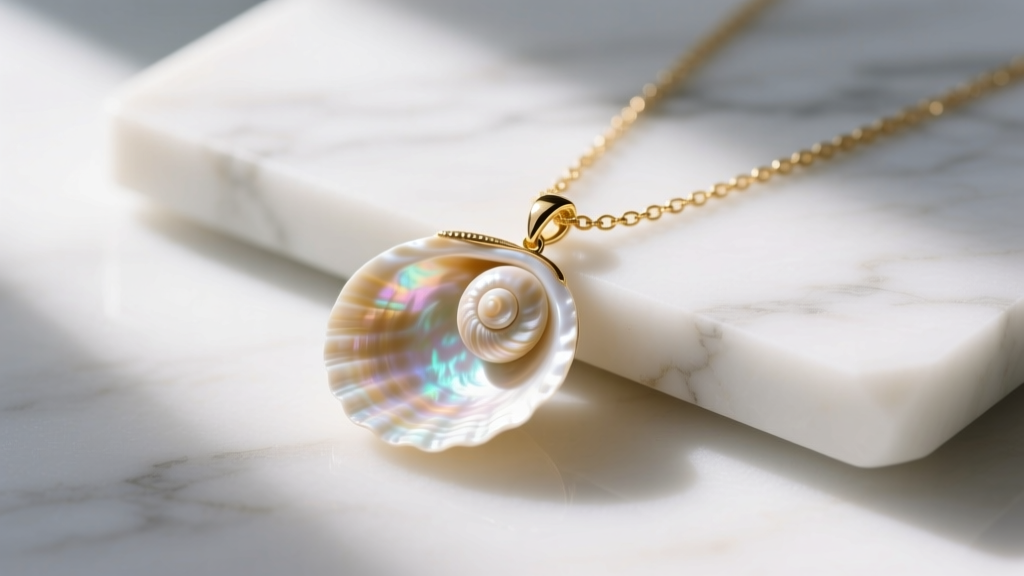
The term 'Venus necklace' typically refers to one of two distinct jewelry styles: a pendant featuring a natural sea shell (often a cowrie or similar Venus shell) on a metallic chain, or a solid metal cast of the Venus planetary symbol (♀) or a stylized shell motif. Because the care requirements for organic materials differ drastically from those of precious metals, identifying the exact material composition of your piece is the critical first step in establishing a proper maintenance routine.
Natural Venus shells are primarily composed of calcium carbonate crystals (aragonite and calcite) bound together by conchiolin, an organic protein. This makes them highly sensitive to acidic environments and dehydration. Conversely, the chains suspending these pendants are usually crafted from sterling silver (92.5% silver, 7.5% copper) or gold vermeil. According to the Federal Trade Commission (FTC) Jewelry Guides, true gold vermeil must consist of a sterling silver base plated with at least 2.5 microns of 10k, 14k, or 18k gold. Understanding this metallurgy is vital, as harsh chemicals can strip the gold layer or accelerate the oxidation of the underlying copper alloy.
Proper jewelry care is not merely about aesthetics; it is about preserving the structural integrity of organic and metallic components against environmental degradation.
Step-by-Step Cleaning Protocols
Routine maintenance should be performed every two to three weeks if the necklace is worn daily, as sebum, dead skin cells, and cosmetic residues accumulate rapidly in the crevices of shell pendants and chain links.
Cleaning Natural Venus Shell Pendants
Organic shells require a gentle, pH-neutral approach. The Gemological Institute of America (GIA) recommends similar protocols for pearls and organic shells, emphasizing the avoidance of ultrasonic cleaners and harsh chemicals.
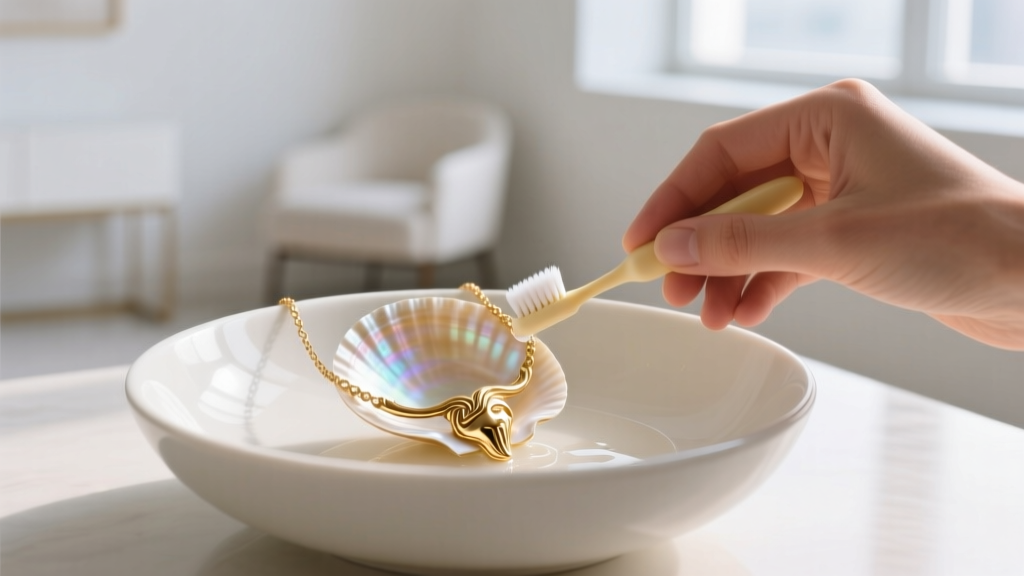
- Preparation: Mix three drops of pH-neutral dish soap (such as Dawn) into a bowl of distilled water. Avoid tap water, as the chlorine and heavy minerals can leave microscopic deposits on the shell's surface.
- Agitation: Dip a soft-bristled baby toothbrush into the solution and gently brush the grooves of the Venus shell. Do not scrub aggressively, as the outer nacreous layer can be scratched.
- Rinsing: Wipe the shell with a damp microfiber cloth. Never submerge the entire necklace, especially if the shell is secured with water-soluble adhesives or if the chain is prone to water-spotting.
- Drying: Pat dry immediately with a lint-free cloth and allow it to air dry completely before storage to prevent mildew.
Polishing Gold Vermeil and Sterling Silver Chains
Metal chains require targeted polishing to remove sulfur-induced tarnish without compromising the gold plating or the metal's structural integrity.
- For Gold Vermeil: Use a clean, dry microfiber cloth to gently buff the chain. Never use silver dip solutions or abrasive polishing pastes, as these will strip the 2.5-micron gold layer, exposing the sterling silver base to rapid tarnishing.
- For Sterling Silver: Utilize a dedicated jeweler's polishing cloth impregnated with micro-abrasives and anti-tarnish agents. Work the cloth into the oval links of cable chains, where sulfur compounds and skin oils accumulate most heavily.
Chemical Incompatibilities and Failure Modes
One of the most common reasons a Venus necklace suffers irreversible damage is the use of inappropriate cleaning agents. The table below outlines the chemical compatibility of common jewelry cleaners with the materials typically found in Venus necklaces.
| Cleaning Agent | Natural Venus Shell | Gold Vermeil Chain | Sterling Silver Chain | Failure Mode / Risk |
|---|---|---|---|---|
| Ultrasonic Cleaner | NEVER USE | AVOID | Safe (with caution) | Cavitation bubbles shatter organic shell micro-fractures; strips vermeil. |
| Commercial Silver Dip | NEVER USE | NEVER USE | Use Sparingly | Acids dissolve calcium carbonate; thiourea chemicals strip gold plating. |
| Baking Soda Paste | NEVER USE | AVOID | Safe | High Mohs hardness of baking soda scratches shell luster and gold. |
| Mild Soapy Water | Safe | Safe | Safe | None, provided the piece is thoroughly dried afterward. |
| Isopropyl Alcohol | AVOID | Safe | Safe | Dehydrates conchiolin protein in shells, leading to micro-cracking. |
Furthermore, environmental exposure to chlorinated pool water or hot tubs is catastrophic for sterling silver and vermeil chains. Chlorine reacts with the copper alloy in sterling silver, causing stress corrosion cracking, which weakens the chain links and eventually leads to snapping under the weight of the pendant.
Long-Term Storage Strategies
How you store your Venus necklace when it is not being worn dictates its longevity. Tarnish is an electrochemical reaction that requires moisture and sulfur; therefore, controlling the storage microclimate is essential.
- Isolate the Piece: Store the Venus necklace in its own soft flannel pouch or a dedicated compartment. Natural shells have a Mohs hardness of roughly 3 to 4, meaning they can be easily scratched by harder gemstones or diamond-accented jewelry.
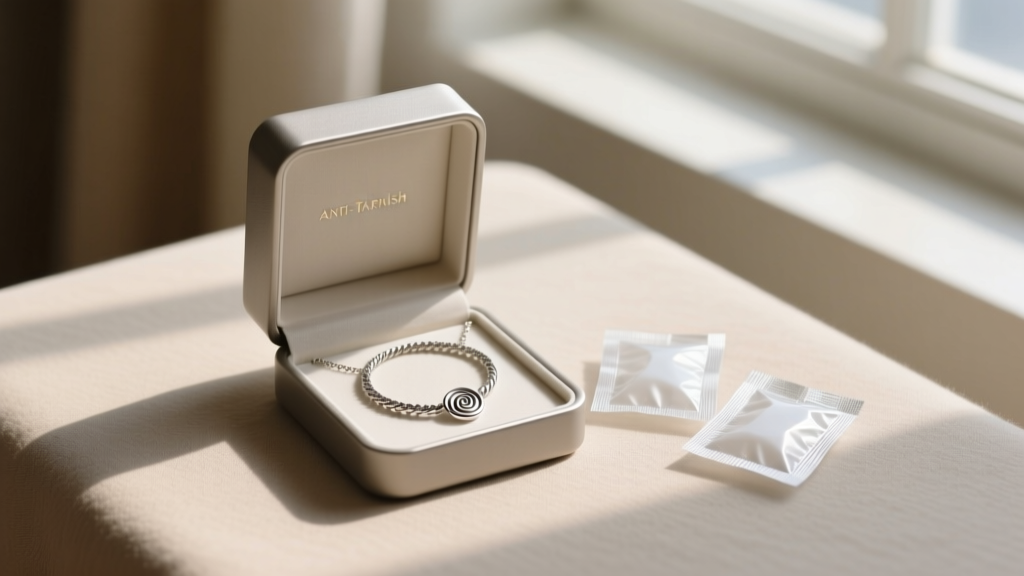
- Utilize Anti-Tarnish Strips: Place a 3M anti-tarnish strip inside the storage pouch. These strips absorb airborne sulfur compounds and hydrogen sulfide, neutralizing the primary catalysts for silver oxidation.
- Control Humidity: Include a small silica gel desiccant packet in your jewelry box to maintain low humidity levels, which protects both the metal from oxidizing and the organic shell from absorbing excess moisture that could harbor mold.
- Prevent Tangling: Fasten the clasp and lay the chain flat. If the chain is prone to tangling, thread it through a short segment of a plastic drinking straw before clasping, or hang it vertically on a velvet-lined jewelry stand.
Troubleshooting Common Maintenance Issues
Even with meticulous care, specific issues may arise over the lifespan of your necklace. Here is how to address them using expert techniques.
Stubborn Tarnish on Intricate Chain Links
If your sterling silver chain has developed heavy, blackened tarnish in the recesses of the links that a polishing cloth cannot reach, you can use an electrochemical reduction method. Line a glass bowl with aluminum foil (shiny side up), place the chain inside, and add a tablespoon of baking soda and a pinch of salt. Pour boiling water over the chain. The chemical reaction transfers the sulfur from the silver to the aluminum foil. Note: You must remove the Venus shell pendant before doing this, as the boiling water and alkaline solution will severely damage the organic shell.
Cloudy or Dull Shell Surface
If your natural Venus shell pendant has lost its luster due to prolonged exposure to skin acids and cosmetics, it requires rehydration and gentle polishing. Apply a single drop of mineral oil or a specialized organic gemstone polish to a soft cotton swab. Rub it gently over the surface of the shell in circular motions. The oil penetrates the microscopic pores of the calcium carbonate, restoring the natural iridescence and providing a temporary hydrophobic barrier against future sweat and sebum exposure.
Loose Jump Rings and Bail Attachments
The jump ring connecting the Venus pendant to the chain is a primary failure point due to the constant friction and pendulum-like motion of the necklace. Inspect the split in the jump ring every six months using a jeweler's loupe. If the gap has widened, use two pairs of flat-nose pliers to twist the ring closed laterally (side-to-side). Never pull the ends apart outward, as this distorts the circular shape and weakens the metal's temper, eventually leading to the loss of your pendant.
By adhering to these material-specific cleaning protocols and storage environments, your Venus necklace will retain its structural integrity, metallic brilliance, and organic beauty for decades of continuous wear.


