Expert Guide to Authenticating a Vintage Givenchy Pearl Necklace
Master the authentication of a vintage Givenchy pearl necklace. Explore hallmarks, glass pearl anatomy, clasp engineering, and current market valuations.

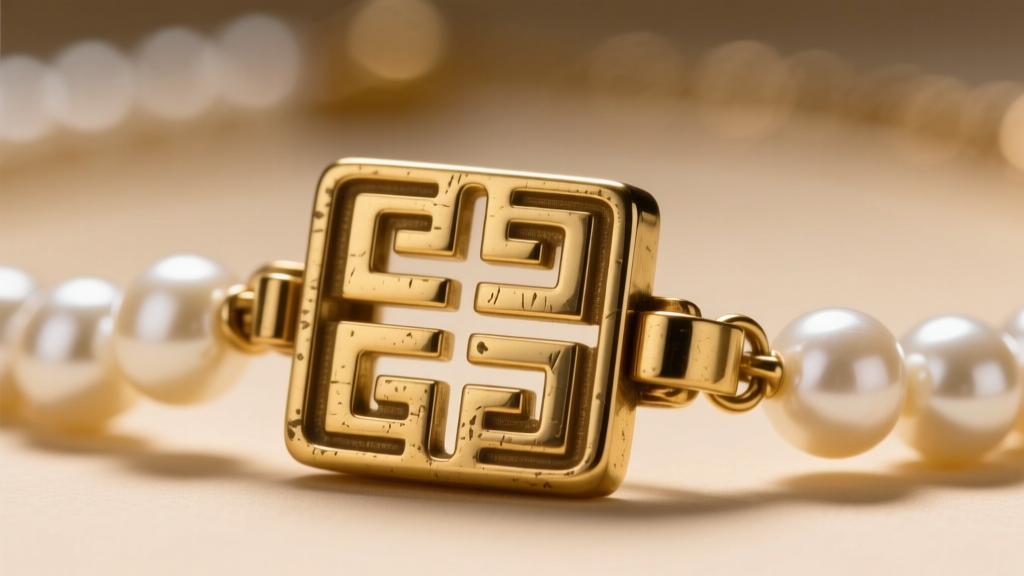
Hubert de Givenchy’s impact on mid-century fashion is undeniable, but his foray into costume jewelry—specifically his iconic faux pearl designs—remains one of the most fiercely collected categories in the vintage market today. For serious collectors and archivists, acquiring a vintage Givenchy pearl necklace is not merely about securing a beautiful accessory; it is an exercise in horological-grade material analysis and historical verification. As we navigate the 2026 vintage market, counterfeit sophistication has reached unprecedented levels, making a deep technical understanding of Givenchy’s manufacturing processes, hallmarking evolution, and material science absolutely essential.
The Material Science: Glass, Guanine, and Gold Wash
To authenticate a vintage Givenchy pearl necklace, one must first understand what it is actually made of. Hubert de Givenchy rarely utilized genuine nacre pearls for his standard costume jewelry lines. Instead, he relied on high-grade, heavy glass beads coated with a specialized pearlescent enamel. Historically, this coating utilized essence d'orient—a suspension of guanine crystals (derived from fish scales) in a lacquer base—which provided a luminous, deep luster that closely mimicked the orient of natural saltwater pearls.
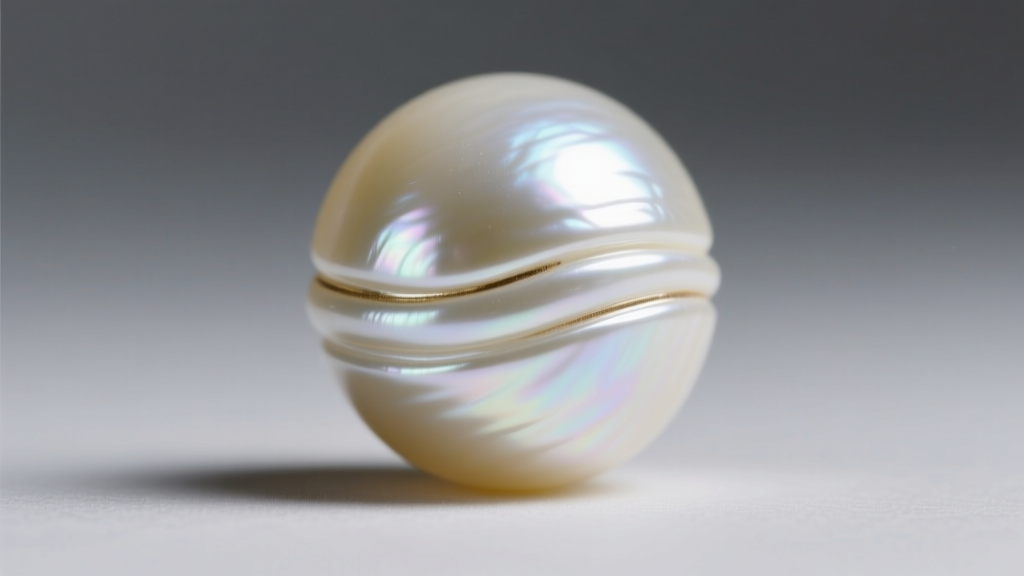
When evaluating a piece, weight is your primary diagnostic tool. A genuine vintage Givenchy glass pearl will feel surprisingly dense, typically weighing between 4 to 8 grams per bead depending on the millimeter size. Counterfeit pieces from the late 1990s and early 2000s often substituted glass with lightweight plastic or resin cores. Furthermore, the gold-tone hardware on authentic pieces from the 1960s through the 1980s features a remarkably thick gold wash (often 18k or 22k), applied over a brass or white-metal base. This plating should exhibit a warm, rich hue that resists the brassy, yellowish tint characteristic of modern electroplating.
Deciphering Givenchy Hallmarks and Stamps (1950s–1990s)
The most critical step in verifying a vintage Givenchy pearl necklace is analyzing the maker's mark. Givenchy’s hallmarking practices evolved distinctly across different decades, largely dictated by manufacturing origins (France vs. USA licensed production) and copyright law changes. According to archival data from Lang Antiques, the presence, font, and placement of the copyright symbol are paramount.
| Era | Stamp Style & Font | Key Identifiers & Characteristics |
|---|---|---|
| 1950s – Mid 1960s | Block Letters (No ©) | Often stamped simply 'Givenchy' or 'Givenchy Paris'. Marks are deeply die-struck into the metal, not laser-etched. |
| Late 1960s – 1970s | Block Letters with © | Introduction of the copyright symbol. You will frequently see 'Givenchy ©' or 'Givenchy Paris ©' on the reverse of the clasp or a dedicated hang tag. |
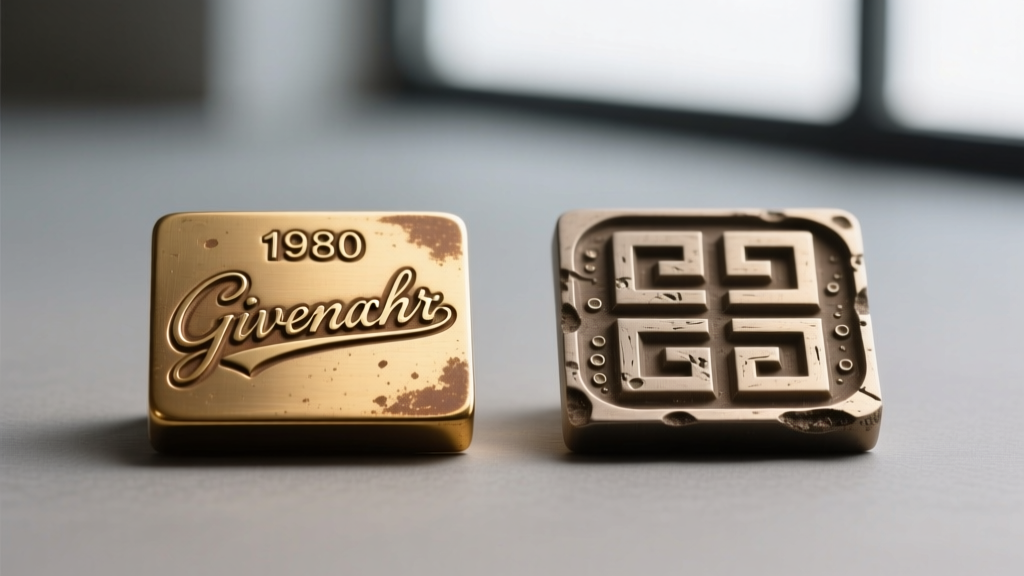
| 1980s – 1990s | Script Font | Transition to the elegant, slanted script logo. Often includes '©' and sometimes 'Made in France' or USA licensing marks on elongated oval plaques. |
Expert Note: A common misconception is that all authentic pieces must bear a stamp on the clasp. In many early 1960s multi-strand pearl chokers, the hallmark was stamped onto a separate, small metal hang tag attached to the first jump ring near the clasp. If the tag is missing, authentication must rely heavily on clasp engineering and pearl quality.
Clasp Mechanisms and Hardware Engineering
The hardware on a vintage Givenchy pearl necklace is a masterclass in mid-century jewelry engineering. Because glass pearls are substantially heavier than plastic, the clasps were designed to bear significant tensile stress. The most prevalent clasp type used on Givenchy's single and multi-strand pearl necklaces is the tongue-in-groove box clasp, often reinforced with a figure-eight safety catch.
When examining the clasp, look for a seamless integration of the box mechanism. The 'tongue' (the male component) should be crafted from a resilient base metal that springs back into place with a distinct, audible 'click' when inserted into the 'groove'. Fold-over clasps were also utilized, particularly on shorter choker styles. Crucially, authentic vintage pieces will never feature modern, mass-produced lobster claw clasps or cheap spring rings. If a necklace features a lobster clasp, it has either been altered (drastically reducing its archival value) or it is an outright forgery. Furthermore, the jump rings connecting the pearls to the clasp should be soldered or tightly wound, preventing the heavy glass beads from pulling the rings apart over time.
Authentication Framework: Spotting Fakes and Frankenstein Pieces
As the secondary market for vintage designer jewelry has surged, so has the proliferation of 'Frankenstein' pieces—necklaces assembled from authentic vintage Givenchy charms or clasps strung onto modern, non-original pearl strands. To protect your investment, apply this rigorous technical checklist:
- The Laser Etching Test: Authentic vintage hallmarks were die-struck or cast into the metal mold. Under a 10x jeweler's loupe, a genuine stamp will show depth, with slightly raised or recessed edges that match the surrounding metal's patina. Counterfeit stamps are often laser-etched, appearing flat, overly crisp, and lacking the microscopic tooling marks of a physical die strike.
- The Pearl Surface Topography: While essence d'orient is smooth, it is not perfectly uniform like modern synthetic pearl paint. Look for microscopic variations in the coating thickness near the drill holes. Modern fakes often use perfectly uniform, injection-molded plastic beads dipped in synthetic pearlescent paint, resulting in an artificially perfect, 'plastic' sheen.
- Knotting and Stringing: High-end vintage Givenchy pearl necklaces were typically knotted between each glass bead to prevent catastrophic loss if the silk cord snapped. If the pearls are strung on a continuous wire or unknotted synthetic thread, exercise extreme caution.
- Font Kerning Analysis: Counterfeiters frequently struggle with the exact kerning (spacing) of the 1980s script logo. Compare the spacing between the 'G' and 'i', and the 'c' and 'h' against verified archival examples from institutions like The Metropolitan Museum of Art's Costume Institute.
Market Valuation and Collector Pricing
Valuing a vintage Givenchy pearl necklace requires an understanding of its specific silhouette, era, and condition. In the current market, standard 18-inch single-strand faux pearl necklaces from the 1980s typically trade between $150 and $350, depending on the integrity of the gold wash and the presence of original hang tags.
However, multi-strand chokers, opera-length ropes, and pieces featuring intricate gold-tone interlocking links interwoven with pearls command significantly higher premiums, often ranging from $450 to $900. The holy grail for collectors remains the collaborative pieces featuring pâte de verre (poured glass) elements crafted by the legendary Gripoix maison for Givenchy. These rare, highly technical pieces seamlessly blend Gripoix's signature translucent glasswork with Givenchy's pearl aesthetics, routinely achieving valuations exceeding $1,500 at specialized auction houses. For up-to-date pricing trends and market liquidity, monitoring archived sales data on platforms like Ruby Lane provides an excellent baseline for fair market value.
Ultimately, authenticating a vintage Givenchy pearl necklace is a multidisciplinary endeavor. It demands an appreciation for mid-century metallurgy, an eye for typographic nuances, and a tactile understanding of vintage glasswork. By mastering these technical details, collectors can confidently navigate the market, preserving a vital piece of fashion history.


