What Is a Kintsugi Necklace? A Beginner’s Guide to Wabi-Sabi Jewelry
Discover the art of the kintsugi necklace. Learn how to identify authentic gold-repaired pendants, style wabi-sabi jewelry, and care for urushi lacquer.

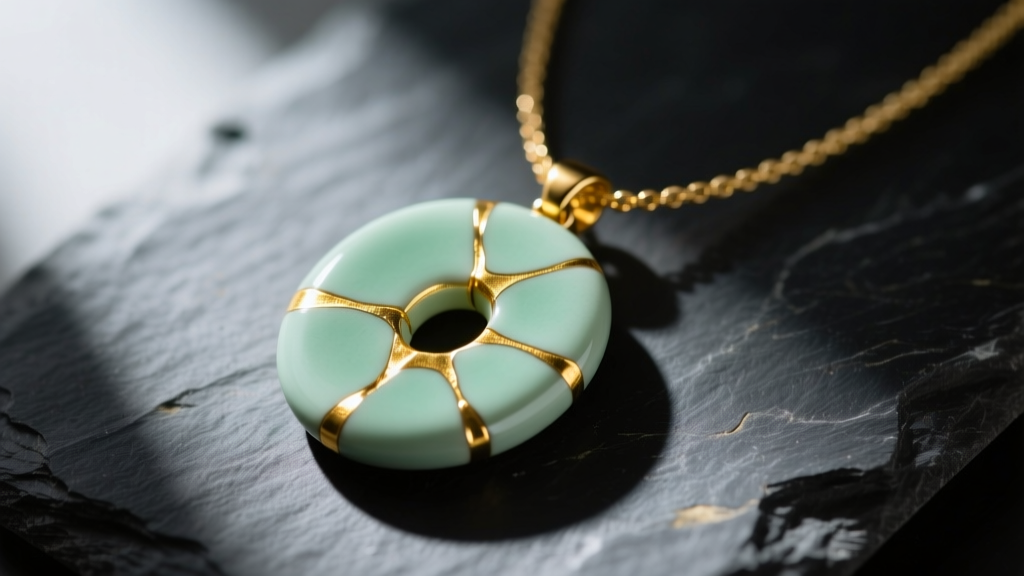
In a jewelry market obsessed with flawless clarity and symmetrical perfection, the kintsugi necklace offers a radical alternative. Rooted in the Japanese philosophy of wabi-sabi—finding beauty in imperfection and transience—kintsugi jewelry embraces the fracture. Instead of hiding breaks or discarding damaged stones and ceramics, artisans repair them with precious metals, turning structural failure into the focal point of the design.
For beginners, navigating the world of kintsugi pendants can be confusing. The market is currently flooded with mass-produced epoxy imitations masquerading as traditional craftsmanship. This guide will teach you how to distinguish authentic urushi lacquer repairs from modern synthetic fakes, how to properly style these deeply symbolic pieces, and the strict care protocols required to maintain them.
The Philosophy Behind the Fracture: Understanding Wabi-Sabi Jewelry
Kintsugi (金継ぎ), translating to "golden joinery," originated in 15th-century Japan. According to historical records popularized by the Smithsonian Magazine, the craft emerged when Japanese shoguns sought a more aesthetically pleasing way to repair beloved tea bowls, moving away from the ugly metal staples previously used by Chinese craftsmen.
When applied to a kintsugi necklace, this philosophy transforms a pendant from a mere accessory into a narrative object. The fractures represent resilience, healing, and the acceptance of life's inevitable damage. Whether the pendant features a cracked piece of jade, a shattered slice of agate, or broken porcelain, the gold-filled seams map the history of the object. Wearing a kintsugi necklace is a daily reminder that breakage is not the end of an object's life, but a pivotal chapter in its evolution.
Authentic Urushi vs. Modern Imitations: What Are You Actually Buying?
The most critical knowledge a beginner must acquire is the difference between traditional kintsugi and "faux-kintsugi." True kintsugi relies on urushi, a toxic sap harvested from the Toxicodendron vernicifluum tree. Imitations use two-part jeweler's epoxy and brass mica powder.
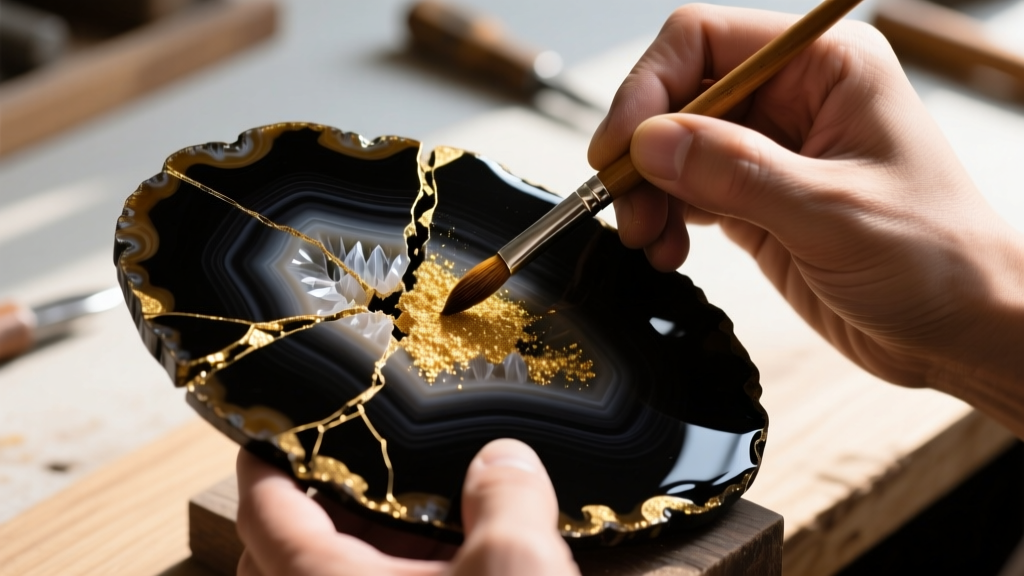
Urushi does not "dry" through evaporation; it cures through a complex enzymatic polymerization process that actually requires high humidity (75% to 85%) and warm temperatures. This makes the creation of an authentic kintsugi pendant incredibly labor-intensive, often taking weeks of layering, curing in a specialized wooden cabinet (a furo), and polishing. Epoxy, conversely, cures in dry air in under an hour.
Material Comparison Chart
| Feature | Traditional Urushi Kintsugi | Modern Epoxy Faux-Kintsugi |
|---|---|---|
| Binder Base | Natural tree sap (urushiol) | Synthetic two-part resin |
| Metal Powder | 23k or 24k pure gold (kinpun) | Brass, copper, or mica powder |
| Curing Environment | High humidity (75-85%) chamber | Dry, room-temperature air |
| Water Resistance | Exceptional once fully polymerized | Moderate; yellows over time |
| Average Price Range | $150 – $600+ | $30 – $85 |
When shopping, look for terms like "natural urushi," "traditional lacquer," and "pure gold powder." If the listing mentions "gold-colored resin" or "kintsugi-style epoxy," you are purchasing a modern imitation. While epoxy pieces are perfectly fine for budget-friendly fashion jewelry, they lack the archival longevity and cultural authenticity of genuine urushi.
How to Style a Kintsugi Necklace for Everyday Wear
Because kintsugi pendants are visually complex and carry significant symbolic weight, styling them requires a minimalist approach to the surrounding elements. The goal is to let the golden fracture lines command attention.
Choosing the Right Chain
Avoid heavy, thick chains like 4mm Cuban links or rope chains, which will visually overpower the delicate gold seams of the pendant. Instead, opt for:
- 1.0mm to 1.5mm Rolo or Cable Chains: These provide enough structural integrity to hold ceramic or stone pendants without competing for attention.
- Metal Matching: Always match your chain metal to the repair metal. If the kintsugi seams are done in 23k yellow gold, use a 14k or 18k yellow gold chain (or high-quality vermeil). Mixing silver chains with gold kintsugi repairs creates visual dissonance.
- Length: An 18-inch chain is ideal for most kintsugi pendants, allowing the piece to rest on the upper chest where the fracture details are easily visible.
Neckline Pairings
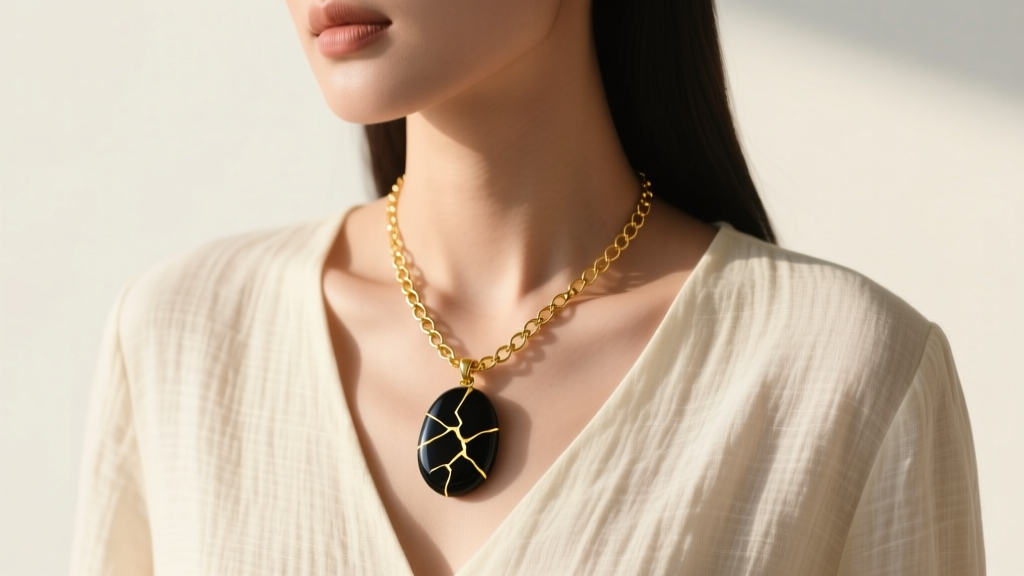
Kintsugi necklaces pair best with solid, unpatterned fabrics. A crisp white button-down, a black turtleneck, or a cream linen V-neck provides the perfect negative space. Avoid wearing them over busy floral prints or heavily textured garments, which will camouflage the intricate repair lines.
Caring for Your Kintsugi Pendant: A Strict Maintenance Protocol
If you have invested in an authentic urushi kintsugi necklace, you must understand the material's vulnerabilities. According to conservation guidelines from the Victoria and Albert Museum, natural lacquer is highly durable against water and heat once fully cured, but it has a fatal enemy: ultraviolet (UV) light.
"Prolonged exposure to strong light, particularly UV radiation, causes the chemical bonds in natural urushi lacquer to break down, leading to chalking, loss of gloss, and eventual structural degradation."
The 4 Rules of Kintsugi Maintenance
- Avoid Direct Sunlight Storage: Never leave your necklace on a windowsill or in a display case exposed to direct sunlight. Store it in a dark jewelry box or pouch when not in use.
- No Chemical Cleaners: Never use jewelry polishing cloths, silver dip, or alcohol-based cleaners on the pendant. The abrasives and solvents will strip the lacquer's finish. Wipe it gently with a dry, clean microfiber cloth.
- Remove Before Swimming: While cured urushi is water-resistant, the chlorine in pools and the salt in the ocean can cause micro-abrasions on the gold powder seams over time.
- Protect from Impact: The base materials (ceramics, glass, or brittle stones like agate) remain fragile. The gold seam is strong, but a hard drop against a tile floor will likely shatter the stone in a new location.
Where to Source Genuine Kintsugi Necklaces
Finding authentic kintsugi jewelry requires looking beyond mainstream commercial jewelers. The Metropolitan Museum of Art notes that true lacquerware requires highly specialized artisans, a fact that holds true for jewelry-scale kintsugi.
To find genuine pieces, explore platforms like Etsy or specialized Japanese craft importers, filtering for artisans based in Kyoto, Kanazawa, or Wajima. Look for sellers who document their process with photos of the furo (humidity cabinet) and raw urushi sap. Expect to pay between $150 and $400 for a small, authentic pendant featuring real gold powder and natural lacquer. If a seller offers a "handmade kintsugi necklace" for $35, it is almost certainly an epoxy and brass imitation.
Ultimately, a kintsugi necklace is more than a trend; it is a wearable philosophy. By understanding the materials, respecting the craft, and styling the piece with intention, you honor the ancient art of golden joinery and carry its message of resilience with you every day.


