How to Style a 3 Chain Necklace: A Beginner's Layering Guide
Master the art of the 3 chain necklace with our beginner's guide. Learn length formulas, chain profiles, and metal grades to prevent tangling.

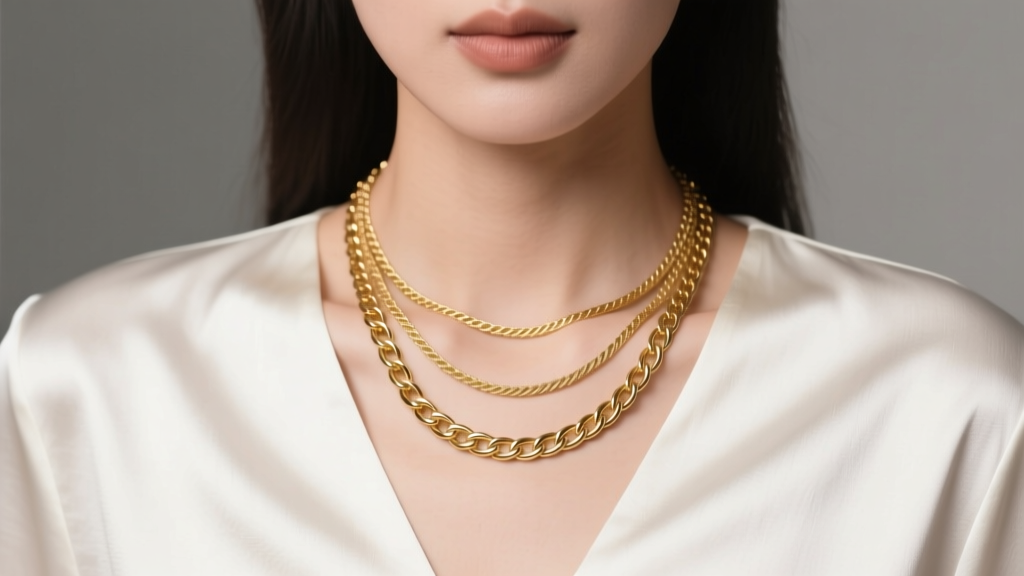
Layering jewelry transforms a simple outfit into a curated, personalized statement. Among the most popular and visually balanced configurations is the 3 chain necklace look. However, beginners often struggle with tangled links, clashing textures, and awkward lengths that fail to flatter their neckline. This guide breaks down the exact geometry, metallurgy, and styling frameworks you need to master the three-strand layer with confidence.
What Exactly is a 3 Chain Necklace?
When we talk about a 3 chain necklace, we are referring to one of two distinct jewelry formats:
- Pre-Layered (Multi-Strand) Necklaces: These feature three separate chains that converge into a single clasp via a specialized jump ring or soldered connector. They are foolproof for beginners because the spacing is permanently fixed by the manufacturer.
- DIY Layered Stacks: This involves wearing three individual necklaces of varying lengths simultaneously. While this requires more styling effort, it offers maximum versatility, allowing you to swap out pendants and mix metals.
For the purpose of this guide, we will focus primarily on the DIY stacking method, as understanding the mechanics of individual chains will also help you evaluate the quality of pre-layered pieces.
The Golden Rule of Lengths: Preventing the Tangle
The physics of chain tangling comes down to link geometry and friction. When chains of similar lengths rub against each other, their links act like tiny gears, interlocking and knotting. To prevent this, you must adhere to the 2-inch drop rule.
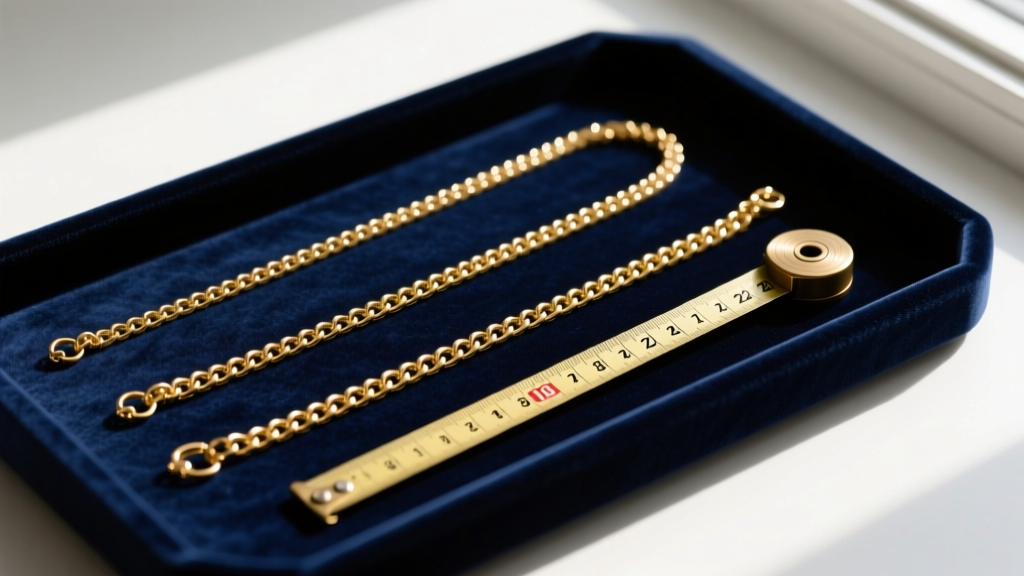
The Ideal Length Formula
For a standard 3 chain necklace stack, your lengths should be spaced at least 2 inches apart to ensure they lay flat against the sternum without crossing over one another.
- Chain 1 (The Anchor): 16 inches (Choker/Collar length). Sits snugly at the base of the neck.
- Chain 2 (The Centerpiece): 18 inches (Princess length). Rests on the collarbone. This is the ideal candidate for a small pendant (3mm - 5mm).
- Chain 3 (The Elongator): 22 inches (Matinee length). Falls just above the bust line, drawing the eye downward and elongating the torso.
Pro-Tip: If your 18-inch chain features a heavy pendant, the weight will pull the chain down an extra 1 to 1.5 inches. To compensate and avoid tangling with your third chain, bump your longest chain to 24 inches.
Chain Profiles: Mixing Textures Like a Pro
A common beginner mistake is wearing three identical chain styles (e.g., three cable chains). This creates a muddy, uniform block of metal that lacks visual depth. A successful 3 chain necklace stack relies on contrasting textures and gauge sizes.
| Chain Type | Ideal Gauge (mm) | Visual Weight | Best Position in Stack |
|---|---|---|---|
| Cable / Herringbone | 0.9mm - 1.2mm | Delicate / Fluid | Top (16-inch anchor) |
| Curb / Figaro | 1.5mm - 2.5mm | Medium / Structured | Middle (18-inch centerpiece) |
| Rope / Box | 2.0mm - 3.5mm | Heavy / Textured | Bottom (22-inch elongator) |
By pairing a fluid, light-catching Herringbone chain at the top with a structured, geometric Box chain at the bottom, you create a dynamic interplay of light and shadow. The varied link shapes also physically resist tangling, as smooth herringbone links slide easily over the rigid edges of a box chain without catching.
Metal Grades and Durability for Everyday Wear
When stacking three chains, the cumulative friction between the metals can accelerate wear and tear. Choosing the right metallurgical grade is critical for longevity.
Solid Gold: 14k vs. 18k
According to the Gemological Institute of America (GIA), pure 24k gold is too soft for daily-wear chains. For a 3 chain necklace stack, 14k solid gold (58.5% pure gold alloyed with copper, zinc, and silver) is the superior choice. The higher alloy content increases the Vickers hardness of the metal, making it highly resistant to the micro-scratches caused by chains rubbing together. 18k gold (75% pure) offers a richer yellow hue but is noticeably softer and more prone to link deformation over time.
The Truth About Gold Vermeil
If solid gold is outside your budget, gold vermeil is the next best option. However, you must verify the plating thickness. The Federal Trade Commission (FTC) mandates that for an item to be legally sold as 'vermeil' in the United States, it must consist of a sterling silver base plated with at least 2.5 microns of gold. Standard gold-plated jewelry often features less than 0.5 microns of gold over brass, which will quickly wear away at the friction points where your three chains overlap.
Neckline Pairing Matrix
The effectiveness of your 3 chain necklace depends heavily on the garment framing it. Use this matrix to match your stack to your wardrobe:
- The Crew Neck (T-shirts, Sweaters): A 16-inch chain will choke against a tight crew collar. Shift your stack to 18", 20", and 24" to ensure the layers rest visibly below the fabric line.
- The V-Neck (Wrap dresses, Cardigans): Mimic the geometry of the garment. Use a 16", 18", and 20" stack, and place a teardrop or marquise pendant on the 20-inch chain to follow the 'V' shape down the sternum.
- The Scoop Neck (Tank tops, Blouses): The classic 16", 18", and 22" stack works perfectly here, filling the negative space of the scoop without competing with the collarbone.
- Off-the-Shoulder / Boat Neck: Keep it high and tight. A 14", 16", and 18" choker-heavy stack keeps the jewelry anchored to the skin, preventing it from looking lost against the expanse of bare shoulders.
Troubleshooting Common Beginner Mistakes
Even with the right lengths and textures, hardware failures can ruin your stack. Here is how to troubleshoot the most common issues.
Clasp Incompatibility
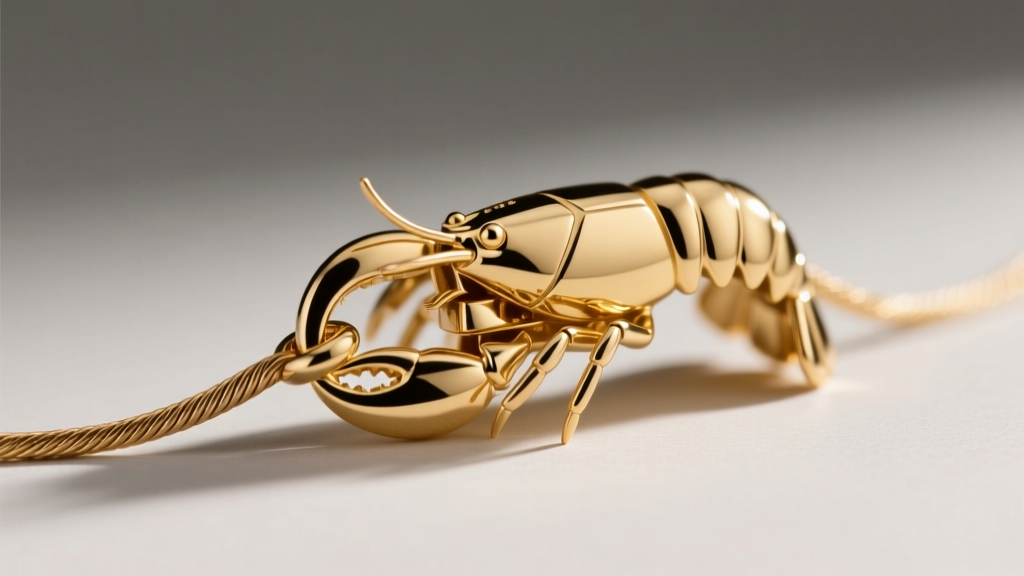
Never use spring-ring clasps for the heavier chains in your stack. Spring rings lack the internal tension required to hold thicker jump rings securely. Always upgrade your 2.0mm+ chains to feature lobster clasps. Lobster clasps have a solid, one-piece body and a stronger internal spring, drastically reducing the risk of accidental unclasping when the chain is pulled by the weight of the other layers.
The 'Sliding Clasp' Phenomenon
If your 16-inch choker constantly slides to the side of your neck, the chain is likely too lightweight for your neck's circumference, or the clasp is too heavy. To fix this, add a 2mm to 3mm gold bead or a tiny charm directly opposite the clasp. This acts as a counterweight, keeping the clasp anchored at the nape of your neck and the front of the chain perfectly centered.
Proper Storage to Preserve the Stack
Never toss a 3 chain necklace stack into a jewelry box drawer. The kinetic energy of closing the drawer will force the links to knot. Instead, invest in a multi-strand jewelry roll or a hanging organizer with individual snap-loop compartments. If you must store them in a box, lay them completely flat, fully extended, and separated by anti-tarnish felt dividers to prevent both physical tangling and chemical oxidation.
Mastering the 3 chain necklace is less about following fleeting trends and more about understanding the structural mechanics of jewelry. By respecting the 2-inch drop rule, mixing your link geometries, and investing in proper metal grades, you will build a layered look that is as durable as it is elegant.


