Troubleshooting an Amethyst Necklace Heart: Care & Fixes
Is your amethyst necklace heart fading or damaged? Learn expert troubleshooting tips to restore color, fix loose prongs, and clean heart pendants safely.

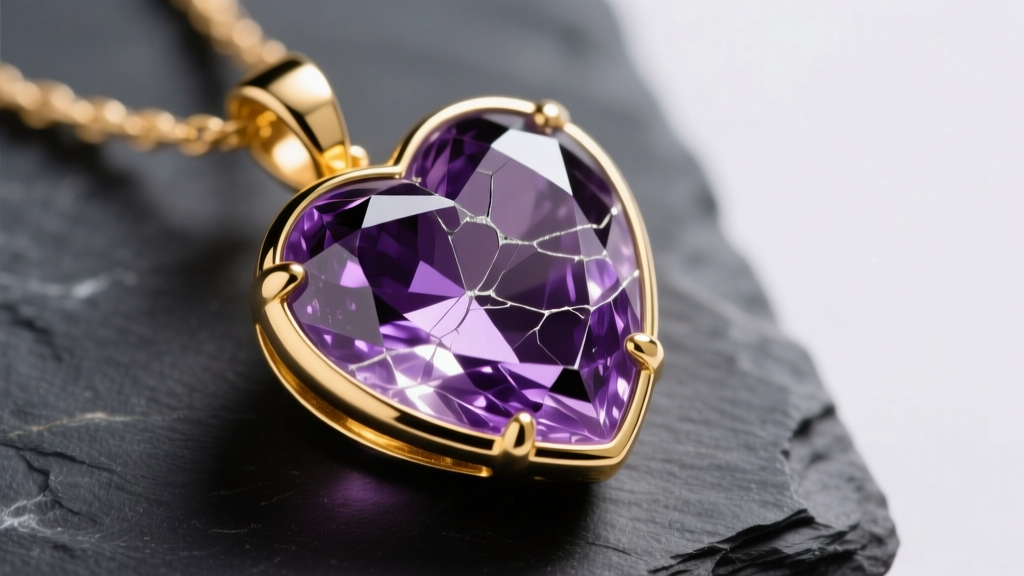
The Unique Vulnerabilities of Heart-Shaped Amethyst
A heart-shaped amethyst pendant is a deeply romantic and visually striking piece of jewelry, but its distinctive silhouette and the gemological properties of quartz present specific structural and chemical challenges. Amethyst ranks at a 7 on the Mohs hardness scale, making it durable enough for everyday wear, yet it lacks cleavage planes and instead exhibits conchoidal fracturing. When combined with the complex geometry of a heart cut—featuring a delicate top cleft and a sharp bottom point—this gemstone requires highly specialized care. As jewelry repair techniques and synthetic detection methods have evolved through 2026, identifying the root cause of your gemstone's deterioration requires more than just a casual visual inspection. Whether you are dealing with a sudden loss of purple saturation, a rattling stone, or a chipped point, this comprehensive troubleshooting guide will help you diagnose and resolve the most common issues plaguing your amethyst necklace heart.
Issue 1: Color Fading and the 'Bleached' Heart Syndrome
Diagnosing the Fade
The most devastating issue an owner can face is watching their deep, velvety purple amethyst necklace heart slowly turn pale, brownish, or entirely clear. The purple coloration in natural amethyst is caused by iron impurities (specifically Fe3+) and natural irradiation within the crystal lattice. When exposed to prolonged ultraviolet (UV) light or extreme heat, these color centers degrade. According to the Gemological Institute of America (GIA), amethyst is notably sensitive to prolonged exposure to direct sunlight and high temperatures. If you frequently leave your necklace on a sunlit vanity or wear it during extended outdoor summer activities, UV degradation is likely the culprit.
The Fix and Prevention Protocol
Unfortunately, UV-induced fading in natural amethyst is irreversible through chemical or physical cleaning. The color centers have been permanently altered. However, if the stone was originally heat-treated to enhance its color (a common industry practice), a professional lapidary might be able to perform a controlled, low-temperature re-irradiation treatment, though this is costly and rarely done for commercial-grade stones. To prevent further damage, store your pendant in a dark, velvet-lined jewelry box with anti-tarnish strips. Never use a steam cleaner on amethyst, as sudden thermal shock can cause internal fracturing, exacerbating the cloudy appearance of a faded stone.
Issue 2: Structural Failures at the Cleft and Point
The anatomy of a heart-cut gemstone creates two major high-stress zones: the cleft (the dip at the top of the heart) and the point (the bottom tip). The cleft is notoriously difficult to secure, as the prongs must be bent into a tight, acute angle. The bottom point is highly susceptible to chipping if the pendant swings and strikes a hard surface like a granite countertop or glass table.
Prong vs. Bezel: A Structural Comparison
If your stone is rattling or you have noticed a chip on the bottom point, your setting type is likely the underlying issue. Below is a diagnostic comparison to help you decide if a setting upgrade is necessary.
| Setting Type | Vulnerability Level | Best Use Case | Repair Difficulty |
|---|---|---|---|
| 3-Prong or 5-Prong | High (Point exposed) | Evening wear, minimal impact | Moderate (Prong retipping) |
| Full Bezel | Low (Point protected) | Daily wear, active lifestyles | High (Requires new mount) |
| V-Prong (at point) | Medium (Secure but snags) | Balanced daily/occasional wear | Low (Standard prong tightening) |
If your amethyst necklace heart features a standard prong setting and the bottom point has chipped, a jeweler can sometimes re-polish the point to remove the chip. Be warned: this will reduce the carat weight and alter the symmetry of the heart, potentially requiring a custom-made replacement setting.
Issue 3: Cloudiness and Micro-Scratches
Why Your Amethyst Looks Milky
If your heart pendant has lost its vitreous luster and appears cloudy, it is likely suffering from surface micro-scratches or a buildup of hardened cosmetics. While amethyst is a 7 on the Mohs scale, it is easily scratched by common household dust, which contains microscopic quartz particles (also a 7) and harder silicates. Furthermore, many owners mistakenly use ultrasonic cleaners to restore their jewelry's shine. The American Gem Society (AGS) warns that ultrasonic vibrations can cause liquid inclusions—common in natural amethyst—to expand and fracture the stone from the inside out, creating a permanent milky cloudiness.
The Safe Cleaning Protocol
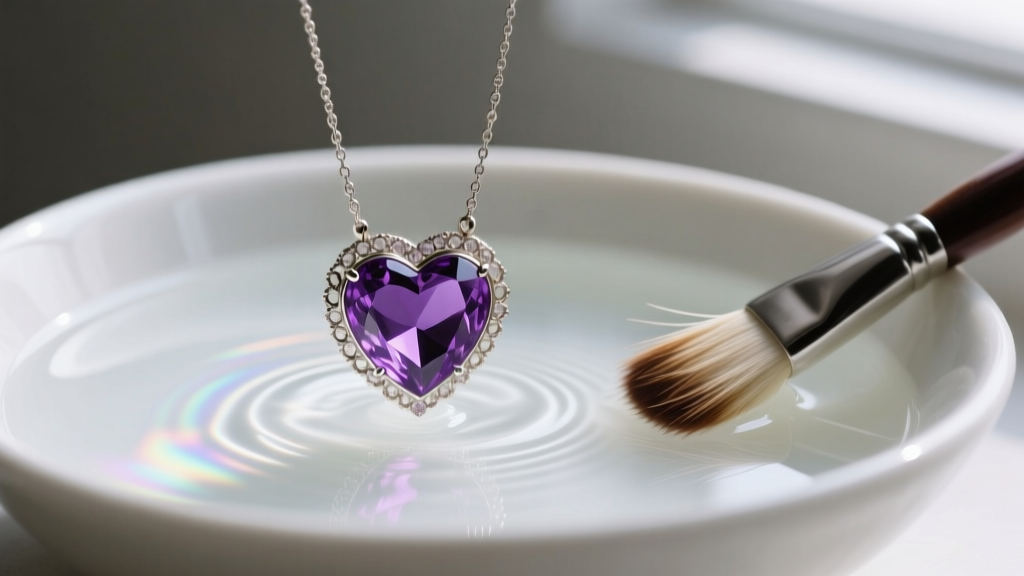
To safely troubleshoot surface cloudiness without risking thermal shock or inclusion fractures, follow this exact protocol:
- Step 1: Mix lukewarm (never hot) distilled water with a few drops of pH-neutral dish soap in a ceramic bowl.
- Step 2: Submerge the amethyst necklace heart for exactly 5 minutes to loosen sebum and cosmetic buildup.
- Step 3: Gently agitate the water. Do not use a hard-bristled toothbrush; instead, use a dedicated, ultra-soft horsehair jewelry brush to lightly sweep the cleft and pavilion facets.
- Step 4: Rinse under a gentle stream of room-temperature distilled water and pat dry with a lint-free microfiber cloth. Avoid air-drying, which leaves hard water spots that mimic cloudiness.
Issue 4: The Slipping Chain and Bail Wear
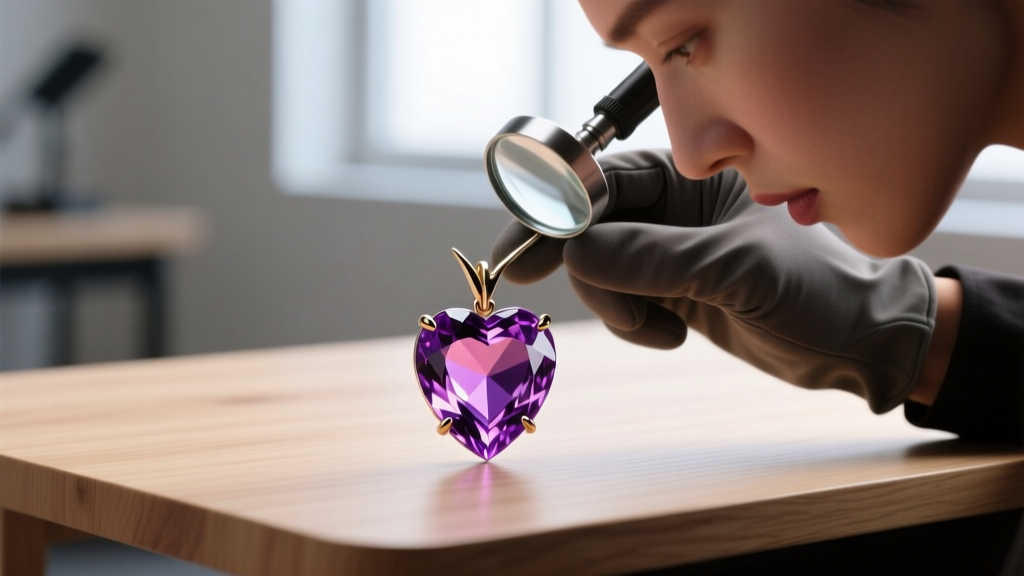
A frequent, yet often overlooked, troubleshooting scenario involves the chain slipping through the bail or the bail itself wearing down the top cleft of the amethyst. Heart pendants often feature a small, delicate soldered loop at the top cleft. If you have paired a heavy 14k gold rope chain with a thin, stamped-metal bail, the friction will eventually wear a groove into the bail, leading to catastrophic failure and loss of the pendant. To fix this, inspect the inner diameter of the bail using a 10x jeweler's loupe. If the metal is thinned by more than 30%, a jeweler must solder a new, heavy-duty soldered ring bail or a tube bail. Always ensure the chain gauge is at least 0.5mm thinner than the inner diameter of the bail to allow for free movement and reduce friction wear.
Issue 5: Identifying the Imposter (Synthetic vs. Natural)
Sometimes the 'problem' isn't damage, but authenticity. If your amethyst necklace heart is completely flawless, lacks any color zoning, and features an impossibly deep, uniform purple, you may be troubleshooting a synthetic hydrothermal quartz rather than a natural stone. By 2026, lab-grown amethyst has become incredibly prevalent in commercial heart-shaped pendants. Natural amethyst almost always exhibits 'tiger-stripe' inclusions, subtle color zoning (where the purple is concentrated in specific geometric bands), or Brazil-law twinning. If you suspect your stone is synthetic, a professional gemologist can perform a polarized light test to check for twinning patterns, which are virtually absent in synthetic hydrothermal stones. While synthetic amethyst is chemically identical and perfectly fine for daily wear, it holds a fraction of the resale value of a natural stone, and you should never pay natural market premiums for a lab-created heart pendant.
Final Thoughts on Pendant Maintenance
Troubleshooting an amethyst necklace heart requires a balance of gemological knowledge and practical jewelry maintenance. By understanding the structural weaknesses of the heart cut, respecting the heat and UV sensitivity of the quartz crystal lattice, and avoiding harsh mechanical cleaning methods, you can preserve the romantic brilliance of your pendant for decades. When in doubt, always consult a certified bench jeweler who understands the specific friction and stress dynamics of heart-shaped gemstone settings.


