Karat & Alloy Guide for a Vintage Gold Cross Necklace
Discover how gold karats, alloys, and hallmarks affect the value, durability, and patina of a vintage gold cross necklace in our expert material guide.

The Metallurgy of Antique Faith: Understanding Gold Alloys
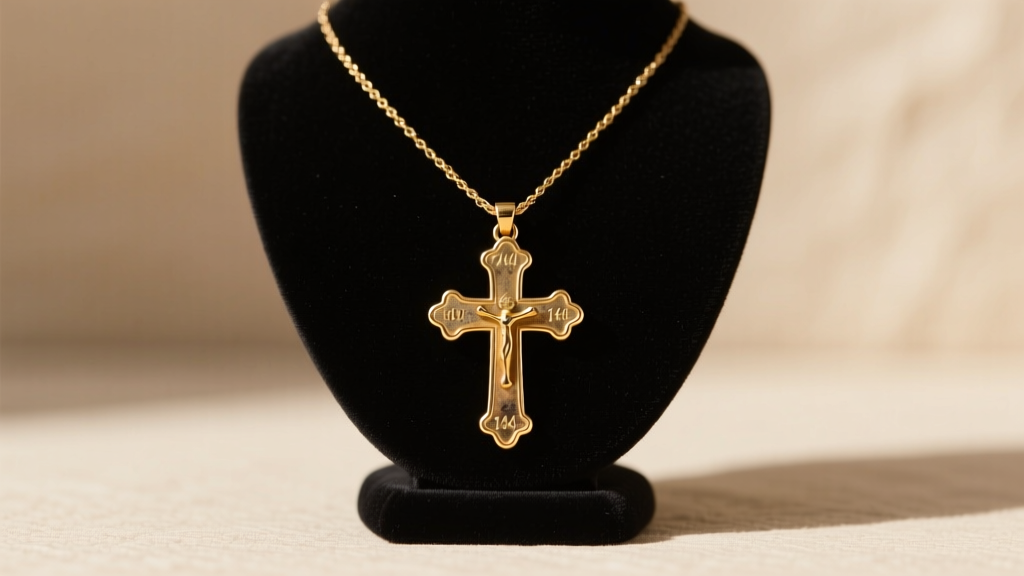
When evaluating a vintage gold cross necklace, understanding the underlying metallurgy is just as critical as appreciating its design. Pure 24-karat gold is highly malleable, making it unsuitable for the structural demands of intricate religious jewelry, especially pieces meant to be worn daily over decades. To achieve the necessary tensile strength, vintage jewelers alloyed gold with metals like copper, silver, zinc, and occasionally palladium. The specific ratio of these base metals not only dictates the karat weight but also influences the cross's structural integrity, its susceptibility to stress corrosion cracking, and the unique patina it develops over a century of wear.
According to the Gemological Institute of America (GIA), the alloy mix in antique jewelry often differs significantly from modern standards. For instance, Victorian-era rose gold crosses contain a much higher copper-to-silver ratio than contemporary rose gold, resulting in a deeper, almost reddish-brown hue that oxidizes into a rich, dark plum patina over time. Recognizing these material nuances is the first step in authenticating and valuing vintage pieces.
Decoding Karats: 10K, 14K, 18K, and 22K in Vintage Pieces
10K and 14K Gold: The Workhorses of the 20th Century
In the United States, 14-karat gold (58.3% pure gold) became the standard for everyday jewelry following the 1906 National Gold and Silver Stamping Act. A vintage 14k gold cross necklace offers an excellent balance of durability and gold content. The remaining 41.7% is typically a mix of silver and copper. However, if the copper content is too high and the piece is exposed to decades of chlorine (from swimming pools or household cleaners), it can suffer from embrittlement and micro-fractures along the solder joints of the cross's arms. 10K gold (41.7% pure) is even more durable but was primarily used for mass-market, mid-century religious medals rather than high-end artisan crosses.
18K Gold: The European Standard and Rich Patina
If you are sourcing a European vintage gold cross necklace, you will predominantly encounter 18-karat gold (75% pure). French and Italian artisans favored 18k for its rich, buttery yellow color and its ability to hold intricate Etruscan revival granulation and filigree work. Because it is softer than 14k, the bail (the loop connecting the cross to the chain) on an 18k vintage piece will often show significant friction wear.  Collectors prize this wear as a testament to the piece's history, but it requires careful inspection to ensure the bail hasn't worn completely through.
22K and 24K Gold: Rare, Soft, and Highly Prized
Solid 22k or 24k gold crosses are exceptionally rare in Western vintage jewelry due to their softness. When found, they are typically heavy, cast Orthodox or Byzantine crosses from the Middle East or Asia. These pieces will almost always show deep dents, scratches, and bent edges. While material purists seek them out for their pure gold content, they are poor candidates for daily wear on delicate chains.
Material Comparison Table: Vintage Gold Cross Properties
| Karat | Gold % | Common Vintage Alloys | Patina Hue | Era Prevalence | Durability |
|---|---|---|---|---|---|
| 10K | 41.7% | Copper, Zinc, Silver | Dull Yellow / Greenish Oxidation | 1940s-1980s (US Mass Market) | Very High |
| 14K | 58.3% | Copper, Silver | Warm Yellow / Brownish Tarnish | 1900-Present (US Standard) | High |
| 18K | 75.0% | Copper, Silver, Palladium | Rich Butter Yellow / Deep Glow | 1800s-Present (European) | Moderate |
| 22K | 91.6% | Copper, Silver | Deep Orange-Yellow | Antique Byzantine / Middle Eastern | Low |
Gold-Filled vs. Rolled Gold: Identifying Vintage Overlays
Not every yellow vintage cross necklace is solid gold. During the Art Deco and Retro periods, gold overlay techniques allowed for opulent designs at accessible prices. Understanding the difference between these materials is crucial for accurate valuation.
- Gold-Filled (GF): A thick layer of karat gold (usually 12k or 14k) mechanically bonded to a brass core under high heat and pressure. By FTC guidelines, the gold must constitute at least 1/20th of the total weight. Vintage gold-filled crosses are highly durable; the gold layer is thick enough that it rarely flakes, though the edges may eventually show brass bleed after 80+ years of wear.
- Rolled Gold Plate (RGP): Similar to gold-filled but with a thinner layer of gold (often 1/30th or 1/40th of the weight). RGP was heavily used in the 1920s and 30s for stamped religious medallions. The failure mode here is micro-cracking; as the brass base expands and contracts with temperature changes over decades, the thinner gold layer can develop a spiderweb crackle pattern.
- Gold Vermeil: Gold electroplated over sterling silver. While popular today, true vintage vermeil (pre-1950s) is rare. If a vintage cross is stamped '925' but looks like yellow gold, it is likely vermeil. The failure mode is plating wear on the high-relief areas of the cross, exposing the bright white silver beneath.
Hallmarks and Acid Testing: Authenticating Your Cross
Authenticating a vintage gold cross necklace requires a meticulous examination of its hallmarks. European pieces are heavily regulated and stamped with precise millesimal fineness marks. 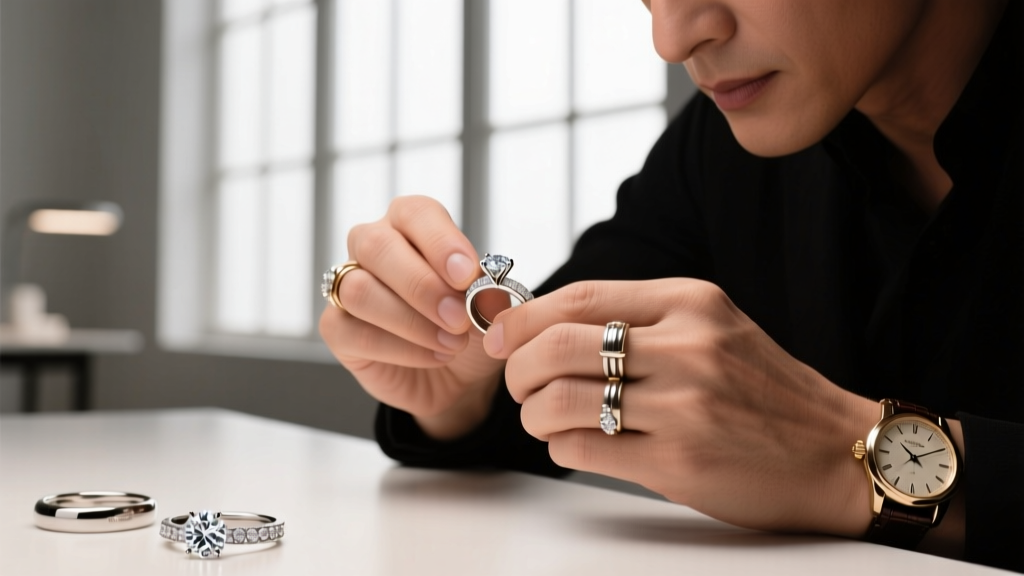 You will frequently encounter '375' (9k, common in the UK), '585' (14k), and '750' (18k). The London Assay Office notes that antique British pieces may also feature a crown stamp alongside the karat number, indicating gold, and a date letter to pinpoint the exact year of manufacture.
Expert Warning: Avoid using liquid acid testing kits on vintage gold crosses. The nitric acid can permanently stain the porous surface of antique alloys, destroy delicate enamel work (like guilloché or plique-à-jour), and erase the very hallmarks you are trying to verify. Always rely on X-ray fluorescence (XRF) testing from a certified gemologist for non-destructive material analysis.
Sourcing and Pricing: What to Pay in 2026
The market for vintage religious jewelry has matured, with buyers increasingly prioritizing material integrity and historical provenance over simple melt value. Here is a realistic pricing framework for the current market:
- 14K Gold-Filled Art Deco Crosses (1920s-1930s): $80 to $180. Value is driven by the condition of the overlay and the intricacy of the die-stamping.
- Solid 14K Victorian Etruscan Revival Crosses (1880s-1900s): $1,200 to $3,500. These feature applied wirework and gold beads. Pricing scales with the survival of the original matte bloom finish.
- Solid 18K French Art Nouveau Crosses (1890s-1910s): $2,500 to $6,000+. Pieces featuring original Plique-à-jour enamel or old European cut diamond accents command the highest premiums.
By mastering the material properties, alloy compositions, and historical manufacturing techniques of these pieces, you can confidently navigate the secondary market and acquire a vintage gold cross necklace that is both a beautiful artifact and a sound material investment.