The Vintage Heart Necklace: 2026 Trend & Style Guide
Discover how to style and authenticate a vintage heart necklace in 2026. Explore era-specific hallmarks, chain pairings, and investment pricing.

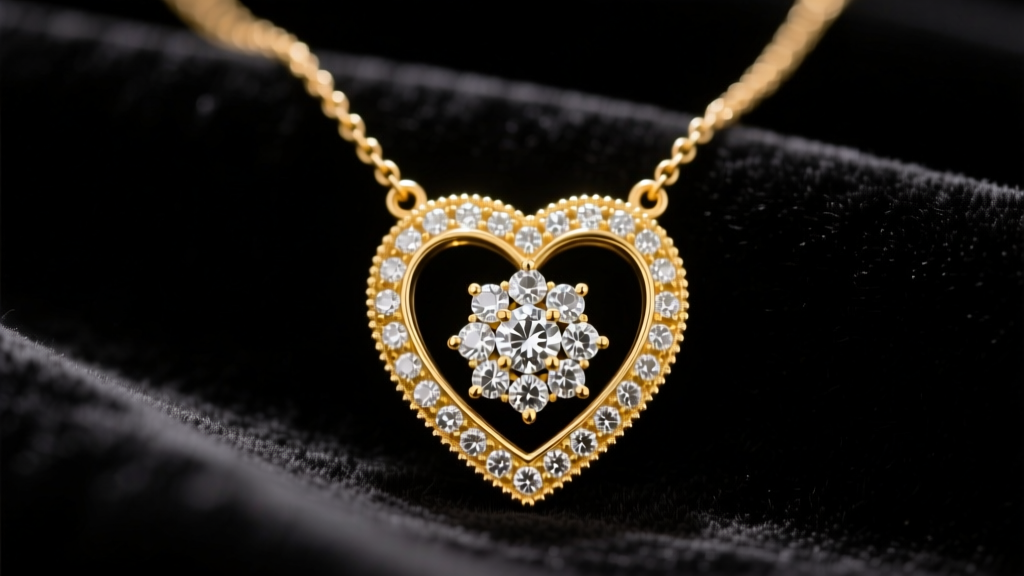
In 2026, the jewelry landscape has decisively pivoted from the ultra-minimalist, barely-there chains of the early 2020s toward 'heirloom core'—a movement defined by sentimental weight, historical provenance, and romantic silhouettes. At the absolute center of this shift is the vintage heart necklace. No longer confined to nostalgic lockets or juvenile charm bracelets, antique and vintage heart pendants have been reclaimed by high-fashion stylists and everyday collectors alike as the ultimate symbol of curated, timeless romance. Whether you are hunting for a foil-backed garnet Victorian piece or a geometric Art Deco platinum heart, understanding the nuances of era-specific craftsmanship is essential for both styling and investment.
The Resurgence of Romanticism: Why Vintage Hearts Dominate 2026
The modern consumer is increasingly fatigued by mass-produced, trend-cycle jewelry. According to market analysts, searches for authenticated antique jewelry have surged, driven by a desire for sustainability and unique storytelling. A vintage heart necklace offers an immediate emotional resonance that contemporary casting simply cannot replicate. The slight asymmetry of a hand-forged 19th-century heart, the soft glow of old mine cut diamonds, and the rich patina of aged gold provide a tactile connection to the past. In 2026, styling these pieces is less about preserving them in a vault and more about integrating them into bold, contemporary layering stacks, juxtaposing historical romance with modern edge.
Decoding Eras: Identifying Authentic Vintage Heart Pendants
To the untrained eye, a heart is just a heart. To a jewelry historian, the silhouette, metalwork, and gemstone cuts reveal the exact decade of its creation. The Metropolitan Museum of Art notes that jewelry motifs often mirror the architectural and social shifts of their time. Here is how to decode the major eras of vintage heart necklaces.
Victorian & Edwardian (1837–1910)
Victorian hearts are deeply sentimental. You will frequently encounter 'REGARD' acrostic pieces, where the first letter of each gemstone (Ruby, Emerald, Garnet, Amethyst, Ruby, Diamond) spells out a hidden message. Foil-backed garnets and seed pearls are hallmarks of this era, often set in 15k gold (a standard in the UK before 1932). Edwardian hearts transitioned into the 'Garland Style,' featuring delicate pierced filigree, platinum, and bow motifs suspended above the heart.
Art Deco (1920–1935)
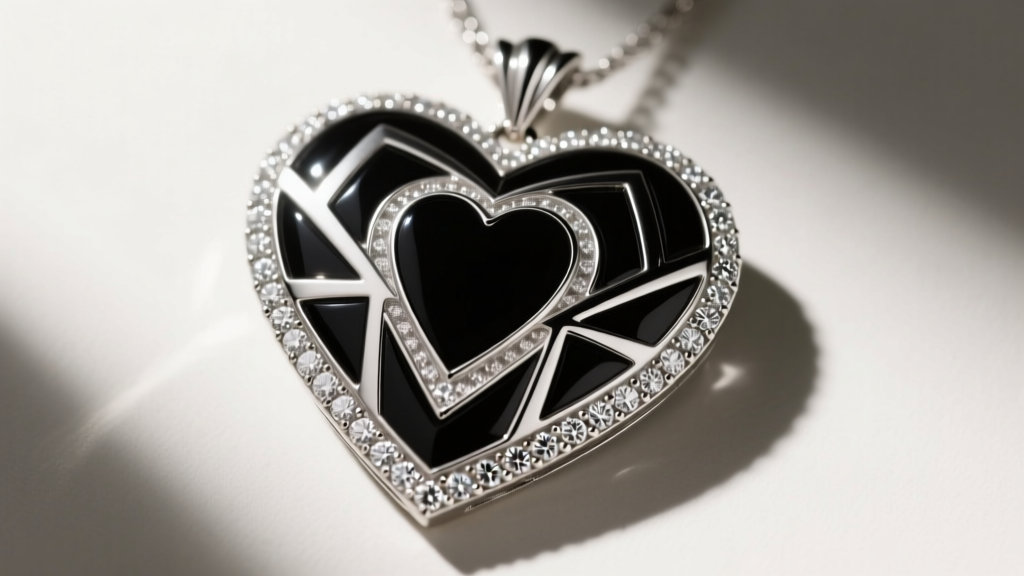
Art Deco stripped away the frills, introducing sharp geometry and high contrast. An Art Deco vintage heart necklace will often feature platinum or white gold, utilizing calibre-cut synthetic rubies, black onyx inlay, and single-cut or European-cut diamonds. Look for millegrain edges (tiny beaded metalwork) and stepped, architectural bail designs.
Retro & Mid-Century (1940–1960)
During the Retro period, platinum was reserved for the war effort, causing a massive surge in rose and yellow gold. Hearts from this era are chunky, three-dimensional, and often feature engine-turned guilloche patterns on the surface of heart-shaped lockets. Mid-century pieces introduced the classic, polished 14k gold locket, designed to hold post-war photographs, often suspended on heavy curb chains.
Material Grades & Hallmark Authentication
Authenticating a vintage heart necklace requires looking beyond the pendant itself. The clasp, the bail, and the hallmarks tell the true story. In the United States, the National Stamping Act of 1906 mandated that gold and silver items carry a purity mark. Therefore, a piece claiming to be from the 1880s but bearing a crisp '14K' stamp alongside a modern lobster clasp has likely been altered or is a later reproduction.
| Era | Common Metals & Marks | Clasp Types | Gemstone Cuts |
|---|---|---|---|
| Victorian (1837-1901) | 15k Gold (UK), Silver, no US stamps | C-clasp, T-bar, Push-in tube | Rose cut, Old mine cut, Cabochon |
| Edwardian (1901-1915) | Platinum, 14k/18k Gold (post-1906) | Early spring ring, C-clasp | Old European cut, Seed pearls |
| Art Deco (1920-1935) | Platinum, White Gold | Spring ring, Dog clip | Calibre, Single cut, Baguette |
| Retro (1935-1950) | 14k Rose/Yellow Gold | Spring ring, Lobster (late 40s) | Round brilliant, Synthetic ruby |
When evaluating diamond hearts, the Gemological Institute of America (GIA) emphasizes that antique cuts like the Old European Cut (OEC) feature a high crown, small table, and large culet, giving them a chunky, romantic sparkle that differs vastly from modern laser-cut brilliants.
Chain Pairings: Matching the Perfect Antique Link
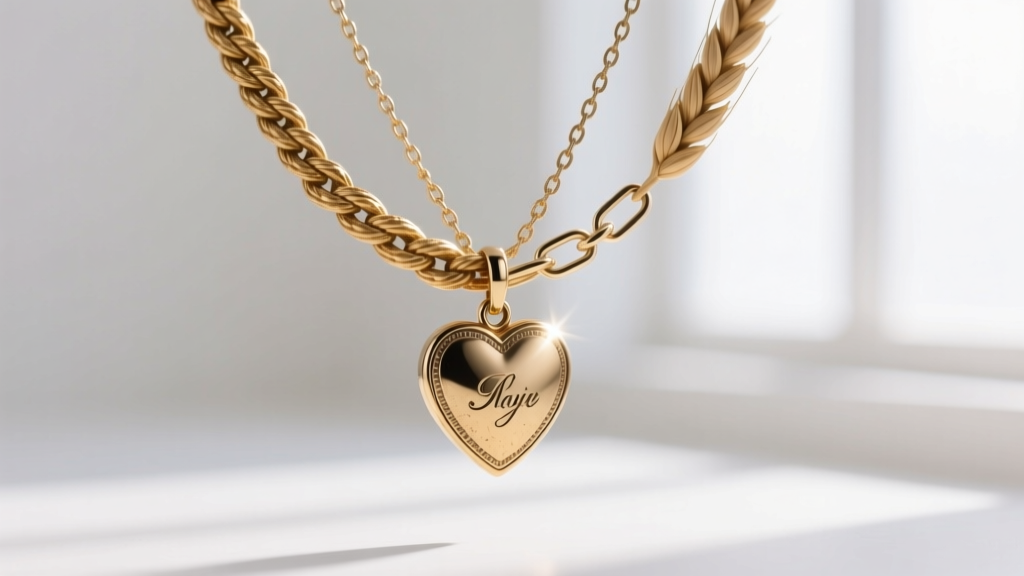
A common mistake collectors make is pairing a heavy, historically significant pendant with a flimsy, modern chain. The bail (the loop connecting the pendant to the chain) dictates your options. A Victorian pendant with a tiny, soldered C-bail requires a delicate 1mm to 1.5mm cable or wheat chain. Conversely, a Retro 1940s gold locket requires a robust chain to balance its visual weight.
- Albert Chains: Originally designed for pocket watches, these feature a T-bar and a swivel dog clip. They are the ultimate pairing for heavy Victorian and Edwardian heart lockets, offering a masculine, utilitarian edge.
- Rope Chains: A 2mm to 3mm antique rope chain provides excellent tensile strength and a twisted texture that catches the light, perfectly complementing the smooth enamel or polished gold of Mid-Century hearts.
- Fetish Chains: Popular in the late 19th century, these feature alternating links of gold and carved hardstone (like agate or coral). They serve as a stunning, standalone statement when paired with a simple gold heart.
Investment Pricing: What to Pay in the Current Market
The market for vintage heart necklaces has stabilized in 2026, with pricing heavily dictated by provenance, material, and condition. According to antique jewelry educators at Lang Antiques, condition is paramount; a cracked foil-back or a repaired bail can devalue a piece by up to 40%. Here is a realistic pricing framework for authentic pieces:
- Victorian Garnet & Seed Pearl Hearts (15k/9k Gold): $450 – $1,200. Prices spike if the piece features intricate hairwork or rare acrostic gem arrangements.
- Edwardian Platinum Filigree Hearts: $1,500 – $3,500. Highly dependent on the quality and clarity of the central Old European cut diamond.
- Art Deco Platinum & Onyx Hearts: $2,500 – $8,000+. True Art Deco geometric hearts are rare and highly coveted by serious collectors.
- Retro 14k Rose Gold Guilloche Lockets: $600 – $1,500. Valued for their intricate engine-turned patterns and pristine interior photo frames.
Modern Styling: Layering Heirlooms with Contemporary Basics
The 2026 approach to styling a vintage heart necklace relies on tension and contrast. Do not treat the piece as a fragile artifact; treat it as the anchor of your neckline. For a modern 'heirloom core' aesthetic, layer a 16-inch Victorian garnet heart with a 14-inch contemporary freshwater pearl choker and an 18-inch minimalist gold paperclip chain. This staggered layering prevents the vintage piece from looking costumey, grounding it in modern proportions. For evening wear, allow a single, long Art Deco platinum heart (suspended on a 24-inch chain) to rest over a silk slip dress, letting the millegrain and diamonds catch the ambient light. By understanding the history, materials, and proper styling techniques, your vintage heart necklace becomes more than an accessory—it becomes a wearable piece of history.


