Vintage Rose Quartz Necklace Value Guide: Pricing & Authentication
Discover how to assess a vintage rose quartz necklace's true value. Learn authentication tips, metal grading, and pricing tiers for collectors.

The Allure and Market Reality of Vintage Rose Quartz
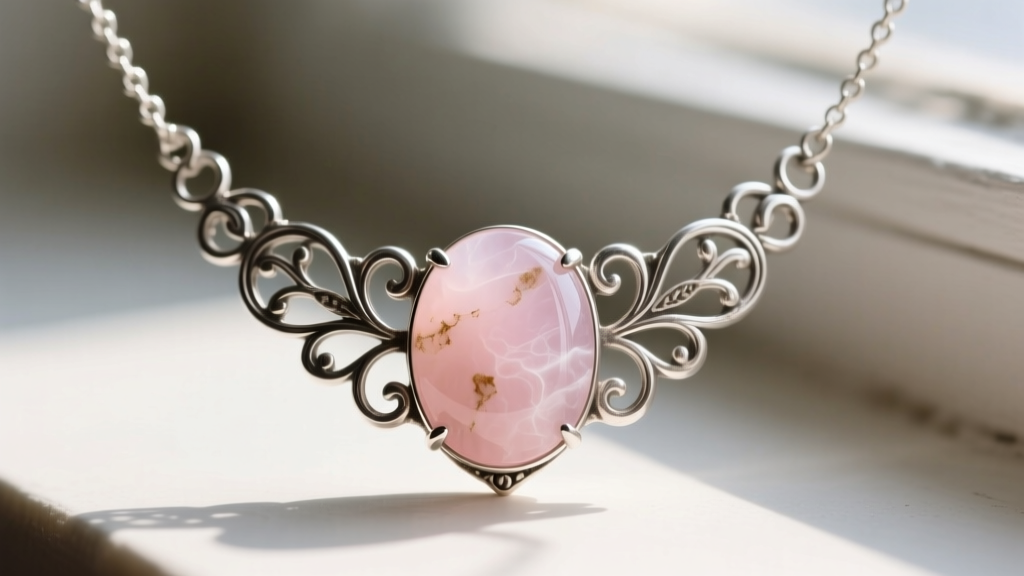
The market for crystal and gemstone jewelry has exploded, but the secondary market for a genuine vintage rose quartz necklace remains a minefield of misrepresentation. Rose quartz, a macrocrystalline variety of quartz, has been prized for its soft, translucent pink hue for centuries. However, the term 'vintage' is frequently abused by online sellers to describe modern, mass-produced baubles. True vintage pieces—typically defined as being at least 20 to 30 years old, with antique pieces crossing the 100-year threshold—carry a distinct lapidary and metallurgical fingerprint. Assessing the budget and true value of these necklaces requires moving beyond aesthetic appreciation and adopting the analytical eye of a gemologist and estate appraiser. This guide provides a rigorous framework for authentication, metal evaluation, and pricing to ensure you never overpay for a synthetic imitation or a 'Frankenstein' assembly.
Authentication: Genuine Quartz vs. Dyed Glass and Synthetics
Rose quartz gets its color from trace amounts of titanium, iron, or manganese, though modern gemology often attributes the pink hue to microscopic fibrous inclusions of a pink borosilicate mineral. Because natural rose quartz is relatively abundant, it is rarely synthesized for commercial jewelry; instead, the market is flooded with dyed glass, synthetic corundum, and reconstituted quartz powder. According to the Gemological Institute of America (GIA), natural quartz has a specific gravity of 2.66 and a Mohs hardness of 7. Glass, the most common impostor, typically ranks around 5.5.
Field Tests for the Savvy Buyer
- Thermal Conductivity: Genuine quartz feels distinctly cold to the touch and takes significantly longer to warm up against the skin compared to glass or plastic resins.
- Magnification (10x Loupe): If you see perfectly round air bubbles, you are holding glass. Natural rose quartz will exhibit internal fractures, cloudy zoning, or fine rutile needles.
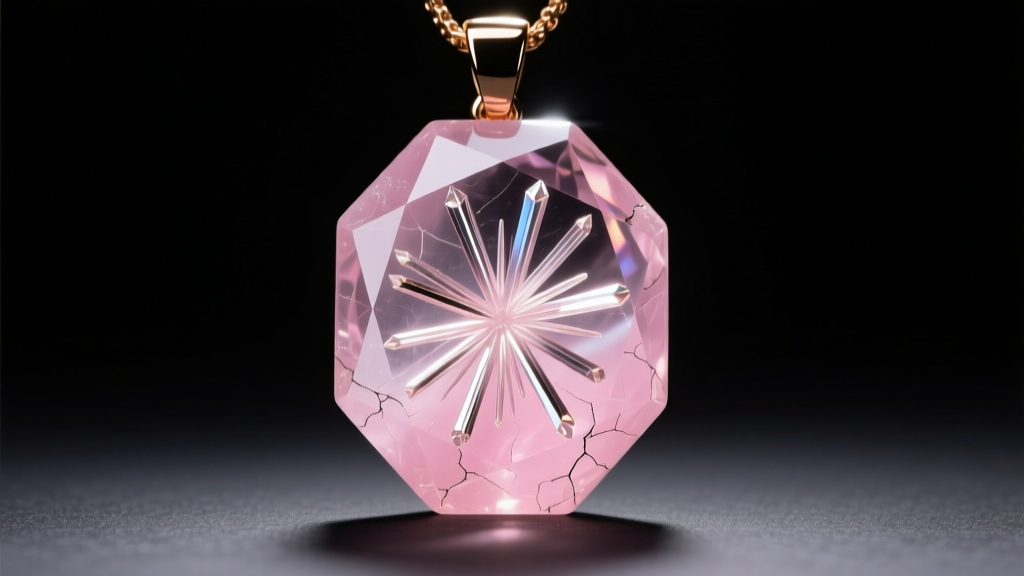
- The Lapidary Reality Check: Natural rose quartz is almost never faceted in genuine vintage pieces. Its translucency and internal fractures make it unsuitable for light return. It is traditionally cut en cabochon or carved. If you encounter a 'vintage' necklace featuring a brilliantly faceted rose quartz stone, you are likely looking at modern synthetic pink spinel or glass.
Evaluating the Metal Setting: Where the Real Value Lies
Because the stone itself is not inherently rare, up to 70% of a vintage rose quartz necklace's financial value is dictated by its metal setting, craftsmanship, and hallmarks. Understanding the historical hallmarks and metal stamps is non-negotiable for accurate budget assessment.
Metal Tiers and Value Impact
- Base Metals & Pot Metal (1920s-1930s): Common in Art Deco costume jewelry. Often plated with a thin wash of silver or gold. Look for pitting, green oxidation (copper/brass), or flaking. Value Impact: Low ($30 - $80).
- Sterling Silver (925): The gold standard for mid-tier vintage pieces. Look for the '925', 'Sterling', or 'STG' stamp. Tarnish is expected and easily polished, but deep pitting or structural cracks in the filigree will lower the value. Value Impact: Moderate to High ($100 - $400).
- Gold-Filled (GF) vs. Rolled Gold Plate (RGP): Highly popular in the 1940s-1960s. Gold-filled means a thick layer of karat gold mechanically bonded to a brass core. It holds immense durability and modest collector value. Value Impact: Moderate ($120 - $300).
- Solid Karat Gold (10K, 14K, 18K): Rare for rose quartz unless it was a custom lapidary commission. 14K is the most common vintage standard. Value Impact: High ($400 - $1,500+ based on gold weight).
The 'Frankenstein' Problem in Vintage Jewelry
A critical concept in vintage jewelry valuation is the 'Frankenstein' necklace. This occurs when a seller takes a genuine vintage rose quartz pendant and strings it onto a modern, mass-produced, low-quality chain, marketing the entire lot as a 'vintage necklace.' For serious collectors, this destroys the historical integrity and the value of the piece. Always inspect the jump rings, the clasp mechanism (e.g., a modern lobster claw vs. a vintage spring ring or C-clasp), and the wear patterns on the chain links. If the pendant shows decades of patina but the chain is bright, un-tarnished, and machine-perfect, you are buying a vintage pendant on a modern chain. Price it accordingly—only pay for the pendant's value and treat the chain as a disposable placeholder.
2026 Pricing Tiers: What Should You Actually Pay?
Pricing vintage jewelry requires synthesizing the era, the metal, and the condition of the lapidary work. Below is a structured assessment matrix to guide your budget allocation in the current market.
| Era | Typical Setting | Stone Cut / Style | Estimated Value Range |
|---|---|---|---|
| Art Deco (1920s-1930s) | Sterling Silver / Pot Metal | Cabochon / Carved | $150 - $450 |
| Retro (1940s-1950s) | 14K Gold-Filled / RGP | Tumbled / Bezel Set | $120 - $350 |
| Mid-Century (1960s-1970s) | 925 Silver / Taxco Mexican | Raw / Beaded / Cab | $80 - $250 |
| Late 20th C. (1980s-1990s) | 14K Solid Gold / Vermeil | Custom Cabochon | $300 - $900+ |
Common Failure Modes in Vintage Quartz Pendants
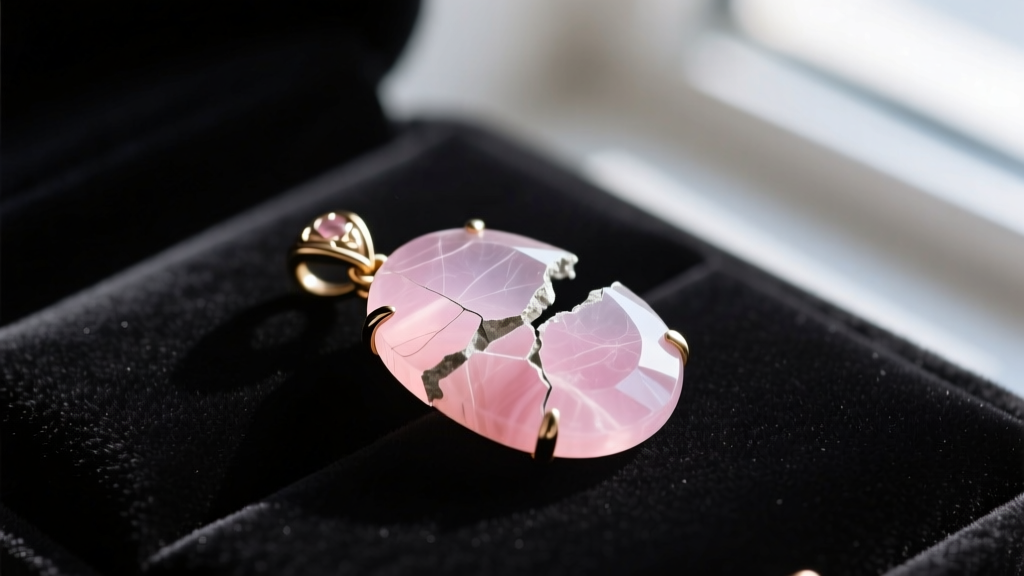
Quartz lacks true cleavage, meaning it doesn't split along flat, predictable planes like diamonds or topaz. However, it exhibits conchoidal fracturing, making it susceptible to chipping upon hard impacts. In vintage necklaces, the most common failure mode is edge chipping where the stone meets the metal prong or bezel. Over decades of wear, silver prongs suffer from metal fatigue and can snap, dropping the stone. Furthermore, data from Mindat.org confirms that the delicate color centers in rose quartz can degrade under intense UV radiation. Rose quartz is mildly photosensitive; prolonged exposure to direct sunlight over 50+ years can cause the vibrant pink color to fade to a dull, chalky gray. A deeply faded vintage stone significantly reduces the aesthetic and monetary value of the piece, and this should be leveraged as a primary negotiation point when purchasing from estate sales.
Sourcing Strategy: Where to Find True Value
To maximize your budget, avoid highly curated 'vintage' boutiques on social media, where the markup for aesthetic curation can exceed 300%. Instead, focus on the following avenues:
1. Estate Sales and Probate Auctions
This is where the deepest value lies. Estate liquidators often lack the time to research specific gemstone lapidary history. A tarnished 1940s gold-filled rose quartz pendant might be lumped into a 'costume jewelry' box and sold for a fraction of its melt and historical value. Bring your 10x loupe and a strong LED flashlight to inspect for internal fractures and hallmark stamps.
2. Online Marketplaces (eBay and Etsy)
When shopping online, use highly specific search queries like 'vintage 925 sterling rose quartz cabochon pendant' rather than broad terms. Filter out sellers who use stock photos. Demand high-resolution macro shots of the clasp, the jump ring, and the stone's surface. If a seller cannot provide a photo of the hallmark or the back of the setting, walk away. The risk of receiving a modern glass replica or a Frankenstein assembly is simply too high.
3. Antique Malls and Flea Markets
Physical inspection is the ultimate advantage here. You can perform the thermal conductivity test (feeling the stone's temperature) and check for the tell-tale conchoidal chips along the girdle of the cabochon. Negotiate based on structural flaws: if the silver prongs are worn thin or the stone is UV-faded, you can often reduce the asking price by 30% to 50% to account for the necessary jeweler's repair costs.
Final Thoughts on Budget Allocation
A vintage rose quartz necklace is an exercise in appreciating historical lapidary arts and metallurgy. By prioritizing genuine cabochon cuts, verifying metal hallmarks, and ruthlessly avoiding dyed glass and Frankenstein chains, you can build a collection that holds both sentimental resonance and rigorous financial value. Always let the condition of the metal and the natural inclusions of the stone dictate your maximum offer, ensuring your investment is as enduring as the quartz itself.