How to Safely Clean and Restore a Vintage Scarab Necklace
Learn expert techniques to safely clean, polish, and store your vintage scarab necklace without damaging delicate enamel, faience, or carved gemstones.

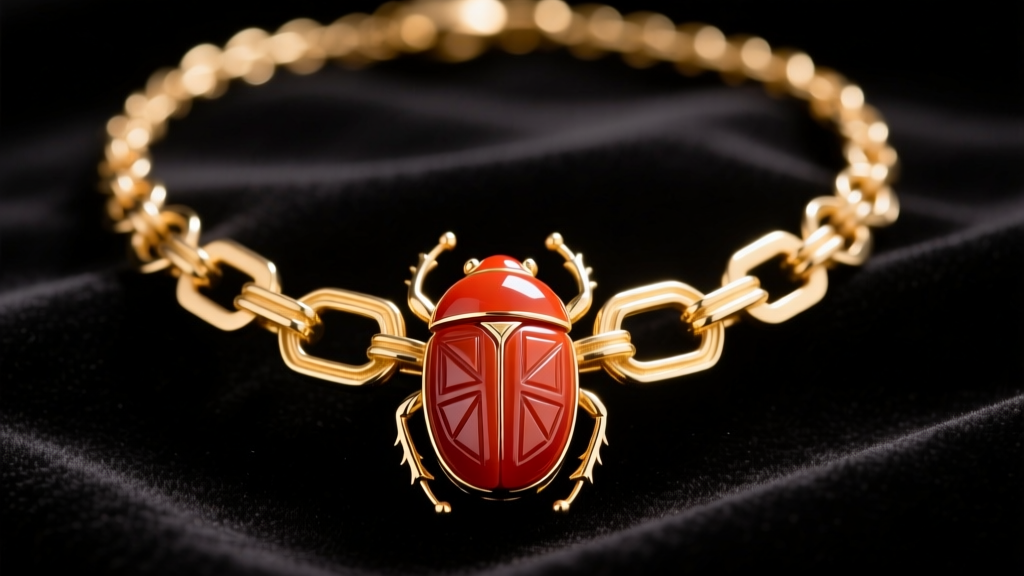
Owning a vintage scarab necklace is like holding a wearable piece of history. Whether your piece originates from the late Victorian Egyptian Revival of the 1890s, the geometric Art Deco era of the 1920s, or the Mid-Century tourist boom, these necklaces are highly collectible and deeply symbolic. However, the diverse materials used to craft scarab jewelry—ranging from porous ancient-style faience to delicate vitreous enamel and carved hardstones—make them exceptionally vulnerable to improper cleaning.
As a jewelry conservation specialist, I frequently see irreversible damage caused by well-meaning owners who treat antique pieces like modern diamond solitaires. This comprehensive guide will walk you through the exact protocols for identifying, cleaning, and preserving your vintage scarab necklace to ensure it survives for another century.
Understanding Your Scarab Necklace Materials
Before applying any moisture or polish, you must accurately identify the materials in your specific vintage scarab necklace. The cleaning protocol for one material can instantly destroy another.
Egyptian Faience and Glazed Steatite
Faience is not a clay-based ceramic; it is a sintered quartz composite often coated in a copper-oxide alkaline glaze. Vintage and antique reproduction faience scarabs feature a micro-porous body beneath the glaze. If the glaze has micro-cracks (crazing), water will seep into the quartz core, leading to internal fracturing and irreversible blooming.
Carved Hardstones and Porous Gems
Art Deco scarab necklaces frequently feature carved carnelian, agate, lapis lazuli, and turquoise. While carnelian and agate (Mohs 6.5–7) are relatively durable, lapis lazuli and turquoise (Mohs 5–6) are highly porous and calcite-rich. Exposure to acidic cleaners or prolonged moisture will dissolve the calcite matrix, leaving the stone pitted and dull.
Vitreous and Cold Enamel
Many 1920s and 1930s scarab pendants utilize enamel to mimic the iridescent wings of real jewel beetles. Vitreous enamel is essentially fused glass, while 'cold enamel' (epoxy or lacquer) is a painted resin. Both are susceptible to thermal shock and chemical stripping.
The Golden Rules of Antique Jewelry Cleaning
To protect the integrity and patina of your vintage scarab necklace, you must strictly avoid the following modern cleaning methods:
- Never use Ultrasonic Cleaners: The high-frequency cavitation bubbles created by ultrasonic machines can shatter vitreous enamel, fracture lapis lazuli, and shake loose the delicate bezels holding the scarab stones in place.
- Avoid Commercial Silver Dips: Liquid silver cleaners contain thiourea and strong acids. These chemicals will instantly strip the highly desirable antique patina from sterling silver settings and will permanently cloud porous stones like turquoise if they seep into the bezel.
- No Steam Cleaners: Sudden thermal shock will cause antique enamel to craze (develop a network of fine cracks) and can cause oil-treated stones to dry out and fracture.
Step-by-Step Cleaning Guide by Material
Follow these targeted protocols based on your necklace's composition. Always work over a soft towel to prevent damage if the piece slips from your hands.
1. Cleaning Carnelian, Agate, and Quartz Scarabs
For these non-porous hardstones, create a solution of lukewarm distilled water and a single drop of pH-neutral dish soap (such as original Dawn). Dip a soft, untreated microfiber cloth into the solution, wring it out until it is barely damp, and gently wipe the surface of the scarab. Use a dry cotton swab to clean the crevices of the carving. Immediately buff dry with a separate microfiber cloth.
2. Cleaning Lapis Lazuli, Turquoise, and Malachite
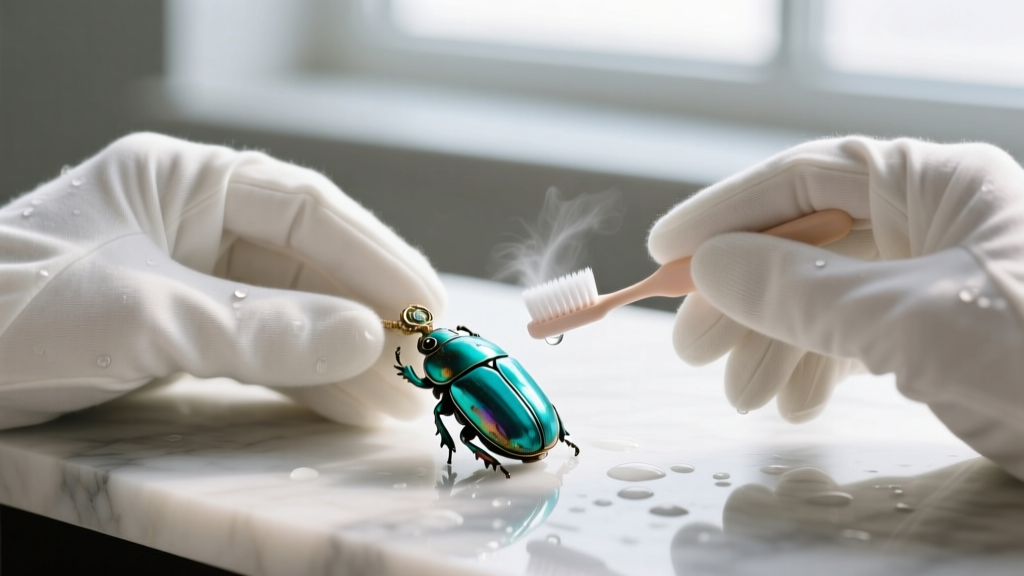
These stones must remain completely dry. Use a clean, soft-bristled baby toothbrush to gently sweep away dust and skin oils from the carved grooves of the scarab. If there is stubborn grime, lightly dampen the tip of a cotton swab with distilled water, roll it over the soiled area, and immediately dry it with the dry end of the swab. Never submerge these stones.
3. Dusting Faience and Enamel
For glazed faience and enameled scarabs, rely on dry cleaning methods. Use a soft makeup brush (like a kabuki brush) to whisk away dust. If the glaze is stable and uncrazed, you may use a slightly damp microfiber cloth, but avoid applying any pressure to the painted or enameled details.
4. Polishing the Metal Chain and Settings
For gold-filled or rolled-gold chains, simply wipe with a dry jewelry cloth. For sterling silver settings, use a treated polishing cloth impregnated with jeweler's rouge (such as a Sunshine Cloth). Carefully fold the cloth to reach the silver bezels, but avoid rubbing the cloth directly against the scarab stones, as the mild abrasives in the cloth can scratch softer gems and strip enamel.
Safe vs. Unsafe Cleaners: A Quick Reference
| Material | Safe Cleaning Method | Strictly Avoid | Drying Protocol |
|---|---|---|---|
| Carnelian / Agate | Damp cloth, pH-neutral soap | Ultrasonic, harsh chemicals | Immediate microfiber buff |
| Lapis / Turquoise | Dry soft brush, dry swab | Water immersion, silver dip, acids | N/A (kept dry) |
| Faience / Enamel | Soft dry makeup brush | Steam, soaking, abrasive cloths | N/A (kept dry) |
| Sterling Settings | Treated rouge polishing cloth | Thiourea liquid dips, baking soda | N/A |
For more in-depth gemological care standards, refer to the Gemological Institute of America (GIA) Gem Care guidelines, which detail the specific vulnerabilities of porous organic and inorganic gems.
Proper Storage and Long-Term Maintenance
How you store your vintage scarab necklace between wears is just as critical as how you clean it. Environmental factors are the primary enemy of antique jewelry.
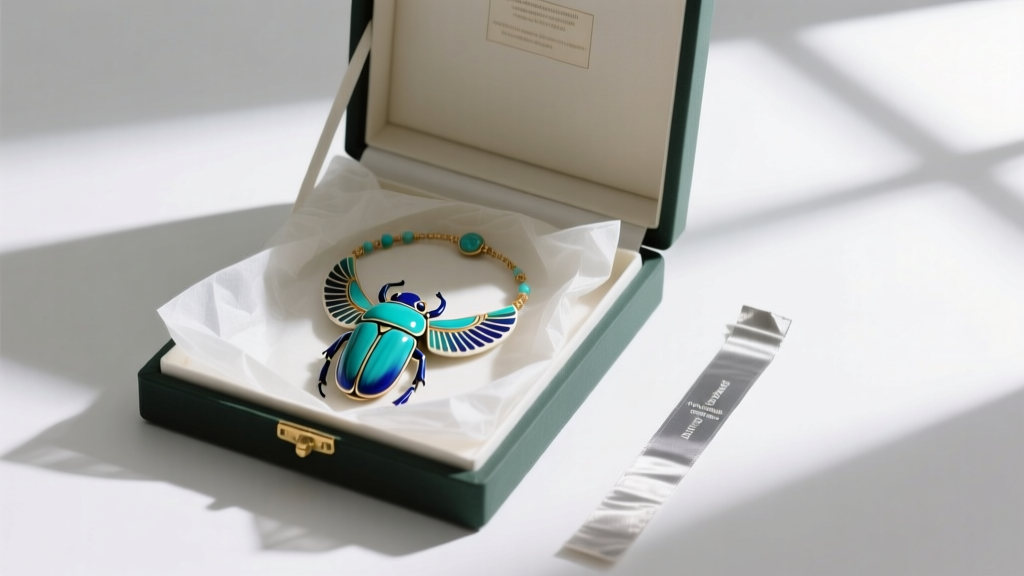
- Use Archival Storage: Store your necklace in an acid-free, lignin-free archival jewelry box. Wrap the piece loosely in unbuffered, acid-free tissue paper to prevent the metal from transferring tarnish to the stones.
- Combat Tarnish Safely: Place a strip of Pacific Silvercloth or 3M Anti-Tarnish strips in the storage box. These materials absorb sulfur compounds from the air before they can react with the silver or copper alloys in your necklace.
- Avoid PVC Plastics: Never store vintage jewelry in standard ziplock bags or PVC plastic boxes. Polyvinyl chloride off-gases chemicals that accelerate silver sulfide tarnish and can create a sticky, destructive film on enamel and faience.
- Prevent Scratching: Scarab necklaces often feature high-relief carvings. Always store them flat and separate from harder gemstones (like diamonds or sapphires) that could scratch the metal or the scarab stones.
When to Consult a Professional Conservator
While routine maintenance can be done at home, certain conditions require the intervention of a professional jewelry conservator. According to conservation best practices outlined by institutions like the Victoria and Albert Museum, you should seek professional help if you notice:
- Verdigris Buildup: A powdery green or blue crust around the metal settings indicates copper oxidation (verdigris). This is an active corrosion process that can eat through the metal bezel and stain the adjacent porous stones. A conservator can mechanically remove this under a microscope without damaging the antique finish.
- Loose Bezels or Rattling Stones: Scarab stones are typically held in place by bezel settings or prongs. If the stone moves, the metal has worn thin. Stop wearing the necklace immediately to prevent losing the irreplaceable scarab.
- Flaking Enamel or Glaze: If the iridescent enamel on a beetle-wing scarab is lifting, a professional can stabilize it using specialized conservation-grade resins (like Paraloid B-72) that are reversible and safe for antiques.
Final Thoughts on Preservation
A vintage scarab necklace is a testament to the craftsmanship and Egyptomania of bygone eras. By abandoning harsh modern chemicals in favor of gentle, targeted, and dry-cleaning techniques, you preserve not just the physical materials, but the historical integrity and patina that give the piece its soul and value. Treat your necklace with the respect of an archivist, and it will continue to tell its story for generations to come.


