The Ultimate Material Guide to the Vintage Snake Chain Necklace
Discover the metallurgy behind the vintage snake chain necklace. Compare silver, gold-filled, and alloy properties, kink resistance, and repairability.

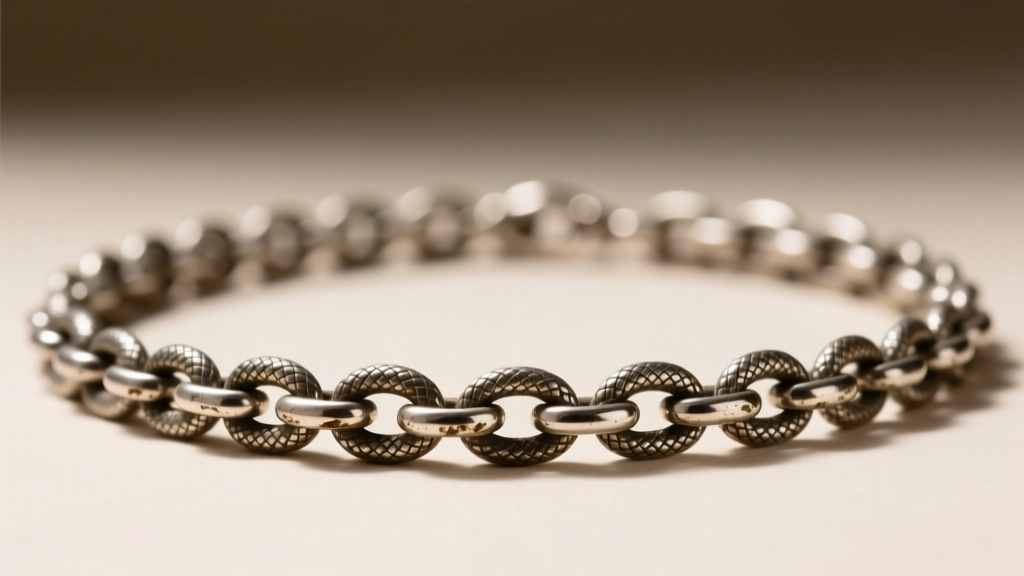
The Anatomy of a Tubular Weave
When collectors and jewelry enthusiasts seek out a vintage snake chain necklace, they are rarely looking for a simple strand of metal. They are searching for a specific architectural marvel of mid-century jewelry manufacturing. Unlike traditional cable or curb chains, which rely on interlocking open loops, a snake chain is constructed from slightly curved, wavy metal plates or rings that are tightly interlocked to form a continuous, flexible tube. This creates a smooth, scale-like surface that catches the light beautifully and drapes with a heavy, liquid-like fluidity.
However, the structural integrity of this tubular weave is entirely dependent on the metallurgy used during its creation. The golden era of the snake chain—spanning the late 1960s through the 1980s, primarily driven by master jewelers in Arezzo, Italy, and Pforzheim, Germany—utilized specific alloys that behave very differently from modern, mass-produced alternatives. Understanding these material properties is critical for authenticating, wearing, and preserving vintage pieces.
Metallurgical Profiles of Vintage Snake Chains
The material composition of a vintage snake chain dictates not only its color and luster but also its tensile strength, tarnish rate, and susceptibility to permanent deformation. Here is a deep dive into the three most common materials found in vintage markets today.
925 Sterling Silver (The Italian Standard)
The vast majority of high-quality vintage snake chains from the 1970s and 1980s were crafted in 925 Sterling Silver. Composed of 92.5% pure silver and 7.5% copper, this alloy provides the necessary hardness to maintain the tight interlocking structure of the chain. However, the copper content makes vintage sterling highly susceptible to sulfur-induced tarnish. In a snake chain, tarnish often becomes trapped in the microscopic seams between the wavy plates, requiring ultrasonic cleaning or specialized silver dips to restore. Furthermore, sterling silver is prone to work hardening; repeated bending causes the crystalline structure of the metal to lock up, making older silver snake chains surprisingly brittle if forced out of a kink.
14k Gold-Filled (1/20 14K GF)
Gold-filled vintage snake chains were incredibly popular in the 1970s bohemian and disco eras. Unlike modern gold plating (which is a microscopic electroplated layer), vintage gold-filled material was created by mechanically bonding a thick outer layer of 14k gold to a brass or copper core using heat and pressure. By law, the gold layer must constitute at least 5% of the total metal weight. This results in a highly durable chain that resists tarnish and can withstand decades of friction. The primary failure mode for vintage gold-filled snake chains occurs at the clasp and the first half-inch of the chain, where skin acids and friction can eventually wear through the gold layer, exposing the brass core to oxidation.
Nickel Silver and Alpaca Alloys
Budget-friendly vintage pieces, particularly those originating from Mexico or mass-produced in the US during the 1970s, were often made from Nickel Silver (also known as Alpaca or German Silver). Despite the name, these alloys contain zero actual silver. They are typically composed of copper, nickel, and zinc. While they offer a bright, silvery appearance and high tensile strength, they are highly problematic for modern collectors. The nickel content is a severe contact allergen, and the copper-zinc base is highly reactive to moisture, frequently developing a green, crusty patina known as verdigris in the tight crevices of the chain weave.
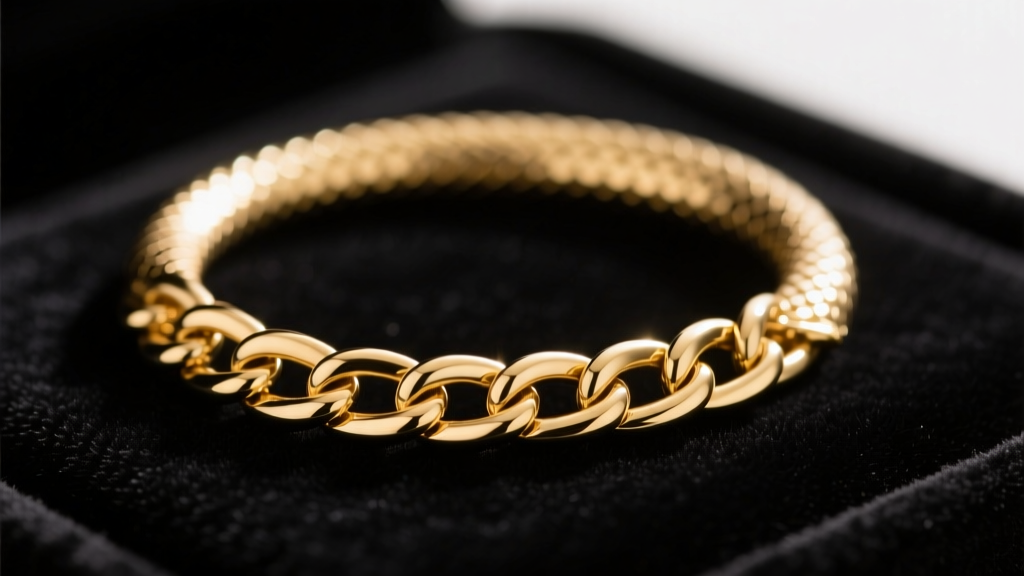
Comparative Material Properties & Failure Modes
To make informed purchasing and restoration decisions, it is essential to compare how these historical alloys perform under the unique mechanical stresses of a tubular chain design. The following table outlines the core physical properties and common failure modes of vintage snake chain materials.
| Material | Era Peak | Core Composition | Tarnish Rate | Kink Resistance | Primary Failure Mode |
|---|---|---|---|---|---|
| 925 Sterling Silver | 1970s - 1980s | 92.5% Ag, 7.5% Cu | High (Sulfur) | Moderate | Work-hardening & snapping |
| 14k Gold-Filled | 1960s - 1970s | Brass core, 14k Au shell | Very Low | High | Clasp friction wear-through |
| Vermeil (Gold over Silver) | 1950s - 1960s | 925 Ag base, Au plate | Moderate (Base) | Moderate | Plating loss revealing silver |
| Nickel Silver / Alpaca | 1970s | Cu, Ni, Zn | Extreme (Verdigris) | Very High | Skin allergies & corrosion |
The Physics of the "Kink": Tensile Strength and Deformation
The most notorious vulnerability of any snake chain is kinking. Because the chain relies on the precise alignment of hundreds of microscopic, wavy metal plates, a sharp lateral bend forces these plates to fold inward, collapsing the tubular structure. Once a snake chain kinks, the structural integrity of that specific section is permanently compromised.
According to metallurgical principles documented by the Gemological Institute of America (GIA), the recovery from a kink depends heavily on the alloy's ductility. A vintage 14k gold-filled chain possesses a highly ductile brass core, meaning a mild kink can sometimes be massaged out by laying the chain on a flat, hard surface and gently rolling a smooth wooden dowel over it. Conversely, a vintage sterling silver chain that has work-hardened over decades will likely snap or suffer micro-fractures if subjected to the same mechanical force. Never attempt to pull a kink out of a vintage sterling silver snake chain with your fingers; the localized stress will almost certainly sever the links.
The Weight and Drape Factor: Vintage vs. Modern
One of the primary reasons collectors seek out a vintage snake chain necklace over modern iterations is the gauge thickness and resulting drape. Modern manufacturing techniques prioritize material conservation, resulting in snake chains that are typically 1.0mm to 1.5mm in diameter. These thinner chains are stiff and lack fluidity. In contrast, vintage pieces from the 1970s frequently feature gauges ranging from 2.5mm to 4.0mm. This substantial metal weight allows the chain to articulate beautifully, moving like liquid metal against the collarbone and providing the necessary tensile support for heavy vintage pendants without stretching.
Sourcing and Authenticating Vintage Pieces
Authenticating a vintage snake chain requires looking past the clasp and examining the hallmarks and physical behavior of the metal. According to the educational archives at Lang Antiques, hallmarks on snake chains are typically stamped on a small, flat metal tab attached directly to the end ring, or on the interior of a barrel clasp.
- Barrel Clasps: True vintage snake chains almost exclusively feature barrel clasps (two threaded cylinders that screw together). This design preserves the unbroken, continuous line of the tubular weave. If a piece features a modern lobster clasp and a jump ring, it has likely been altered or is a modern reproduction.
- The Magnet Test: Because the interlocking plates of a snake chain make it difficult to perform a traditional acid test without damaging the surface, a rare-earth magnet is a vital tool. Sterling silver, gold, and brass are non-magnetic. If the chain exhibits any magnetic pull, it contains a steel or iron core, immediately identifying it as a modern, low-quality counterfeit.
- Maker's Marks: Look for Italian provincial marks, such as the "Florence" or "Arezzo" stamps, often accompanied by a number and the letters "VI" or "AR" (e.g., "123 AR"), which denote the specific manufacturing house registered in that region during the mid-century.

The Repair Reality: Why Torch Soldering Fails
If you acquire a vintage snake chain necklace that has suffered a break or a severe kink, traditional jewelry repair methods are virtually useless. Standard torch soldering requires applying flux and heat to the metal. Because the links of a snake chain are tightly packed with microscopic tolerances, liquid flux will wick deep into the tubular structure via capillary action. When the torch is applied, the solder will follow the flux, fusing a massive section of the chain into a single, stiff, inflexible block of metal.
As noted by the jewelry fabrication experts at Rio Grande, the only viable method for repairing a broken vintage snake chain is laser welding. A laser welder uses a highly focused beam of light to melt the metal at a microscopic point without requiring flux and without transferring thermal energy to the surrounding links. This allows a master jeweler to fuse a severed snake chain while preserving the flexibility of the adjacent tubular weave. However, the repair spot will remain a structural weak point, and the chain should never be used to support heavy pendants post-repair.
Preservation and Storage Best Practices
To protect the metallurgical integrity of your vintage snake chain, proper storage is non-negotiable. Never toss a snake chain into a jewelry box where it can become tangled or crushed. The chain should either be hung vertically on a padded jewelry stand to allow gravity to maintain its alignment, or coiled loosely in a wide, flat circle inside an anti-tarnish cloth pouch. Avoid wearing vintage snake chains to bed, as the lateral pressure of rolling over in sleep is the leading cause of catastrophic kinking in these historic, irreplaceable tubular weaves.


