The Vintage Wood Necklace Trend: 2026 Style Guide
Explore the 2026 vintage wood necklace trend. Discover wood species, authentication tips, styling frameworks, and care guides for organic jewelry.

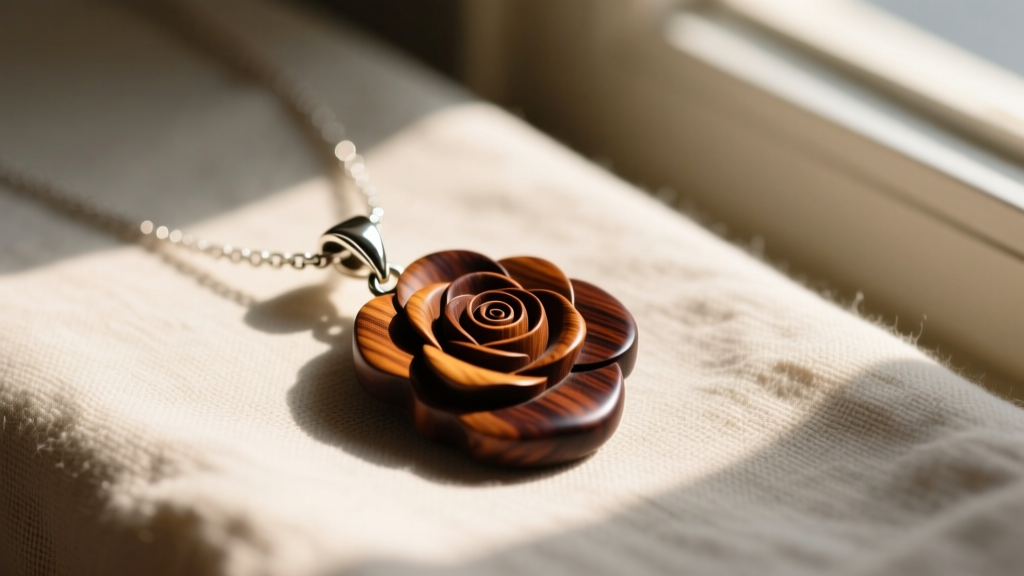
The jewelry landscape in 2026 is experiencing a profound tactile shift. After years dominated by hyper-polished precious metals and lab-grown diamonds, collectors and style enthusiasts are gravitating toward grounded, organic materials. At the forefront of this movement is the vintage wood necklace. Far from the cheap, mass-produced bead strands of the late 1990s, today's most coveted vintage wood pieces are masterclasses in artisanal carving, rare timber sourcing, and mid-century or Victorian craftsmanship. Whether you are hunting for a Victorian mourning piece carved from Irish Bog Oak or a 1970s hand-turned Koa wood pendant, understanding the nuances of organic jewelry is essential for the modern collector.
The 2026 Resurgence: Why Organic Antiquity is Trending
The current fascination with vintage wood necklaces is deeply tied to the broader 'earthy luxury' and 'quiet sustainability' movements. Modern consumers are seeking pieces with a palpable history and a lower environmental footprint. Vintage wood offers both. Unlike newly harvested exotic timbers, which can raise ethical and ecological concerns, vintage pieces repurpose historically significant materials. Furthermore, wood possesses a thermal warmth and acoustic dampening quality that metal simply cannot replicate. When worn against the skin, a vintage wood pendant quickly acclimates to body temperature, creating an intimate, grounded wearing experience that resonates with the 2026 desire for mindful, sensory-rich adornment.
Decoding Wood Species: A Collector's Matrix
Not all wood is created equal. The value, durability, and carving potential of a vintage wood necklace depend heavily on the species used and its Janka hardness rating—a measure of a wood's resistance to wear and denting. Below is a breakdown of the most prominent woods found in high-quality vintage and antique necklaces.
| Wood Species | Era of Popularity | Janka Hardness (lbf) | Market Price Range (USD) | Key Characteristics |
|---|---|---|---|---|
| Irish Bog Oak | Victorian (1830-1900) | 1,120 | $300 - $1,200 | Jet-black, fossilized, used in mourning jewelry. |
| Hawaiian Koa | Mid-Century (1950-1970) | 1,170 | $150 - $450 | Rich golden-brown, chatoyant grain, highly polished. |
| Indian Sandalwood | 19th Century - 1980s | 900 | $80 - $300 | Aromatic, pale yellow, often intricately carved with deities. |
| African Ebony | Art Deco & 1970s | 3,220 | $200 - $600 | Dense, sink-water heavy, takes a glass-like polish. |
| Mediterranean Olive | 1960s - Present | 2,710 | $50 - $180 | Swirled, contrasting grain, often used for chunky beads. |
As noted by the Gemological Institute of America (GIA), organic gems like wood require specialized assessment. High-density woods like Ebony and Olive Wood allow for incredibly fine, detailed carving without splintering, making them ideal for intricate vintage pendants. Conversely, softer woods like Sandalwood were often shaped into smooth, tactile beads meant to be handled and worn for their aromatic properties.
Hardware & Suspension: Cords, Chains, and Bails
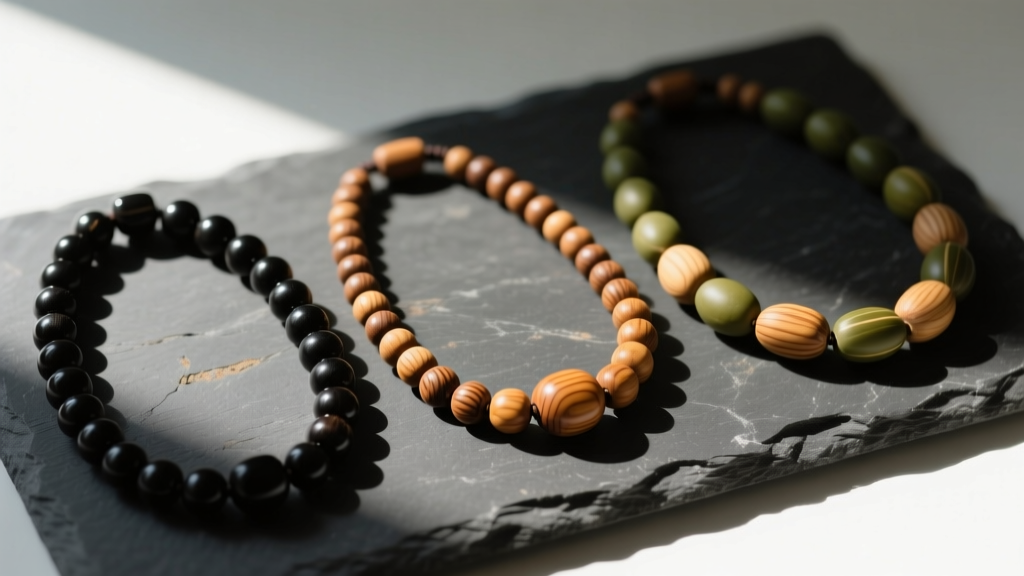
A common pitfall when evaluating a vintage wood necklace is ignoring the suspension system. The hardware and stringing materials are critical indicators of a piece's authenticity, age, and overall value. True mid-century and antique pieces rarely feature modern stainless steel chains or nylon cords.
- Victorian & Edwardian Pieces: Look for black silk ribbons, braided human hair (in mourning pieces), or early gutta-percha cords. Metal bails are typically rolled gold, pinchbeck, or low-karat yellow gold (9k or 14k).
- 1970s Artisan Pendants: Often suspended on thick, hand-braided leather thongs or macramé cotton cords. The bails are frequently hand-forged sterling silver or hammered copper, reflecting the era's embrace of raw, unrefined metalwork.
- Mid-Century Modern: Sleek, geometric wood pendants from the 1950s and 60s are often found on fine silver snake chains or minimalist silk cords with hidden clasps.
When restoring or re-stringing a vintage wood necklace, always avoid synthetic nylon threads, which can act like a saw and cut through softer antique woods over time. Opt for natural silk or waxed cotton, which provide tensile strength without abrasive friction.
Styling Frameworks: Necklines & Occasions
Styling a vintage wood necklace requires an understanding of proportion, color theory, and fabric weight. Because wood is visually 'heavy' and matte, it interacts with clothing differently than reflective metals.
The Deep V-Neck & Long Pendant
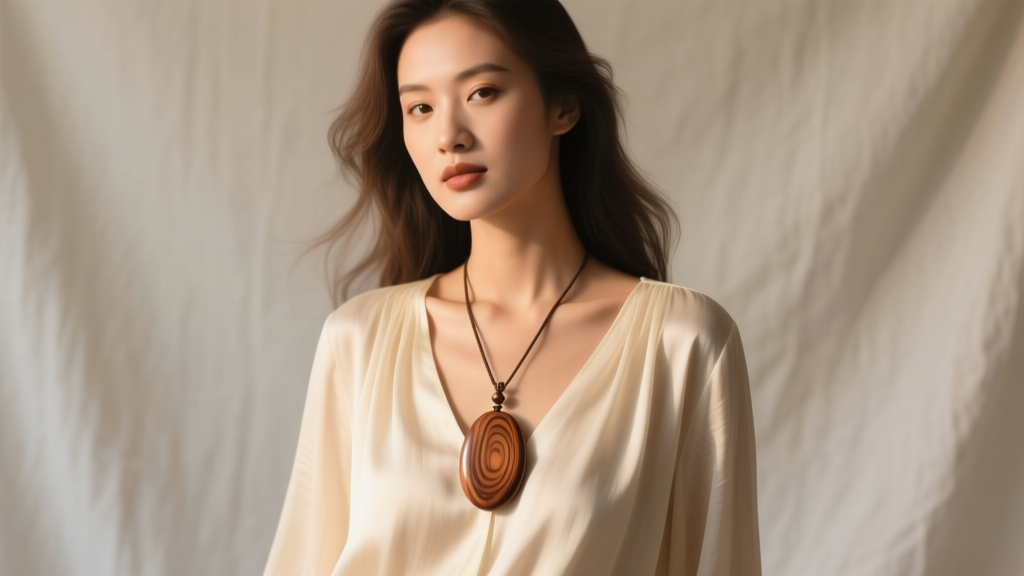
For deep V-necklines in silk or fine merino wool, a long (28-32 inch) vintage wood pendant is ideal. The matte texture of woods like Bog Oak or dark Rosewood provides a striking contrast against the subtle sheen of silk. The elongated pendant draws the eye vertically, complementing the neckline without overwhelming the collarbone.
The Crewneck & Chunky Beads
When wearing a heavy cotton or cashmere crewneck, opt for a shorter (16-18 inch) necklace featuring chunky, graduated wood beads, such as vintage Olive Wood or Amber-toned Koa. The thickness of the beads sits perfectly against the ribbed collar, adding a layer of organic warmth to winter knits.
Authentication, Patina, and Preservation
The market is unfortunately flooded with modern replicas—compressed sawdust dyed to look like ebony, or resin cast from vintage molds. Authenticating a vintage wood necklace requires engaging multiple senses. First, the weight test: dense woods like Ebony and Ironwood are surprisingly heavy, often sinking in water, whereas resin or compressed wood composites feel unnaturally light or uniformly dense. Second, the thermal test: real wood feels warm to the touch almost instantly, while resin and plastic remain stubbornly cool.
Preserving the patina of an antique wood pendant is a delicate science. According to guidelines from The Metropolitan Museum of Art's conservation department, organic materials are highly susceptible to fluctuations in humidity. Wood is hygroscopic; it absorbs and releases moisture from the air, which can lead to checking (cracking) if the environment is too dry.
Care Directives for Collectors:
- Avoid Chemical Cleaners: Never use commercial jewelry dips or alcohol-based cleaners on vintage wood. These will strip decades of natural oils and historical patina.
- Hydration: Once a year, gently rub a micro-drop of pure, cold-pressed Tung oil or mineral oil into the wood using a microfiber cloth. This prevents desiccation without creating a sticky, artificial-looking gloss.
- Storage: Store vintage wood necklaces in a breathable cotton pouch, never in an airtight plastic bag, which can trap moisture and invite mold growth on organic fibers.
By understanding the botanical origins, historical context, and physical properties of these remarkable pieces, you can confidently navigate the 2026 market. A well-chosen vintage wood necklace is not merely an accessory; it is a wearable artifact, carrying the quiet, enduring strength of the natural world.


